The best rotary tools for home mechanics make it easier to cut, grind, polish, deburr, sand, and clean parts without reaching for a full-size power tool. The right kit can handle everything from light garage repairs to detailed restoration and fabrication work.
We’ve selected ten options across corded, cordless, and flex-shaft designs, with attention to speed control, included accessories, handling, power, and overall versatility. Use the guide below to narrow the choices based on your workspace and typical projects.
Best 10 Rotary Tools for Home Mechanics Picks for 2026
Premium All-Rounder
Dremel 4300-5/40 Rotary Tool Kit
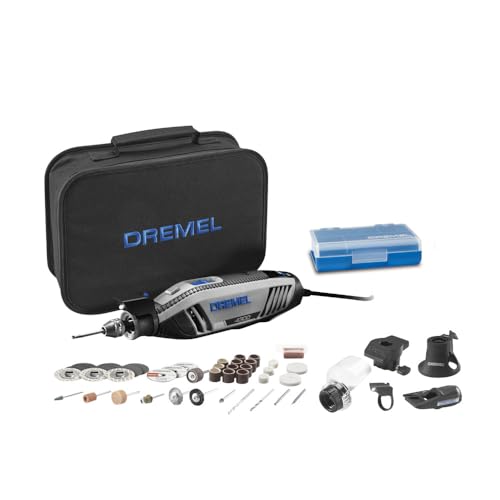
- 5,000–35,000 RPM variable-speed motor
- Universal three-jaw chuck
- Five attachments and 40 accessories
Best For: Home mechanics seeking a comprehensive corded kit
Flex-Shaft Power Station
VEVOR 780W Rotary Tool Grinder

- 780W copper motor
- 100 cm flexible shaft
- Stepless foot-pedal speed control
Best For: Detailed garage grinding, polishing, and deburring
Dependable Workshop Choice
Dremel 4000-2/32 Rotary Tool Kit

- 1.6-amp variable-speed motor
- 5,000–35,000 RPM range
- Ergonomic 360-degree grip zone
Best For: Regular cutting, sanding, polishing, and grinding
Accessory-Rich Value Pick
WEN 23114 Variable Speed Rotary Tool
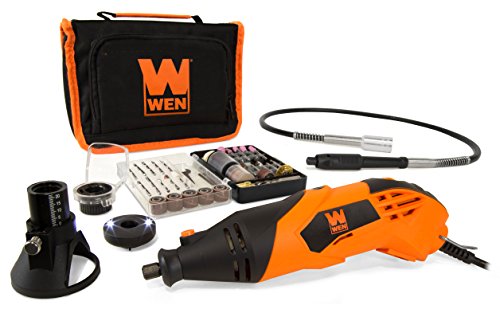
- 1.4-amp variable-speed motor
- Three-foot flex shaft
- 100-plus accessories and carrying case
Best For: DIY mechanics wanting broad capability in one kit
Best Cordless Value
WORKPRO 12V Cordless Rotary Tool

- Cordless 12V operation with included 2.0Ah battery
- Five speeds from 7,500 to 32,000 RPM
- Includes 114 accessories and a storage case
Best For: Portable household repairs and light workshop tasks
Best for Detail Work
WEN 2305 Rotary Tool with Flex Shaft
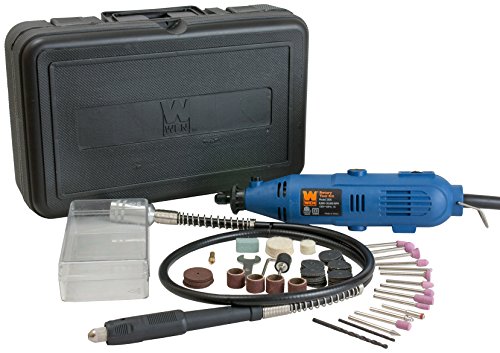
- Corded 120V power for continuous operation
- 8,000–30,000 RPM variable-speed range
- Includes flex shaft and 80 accessories
Best For: Bench work and intricate detail tasks
Best Compact Smart Design
Fanttik F2 Pro Cordless Rotary Tool

- Ultra-light 0.45-pound cordless design
- Pressure-sensitive five-speed control from 5,000–25,000 RPM
- Integrated status lights and flip-top accessory case
Best For: Lightweight precision work and detailed finishing
Heavy-Duty Flex-Shaft Pick

- 1000W motor reaches 30,000 RPM
- Stepless foot-pedal speed control
- Flexible shaft with forward-reverse rotation
Best For: Heavy grinding, polishing, and detailed workshop work
High-Speed DIY Versatility
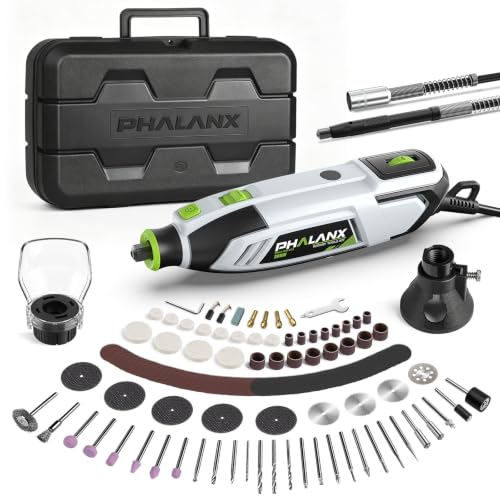
- Six speeds up to 38,000 RPM
- Keyless chuck for faster bit changes
- Includes 132 accessories and four collets
Best For: General DIY, polishing, engraving, and light mechanic tasks
Balanced Flex-Shaft Option

- Six speeds from 8,000 to 32,000 RPM
- Pen-like flexible shaft for detail work
- Includes 139 accessories and four collets
Best For: Detail work, sanding, polishing, and varied DIY projects
Premium All-Rounder – Dremel 4300-5/40 Rotary Tool Kit
For home mechanics who want one versatile setup, the Dremel 4300-5/40 is a strong choice among rotary tools for home mechanics. Its 5,000–35,000 RPM variable-speed motor, universal three-jaw chuck, pivot light, and included guides support cutting, sanding, grinding, engraving, and sharpening tasks.
Best For: Home mechanics who want a premium corded kit with broad accessory and attachment compatibility.
Pros:
- Powerful 5,000–35,000 RPM motor with electronic feedback for consistent control
- Universal three-jaw chuck accepts all Dremel accessory shank sizes
- Includes five attachments, 40 accessories, a pivot light, and storage case
- Replaceable brushes and airflow design support longer, cooler operation
Cons:
- Corded design requires access to a 120-volt outlet
- The premium kit may include more attachments and accessories than occasional users need
The 4300 stands out when versatility and control matter more than portability. Its included cutting, sanding, grinding, and sharpening guides make it especially practical for varied garage and workshop jobs.
Flex-Shaft Power Station – VEVOR 780W Rotary Tool Grinder
The VEVOR Flex Shaft Grinder is built for users who need high power and hands-free speed control. Its 780W copper motor, 500–23,000 RPM range, 100 cm flexible shaft, three-jaw chuck, and foot pedal make it a capable option among rotary tools for home mechanics handling polishing, deburring, grinding, and detailed work.
Best For: Garage users who prioritize motor power, flexible-shaft reach, and foot-pedal control.
Pros:
- 780W motor provides strong output across a 500–23,000 RPM range
- Flexible 100 cm steel shaft helps reach small or delicate work areas
- Three-jaw chuck accommodates accessories from 0.3–6.5 mm
- Includes a foot pedal and a broad accessory assortment for sanding and polishing
Cons:
- At approximately 6 pounds, it is heavier than the compact handheld kits listed here
- Its 23,000 RPM maximum is lower than the Dremel and WEN options
- The hanging flex-shaft format is less convenient for quick handheld jobs
This VEVOR is a specialized choice rather than a small grab-and-go rotary tool. The flex shaft and foot pedal are useful when precision, extended reach, and sustained workshop work are the priorities.
Dependable Workshop Choice – Dremel 4000-2/32 Rotary Tool Kit
The Dremel 4000-2/32 offers a straightforward, capable setup for common garage and workshop tasks. With a 1.6-amp motor, electronic speed control from 5,000–35,000 RPM, ergonomic grip zone, and accessories for cutting, sanding, polishing, engraving, and grinding, it is a well-rounded pick among rotary tools for home mechanics.
Best For: Users who want a durable-feeling corded rotary tool for regular multi-purpose work.
Pros:
- 1.6-amp motor maintains high power across the variable-speed range
- Electronic speed control helps maintain consistent performance under load
- 360-degree grip zone supports comfort and control during longer sessions
- Includes two attachments and 32 accessories for common shop applications
Cons:
- Includes fewer attachments and accessories than the Dremel 4300 kit
- Corded operation limits use where an outlet is unavailable
- Does not list a pivot light or flex shaft among the included components
The 4000 is a sensible middle-ground option: more focused than a large specialty setup, yet powerful enough for demanding cutting, deburring, sanding, and polishing work. Its ergonomic housing also suits longer maintenance sessions.
Accessory-Rich Value Pick – WEN 23114 Variable Speed Rotary Tool
The WEN 23114 is a practical value-oriented kit for home mechanics who want plenty of accessories and useful add-ons in one case. Its 1.4-amp variable-speed motor reaches 8,000–35,000 RPM, while the flex shaft, LED collar, guides, and 100-plus accessories cover cutting, drilling, grinding, polishing, and sanding.
Best For: DIY users who want an accessory-heavy kit with a flex shaft and task-specific collars.
Pros:
- 1.4-amp motor and variable speed up to 35,000 RPM
- Includes a three-foot flex shaft for intricate detail work
- Comes with drilling/routing, LED, and spark/debris-shield collars
- 100-plus accessories and a multi-compartment carrying case simplify setup
Cons:
- Its 8,000 RPM minimum is higher than the Dremel models and VEVOR
- Accessory volume may be more than needed for occasional projects
- Corded operation requires a 120-volt power source
The WEN makes a strong case when included equipment matters as much as the tool itself. Its flex shaft and task-specific collars add flexibility, while the organized case keeps a large accessory collection manageable.
Best Cordless Value – WORKPRO 12V Cordless Rotary Tool
For home mechanics who want freedom from a power cord, the WORKPRO 12V is a practical choice among rotary tools for home mechanics. Its five-speed range, included battery, and broad accessory selection cover common sanding, grinding, cutting, polishing, and drilling tasks.
Best For: Cordless household repairs, light workshop jobs, and users who want a large accessory assortment in a portable kit.
Pros:
- Cordless 12V design with a 2.0Ah lithium-ion battery included.
- Five speeds from 7,500 to 32,000 RPM for different materials and tasks.
- Includes 114 accessories, two collet sizes, and a storage case.
- Lightweight 1.38-pound body with reportedly low vibration and sound.
Cons:
- Battery operation requires periodic recharging, even when stored.
- The extensive accessory set may be more than casual users need.
The WORKPRO stands out when portability and kit completeness matter most. It is a versatile option for home mechanics handling occasional repairs, finishing work, and detail tasks without wanting a cord in the way.
Best for Detail Work – WEN 2305 Rotary Tool with Flex Shaft
The corded WEN 2305 is a straightforward pick for home mechanics who prefer continuous power. Its variable-speed motor, spindle lock, and included flex shaft make it useful for cutting, deburring, sanding, polishing, drilling, and precise shaping.
Best For: Bench work and detailed jobs where consistent corded power and flexible bit control are more important than portability.
Pros:
- Variable speed adjusts from 8,000 to 30,000 RPM.
- Included flex shaft supports intricate detail and precision work.
- 80-piece accessory set covers cutting, sanding, polishing, shaping, and drilling.
- Onboard spindle lock enables quick bit changes.
Cons:
- Corded design requires access to a 120V outlet.
- At 3.6 pounds, it is heavier than the listed cordless alternatives.
The WEN 2305 favors dependable bench-top usability over cordless convenience. Choose it if your home mechanic projects typically happen near an outlet and benefit from the included flex shaft.
Best Compact Smart Design – Fanttik F2 Pro Cordless Rotary Tool
The Fanttik F2 Pro is a compact cordless option for home mechanics who value controlled detail work and easy organization. Its pressure-sensitive five-speed control, integrated lighting, battery indicators, and flip-top case make small sanding, carving, polishing, and repair tasks easier to manage.
Best For: Lightweight precision work, detailed finishing, and users who want a modern cordless tool with organized accessory storage.
Pros:
- Lightweight 0.45-pound design with pressure-sensitive speed control.
- Five-speed range from 5,000 to 25,000 RPM.
- Battery, speed, overload, and work-area lighting provide useful status and visibility.
- Built-in 3,000mAh battery supports over 30 minutes of continuous grinding and USB-C charging.
Cons:
- Its listed battery life is about 30 minutes under continuous grinding.
- USB-C charging cable is not included.
- Includes 44 accessories, fewer than the WORKPRO and WEN kits.
The Fanttik is particularly appealing for controlled, close-up work where low weight and visibility features help. Its shorter continuous runtime makes it better suited to detail sessions than extended heavy-duty use.
Heavy-Duty Flex-Shaft Pick – 1000W Hanging Grinder
For home mechanics who need substantial power, this 1000W flex-shaft rotary tool reaches 30,000 RPM and adds foot-pedal control for hands-free speed adjustment. Its hanging motor and flexible shaft are useful when working around larger automotive parts or in tight areas.
Best For: Heavy grinding, deburring, polishing, sanding, and precision work on metal, wood, stone, or jewelry.
Pros:
- High-output 1000W copper motor with a 500–30,000 RPM range.
- Large stepless foot pedal leaves both hands available for positioning workpieces.
- 6.5mm flexible shaft supports detailed work while allowing the object to rotate freely.
- Includes assorted abrasives, mandrels, sanding accessories, tools, and storage boxes.
Cons:
- Corded 110V design is less portable than a compact handheld tool.
- The high power may be more than needed for light-duty household tasks.
This is the most workshop-oriented choice in the group, especially for users who value strong sustained power and foot control. The forward-reverse function and included accessories add flexibility for varied home-mechanic jobs.
High-Speed DIY Versatility – 200W Rotary Tool Kit
This 200W model is a versatile option among rotary tools for home mechanics, combining six speed settings, a 10,000–38,000 RPM range, a flex shaft, and 132 accessories. It is suited to jobs that shift between cutting, engraving, sanding, drilling, and polishing.
Best For: General DIY maintenance, light automotive detailing, engraving, sanding, polishing, and accessory-heavy projects.
Pros:
- Six speed settings provide control from delicate polishing to tougher cutting tasks.
- Keyless chuck enables quick accessory changes without wrench adjustments.
- Four included collets accommodate several common shank sizes.
- 132-piece kit covers cutting, grinding, engraving, sanding, and polishing applications.
Cons:
- Its 200W rating is less substantial than the 1000W flex-shaft grinder for demanding material removal.
- The minimum speed is 10,000 RPM, which may be fast for some delicate work.
Choose this kit if accessory variety and quick setup matter more than maximum grinding power. The ergonomic handle, ventilation, and gear-protection blocker also support more comfortable extended use.
Balanced Flex-Shaft Option – PHALANX 180W Rotary Tool
The PHALANX 180W rotary tool offers six speeds from 8,000 to 32,000 RPM, plus a pen-like flexible shaft for detail work and corner polishing. For home mechanics, its broad accessory selection makes it a practical multipurpose set for routine cutting, sanding, grinding, and polishing.
Best For: Detail-oriented DIY work, corner polishing, sanding, engraving, and varied projects requiring many accessories.
Pros:
- Six speed settings provide a useful 8,000–32,000 RPM working range.
- Flexible shaft is designed for pen-like handling and reduced runout.
- Four collets support multiple accessory shank sizes.
- 139-piece accessory set includes cutting discs, sanding drums, brushes, burrs, and polishing-related accessories.
Cons:
- The chuck must be tightened with a spanner before use.
- At 180W, it is better suited to general-purpose work than the heavy-duty demands of a 1000W grinder.
This model balances manageable power with an extensive kit and flexible-shaft control. It is a strong fit for home mechanics who expect to switch frequently between detail work and everyday material removal.
How We Picked the Best Rotary Tools for Home Mechanics
We compared these rotary tools by looking at the features that matter most in a home garage or workshop: motor power, usable speed range, variable-speed control, accessory compatibility, ergonomics, included attachments, and power-source convenience. Flex-shaft systems received special consideration because they can improve reach and precision for detailed work, while cordless models were evaluated for portability and quick setup.
Accessory counts are useful, but they are not the only measure of value. A smaller kit with reliable collets, a comfortable grip, and useful cutting or grinding attachments may be more practical than a larger assortment filled with duplicates. For demanding jobs, motor consistency and heat management also matter.
Quick Comparison
| Type | Best suited for | Main advantage | Potential trade-off |
|---|---|---|---|
| Corded rotary tool | Regular garage and workshop use | Consistent power without battery limits | Requires an outlet and cord management |
| Cordless rotary tool | Quick repairs and mobile projects | Excellent portability | Runtime and charging requirements |
| Flex-shaft grinder | Extended detail work and carving | Improved reach and hand control | Larger setup and hanging motor |
| High-speed multi-tool kit | Cutting, sanding, polishing, and deburring | Broad accessory compatibility | May produce more vibration or noise |
Key Buying Factors for Rotary Tools for Home Mechanics
Power and Speed Control
Choose enough power for the materials you expect to work on. Lower speeds are preferable for polishing, plastic, and heat-sensitive materials, while higher speeds help with light grinding, cutting, and sharpening. A wide variable-speed range is usually more useful than a single maximum RPM figure.
Collets, Chucks, and Accessories
Check whether the tool accepts common 1/32-, 1/8-, or 1/4-inch accessories and whether the kit includes the sizes you need. A three-jaw chuck can simplify bit changes, while standard collets often provide a more secure fit for compatible accessories.
Handling and Control
For precision work, weight, grip shape, vibration, and switch placement can make a bigger difference than peak power. A flex shaft can reduce hand fatigue, but it adds setup space. A foot pedal is useful when both hands need to remain on the workpiece.
Power Source and Durability
Corded tools are dependable for long sessions, while cordless models are easier to carry and use around a vehicle. Look for a stable speed controller, ventilation, a secure accessory lock, and a case that keeps bits organized. Eye protection, hearing protection, and dust control are essential when cutting or grinding.
Who Should Buy Which Rotary Tools for Home Mechanics?
Choose a compact cordless kit if you mainly handle quick adjustments, light cleanup, crafts, or occasional vehicle work away from an outlet. A corded Dremel or WEN-style kit is a better fit for homeowners who want dependable all-purpose performance and longer operating sessions.
For carving, polishing, porting, and other detailed jobs, a flex-shaft grinder offers better control and reach. If your projects involve heavier grinding or frequent use of larger accessories, prioritize a higher-powered hanging grinder and a foot pedal. Finally, buyers who already own compatible bits should focus on tool quality and control rather than paying extra for another oversized accessory bundle.