Great monitoring can tighten a band’s timing, improve vocals, and lower stage volume fast. The right wireless setup should be easy to run, stable on stage, and clear enough for real performance use.
Below, we focus on the best in ear monitoring systems for bands in 2026, from compact options for rehearsal spaces to stronger multi-artist systems for live gigs.
Best 10 In Ear Monitoring Systems for Bands Picks for 2026
Compact Stereo Pick
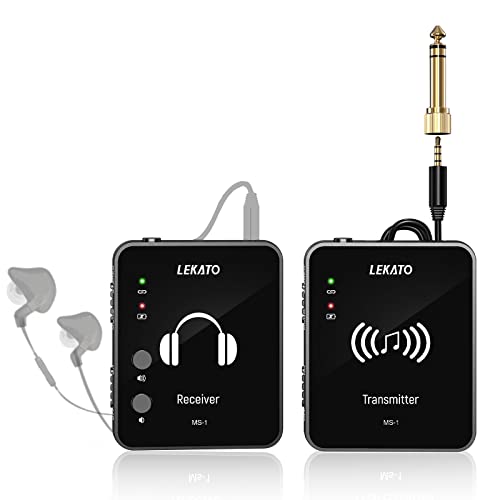
- Auto-pairing reduces setup time.
- Supports up to 6 device sets.
- Stereo transmission with low latency.
Best For: small bands, rehearsals, and church stages
Four-Person Rack System

- Includes 4 bodypacks for multi-performer use.
- Four independent mixes from one transmitter.
- Rack-mountable UHF setup with 4x25 frequencies.
Best For: four-piece bands and worship teams
Portable Low-Latency Pick

- Less than 5 ms latency.
- Portable metal receiver and transmitter.
- Mono setup with built-in limiter.
Best For: traveling musicians and simple stage rigs
Long-Range Stage Kit

- 250-350 ft UHF operating range.
- Includes 4 bodypacks and accessories.
- 2x40 frequencies for interference control.
Best For: larger bands, church stages, and studios
Compact 2.4GHz Practice Pick
JOYO JW-07 Wireless IEM for practice and small setups

- 48kHz/16-bit audio clarity
- Low latency under 5ms
- Over 8 hours of battery life
Best For: Guitarists and beginners who need simple wireless monitoring
Rack-Mount Stage Workhorse
IME-4000 UHF rack-mount IEM with 4 bodypacks

- UHF with PLL and limiter circuitry
- Up to 330 ft open-space range
- Includes 4 bodypack receivers
Best For: Bands and stage crews needing a multi-receiver rack system
All-in-One Rehearsal Kit
LEKATO MS-20 2.4G IEM with case and OTG support

- Up to 30 hours with charging case
- OTG support for phones and USB-C devices
- One transmitter can feed up to 10 pairs
Best For: Singers and small bands wanting a portable long-battery IEM
Ultra-Quiet 5.8GHz Pick

- 5.8 GHz true diversity wireless
- Channel Scan Mode for setup
- Up to 100 ft / 30.5 m range
Best For: Bands and small-stage performers who want interference-resistant 5.8 GHz monitoring.
Expandable 2.4G Stage Rig

- One transmitter to up to 4 receivers
- Mono latency under 4.5 ms
- 6-8 hour battery life with LED status
Best For: Small bands and church teams needing one-to-many wireless monitoring.
All-Purpose Rehearsal Monitor

- Stereo and mono monitoring modes
- Up to 30 m open-area range
- Compatible with mixers and interfaces
Best For: Musicians needing a lightweight, flexible monitor for rehearsal and small gigs.
Compact Stereo Pick – LEKATO MS-1 Stereo 2.4GHz
If you’re shopping for in ear monitoring systems for bands, the LEKATO MS-1 is a straightforward option for rehearsal rooms, churches, and small gigs. It supports stereo transmission, auto-pairing, and one transmitter to multiple receivers, making it easy to build a simple monitor setup without a lot of setup time.
Best For: Small to medium bands that want easy wireless monitoring with stereo sound.
Pros:
- Supports up to 6 device sets and multiple receivers on one transmitter.
- Auto-pairing makes setup quick and simple.
- True stereo transmission with a one-key stereo/mono option.
- Low-latency 2.4GHz design with up to 100 ft open-area range.
Cons:
- Battery life is rated at just over 5 hours per charge.
- Best results depend on using a stereo source and stereo cable for stereo mode.
This is a practical choice for bands that need an affordable, easy-to-run wireless IEM system rather than a complex rack setup. It focuses on convenience, stereo playback, and enough range for smaller stages.
Four-Person Rack System – Phenyx Pro PTM-33-4B UHF Mono
For bands that need multiple in ear monitoring systems for bands from one rack-mounted station, the Phenyx Pro PTM-33-4B is built around four bodypacks and four independent left/right inputs. It is a mono UHF system designed for live stage and worship use, with interference-resistant operation and a layout that supports separate mixes for multiple performers.
Best For: Four-member bands and worship teams that need individual mono monitor mixes.
Pros:
- Includes 4 bodypacks and supports up to 4 standalone mixes.
- Four-channel integrated monitor station with loop outputs and daisy-chaining.
- UHF mono design offers 4×25 frequencies and 140-164 ft line-of-sight range.
- Rack-mountable transmitter with included antenna kit for touring workflows.
Cons:
- Mono monitoring only, so it is not the choice for stereo IEM fans.
- Performance range can be reduced by thick walls, glass, or metal blocks.
This system makes sense when your priority is giving four players clean, separate monitor mixes from a single station. It is less about stereo features and more about practical, scalable stage monitoring.
Portable Low-Latency Pick – Xvive U4 Wireless Monitor
The Xvive U4 is a compact option for in ear monitoring systems for bands that want a simple portable rig with very low latency. It uses 2.4GHz wireless transmission, supports mono input, and is aimed at players who need clear monitoring for rehearsal, studio work, or live performance without a large setup.
Best For: Musicians who want a compact, easy-to-carry wireless IEM system with very low latency.
Pros:
- Less than 5 ms latency for tight monitoring response.
- Supports up to 6 channels with no interference.
- Built-in limiter helps reduce distortion at high input levels.
- Metal housing and rechargeable battery make it stage-friendly.
Cons:
- Mono input only, so it is not a stereo monitoring solution.
- Battery life is about 5 hours per charge.
This is a strong pick if portability and speed matter more than advanced routing or stereo playback. The U4 keeps the workflow simple while still delivering the low-latency monitoring many performers want.
Long-Range Stage Kit – XTUGA RW2080 4 Bodypacks
If you need in ear monitoring systems for bands that can cover a bigger stage, the XTUGA RW2080 is built around UHF transmission, a 300 ft range, and four bodypacks in the kit. It is a mono dual-channel monitoring system with multiple frequency choices and wired input options that suit stage, studio, and church use.
Best For: Bands, churches, and studios that need a longer-range UHF monitor system.
Pros:
- UHF design offers a stated 250-350 ft operating range.
- 2×40 adjustable frequencies help reduce interference.
- Includes 4 bodypacks and a full starter kit with cables and earbuds.
- Metal transmitter chassis adds stage-ready durability.
Cons:
- Monitor response is specified at 50 Hz to 15 kHz, not full-range stereo hi-fi.
- Mono dual-channel design may not suit users wanting stereo IEM playback.
This model is a practical fit when distance and reliability matter more than premium audio extras. It gives larger groups a workable monitor solution with the kind of range that can help on wider stages.
Compact 2.4GHz Practice Pick – JOYO JW-07 Wireless IEM for practice and small setups
If you want a straightforward option in the world of in ear monitoring systems for bands, the JOYO JW-07 is built around portability, fast pairing, and practice-friendly performance. Its 2.4GHz design, low-latency monitoring, and 48kHz/16-bit audio make it a practical choice for guitar players, studio use, DJs, and smaller live setups where clear real-time feedback matters.
Best For: Guitarists, beginners, and small-band practice or live monitoring setups that value simple wireless monitoring.
Pros:
- Low latency under 5ms for real-time monitoring feedback
- 48kHz/16-bit audio clarity with 2.4GHz wireless transmission
- Frequency-hopping anti-interference design for more stable signal
- Over 8 hours of battery life and automatic pairing
Cons:
- One transmitter is not supported to connect multiple receivers
- 40-60 ft range is best suited to smaller spaces
- Primarily positioned as a practice and monitoring device for beginners
The JW-07 makes sense if you want an easy-entry wireless IEM that prioritizes convenience over advanced stage routing. It’s compact, stable, and geared toward players who want solid personal monitoring without a complicated setup.
Rack-Mount Stage Workhorse – IME-4000 UHF rack-mount IEM with 4 bodypacks
For bands that need a more traditional stage-ready solution, this UHF entry among in ear monitoring systems for bands focuses on stable mono monitoring, long range, and multi-receiver support. The IME-4000 uses PLL technology, built-in limiter circuitry, and a 520-580 MHz frequency range to help keep the signal clean in live, studio, or church settings.
Best For: Bands, sound engineers, and stage crews who need a rack-mount wireless IEM system with multiple bodypacks.
Pros:
- UHF wireless design with PLL technology for stable performance
- Built-in limiter circuitry helps prevent distortion at high input levels
- Up to 330 feet of open-space range
- Includes 1 transmitter, 4 bodypack receivers, and 4 in-ear earphones
Cons:
- Mono monitoring only, so it is less flexible than stereo-focused systems
- Thick walls, glass, and metal blocks can reduce longer-distance performance
- Larger setup is better suited to fixed stage or rack use than ultra-portable use
Overall, the IME-4000 is a solid pick if your priority is dependable group monitoring rather than a tiny travel rig. It gives bands a more structured, multi-receiver workflow with the kind of range and signal management that suits recurring gigs and rehearsals.
All-in-One Rehearsal Kit – LEKATO MS-20 2.4G IEM with case and OTG support
The LEKATO MS-20 is a practical option in in ear monitoring systems for bands if you want long battery life, easy setup, and flexible input options. With auto-pairing, OTG support, and a 2.4GHz wireless design, it is aimed at rehearsals, live use, and studio monitoring where portability and convenience matter.
Best For: Singers, rehearsal groups, and small bands that want a compact wireless IEM system with long runtime.
Pros:
- Up to 30 hours of usage time with the charging case
- Supports OTG audio input from smartphones and USB-C devices
- One transmitter can send to multiple receivers, up to 10 pairs
- 150 ft open-area range with low noise and low latency
Cons:
- Earphones are not included
- Open-area range drops in real-world environments with obstacles
- Designed as a compact system, so it is less rack-focused than larger UHF rigs
For players who value battery life and easy portability, the MS-20 is a strong everyday monitoring tool. It combines simple operation with useful modern features, making it a sensible choice for rehearsals, gigs, and basic studio workflows.
Ultra-Quiet 5.8GHz Pick – Xvive U45 Wireless IEM
If you want in ear monitoring systems for bands that prioritize a clean RF path, the Xvive U45 is built around 5.8 GHz true diversity wireless and a solid connection up to 100 ft / 30.5 m. It is a straightforward choice for rehearsals and live sets where avoiding interference and keeping setup simple matter more than flashy extras.
Best For: Bands, rehearsals, and live performers who want 5.8 GHz monitoring with channel-scan setup.
Pros:
- 5.8 GHz true diversity design helps reduce interference from other wireless gear.
- Channel Scan Mode makes it easier to find a usable wireless channel.
- 20Hz-20kHz response and 24-bit/48kHz audio support detailed monitoring.
- USB-C charging and a dual cable help keep transmitter and receiver powered together.
Cons:
- Battery life is listed at up to 5 hours, so longer sessions may need charging breaks.
- Receiver and transmitter still need manual channel matching after scanning.
- Best range is rated at 100 ft / 30.5 m, which may not suit larger stages.
For players who want a practical wireless monitoring option without overcomplicating the rig, the U45 focuses on stable operation and clean audio. It is a strong fit when your band wants dependable monitoring at rehearsal or on smaller stages.
Expandable 2.4G Stage Rig – LEKATO MS-02 Wireless IEM
Among in ear monitoring systems for bands, the LEKATO MS-02 stands out for its one-transmitter-to-many-receivers design and upgraded low-latency performance. It is aimed at small and medium stage use, giving multiple players a simple way to share the same monitor feed during rehearsals, church services, or live practice.
Best For: Small bands, worship teams, and rehearsals that need one transmitter feeding multiple receivers.
Pros:
- Supports one transmitter to multiple receivers, up to 4 pairs of devices.
- Mono mode latency is listed at under 4.5 ms for quick monitoring response.
- 24-bit/48kHz audio aims for detailed, realistic sound.
- Up to 6-8 hours of operation and LED indicators make it practical for longer sessions.
Cons:
- Earbuds are not included, so you must buy compatible earbuds separately.
- Rated range is 100 ft in open area, which may be limiting on larger stages.
- Best performance is geared toward small and medium setups rather than full-size touring rigs.
If your band needs a flexible wireless monitoring system that can grow to a few receivers without adding complexity, the MS-02 is well matched to that job. Its low-latency behavior and one-to-many support make it especially useful for shared rehearsal and stage workflows.
All-Purpose Rehearsal Monitor – Wireless IEM for Musicians
If you are comparing in ear monitoring systems for bands, this 2.4G model is designed as a practical all-rounder for rehearsal, livestreaming, church worship, recording, and small stage work. It supports stereo and mono monitoring, works with a wide range of audio gear, and keeps the focus on simple wireless freedom for everyday use.
Best For: Musicians who want a lightweight, versatile wireless monitor for practice, streaming, and small gigs.
Pros:
- Supports both stereo and mono modes for different monitoring setups.
- Up to 30 m operating range in open environments.
- Works with mixers, audio interfaces, active speakers, tablets, and computers.
- Rechargeable design with up to 5 hours of continuous operation.
Cons:
- Battery life is moderate compared with some longer-running alternatives.
- Best range depends on open, line-of-sight positioning.
- Noise control is listed as none, so isolation depends on the earphones you use.
This model makes sense when you want a versatile wireless monitoring tool that can move between practice spaces and small performance settings. It is especially appealing for musicians who need compatibility and convenience more than advanced stage-system features.
How We Picked the Best In Ear Monitoring Systems for Bands
We prioritized systems that make sense for working bands: dependable wireless connection, usable range, low-latency performance, simple setup, and receiver counts that match small-group and larger-stage needs. We also looked at whether each system is better suited to stereo or mono monitoring, since that affects clarity, mix control, and live comfort.
Quick Comparison
For smaller bands, 2.4GHz systems are often appealing because they are easy to set up and usually more compact. UHF options can be a better fit when you want more traditional pro-style monitoring, more channel flexibility, or a setup built for multiple performers. Some models are designed for one performer at a time, while others support several bodypacks for full-band use.
Key Buying Factors for In-Ear Monitoring Systems for Bands
Wireless Band and Interference
Choose a frequency range that works well in your environment. Crowded venues can be harder on wireless gear, so channel selection and stable transmission matter more than spec-sheet range alone.
Mono Vs. Stereo
Mono is often fine for rehearsal and simpler live rigs, while stereo can improve separation and help players hear click tracks, backing tracks, or detailed mixes more naturally. If your band runs complex stage monitoring, stereo may be worth the extra cost.
Number of Bodypacks
Make sure the system matches your lineup. A duo may only need one transmitter and two receivers, but full In Ear Monitoring Systems for Bands often need multiple bodypacks for singers, drummers, and instrumentalists.
Latency, Range, and Ease of Use
Low latency is essential for tight playing and vocal confidence. Range is important, but real-world reliability at rehearsal or on stage matters more than maximum advertised distance. Auto-pairing, charging cases, and beltpack design can also make day-to-day use much easier.
Who Should Buy Which In Ear Monitoring Systems for Bands?
If you need a simple entry-level rig for practice, a compact 2.4GHz system is usually the easiest path. If you want to monitor multiple players on a budget, look for multi-bodypack UHF kits with enough channels for your group. Bands that play regular gigs should favor systems with proven stability, flexible frequency options, and receiver counts that leave room to grow. For studio work or hybrid rehearsal/live use, choose a model that offers cleaner audio, comfortable beltpacks, and quick setup between sessions.