If you need cleaner stage runs and faster setup, a well-built 16-channel audio snake can simplify everything from small gigs to full recording sessions.
This roundup focuses on practical options for live sound, studios, and hybrid rigs, with attention to length, connector layout, and return channels.
Best 10 16 Channel Audio Snakes Picks for 2026
Stage-Ready 16x8 Split
16 Channel XLR Snake Cable 50' Long

- 50-foot run with 16 sends and 8 returns
- Steel stage box with color-coded, numbered fantail
- Individually shielded 22-gauge pairs with strain relief
Best For: Long live-sound runs that need durable XLR channel organization
Compact Rack Link
16 Channel TRS 1/4" Snake Cable

- Short 5-foot TRS bundle for tight setups
- 16 color-coded channels in one cable
- Serviceable ends with gold-tipped connectors
Best For: Short rack or studio connections that need organized 16-channel TRS wiring
Clean Signal Splitter
16-Channel Low Profile XLR Snake Cable
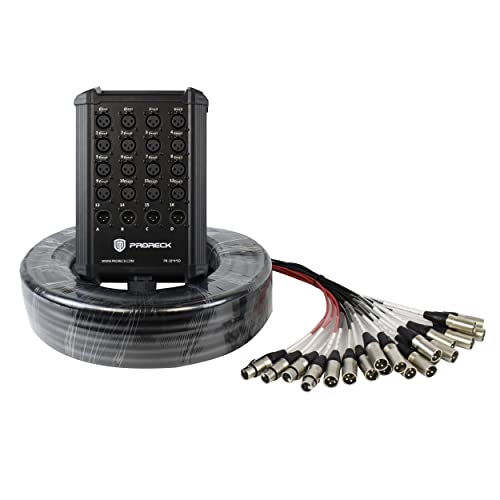
- 50-foot 16-channel XLR splitter snake
- Low-profile box with numbered connectors
- Circuit board design helps reduce external noise
Best For: Live or studio setups that want a compact 16-channel XLR splitter
Dual-Format Return Snake
16 Channel 25' XLR Snake Cable

- 25-foot snake with 16 sends and 8 returns
- 1/4" TRS returns are paralleled on the box
- Braided, heat-resistant, weatherproof build
Best For: Shorter live or studio setups needing XLR sends with TRS-capable returns
Compact Stage Snake
25 ft 16-channel balanced XLR snake

- 16 female-to-male XLR channels
- Balanced, shielded signal path
- Color-coded and numbered for easy setup
Best For: Short live and studio runs
Long-Run Stage Box
100 ft 16-channel snake with returns

- 100-foot snake box for larger stages
- 12 sends plus 4 return channels
- Labeled channels and 100% shielded cable
Best For: Large stages needing long reach and returns
Short Straight-Through Snake
15 ft 16-channel straight XLR snake

- 16 female-to-male XLR channels
- No returns or split, just straight routing
- Color-coded and numbered for quick setup
Best For: Compact stage and patch-bay connections
Road-Ready 16x8 Touring Snake

- 100-foot cable with 16 sends and 8 returns
- Individually shielded 22-gauge pairs
- Steel stage box with labeled, color-coded fantail
Best For: Large live sound setups that need long runs and clear channel labeling
Compact 16-Channel Stage Snake
50' with 12 Sends and 4 Returns
- 50-foot 16-channel snake for live or studio use
- 12 send and 4 return connections
- 22-gauge cable with braided outer material
Best For: Smaller venues and studio setups that want a shorter stage snake
Low-Profile 16-Channel Splitter Snake

- Low-profile stage box reduces footprint
- 100-foot run with labeled sends and returns
- Circuit board tech and individually shielded conductors
Best For: Professional live or studio setups that need a compact stage box and clean routing
Stage-Ready 16×8 Split – 16 Channel XLR Snake Cable 50' Long
If you need 16 channel audio snakes for a larger live setup, this 50-foot XLR snake gives you 16 sends and 8 returns in one run. The stage box is steel, numerically labeled, and designed for self-labeling, while the fantail is color coded and numbered to help keep patching organized.
Best For: Live sound rigs that need a long, heavy-duty 16-send/8-return XLR snake with clear channel identification.
Pros:
- 50-foot length suits wider stage-to-FOH runs
- 16 XLR male sends plus 8 XLR female returns
- Steel stage box with handle for rugged handling
- Individually shielded 22-gauge pairs and heavy-duty strain relief
Cons:
- Heavier build at 27 pounds
- Returns are limited to 8 channels, not a full 16
- Designed for XLR setups only
This is a practical choice when you want a long, clearly labeled snake that prioritizes durability and straightforward channel management over compact size.
Compact Rack Link – 16 Channel TRS 1/4" Snake Cable
For tighter setups, this 16 channel audio snake keeps all the connections in a short 5-foot TRS bundle. It is aimed at professional audio applications where you want a compact, color-coded link between gear such as mixers, audio interfaces, amplifiers, and instruments.
Best For: Short rack, studio, or console-to-device connections where a compact 16-channel TRS snake is easier to manage than a long stage run.
Pros:
- Very short 5-foot length for clean near-rack routing
- 16 TRS 1/4" channels in one cable assembly
- Color-coded ends help with quick identification
- Serviceable ends and gold-tipped connectors
Cons:
- Too short for most stage-to-FOH applications
- TRS format may not fit XLR-based setups
- Only listed as a male-to-male connection style
If your priority is keeping 16 channels neatly grouped over a short distance, this model is more about efficient routing than long-throw flexibility.
Clean Signal Splitter – 16-Channel Low Profile XLR Snake Cable
This 16 channel audio snake is built as a low-profile XLR splitter for live, recording, stage, and studio use. It runs 50 feet and uses numbered connectors on both the box and fantail, with a circuit board design intended to help maintain a solid connection and reduce external noise.
Best For: Users who want a 50-foot 16-channel XLR splitter snake with a lower-profile box and simplified numbering for fast setup.
Pros:
- 16-channel XLR layout with 50-foot cable length
- Low-profile box design for a smaller footprint
- Circuit board construction aimed at cleaner signal handling
- Numbered connectors on both box and fantail
Cons:
- Returns are limited to 4 XLR female connectors on the box
- Listed weight of 9.1 kg suggests a substantial build
- Outdoor use is not specified in the notes
It stands out as a straightforward splitter option when your main goal is orderly channel distribution and a compact stage-box profile.
Dual-Format Return Snake – 16 Channel 25' XLR Snake Cable
Seismic Audio - SAXQ-16x8x25 - 16 Channel 25' XLR Snake Cable with XLR and 1/4" Returns on the Box
Check Price On AmazonIf you want 16 channel audio snakes with flexible return options, this 25-foot model combines 16 XLR sends with 8 returns that are paralleled with 1/4″ TRS on the box end. It is a practical mid-length choice for mixers, interfaces, preamps, and PA systems that may use either XLR or 1/4" TRS connections.
Best For: Compact stage or studio rigs that need 16 XLR sends and return flexibility in a 25-foot snake.
Pros:
- 25-foot length works well for shorter stage runs
- 16 sends plus 8 returns with parallel 1/4" TRS on the box end
- Braided, heat-resistant, and weatherproof construction
- 22-gauge cable with steel outer material
Cons:
- Shorter than 50-foot snake options
- Returns are only 8 channels
- Blue color may not suit every labeling preference
This model is a strong fit when you want a shorter snake that still offers useful return routing and rugged cable construction.
Compact Stage Snake – 25 ft 16-channel balanced XLR snake
Seismic Audio SARLX-16x25 25-Feet 16-Channel XLR Snake Cable for Live, Recording, Studios, Gigs
Check Price On AmazonIf you need one of the more straightforward 16 channel audio snakes for short stage-to-mixer runs, the Seismic Audio SARLX-16×25 keeps things simple with 16 female-to-male XLR channels in a 25-foot layout. Its balanced, shielded construction is aimed at reducing hum and interference, while the numbered and color-coded channels make setup and troubleshooting easier during load-in.
Best For: Live bands, churches, DJs, studios, and small event setups that want a clean 25-foot multichannel XLR run.
Pros:
- 16 XLR channels in a 25-foot straight-through snake
- Balanced and shielded to help reduce noise and interference
- Numbered, color-coded channels speed patching and identification
- Built with 22 AWG copper conductors for pro audio use
Cons:
- 25-foot length may be too short for larger stages
- No returns or split functionality mentioned in the supplied notes
- Best suited to basic straight-through routing rather than flexible routing setups
This is a practical pick if you want a road-ready, no-frills snake for clean channel routing without adding complexity. The feature set is focused on reliable live and studio use rather than extra routing options.
Long-Run Stage Box – 100 ft 16-channel snake with returns
Among 16 channel audio snakes, the Harmony Audio HA-SB16100 is the long-run option for setups that need distance and some return channels. It provides a 100-foot snake box design with 12 sends and 4 returns, plus labeled channels for inputs and returns, making it easier to keep larger stage layouts organized.
Best For: Bigger stages, live sound, and studio installs that need a 100-foot multichannel snake with return lines.
Pros:
- 100-foot length gives you plenty of reach for larger setups
- 12 sends and 4 returns add routing flexibility
- Channels are labeled for inputs and returns
- 100% shielded XLR cable design helps support cleaner signal transfer
Cons:
- At 32.4 pounds, it is heavier than shorter snakes
- May be more cable than needed for small venues
- Return channel layout may not suit users wanting 16 straight sends
If your priority is distance and practical stage-box routing, this model stands out more than a basic straight snake. It is a better fit for larger systems where the extra reach and return lines justify the size.
Short Straight-Through Snake – 15 ft 16-channel straight XLR snake
The Seismic Audio SARLX-16×15 is a compact choice in 16 channel audio snakes when you want a short, clean straight-through XLR run. It uses 16 female connectors to 16 male connectors with no returns or split, and the color-coded, numbered channels are designed to make fast setup and cable management less of a hassle.
Best For: Small stages, patch bays, audio interfaces, and rack setups that need a 15-foot straight-through snake.
Pros:
- 16-channel straight-through XLR layout with no returns
- Balanced connection path for low-noise signal transfer
- Color-coded and numbered channels simplify setup
- Compact 15-foot length helps reduce cable clutter
Cons:
- 15 feet may be too short for wider stage layouts
- No split or return functionality is included
- Best for simple routing rather than more complex stage patching
This model makes sense when you want the shortest, simplest of the three options and do not need return channels. It is a practical fit for straightforward audio runs where organization and a clean path matter most.
Road-Ready 16×8 Touring Snake – 100' Color-Coded Stage Box
If you need one of the more flexible 16 channel audio snakes for live rigs, this Seismic Audio 100-foot model gives you 16 sends and 8 returns in a straightforward, clearly marked layout. It’s built for larger stage setups where long runs, quick identification, and durable hardware matter more than keeping the box compact.
Best For: Bands, venues, and mobile sound crews that need a long, well-labeled 16-send/8-return snake for concerts or recording setups.
Pros:
- 100-foot snake with 16 XLR male sends and 8 XLR female returns
- Color-coded, numerically labeled fantail and stage box for easier setup
- Individually shielded 22-gauge pairs for each channel
- Steel stage box with handle and heavy-duty strain relief on both ends
Cons:
- Large 45-pound build may be more than smaller rigs need
- Only 8 returns, so it may not suit setups needing more monitor lines
- Long 100-foot cable can be excessive for compact stages
This is a practical choice if your priority is length, labeling, and a rugged build rather than a smaller footprint. The clear channel markings and shielded construction should make it easier to manage in busy live sound environments.
Compact 16-Channel Stage Snake – 50' with 12 Sends and 4 Returns
This Harmony Audio option is a shorter take on 16 channel audio snakes, giving you a 50-foot run with 12 sends and 4 returns. It’s a practical fit when you want a stage snake for live sound or studio use without the bulk of a longer 100-foot system.
Best For: Smaller performance spaces, studio setups, and live sound users who want a 50-foot 16-channel snake with fewer return lines.
Pros:
- 50-foot length is easier to manage in tighter spaces
- 16-channel layout with 12 send and 4 return connections
- 22-gauge construction and braided outer material
- Suitable for live sound and studio applications
Cons:
- Fewer returns than some full-featured stage snakes
- No mention of color coding or numeric labeling in the supplied details
- May be less suited to larger stages that need longer cable runs
For buyers who want a simpler, shorter snake, this model keeps the layout straightforward and the cable length manageable. It makes sense when you need a dependable 16-channel connection but do not need the reach or extra return capacity of larger systems.
Low-Profile 16-Channel Splitter Snake – 100' Circuit Board Design
If you want a 16 channel audio snake with a lower-profile stage box, this Seismic Audio splitter cable is built to reduce footprint while still covering a full 100-foot run. It uses circuit board technology and individually shielded conductors, making it a solid fit for professional audio routing where clean connections and organized labeling are priorities.
Best For: Live performances, studio recording, and event setups that benefit from a low-profile 16-channel splitter snake with labeled sends and returns.
Pros:
- Low-profile stage box helps reduce the footprint on stage
- 100-foot cable with a numerically labeled stage box and fantail
- Circuit board technology for solid connector connections
- Individually shielded conductors and nickel-plated XLR return connectors
Cons:
- Only 4 returns, so monitor routing is limited compared with higher-return snakes
- Low-profile design may trade some size for convenience at the stage box
- 100-foot length may be more than needed for small rooms
This is a good fit if you care about a cleaner stage footprint and want the stability of a circuit board-style snake. Its labeled layout and shielded construction make it easier to deploy in professional settings where setup speed and signal integrity both matter.
How We Picked the Best 16 Channel Audio Snakes
We looked for models that balance connector quality, clear labeling, usable cable lengths, and the right send/return configuration for real-world setups. For 16 Channel Audio Snakes, the best choice is usually the one that matches your stage layout more than the one with the most features.
Quick Comparison
Shorter snakes are easier to manage for compact stages and mobile recording setups, while 50-foot and 100-foot options are better when the stage, control position, or isolation room is farther away. Box and loom styles also matter: low-profile board snakes can be easier to place neatly, while traditional stage box designs often suit live workflows.
Key Buying Factors for 16 Channel Audio Snakes
Send and Return Count
Check whether you need 16 sends only or a combination of sends and returns. Some models include return lines for monitor feeds, playback, or talkback, while others are send-heavy for input-heavy sessions.
Connector Type
XLR is the most common choice for microphones and balanced stage audio. TRS models can work well for certain patching and studio uses, but they should match the rest of your gear.
Length and Layout
Choose the shortest length that comfortably reaches your destination. Extra slack can create clutter, signal management headaches, and trip hazards. Longer runs are useful, but only when the room truly needs them.
Build Quality and Labeling
Color coding, numeric labeling, and sturdy strain relief help speed setup and reduce mistakes. For busy live rigs, these details matter almost as much as the copper inside the cable.
Who Should Buy What
Portable bands and small venues should lean toward shorter, easy-to-deploy snakes. Recording studios often benefit from longer, clearly labeled options with flexible routing. Touring users and fixed installs should prioritize durability, consistent channel identification, and the layout that best fits their patch workflow.
If you want the simplest path to a cleaner setup, start with the cable length and routing style that fits your room, then narrow down by connector type and return-channel needs. That approach will usually lead you to the right 16 Channel Audio Snakes without paying for extras you won’t use.