Choosing the right transmission jack can make drivetrain work safer, faster, and far less frustrating. The best options combine low clearance, stable support, and enough lift capacity for the vehicles you service most.
Below, we focus on the strongest low profile transmission jacks for home garages and professional shops, with an eye toward real-world usability, not just specs on paper.
Best 10 Low Profile Transmission Jacks Picks for 2026
Heavy-Duty Low-Profile Lift
AFF 4,400 lb Manual Hydraulic Jack

- 4,400 lb capacity for large drivetrain work
- 8.5-inch low height for low-clearance jobs
- Adjustable saddle, 360° handle, and safety chain
Best For: Trucks, buses, and construction equipment
Class 7/8 Service Choice
OTC 5019A Low-Lift Transmission Jack

- 8-1/4 inch roll-under height
- Includes RoadRanger-compatible adapter
- Swiveling handle for tight service areas
Best For: Heavy-duty truck shops and RoadRanger service
Versatile Hydraulic Pick
VEVOR 2200 lb Adjustable Floor Jack

- 7.28-inch minimum height for low-clearance access
- 2,200 lb capacity for drivetrain tasks
- 360° tray and swivel casters improve positioning
Best For: General garage use on transmissions and axles
Budget Garage Helper
Garvee 450 lb Low Profile Transmission Jack

- 7 to 23 inch range for compact vehicles
- 4 brake wheels and safety straps for control
- Lightweight build is easier to move
Best For: Light garage repairs on car and truck transmissions
Heavy-Duty Low-Clearance Choice
2000 lb Adjustable Hydraulic Transmission Jack

- 6.9-inch minimum height
- 2000 lb lifting capacity
- Telescoping lift with swivel casters
Best For: Low-clearance vehicles and heavier transmission jobs
Shop-Ready Budget Lift
TUFFIOM 1/2 Ton Low Profile Floor Jack

- 6.7-inch low starting height
- 1,000 lb capacity with safety chain
- 360° handle and swivel casters
Best For: Garage and body-shop work with light-to-medium loads
Compact Safety-Focused Pick
450 lb Low Profile Transmission Jack

- 7-inch low profile for clearance
- Locking brake wheels for stability
- 2M safety straps included
Best For: Smaller drivetrain jobs where stability is key
Heavy-Duty Lift Pick
VEVOR Adjustable Floor Transmission Jack 1000 LBS

- 1000 lb capacity for heavier transmission work
- 6.3-inch low profile fits low-clearance vehicles
- 360° tray adjustment and swivel mobility
Best For: Heavier transmissions and demanding garage work
Budget Safety Pick
450 LBS Low Profile Transmission Jack
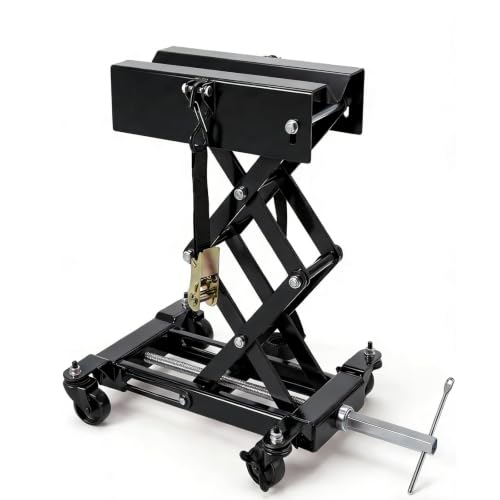
- 450 lb capacity for light-duty service
- 7-23 inch lift range with 7-inch minimum height
- Includes safety straps and lockable swivel casters
Best For: DIY and small-shop transmission work
Stable Garage Pick
Garvee 450 LBS Low Profile Transmission Jack

- 450 lb capacity for routine auto repair
- Double scissor design for better stability
- 7-inch low profile with 4 swivel wheels
Best For: Stable light-duty garage service
Heavy-Duty Low-Profile Lift – AFF 4,400 lb Manual Hydraulic Jack
If you need low profile transmission jacks for large, heavy drivetrain work, this AFF unit is built for clearance and control. Its wishbone design, adjustable saddle, and long rotating handle make it a practical choice for lifting and positioning bigger transmissions, transfer cases, and differentials.
Best For: Trucks, buses, and construction equipment with larger transmissions and drivetrain components.
Pros:
- 4,400 lb capacity for heavy-duty removal and installation work
- 8.5-inch low height helps with low-clearance applications
- Adjustable saddle, corner brackets, and 360° handle improve positioning
- Safety overload mechanism and included chain add security
Cons:
- At 297 lb, it is heavy to move and store
- Designed for larger jobs, so it may be more jack than casual garages need
This is a strong fit if your priority is capacity, stability, and access under low-profile vehicles. The tradeoff is size and weight, but that comes with the heavy-duty construction needed for demanding shop work.
Class 7/8 Service Choice – OTC 5019A Low-Lift Transmission Jack
Among low profile transmission jacks, the OTC 5019A stands out for heavy-duty truck service and tight-space usability. Its 8-1/4 inch roll-under height, swiveling pump handle, and included RoadRanger adapter make it especially relevant for modern aerodynamic trucks and common Eaton Fuller applications.
Best For: Heavy-duty truck shops working on Eaton Fuller RoadRanger transmissions.
Pros:
- 8-1/4 inch minimum height suits low ground-clearance trucks
- Included adapter fits Eaton Fuller RoadRanger transmissions
- Swiveling pump handle helps in restricted work areas
- Adjustable mounting plate and tilt settings support alignment
Cons:
- 2,200 lb capacity is lower than some heavy-duty alternatives
- Additional adapters are sold separately for broader compatibility
If your work centers on Class 7 and 8 trucks, this model offers the kind of fit and maneuverability that matter most. It is a specialized tool, but that specialization is exactly what makes it useful for fleet and drivetrain service.
Versatile Hydraulic Pick – VEVOR 2200 lb Adjustable Floor Jack
If you want low profile transmission jacks for general repair work, this VEVOR model balances reach, mobility, and adjustable support. The 7.28-inch minimum height, 360° swivel front wheels, and tilting tray make it easier to position under low vehicles and line up components during installation.
Best For: General garage use on transmissions, drive shafts, and axles.
Pros:
- Low 7.28-inch minimum height fits under low-clearance vehicles
- 2,200 lb capacity handles transmission and drivetrain work
- 360° tray rotation and up to 30° tilt aid alignment
- Swivel casters and rotatable handle improve movement in tight spaces
Cons:
- Must be used with jack stands supporting the vehicle
- Not intended for the heaviest-duty lifting needs
This is a practical all-around option if you want an adjustable floor jack that is easy to maneuver and set up. It gives you useful low-profile access without stepping into the size and weight of the biggest shop jacks.
Budget Garage Helper – Garvee 450 lb Low Profile Transmission Jack
For lighter-duty jobs, this Garvee model shows how low profile transmission jacks can make compact repair work simpler. Its 7 to 23 inch lift range, brake wheels, and safety straps are aimed at controlled handling of car and truck transmissions in a home garage or smaller shop.
Best For: Light garage repairs on car and truck transmissions.
Pros:
- 7 to 23 inch lift range suits low-clearance vehicles
- 4 universal brake wheels allow movement and locking
- 2M safety straps help secure the load
- Lightweight 45.4 lb design is easier to handle than heavy shop jacks
Cons:
- 450 lb capacity is far below heavy-duty transmission jacks
- Best suited to lighter tasks rather than large transmissions
This is the simplest choice in the group if you value easy handling and basic control over maximum capacity. It works best when the job is smaller and you want a low-profile jack without the bulk of a professional heavy-duty unit.
Heavy-Duty Low-Clearance Choice – 2000 lb Adjustable Hydraulic Transmission Jack
If you need low profile transmission jacks that can slide under vehicles with limited ground clearance, this 2000 lb hydraulic model is built for that job. The low starting height, telescoping lift, and stable wide base make it practical for controlled removal and installation work in a home garage or shop.
Best For: Mechanics who need a higher-capacity jack for low-clearance vehicles and precise transmission alignment.
Pros:
- 6.9-inch minimum height helps it fit under low vehicles more easily.
- 2000 lb capacity supports heavier transmission service tasks.
- Telescoping hydraulic lift helps with accurate positioning during installation.
- 360° swivel front casters improve maneuverability around the shop.
Cons:
- Large size may take up more storage space than lighter-duty options.
- 90-day limited warranty is shorter than some alternatives.
This is a strong pick if capacity and clearance matter more than portability. The steel construction and controlled lift range make it a sensible option for repeated use in demanding automotive work.
Shop-Ready Budget Lift – TUFFIOM 1/2 Ton Low Profile Floor Jack
This option fits the low profile transmission jacks category well if you want a straightforward service tool for shop use. It starts at 6.7 inches, includes a rotating handle and adjustable saddle, and uses a wide reinforced base for steadier lifting and positioning.
Best For: Garage and body-shop users who want a 1,000 lb transmission jack with easy maneuvering.
Pros:
- 6.7-inch minimum height helps it roll under lower vehicles.
- 1,000 lb capacity suits lighter transmission service tasks.
- 360-degree rotating handle and four swivel casters aid positioning.
- Built-in overload system and chain add safety support.
Cons:
- Lower capacity than heavier-duty transmission jacks.
- Weighs about 86-88 lbs, so delivery and handling need care.
- Maximum lift height is 26.4 inches, which may not suit every setup.
For general shop work, this jack offers a balanced mix of low-profile access, maneuverability, and basic safety features. It looks best suited to users who need a dependable mid-duty tool rather than maximum lifting capacity.
Compact Safety-Focused Pick – 450 lb Low Profile Transmission Jack
Among low profile transmission jacks, this 450 lb model is aimed at smaller repair jobs where smooth movement and secure hold matter. The 7-inch low profile, locking brake wheels, and included safety straps make it a practical choice for controlled lifting in tighter spaces.
Best For: Smaller transmission and drivetrain tasks where stability and easy positioning are priorities.
Pros:
- 7-inch minimum height works with low-clearance vehicles.
- Four swivel casters with locking brakes improve secure positioning.
- Included 2M safety straps help keep components fastened during lifting.
- 360° swiveling and tilting saddle supports better alignment.
Cons:
- 450 lb capacity is much lower than heavier shop jacks.
- Best suited to lighter repair jobs rather than large transmissions.
This jack stands out for control and safety features more than raw lifting power. If your work involves lighter components and you want a compact, stable option, it fits that role well.
Heavy-Duty Lift Pick – VEVOR Adjustable Floor Transmission Jack 1000 LBS
If you need one of the more capable low profile transmission jacks for heavier shop jobs, this VEVOR floor jack stands out with its 1000 lb load rating and 6.3-inch minimum height. It is designed to slide under low vehicles, then provide controlled hydraulic lifting plus 360° tray adjustment for transmission alignment.
Best For: Mechanics or serious DIY users who want a higher-capacity low-profile jack for transmissions, axles, and drive shafts.
Pros:
- 1000 lb lifting capacity with a 500 lb transport load rating
- Ultra-low 6.3-inch minimum height for low-clearance vehicles
- 360° rotating tray with width adjustment and up to 30° tilt
- 360° mobility with swivel casters and large fixed wheels
Cons:
- Heavier at 82 pounds, so it is less compact than smaller jacks
- Chains are required to secure parts during use
- Vehicle must be supported with jack stands before operation
This is the strongest option in the group when capacity matters most, and the low entry height helps with challenging undercar access. If you want a low profile transmission jack that emphasizes heavy-duty lifting and precise tray positioning, this VEVOR model is a practical choice.
Budget Safety Pick – 450 LBS Low Profile Transmission Jack
This 450 lb model is a straightforward option if you want low profile transmission jacks for light-duty car and small truck work. It offers a 7-inch minimum height, a 7 to 23 inch lift range, and heavy-duty safety straps to help keep the load secure during removal or installation.
Best For: DIY mechanics and small shops that want a lighter-capacity jack with added load security.
Pros:
- 450 lb capacity for car and light truck transmission work
- 7-inch low profile entry for compact and low-clearance vehicles
- Includes 2M safety straps for more secure handling
- 4 lockable swivel casters for maneuvering and positioning
Cons:
- Lower capacity than heavier-duty alternatives
- 7-inch minimum height is not as low as the VEVOR option
- Manufacturer warranty is listed as 30 days
For users who prioritize a secure, easy-to-move jack over maximum lift capacity, this model covers the basics well. It is a sensible pick for routine garage service where a low profile transmission jack with straps and lockable wheels makes the job easier.
Stable Garage Pick – Garvee 450 LBS Low Profile Transmission Jack
The Garvee model is another solid entry in low profile transmission jacks, with a 450 lb capacity and a 7 to 23 inch lift range for common car maintenance tasks. Its double scissor structure is aimed at steadier load distribution, while the safety straps and swivel wheels support controlled handling in a garage setting.
Best For: Home garages and small repair shops that want a stable, easy-to-position light-duty transmission jack.
Pros:
- 450 lb load capacity for transmission replacement and maintenance
- Double scissor structure helps reduce wobble
- Low profile 7-inch entry works with low-clearance vehicles
- 4 swivel wheels make positioning simpler
Cons:
- Same 450 lb capacity as other light-duty models in this group
- Minimum height is 7 inches, not ultra-low
- Designed mainly for cars and small vehicles, not heavier jobs
If your priority is smoother handling and a stable feel rather than maximum lifting power, this Garvee jack is well matched to that use case. It fits naturally into routine maintenance tasks where a low profile transmission jack needs to be easy to move and steady under load.
How We Picked These Low Profile Transmission Jacks
We compared capacity, minimum and maximum lift height, saddle adjustability, wheel design, and stability features. We also looked for practical shop details like safety straps, telescoping lifts, and casters that roll smoothly under a vehicle without adding unnecessary hassle.
For Low Profile Transmission Jacks, the most important question is whether the jack can fit under the vehicle at full collapse and still reach the transmission safely at working height. That’s why lift range and minimum height matter as much as weight rating.
Quick Comparison
Think of the 10 picks in three groups: heavy-duty jacks for larger transmissions and shop use, mid-capacity models for general automotive work, and lighter-duty options for smaller cars or occasional DIY service. If you need broad versatility, choose a higher-capacity jack with a wider lift range. If space is tight, prioritize a lower collapsed height and compact rolling base.
Key Buying Factors for Low Profile Transmission Jacks
Capacity
Match the jack’s rated capacity to the heaviest transmission you expect to handle, with a margin to spare. A 1/2-ton or 1-ton model is often enough for light- and medium-duty work, while higher-capacity units are better for larger truck or commercial applications.
Lift Range and Minimum Height
The whole point of Low Profile Transmission Jacks is clearance. Check both the minimum collapsed height and the maximum lift height so the jack can slide under the vehicle and still reach the transmission tunnel comfortably.
Stability and Control
Wide bases, locking or brake-equipped casters, and secure saddles help keep the load centered. Safety straps are especially useful when the transmission needs to stay steady during removal or installation.
Build Quality and Mobility
Heavy-duty steel frames, smooth hydraulic action, and quality wheels make the jack easier to position and safer to use. In a shop setting, better casters can save time every single job.
Who Should Buy Which Low Profile Transmission Jacks?
If you work on trucks, diesel applications, or larger drivetrains, start with the higher-capacity models. For everyday passenger vehicles, a mid-capacity jack with a strong lift range and safety straps is usually the smarter value. DIY users and occasional mechanics may prefer a simpler, lighter jack that is easy to store and move around the garage.
Ultimately, the best choice depends on your vehicle mix, available clearance, and how often you’ll use the tool. Focus on fit, stability, and lift range first; extras are only worthwhile once those basics are covered.