Choosing the right stage monitor can make the difference between a confident performance and constant onstage guesswork. The best wedges give you clear vocal monitoring, enough output for the room, and the coverage pattern that fits your setup.
Below, we’ve narrowed the field to 10 practical options for bands, DJs, churches, and small venues, with a focus on sound quality, power, portability, and value.
Best 10 Stage Monitors Picks for 2026
Powered Wedge Monitor
Behringer EUROLIVE F1220D 12" 250W

- 250-watt bi-amped powered wedge
- Feedback filter and integrated limiter
- XLR, TRS/TS, RCA, and Speakon inputs
Best For: Live performers needing a powered 12-inch wedge monitor with feedback control
Pair Stage Monitors
Seismic Audio SA-10MT 10" Wedge Pair
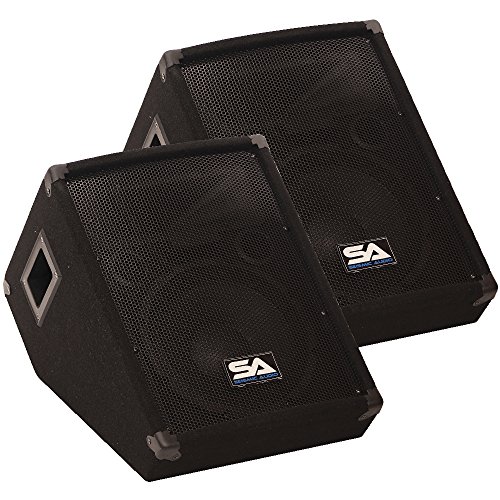
- Two wedge monitors included
- 10-inch two-way design with titanium horn
- 300 watts peak power per speaker
Best For: Bands and venues wanting a matched pair of wired stage monitors
Active Floor Monitor
Behringer EUROLIVE F1320D 300W

- 300-watt powered 2-way monitor
- Feedback filter, limiter, and sound processor
- Bluetooth plus wired connectivity
Best For: Performers and playback setups needing a powered monitor with onboard processing
Classic Floor Monitor

- 12-inch woofer with 1-inch compression driver
- 300W program / 600W peak handling
- Built-in pole socket for stand mounting
Best For: Anyone wanting a dependable 12-inch floor monitor for stage use
Powered Compact Stage Monitor
Sound Town METIS-10MPW 10" 300W Wedge

- Powered 2-way wedge with 10" woofer
- 300W built-in amplifier
- XLR, 1/4", and 1/8" inputs
Best For: Small venues and rehearsals that need an easy powered wedge monitor
Road-Ready 12-Inch Monitor
Peavey PV 12M Floor Wedge 12-Inch
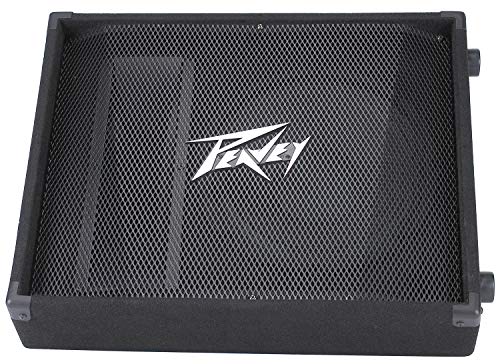
- 12" woofer with titanium compression driver
- 500W program / 1,000W peak handling
- Can angle at 30 or 45 degrees
Best For: Bands and vocalists needing a rugged passive wedge
Passive Daisy-Chain Monitor
Sound Town METIS-10M 10" Passive Wedge

- Passive 8-ohm wedge with 150W RMS / 300W peak
- 10" woofer and 1" compression tweeter
- Parallel 1/4" jacks for daisy chaining
Best For: Portable live setups that need an easy-to-chain passive monitor
Compact Powered Coaxial Monitor
Samson RSXM10A 800W Stage Monitor

- 800 watts of output
- 10-inch coaxial 2-way design
- XLR/1-4-inch combo input with XLR link out
Best For: Live performers and DJs needing a lightweight powered monitor
Dual Powered Wedge Pair

- Pair of powered 10-inch wedge monitors
- XLR combo, 3.5 mm, 1/4-inch, and Speakon inputs
- Built-in 3-band EQ and gain control
Best For: Live sound and studio users needing two powered wedge monitors
High-Power Passive Floor Monitor
Rockville RSM15P 15-Inch Monitor

- 1400 watts peak power
- 15-inch woofer with titanium compression driver
- 70 x 50 degree horn coverage
Best For: DJs and PA setups needing a large passive wedge monitor
Powered Wedge Monitor – Behringer EUROLIVE F1220D 12" 250W
If you need stage monitors with plenty of volume and simple wired hookup options, the Behringer EUROLIVE F1220D is built for live performance and music playback. Its 12-inch woofer, bi-amped 250-watt design, and feedback filter make it a practical pick for performers who want a powered wedge with easy system control.
Best For: Live performers who want a powered 12-inch wedge monitor with feedback control.
Pros:
- 250-watt bi-amped design for strong output
- Adjustable feedback filter and integrated limiter
- Wide connectivity with XLR, 1/4-inch TRS/TS, RCA, and Speakon
- Lightweight for a powered monitor at 23.6 pounds
Cons:
- Wired only, with no wireless options listed
- Mono output mode may be limiting for some setups
- Large 12-inch cabinet takes up floor space
The F1220D is a solid choice if your priority is a powered stage monitor with built-in protection and straightforward connectivity. It balances output, control, and portability well for rehearsals or live use.
Pair Stage Monitors – Seismic Audio SA-10MT 10" Wedge Pair
Seismic Audio - SA-10MT - Pair of 10" Floor / Stage Monitors Wedge Style with Titanium Horn
Check Price On AmazonFor buyers comparing stage monitors for live shows or rehearsal spaces, this Seismic Audio pair gives you two wedge-style cabinets in one package. Each monitor uses a 10-inch two-way design with a titanium compression horn, making it a straightforward wired solution for stage monitoring.
Best For: Bands and venues that want a matched pair of wedge monitors for live monitoring.
Pros:
- Includes two floor/stage monitors in the set
- 10-inch two-way design with titanium compression horn driver
- 300 watts peak power per speaker
- XLR and auxiliary connectivity for wired setups
Cons:
- Wired-only connectivity
- Bulky pair at 44 pounds total
- No waterproofing or outdoor protection listed
This pair is appealing when you want a simple monitor package rather than a single cabinet. The 10-inch format and horn-loaded design fit common live sound needs without adding extra complexity.
Active Floor Monitor – Behringer EUROLIVE F1320D 300W
If you want stage monitors with built-in processing and a bit more headroom, the Behringer EUROLIVE F1320D is aimed at live and playback applications. It combines a 12-inch two-way monitor design with a feedback filter, integrated limiter, and sound processor, which makes it a feature-rich powered option for the stage.
Best For: Performers and playback setups that want a powered monitor with onboard processing.
Pros:
- 300-watt powered 2-way monitor system
- Adjustable feedback filter and integrated limiter
- Integrated sound processor for system control
- Bluetooth listed alongside wired connectivity
Cons:
- Heavier and larger than compact monitors at 33.1 pounds
- Control method is listed as app-based, which may not suit every setup
- Maximum output power is listed lower than the model’s rated wattage
The F1320D stands out if you value onboard control features more than minimalism. It is best suited to users who want a powered floor monitor with protection and processing already built in.
Classic Floor Monitor – Yamaha BR12M 12-inch 2-Way
For stage monitors with a straightforward, no-frills approach, the Yamaha BR12M focuses on proven floor-monitor basics. Its 12-inch woofer, 1-inch compression driver, and 300-watt program rating make it a practical option for stage monitoring, public address, and general sound reinforcement.
Best For: Users who want a dependable 12-inch floor monitor for stage and sound reinforcement use.
Pros:
- 12-inch high-power woofer with 1-inch compression driver
- Built-in pole socket adds stand-mount flexibility
- Rated for 300 watts program and 600 watts peak
- Designed for stage monitoring and sound reinforcement
Cons:
- Passive design requires external amplification
- No wireless or onboard processing features listed
- Heavier than some compact monitor options at 15.6 kg
The BR12M is a sensible choice if you want a traditional monitor cabinet with Yamaha’s emphasis on durability and acoustic balance. It is especially appealing when you need flexible placement and a simple wired setup.
Powered Compact Stage Monitor – Sound Town METIS-10MPW 10" 300W Wedge
If you need stage monitors that are simple to set up and easy to place on the floor, the Sound Town METIS-10MPW is built for practical live sound use. Its powered 2-way design combines a 10-inch woofer with a 1-inch titanium compression driver, while the onboard 3-band EQ helps you make quick adjustments for different rooms and stages.
Best For: Singers, small venues, churches, and rehearsal spaces that want an all-in-one powered wedge monitor.
Pros:
- Integrated 300W amplifier for powered stage monitoring
- XLR line in/out plus 1/4″ aux and 1/8″ MP3 inputs for flexible connections
- 3-band EQ makes it easier to shape sound for the room
- Low-profile wedge build with carpet covering, metal grille, and reinforced corners
Cons:
- Only one monitor is included
- Carpet-covered cabinet may not be the easiest finish to keep spotless
- Designed for basic live use rather than advanced system control
Overall, this is a straightforward powered monitor for users who want dependable output and simple connectivity without extra gear. It’s a solid fit if you need a compact stage monitor that can handle rehearsals and smaller performance setups.
Road-Ready 12-Inch Monitor – Peavey PV 12M Floor Wedge 12-Inch
The Peavey PV 12M is a sturdy option for stage monitors when you want more cabinet size and a driver setup built to project vocals clearly. This 2-way floor monitor uses a 12-inch Sheffield Pro woofer and a titanium-diaphragm compression driver, with angled placement options that help it work well on stage or in a monitoring setup.
Best For: Vocalists, bands, and venues that want a rugged passive floor monitor with strong projection.
Pros:
- 500W program power handling with 1,000W peak capability
- 12″ woofer and 1.4″ titanium compression driver for clear output
- Can be angled at 30 or 45 degrees for flexible positioning
- Heavy-duty metal grille, steel handle, and carpet covering for road use
Cons:
- Passive design requires external amplification
- Larger and heavier than compact 10-inch monitors
- No built-in EQ or onboard amp controls
For users who already have a powered PA setup, this monitor offers a rugged build and a vocal-focused driver combination. It’s a practical choice when durability and stage projection matter more than built-in convenience features.
Passive Daisy-Chain Monitor – Sound Town METIS-10M 10" Passive Wedge
For buyers comparing stage monitors on a budget-friendly passive format, the Sound Town METIS-10M gives you a simple 2-way wedge with a 10-inch woofer and 1-inch compression tweeter. Its parallel 1/4-inch jacks make daisy chaining easy, and the rugged carpet-covered cabinet is built for portable live sound setups.
Best For: DJs, live performers, and portable setups that want a passive monitor with easy chaining.
Pros:
- Passive 8-ohm design with 150W RMS / 300W peak handling
- 10″ woofer plus 1″ compression tweeter for monitoring use
- Parallel 1/4″ jacks support simple daisy chaining
- Metal grille, corners, and recessed handle improve portability
Cons:
- Requires an external amp because it is passive
- Only basic monitor features, with no onboard EQ
- Sound setup depends on the rest of your PA system
This is a practical monitor if you want straightforward stage coverage and flexible chaining without paying for built-in amplification. It makes sense for users who already have matching external gear and want a durable floor wedge.
Compact Powered Coaxial Monitor – Samson RSXM10A 800W Stage Monitor
If you want a compact stage monitor that is easy to place and built for live use, the Samson RSXM10A is a practical 10-inch active option. Its 800 watts of output, coaxial design, and simple XLR/1/4-inch combo input make it a straightforward pick for performers, DJs, and small sound setups that need reliable stage monitoring.
Best For: Live performers, DJs, and sound engineers who want a lightweight powered stage monitor with simple connectivity.
Pros:
- 800 watts of output for strong monitoring volume
- 10-inch woofer plus 1-inch tweeter in a coaxial design
- XLR-1/4-inch combo input and XLR link output for flexible routing
- All-wood cabinet with compact footprint and pole mount receptacle
Cons:
- Mono output only
- Best suited to smaller or simpler monitoring setups
- Wired-only design with no wireless features
The RSXM10A is a solid stage monitor choice if you value portability and a clean, no-fuss feature set. It is especially useful when you need a monitor that can handle live performance duties without taking up much space.
Dual Powered Wedge Pair – Seismic Audio SA-10MT-PW Pair
The Seismic Audio SA-10MT-PW-Pair is a powered 2-way stage monitor pair built in a wedge style for PA, live sound, stage, and studio use. With 10-inch drivers, titanium horns, and built-in controls like 3-band EQ and gain, this set is aimed at users who want a flexible monitor solution for multiple sources and performance spaces.
Best For: Users who need a pair of powered wedge stage monitors for live sound, stage work, or studio monitoring.
Pros:
- Comes as a pair of powered 2-way 10-inch floor monitors
- XLR combo inputs plus 3.5 mm, 1/4-inch, and Speakon connections
- Built-in 3-band EQ and gain control for easy adjustments
- 110V/220V power select switch adds setup flexibility
Cons:
- Heavier than a single compact monitor at 70 pounds for the pair
- Not a wireless system
- Best suited to users comfortable with powered speaker setup
This pair makes sense when you need two matching stage monitors with broad connectivity and onboard tone shaping. It is a more setup-oriented option, but the added flexibility can be valuable in live and studio environments.
High-Power Passive Floor Monitor – Rockville RSM15P 15-Inch Monitor
The Rockville RSM15P is a passive 15-inch stage floor monitor designed for users who want high output and wide coverage from a rugged wedge enclosure. With a 15-inch woofer, 1.75-inch titanium compression driver, and 1400 watts peak power, it is built for loud stage monitoring, DJ use, and PA applications where size and output matter.
Best For: DJs, PA setups, and performers who want a large passive stage monitor with strong output and broad coverage.
Pros:
- 1400 watts peak power for high-output monitoring
- 15-inch woofer with 1.75-inch titanium compression driver
- 70-degree x 50-degree horn coverage for even dispersion
- Dual 1/4-inch and Speakon inputs for flexible wired use
Cons:
- Passive design requires an external amplifier
- Larger and heavier than compact 10-inch monitors
- No built-in Bluetooth or wireless features
If you need a bigger stage monitor with more room-filling output, the RSM15P delivers a strong value proposition. It is best matched with an amp-heavy pro audio setup rather than a simple plug-and-play system.
How We Picked These Stage Monitors
We looked for models that are suitable for real-world live sound use, not just specs on paper. Important factors included driver size, amplifier design or passive compatibility, output capability, feedback rejection, portability, and overall value for performers and venues.
Because Stage Monitors are used in very different environments, we also favored options that cover a range of needs, from budget-friendly passive wedges to powered choices that are easier to deploy quickly.
Quick Comparison
If you want the simplest setup, powered Stage Monitors are usually the faster choice since they reduce the need for external amplification. Passive models can be a better fit if you already own a mixer and power amp, or if you want to build a more flexible rig.
Smaller 10-inch wedges are often easier to move and can be a smart choice for vocals, keys, and compact stages. 12-inch and 15-inch monitors generally offer more low-end presence and can feel more full-range, which may help for fuller band mixes or louder environments.
Key Buying Factors for Stage Monitors
Powered Vs. Passive
Powered monitors simplify setup and are ideal when you need quick deployment, fewer cables, and built-in amplification. Passive Stage Monitors make more sense if you already have compatible amp channels or want to centralize your amplification.
Driver Size and Coverage
Driver size affects both tonal balance and physical footprint. A 10-inch wedge can be easier to position on a crowded stage, while 12-inch and 15-inch designs may deliver a larger sound image. Also pay attention to horn or compression driver design, since that impacts vocal clarity and how well you hear articulation at higher volumes.
Feedback Control and Loudness
Feedback filters, dispersion pattern, and usable SPL matter more than raw wattage alone. Good Stage Monitors should stay intelligible when the mix gets loud, especially for singers who need to hear pitch and timing clearly.
Portability and Placement
Think about how often the monitor will be moved. Lighter cabinets and wedge-friendly footprints are easier for gigging musicians, churches, and mobile DJs. Rugged construction is also important if the monitor will be loaded in and out frequently.
Who Should Buy Which Stage Monitors?
For bands and vocalists who want a straightforward setup, powered Stage Monitors are usually the most convenient. For budget-conscious buyers or users with existing rack gear, passive options can stretch dollars further and integrate well with larger systems.
If your priority is vocal clarity on smaller stages, a 10-inch wedge is often the sweet spot. If you need more body in the monitor mix or plan to use the speaker for broader onstage coverage, a 12-inch or 15-inch model may be the better match. Churches, DJs, and multi-purpose venues should lean toward the option that best balances output, ease of use, and durability for repeated setups.