If you need a compact interface that can handle vocals, instruments, and dual-source sessions, four-channel models are the sweet spot. They offer enough inputs for small bands, podcast setups, and hybrid home studios without moving into rack-sized complexity.
Below, we break down the best audio interfaces with four inputs based on sound quality, driver performance, connectivity, software value, and real-world recording flexibility.
Best 10 Audio Interfaces with Four Inputs Picks for 2026
Studio-Ready 4x4 Value

- 4 inputs / 4 outputs with MIDI I/O
- 24-bit/192 kHz recording and MIDAS preamps
- Metal chassis with +48V phantom power
Best For: Home studios needing a rugged four-input interface with MIDI
Modern Creator Hub
Focusrite Scarlett 4i4 4th Gen

- 4-in/4-out USB-C interface with MIDI I/O
- Two mic preamps, two Hi-Z inputs, four line inputs
- Auto Gain, Clip Safe, and Air mode
Best For: Musicians and producers needing a flexible four-input USB-C interface
Portable Recording Performer

- 4-in/4-out USB-C design with MIDI I/O
- Two mic preamps, hardware monitoring, and LCD
- Loopback support for recording and streaming
Best For: Creators wanting a compact four-input interface with monitoring tools
Streaming-First Four-In Hub

- Four XLR/TRS combo inputs with phantom power
- Studio mode and streaming mode routing
- Direct monitor and loopback support
Best For: Musicians and streamers who need simple routing in a four-input interface
Compact Four-Input Creator Hub

- 4 inputs with combo and TRS connectivity
- Loopback, MIDI I/O, and dual headphone outs
- Includes Ableton Live Lite and other software
Best For: Home studios and content creators needing a compact four-input interface
Low-Latency Recording Workhorse

- Four MAX-HD mic preamps with +75 dB gain
- Low-latency driver and 24-bit/192 kHz support
- Auto Gain and Universal Control app support
Best For: Fast, transparent recording with four mic inputs
Producer-Grade Expansion Interface
Focusrite Scarlett 18i16 4th Gen

- Four mic preamps with 69 dB gain
- 18-in/16-out design with ADAT, S/PDIF, and MIDI
- Auto Gain and Clip Safe for easier sessions
Best For: Expanded recording setups that need four mic preamps and extra I/O
Premium 4x2 USB-C Interface
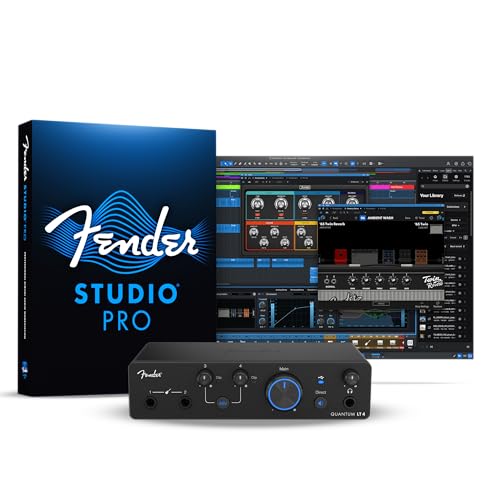
- 4x2 USB-C interface with dual mic preamps and dual instrument inputs
- Loopback, balanced outputs, and headphone amp for monitoring
- Includes Fender Studio app access and 6-month Fender Studio Pro trial
Best For: Musicians and creators who want four inputs with Fender software support
Value 4-Input Recording Interface

- 4 inputs and 4 outputs with combo and TRS connections
- Records up to 24-bit/192kHz with 48V phantom power
- Mono/stereo direct monitoring for delay-free tracking
Best For: Budget-minded musicians, vocalists, and podcasters
Studio-Ready 4×4 Value – Behringer U-PHORIA UMC404HD
If you want audio interfaces with four inputs at a budget-friendly price, the Behringer U-PHORIA UMC404HD is built for straightforward recording. It gives you four inputs and four outputs over USB 2.0, plus MIDI I/O, 24-bit/192 kHz resolution, and MIDAS-designed mic preamps for mic or instrument tracking.
Best For: Home studios that need four input channels, MIDI, and dependable basic recording.
Pros:
- 4×4 USB audio/MIDI interface with 4 inputs and 4 outputs
- 24-bit/192 kHz resolution for high-quality recording
- 4 MIDAS-designed mic preamps with +48V phantom power
- Metal chassis for a more rugged, studio-ready feel
Cons:
- Only two-channel style input count may not suit bigger tracking sessions
- USB 2.0 design is less modern than USB-C interfaces
- Focuses on core recording features rather than advanced workflow extras
The UMC404HD is a practical pick if you need four-input recording without paying for premium extras. It covers the essentials well, especially for musicians who want simple connectivity, phantom power, and MIDI in one box.
Modern Creator Hub – Focusrite Scarlett 4i4 4th Gen
The Focusrite Scarlett 4i4 4th Gen is a strong choice among audio interfaces with four inputs if you want a flexible USB-C hub for mics, guitars, synths, and drum machines. It combines two Scarlett mic preamps, two Hi-Z instrument inputs, four line inputs, four line outputs, and MIDI I/O, along with studio-focused features like Auto Gain and Clip Safe.
Best For: Musicians and producers who need a versatile four-input interface with modern recording tools.
Pros:
- Two mic preamps, two Hi-Z inputs, and four line inputs
- 4-in/4-out design with MIDI I/O and USB-C connectivity
- Auto Gain and Clip Safe help prevent bad takes
- 120dB dynamic range and Air mode for polished recordings
Cons:
- Four line inputs may be more than some simple solo setups need
- Best feature set is most useful if you record with multiple sources
- Includes a power supply, so it is less minimalist than bus-powered-only options
For users who want a flexible four-input interface with modern workflow help, the Scarlett 4i4 stands out. It is well suited to small project studios that need more routing options and useful recording safeguards.
Portable Recording Performer – MOTU M4 4×4 USB-C
The MOTU M4 is a compact option in the audio interfaces with four inputs category, built for recording, mixing, and podcasting over USB-C. It offers 4-in/4-out connectivity, two microphone preamps, MIDI I/O, hardware monitoring, an LCD screen, and loopback support for simple desktop production.
Best For: Creators who want a compact four-input interface with monitoring and loopback.
Pros:
- 4-in/4-out USB-C interface with two microphone preamps
- Hardware monitoring and LCD screen for easier level checking
- Loopback support is useful for podcasting or streaming
- Includes MIDI I/O and low-latency monitoring
Cons:
- Only two mic preamps are built in, so larger mic setups will need more gear
- Compact footprint means fewer front-panel controls than bigger interfaces
- Feature set is focused on utility rather than extra studio processing
The M4 is a smart pick if you want a portable interface that covers the essentials cleanly. Its monitoring tools and loopback features make it especially practical for creators who record and stream from the same device.
Streaming-First Four-In Hub – Zoom AMS-44 4 In / 4 Out
If you are comparing audio interfaces with four inputs for music or livestreaming, the Zoom AMS-44 is designed to keep setup simple. It includes four XLR/TRS combo inputs, four low-noise preamps, 48V phantom power, direct monitoring, and a loopback switch, plus a mode switch for either studio-style routing or streaming-friendly mixing.
Best For: Musicians and streamers who want an easy four-input interface with flexible routing.
Pros:
- Four XLR/TRS combo inputs with four low-noise preamps
- Studio mode and streaming mode for different workflows
- Direct monitoring and loopback without extra software
- USB-C power or AA battery support for portability
Cons:
- Limited to four inputs, so it is not ideal for bigger multi-mic setups
- Only one year of replacement warranty is listed
- Streaming-focused controls may be more than needed for basic recording-only use
The AMS-44 is a good fit when you want four-input capture without a complicated workflow. Its switching between music and streaming modes makes it especially appealing for creators who do both recording and live output.
Compact Four-Input Creator Hub – Arturia MiniFuse 4
If you want audio interfaces with four inputs that are easy to live with, the Arturia MiniFuse 4 is built for recording voice, guitar, synths, and more in a compact USB format. It combines 2 combo mic/inst/line inputs with 2 additional inst/line TRS inputs, plus MIDI I/O and a loopback feature for content creation.
Best For: Home studio users, musicians, and content creators who want a compact 4-input interface with extra creative software.
Pros:
- 4 inputs total: 2 combo XLR inputs with 48V phantom power and 2 Inst/Line TRS inputs
- Includes 2 headphone outputs, 4 balanced line outputs, and 2 USB-A hubs
- Loopback support is handy for voiceovers and in-app or in-game audio capture
- Comes with a long software bundle, including Ableton Live Lite and Analog Lab Intro
Cons:
- Only 1 channel is listed in the product details, so it may not suit every multitrack workflow
- Best suited to compact setups rather than larger recording rigs
This is a practical pick if you want a four-input interface that stays portable without giving up useful extras. The 5-year warranty and extensive reliability testing also make it appealing for buyers who value long-term durability.
Low-Latency Recording Workhorse – PreSonus Quantum ES 4
PreSonus Quantum ES 4 4 x 4, 24-bit / 192 kHz USB-C Audio Interface with Fender Studio Pro Software
Check Price On AmazonAmong audio interfaces with four inputs, the PreSonus Quantum ES 4 stands out for low-latency recording and transparent mic gain. It gives you four newly designed MAX-HD mic preamps with up to +75 dB of gain, plus high-performance converters and USB-C connectivity for modern recording setups.
Best For: Recordists who want four mic inputs, fast monitoring response, and app-based control in a compact interface.
Pros:
- Four MAX-HD mic preamps with up to +75 dB of gain
- Custom low-latency driver and 24-bit / 192 kHz operation
- Auto Gain helps set input levels quickly
- Universal Control app lets you manage key functions from mobile or desktop
Cons:
- Designed around recording workflow rather than lots of onboard hardware extras
- Some users may prefer a larger interface if they need more physical connectivity
The Quantum ES 4 is a strong choice when your priority is clean capture, low latency, and straightforward gain control. Its included Studio One Pro license and Fender co-developed instrument input add extra value for producers and guitarists.
Producer-Grade Expansion Interface – Focusrite Scarlett 18i16 4th Gen
If you need audio interfaces with four inputs but also want room to grow, the Focusrite Scarlett 18i16 4th Gen offers four mic preamps alongside a much larger I/O count. It combines 18 inputs and 16 outputs with Hi-Z, line, ADAT, S/PDIF, and MIDI connectivity, making it suited to more expanded recording sessions.
Best For: Producers and multi-instrument setups that need four mic preamps plus extra expansion options.
Pros:
- Four 4th Gen mic preamps with 69 dB of gain
- High-resolution 24-bit / 192 kHz converters and 122 dB dynamic range
- Auto Gain and Clip Safe help manage recording levels
- Broad connectivity includes ADAT, S/PDIF, MIDI, Hi-Z, and line inputs
Cons:
- Larger and more complex than a basic 4-input interface
- May be more interface than you need if you only want a simple recording setup
The Scarlett 18i16 is best viewed as a serious studio interface that happens to include four high-quality mic preamps. If you want flexibility today and expansion tomorrow, it brings plenty of headroom in one box.
Premium 4×2 USB-C Interface – Fender Quantum LT 4
If you want audio interfaces with four inputs for music production, the Fender Quantum LT 4 gives you a practical 4×2 setup with two MAX-HD mic preamps and two instrument inputs. It is built for home recording, streaming, and content creation, with low-latency drivers, loopback routing, and balanced outputs for a streamlined studio workflow on Mac or PC.
Best For: Musicians, streamers, and creators who want four inputs with Fender’s software and amp-modeling ecosystem.
Pros:
- 4×2 USB-C design with dual mic preamps and dual instrument inputs
- 75 dB gain on the MAX-HD mic preamps for detailed recording
- Loopback, balanced TRS outputs, and a headphone amp for flexible monitoring
- Includes access to Fender Studio app features and a 6-month Fender Studio Pro trial
Cons:
- Best fit if you want Fender software integration, not just basic hardware
- Four channels are split between mic and instrument inputs rather than four mic inputs
This model stands out if you value a creator-friendly interface that combines recording inputs with monitoring and software tools. It is a solid choice for users who want simple connectivity plus Fender’s amp and effects options.
Value 4-Input Recording Interface – OseTub AR007
For buyers comparing audio interfaces with four inputs, the OseTub AR007 offers a straightforward 4-input / 4-output layout with two XLR/1/4″ combo inputs and two balanced 1/4″ TRS inputs. It is aimed at musicians, vocalists, and podcasters who want 24-bit/192kHz recording, phantom power, and direct monitoring without a complicated setup.
Best For: Budget-conscious creators who need flexible input options and simple monitoring.
Pros:
- 4 inputs and 4 outputs for a flexible small-studio setup
- Up to 24-bit/192kHz recording for high-resolution capture
- 48V phantom power for condenser microphones
- Mono/stereo direct monitoring modes for delay-free tracking
Cons:
- Only two inputs are combo jacks; the other two are line-level TRS inputs
- Feature set is practical rather than heavily expanded for advanced workflows
The AR007 is a sensible pick if you want a simple interface that still covers recording, monitoring, and playback needs. Its mix of combo and TRS inputs makes it useful for basic multi-source sessions.
Low-Latency 4-Channel Studio Interface – Depusheng 4 Channel
If you are shopping for audio interfaces with four inputs for a home studio, the Depusheng 4 Channel model is built around 4-channel combo inputs, ASIO drivers, and 24-bit/192kHz recording. It adds +48V phantom power, Hi-Z switches, direct and DAW monitoring, and four TS main outs, making it a versatile option for PC or Mac recording setups.
Best For: Home-studio users who want low-latency recording with four input channels and ASIO support.
Pros:
- 4-channel CH1-CH4 combo inputs for mics, guitars, and line sources
- ASIO drivers for low-latency monitoring and recording
- 24-bit/192kHz support with +48V phantom power
- Includes Hi-Z switches, mono/stereo switching, and four TS main outs
Cons:
- Details emphasize Windows compatibility in the supplied specs
- Driver-based workflow may be more involved than plug-and-play options
This interface is a strong fit when low latency matters as much as input count. The combo inputs and monitoring tools make it practical for tracking vocals, instruments, and line sources in one compact unit.
How We Picked the Best Audio Interfaces with Four Inputs
We focused on Audio Interfaces with Four Inputs that deliver dependable recording performance, usable monitoring options, and clear value for home studio and content-creation workflows. Priority went to models with strong preamps, stable drivers, sensible I/O layouts, and modern USB-C or USB connections. We also considered latency, MIDI support, phantom power, and whether the interface is suited to vocals, guitars, podcasts, or small ensemble tracking.
Quick Comparison
The right choice depends on how you record. Some Audio Interfaces with Four Inputs are built for singer-songwriters and podcasters who need simple operation and clean gain. Others add extras like better metering, loopback, higher headroom, or more flexible line outputs for monitor mixes and external gear.
Key Buying Factors for Audio Interfaces with Four Inputs
Input Type and Flexibility
Check whether the four inputs are mic, line, or instrument capable. Combo jacks are usually the most versatile, especially if you plan to switch between microphones, guitars, synths, and outboard gear.
Preamps, Phantom Power, and Gain
For recording vocals and acoustic instruments, preamp quality matters as much as channel count. Make sure the unit offers clean gain, enough headroom, and 48V phantom power if you use condenser microphones.
Monitoring and Latency
Direct monitoring and low-latency drivers are important when recording with software effects or tracking multiple performers. If you stream or podcast, loopback and stable real-time monitoring can be especially useful.
Outputs, MIDI, and Expandability
Consider how many outputs you need for speakers, headphones, or external processing. MIDI I/O is a plus for keyboard players and producers, while extra line outs can make a modest interface more studio-ready.
Who Should Buy Which Audio Interfaces with Four Inputs?
Singer-songwriters and solo creators should look for compact, easy-to-use models with solid mic preamps and reliable monitoring. Podcasters and streamers may prefer interfaces with loopback and straightforward routing. Small bands and multi-instrument setups should prioritize four-input units with flexible input switching, strong gain structure, and enough outputs for headphones or monitors. If you expect to expand your setup, choose one of the more feature-rich Audio Interfaces with Four Inputs so you have room to grow without replacing the interface too soon.
In short, match the interface to your workflow first, then compare sound quality, driver support, and connectivity before deciding.