The best portable DACs for Android can make wired headphones sound cleaner, louder, and more detailed without adding much bulk to your phone. The right model depends on your headphones, connection type, power needs, and whether you want a simple dongle or a feature-rich amplifier.
We selected 10 portable options ranging from affordable 3.5mm adapters to balanced 4.4mm DAC amps, including compact models for everyday use and more powerful choices for demanding headphones.
Best 10 Portable Dacs for Android Picks for 2026
Best High-Power Pick

- Up to 550mW in Desktop mode
- 3.5mm and 4.4mm outputs
- PCM 384kHz/32-bit and DSD256
Best For: Android listeners needing substantial output power
Best With On-Device Controls

- Dual CS43131 DAC design
- 3.5mm and 4.4mm outputs
- Physical controls and Android 8-band EQ
Best For: Android listeners who value buttons and sound customization
Best Compact 3.5mm Dongle

- About 8.5g and highly compact
- Up to 32-bit/384kHz playback
- Up to 200mW at 32Ω
Best For: Daily Android listening with standard 3.5mm headphones
Best Android EQ Flexibility

- 10-band parametric EQ for Android
- 3.5mm and 4.4mm outputs
- 10g body with 32-bit/384kHz decoding
Best For: Android listeners who want extensive sound customization
Premium Wood Tuning

- Dual CS43131 DACs support PCM 384kHz/32-bit and DSD256
- 10-band PEQ with app and web control
- 3.5mm and 4.4mm headphone outputs
Best For: Android listeners seeking customizable sound and a premium wood build
High-Power Balanced Output

- ES9028Q2M DAC supports PCM 384kHz and DSD256
- 4.4mm balanced and 3.5mm outputs
- Up to 220mW output with 100-level volume control
Best For: Android users needing extra headphone-driving power
Ultra-Light Direct Plug-In
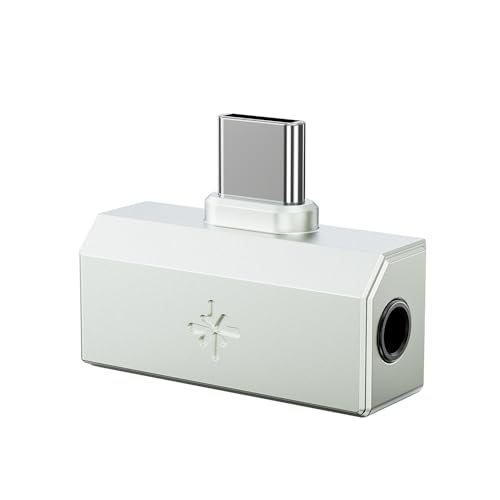
- 7g direct plug-in aluminum design
- Android 10-band PEQ and FiiO Control support
- 3.5mm output with simultaneous Type-C charging
Best For: Android listeners prioritizing minimal size and convenient charging
Best Compact Hi-Res Pick
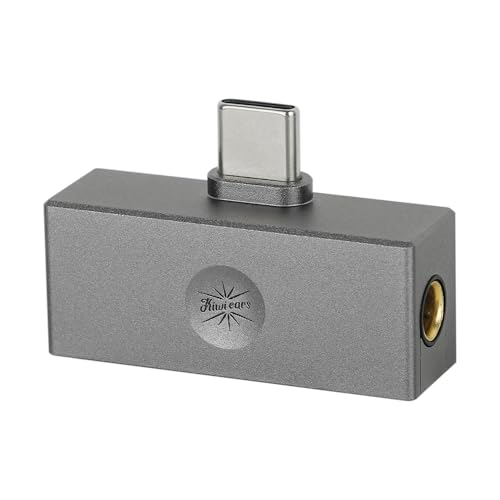
- Compact aluminum-alloy construction
- 3.5mm and 4.4mm outputs
- Supports PCM 384kHz and DSD128
Best For: Android listeners wanting flexible outputs in a small DAC
Best Powerful Battery-Powered Pick

- Up to 400mW amplifier power
- 6–8 hours of stated battery life
- 3.5mm and 4.4mm outputs
Best For: Android users driving demanding headphones on the go
Best Lightweight Balanced Dongle

- Lightweight 15g dongle design
- Balanced 4.4mm output up to 241mW
- PCM 384kHz and native DSD256 support
Best For: USB-C Android users seeking a compact balanced DAC
Best High-Power Pick – FiiO KA13
The FiiO KA13 is a strong choice among portable dacs for android users who want more output power than a basic dongle provides. Its dual outputs, high-resolution support, and optional Desktop mode make it suitable for both everyday IEMs and more demanding headphones.
Best For: Android listeners who need high power and both 3.5mm and 4.4mm connections.
Pros:
- Desktop mode delivers up to 550mW through the balanced output.
- Includes 3.5mm and 4.4mm headphone outputs.
- Supports PCM up to 32-bit/384kHz and DSD256.
- FIIO Control app supports lighting, filters, and other settings.
Cons:
- Desktop mode is likely more power than efficient earbuds require.
- Its feature set may be more than needed for simple 3.5mm listening.
Choose the KA13 if driving power and connection flexibility matter most. It is especially appealing for Android users with full-size headphones or balanced cables.
Best With On-Device Controls – TRN Black Pearl
The TRN Black Pearl combines dual-DAC decoding with physical playback controls, making it a practical option among portable dacs for android. It supports both common 3.5mm headphones and 4.4mm balanced setups, while its Android app adds an 8-band EQ.
Best For: Android users who want buttons, app-based EQ, and flexible headphone outputs.
Pros:
- Dual CS43131 DACs support PCM up to 32-bit/384kHz and DSD256.
- Offers 3.5mm and 4.4mm outputs with up to 320mW at 32Ω through balanced output.
- Built-in buttons control volume, playback, and track changes.
- Supports calls, recording, and inline controls through compatible 3.5mm headsets.
Cons:
- The 8-band EQ requires the WALK PLAY app and a compatible Android connection.
- Only one headphone output should be used at a time.
The Black Pearl stands out when convenience is as important as decoding performance. Its controls and call support make it more versatile for everyday phone use than a control-free dongle.
Best Compact 3.5mm Dongle – FiiO KA11
The FiiO KA11 is a compact pick for Android users who want a simple USB-C-to-3.5mm upgrade. It weighs about 8.5g, supports high-resolution playback, and provides enough stated output power for many everyday headphones.
Best For: Android users seeking a lightweight 3.5mm dongle for daily music, gaming, and calls.
Pros:
- Very small design measuring about 44 x 9.7 x 10.5mm.
- Supports PCM up to 32-bit/384kHz.
- Provides up to 200mW at 32Ω and 245mW at 16Ω.
- UAC1.0 mode supports plug-and-play use with devices such as Switch and PS5.
Cons:
- Provides only a 3.5mm output, without balanced connectivity.
- Its output is less suited to especially demanding headphones than higher-powered options.
The KA11 is the straightforward choice in this group. Pick it when low weight, a 3.5mm connection, and broad device support matter more than balanced output or extensive controls.
Best Android EQ Flexibility – BQEYZ C30
The BQEYZ C30 is aimed at Android listeners who want to shape their sound rather than rely on a fixed tuning. Its Android and web-based 10-band parametric EQ, dual outputs, and 10g aluminum body give it a flexible feature set for portable listening.
Best For: Android users who want detailed EQ control in a lightweight dual-output DAC amp.
Pros:
- 10-band parametric EQ allows adjustment of frequency, Q value, gain, and filters.
- Includes 3.5mm and 4.4mm outputs.
- Supports PCM decoding up to 32-bit/384kHz.
- Compact 10g CNC aluminum design supports Android, iOS, Windows, macOS, and HarmonyOS.
Cons:
- EQ functionality is not supported on iOS.
- Its stated 57mW output at 32Ω is lower than the higher-powered options here.
- Output performance may vary depending on the connected device.
The C30 makes the most sense for Android users who actively customize their sound. It is lightweight and versatile, though listeners with power-hungry headphones may prefer a stronger amplifier.
Premium Wood Tuning – FiiO Melody Portable DAC
The FiiO/Snowsky Melody is a distinctive choice among portable dacs for android, combining dual-DAC decoding with a walnut housing and app-based sound customization. It supports PCM up to 384kHz/32-bit and DSD256, while offering both 3.5mm single-ended and 4.4mm balanced outputs.
Best For: Android listeners who want premium materials, adjustable sound, and both balanced and single-ended headphone connectivity.
Pros:
- Walnut/maple construction with an ergonomic curved design and tactile controls
- Dual CS43131 DACs support PCM 384kHz/32-bit and DSD256
- 10-band PEQ through the FiiO Control App or web interface
- 3.5mm and 4.4mm outputs, detachable cables, and UAC mode switching
Cons:
- Not water resistant
- Headset controls may be restricted on some iOS and Android devices
- The wood-focused design may be less compact than a simple dongle
Melody stands out for listeners who value hands-on control and a more luxurious build than typical USB dongles. Its flexible outputs and PEQ make it a versatile option for Android and other devices.
High-Power Balanced Output – MECHEN AP10 USB DAC
The MECHEN AP10 is a powerful pick among portable dacs for android, with an ES9028Q2M DAC, 3.5mm and 4.4mm outputs, and support for PCM 384kHz and DSD256. Its high output and 100-level volume adjustment make it suitable for a wide range of headphones.
Best For: Android users who need strong headphone drive, balanced output, and a straightforward USB-C setup.
Pros:
- Supports PCM 384kHz/32-bit and DSD256 decoding
- Offers 4.4mm balanced and 3.5mm single-ended outputs
- Up to 220mW output, with stated SNR above 120dB
- 100-level volume adjustment with volume memory
Cons:
- Its higher output may be more than needed for efficient earbuds
- The supplied notes do not specify app-based equalizer controls
- Requires a cable connection rather than a direct plug-in design
AP10 is focused on output capability and broad compatibility rather than decorative extras. It can serve as an Android dongle, computer sound card, or balanced headphone amplifier in a compact metal-style enclosure.
Ultra-Light Direct Plug-In – FiiO Tiny A Portable DAC
The FiiO/Snowsky Tiny A is one of the most convenient portable dacs for android when minimal bulk matters. Its direct plug-in format weighs 7g, supports PCM 384kHz/32-bit and DSD256, and includes Android app control for 10-band PEQ and other settings.
Best For: Android users who want the smallest practical DAC with built-in sound customization and simultaneous charging.
Pros:
- 7g CNC-machined aluminum body with a compact direct plug-in design
- 10-band PEQ, preset switching, and volume control through FiiO Control on Android
- Supports PCM 384kHz/32-bit and DSD256
- 3.5mm headphone jack and Type-C charging port allow playback while charging
Cons:
- Control app is supported on Android and not iOS
- Only a 3.5mm headphone output is listed
- Direct plug-in positioning may be less convenient with some phone cases
Tiny A prioritizes portability and practical Android features over multiple headphone outputs. Its charging pass-through design and PEQ controls make it particularly appealing for phone-based listening on the move.
Best Compact Hi-Res Pick – Kiwi Ears Allegro Mini
If you want portable DACs for Android that stay compact without giving up connection flexibility, the Kiwi Ears Allegro Mini is a strong option. Its USB-C interface supports Android devices running version 5.1 and above, while both 3.5mm and 4.4mm outputs accommodate different headphones and IEMs.
Best For: Android listeners who want a small, durable DAC with both single-ended and balanced outputs.
Pros:
- Compact aluminum-alloy body designed for portability and durability
- Provides both 3.5mm and 4.4mm headphone outputs
- Supports PCM up to 32-bit/384kHz and DSD128
- Plug-and-play compatibility with Android 5.1 and newer
Cons:
- Does not include a built-in battery, according to the supplied details
- Its 4.4mm balanced output requires compatible headphones or an adapter
The Allegro Mini is a practical choice when portability and output versatility matter most. Its high-resolution support and low stated THD+N make it well suited to detailed listening from an Android phone or PC.
Best Powerful Battery-Powered Pick – iFi hip-dac2 Gold Edition
Among portable DACs for Android, the iFi hip-dac2 Gold Edition stands out for combining a rechargeable design with a more powerful headphone amplifier. It connects through USB and offers both 3.5mm unbalanced and 4.4mm balanced outputs for IEMs and over-ear headphones.
Best For: Android users who need extra amplification and want a portable DAC with battery-powered operation.
Pros:
- Provides up to 400mW of maximum amplifier power
- Offers 3.5mm unbalanced and 4.4mm balanced outputs
- Rated for approximately 6–8 hours of battery life depending on use
- Supports high-resolution formats including Tidal MQA, according to the supplied notes
Cons:
- Heavier and larger than a typical dongle, weighing 0.23kg
- Uses a USB input only, so a suitable smartphone cable may be needed
The hip-dac2 Gold Edition is the better fit for listeners whose headphones need more power than a basic dongle can provide. Its battery, balanced output, and broad format support make it versatile, though less minimal than cable-powered alternatives.
Best Lightweight Balanced Dongle – iFi Go Link Max
The iFi Go Link Max is a convenient choice if you want portable DACs for Android in a lightweight dongle format. Its USB-C connection is plug-and-play with compatible devices, and it includes both 3.5mm and balanced 4.4mm headphone outputs.
Best For: Android and other USB-C device users who prioritize low weight, high-resolution playback, and balanced output support.
Pros:
- Very light design at a stated 15g
- Balanced 4.4mm output delivers up to 241mW of power
- Supports 32-bit/384kHz PCM and native DSD256
- Flexible cable helps portability and reduces stress on USB sockets
Cons:
- Compatibility is listed for devices with USB-C ports, so older Android phones may need an adapter
- It lacks the separate battery-powered design of the hip-dac2
The Go Link Max makes sense for commuters and mobile listeners who want a small, easy-to-carry upgrade. Its 4.4mm output and high-resolution support add flexibility, while the lightweight cable-mounted design keeps it unobtrusive.
How We Picked the Best Portable Dacs for Android
We focused on models that connect conveniently to Android devices and offer a meaningful upgrade over a phone’s built-in audio hardware or a basic USB adapter. Our comparison considers output options, amplification, codec and format support, portability, controls, compatibility, and overall value.
Because Android phones vary in USB-C behavior, software support, and available power, we also favored products with clear connection methods and practical output choices. A DAC that looks impressive on paper is not necessarily the best match for every listener, so headphone compatibility and everyday convenience remain central to our recommendations.
Quick Comparison
| Type | Best For | Output Options | What to Expect |
|---|---|---|---|
| Basic USB-C dongle | Efficient IEMs and earbuds | 3.5mm | Small, simple, and usually the most affordable |
| Balanced dongle DAC | IEMs and portable headphones | 3.5mm and/or 4.4mm | More flexibility and potentially higher output |
| Feature-rich portable DAC | Enthusiasts and mixed headphone collections | 3.5mm and 4.4mm | More power, tuning options, and controls |
| Battery-powered DAC amp | Harder-to-drive headphones | Balanced and unbalanced | Greater power, but more size and charging |
Key Buying Factors for Portable Dacs for Android
Connector and Android Compatibility
Most current models use USB-C, but confirm that your phone supports USB audio and that the included cable or adapter fits your device. Some phones may display a USB accessory prompt or require audio output to be enabled manually. iPhone compatibility can also vary, even when a product supports multiple platforms.
3.5mm Versus 4.4mm Output
A 3.5mm output works with the widest range of headphones and IEMs. A 4.4mm balanced output can provide additional power and channel separation, but it requires a compatible balanced cable. Do not connect a balanced cable to an incompatible adapter or use a balanced output with headphones wired for a shared ground.
Power and Headphone Matching
Efficient IEMs generally need very little power, making a compact dongle ideal. Full-size or high-impedance headphones may benefit from a stronger amplifier, particularly at higher listening levels. More power does not automatically mean better sound, and excessive output can make sensitive earphones harder to use quietly.
Features, Size, and Battery Life
Look for volume buttons, gain controls, physical playback controls, EQ, app support, and display features only when you will use them. Bus-powered dongles are convenient because they do not need separate charging, while battery-powered units can offer more output but add weight and another device to maintain.
Who Should Buy Which Portable Dacs for Android?
Choose a Simple Dongle If:
You mainly use efficient earbuds or IEMs and want a pocket-sized improvement with minimal setup. A 3.5mm model is the easiest choice for standard wired headphones.
Choose a Dual-Output Model If:
You own both standard and balanced headphones, or you want room to upgrade your cable later. These Portable Dacs for Android offer greater flexibility without requiring a separate desktop amplifier.
Choose a Powerful DAC Amp If:
You use demanding over-ear headphones, need higher listening headroom, or want advanced tuning controls. Be prepared for a larger footprint, higher power consumption, and possible battery management.
Before buying, confirm your headphone connector, desired output, phone compatibility, and power requirements. Those four checks usually matter more than maximum sampling-rate numbers.