The best sealed subwoofers deliver tight, controlled bass without the port noise or larger cabinet footprint associated with many ported designs. That makes them especially appealing for music listening, compact rooms, and systems where precise integration matters.
This roundup compares 10 sealed and compact subwoofer options across multiple price and performance levels, including compact dual-driver models, affordable entry-level choices, and high-output designs for serious home theater.
Best 10 Sealed Subwoofers Picks for 2026
Best Overall

- 12-inch driver with 325W RMS amplification
- App-based DSP tuning and custom presets
- Compact, rigidly braced sealed cabinet
Best For: Powerful, adjustable bass in a compact sealed design
Best Budget Pick
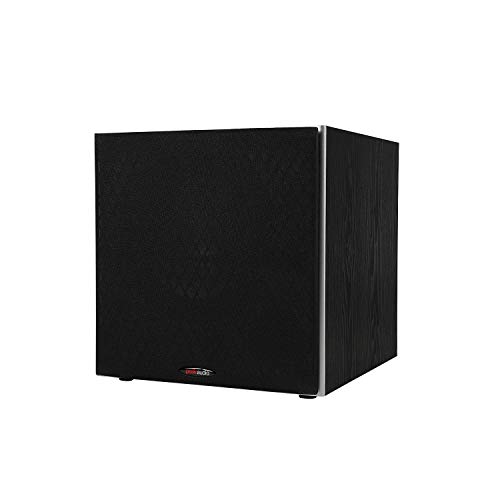
- 10-inch driver for compact-room bass
- 100W maximum built-in amplification
- Flexible crossover and speaker-level inputs
Best For: Affordable bass upgrades in small-to-mid-size rooms
Best Compact Premium

- Dual opposing 8-inch drivers
- 800W RMS amplifier with substantial peak headroom
- Advanced app DSP in an ultra-compact sealed cabinet
Best For: Premium bass performance where space is limited
Best High-Output Alternative

- 12-inch spun-copper woofer
- 400W peak output and up to 116dB acoustic output
- Rear-firing bass-reflex design for home theater impact
Best For: Energetic home theater bass when sealed construction is not required
Premium Sealed Power

- 550W RMS with 1,500W peak power
- 12-inch high-excursion driver
- DSP control via smartphone app
Best For: Powerful home theater and music systems
Everyday Theater Bass

- 10-inch front-firing IMG woofer
- 300W peak all-digital amplifier
- RCA and LFE inputs with phase control
Best For: Traditional wired home theater and gaming setups
Compact Sealed Specialist

- Compact approximately 11-inch footprint
- 8-inch driver with 300W peak power
- High-pass filter and phase switch
Best For: Small rooms, desktops, and tight audio setups
Best Value Pick

- 12-inch copper-spun woofer
- 400 watts of dynamic power
- Line/LFE inputs with phase control
Best For: Accessible home theater bass
Premium Smart Pick

- 13-inch high-excursion driver
- Automatic room EQ
- App-based DSP and tuning controls
Best For: Precision-focused home theater and music systems
Deep Bass Powerhouse

- 15-inch sealed glass-fiber driver
- 475W RMS amplifier
- 14Hz ±3dB response with XLR connectivity
Best For: Large-room, high-output home theater bass
Best Overall – SVS SB-1000 Pro
SVS SB-1000 Pro Subwoofer (Black Ash) | 12-in Driver, 325 Watt RMS, Sealed Cabinet
Check Price On AmazonThe SVS SB-1000 Pro is a strong all-around choice among sealed subwoofers for listeners who want room-filling bass from a relatively compact cabinet. Its 12-inch driver, 325-watt RMS amplifier, DSP controls, and app-based tuning make it flexible for both music and home theater.
Best For: Buyers seeking powerful, adjustable bass in a compact sealed design.
Pros:
- 12-inch high-excursion driver delivers substantial output with controlled response.
- 325 watts RMS and more than 820 watts peak power provide strong headroom.
- Smartphone app offers volume control, presets, crossover adjustments, and room tuning.
- Rigidly braced MDF cabinet is designed to minimize resonance.
Cons:
- Its advanced features may be more than needed for a basic system.
- It is a corded subwoofer rather than a fully wireless speaker.
The SB-1000 Pro stands out when you want sealed-cabinet precision without giving up output. App control and room-tuning options also make it easier to integrate into changing setups.
Best Budget Pick – Polk Audio PSW10
The Polk Audio PSW10 is a straightforward powered subwoofer for shoppers who want more bass without a complex setup. Although it is ported rather than sealed, its compact 10-inch design, built-in amplifier, and flexible connections make it a practical alternative for smaller rooms.
Best For: Budget-conscious home audio users upgrading a small-to-mid-size room.
Pros:
- 10-inch driver adds bass depth and punch for music and movies.
- Built-in amplifier provides 50 watts RMS and up to 100 watts of power.
- Continuously variable 80–160 Hz crossover supports system matching.
- Includes line-level and speaker-level connections plus a phase switch.
Cons:
- It is a bass-reflex design, so it is not a sealed subwoofer.
- Its 40–160 Hz frequency response is less extended than the SVS models here.
- It offers substantially less amplifier power than the higher-end options.
The PSW10 makes sense when affordability and easy integration matter more than maximum output or sealed-cabinet construction. Its connection options are useful for older and simpler receivers.
Best Compact Premium – SVS 3000 Micro
The SVS 3000 Micro is one of the most space-conscious sealed subwoofers in this group. Its dual opposing 8-inch drivers, 800-watt RMS amplifier, and sophisticated app-based DSP are designed to deliver substantial bass from a cabinet measuring about 11 inches on each side.
Best For: Premium systems where strong bass and a very small footprint are priorities.
Pros:
- Dual opposing 8-inch drivers produce high output from a compact cabinet.
- 800 watts RMS and more than 2,500 watts peak power offer considerable headroom.
- App provides presets, crossover control, polarity, room gain, and parametric EQ.
- Sealed cabinet uses thick MDF side baffles and rigid internal bracing.
Cons:
- Its compact 8-inch drivers may not suit buyers specifically seeking a single large driver.
- The premium feature set may be excessive for basic audio systems.
The 3000 Micro is especially compelling when placement is difficult but performance expectations remain high. Dual drivers and extensive DSP give it a distinctive combination of small size, output, and tuning control.
Best High-Output Alternative – Klipsch R-120SW
The Klipsch R-120SW is a powered 12-inch subwoofer built for home entertainment systems that favor strong output. It is a bass-reflex model rather than one of the sealed subwoofers in this roundup, but its 200-watt amplifier, 400-watt peak output, and rear-firing port make it a notable alternative.
Best For: Home theater users who prioritize energetic bass and high acoustic output.
Pros:
- 12-inch spun-copper woofer supports powerful low-frequency playback.
- 200 watts of amplifier power and 400 watts peak output provide strong drive.
- Rated acoustic output reaches 116 dB according to the supplied specifications.
- Includes a grille, manual, power cord, and RCA connectivity.
Cons:
- It is ported, not sealed, so it does not offer sealed-cabinet behavior.
- Its 19.2-inch depth requires more placement space than the compact SVS models.
- Supplied notes list remote control, but no app-based tuning system.
The R-120SW is a sensible pick when cinematic impact matters more than a compact sealed enclosure. Its large driver and ported cabinet emphasize output, while the straightforward RCA connection keeps installation simple.
Premium Sealed Power – SVS SB-2000 Pro
The SVS SB-2000 Pro is a powerful option for listeners comparing sealed subwoofers for home theater or music. Its 12-inch high-excursion driver, 550-watt RMS output, and app-based control provide substantial bass with convenient tuning from a compatible smartphone.
Best For: Home theater and music setups where strong output, DSP control, and premium styling matter.
Pros:
- 550 watts RMS and 1,500 watts peak power
- 12-inch high-excursion driver in a sealed enclosure
- DSP control with smartphone app availability
- Piano gloss finish suits polished home theater spaces
Cons:
- Larger and heavier than compact sealed subwoofers
- Wired subwoofer connectivity; app features use Bluetooth and Wi-Fi protocols
- Not water resistant
The SB-2000 Pro is the performance-focused choice in this group. Its combination of amplifier power, driver size, and DSP app control makes it a strong fit when bass capability and adjustment flexibility take priority over a small footprint.
Everyday Theater Bass – Klipsch R-100SW
The Klipsch R-100SW is a straightforward choice for shoppers seeking sealed subwoofers for a TV, gaming console, or home theater system. Its front-firing 10-inch spun-copper IMG woofer pairs with a 150-watt continuous, 300-watt peak amplifier and practical RCA connectivity.
Best For: Home theater and gaming setups needing accessible bass with simple wired receiver integration.
Pros:
- 10-inch front-firing spun-copper IMG woofer
- 300 watts peak amplifier power
- Low-pass crossover and 0/180-degree phase control
- RCA line-level and LFE inputs support receiver compatibility
Cons:
- Less amplifier power than the SVS SB-2000 Pro
- No wireless communication technology
- Heavier and taller than the compact Kanto model
The R-100SW emphasizes familiar controls and broad receiver compatibility rather than advanced app tuning. It is a sensible pick for a conventional wired setup where 32Hz–120Hz response and adjustable crossover and phase controls cover the essentials.
Compact Sealed Specialist – Kanto SUB8VMB
Kanto SUB8VMB Sealed Powered Subwoofer | 300W Peak Power | 8" Woofer | Matte Black
Check Price On AmazonThe Kanto SUB8VMB is designed for shoppers who need sealed subwoofers without giving up valuable floor or desk space. Its compact roughly 11-inch footprint, 8-inch driver, and 300-watt peak output make it suitable for smaller rooms, desktop systems, and compact home theater setups.
Best For: Small living spaces, desktop audio, gaming setups, and music production stations with limited room.
Pros:
- Compact 11-inch-wide, 11-inch-deep design
- Sealed enclosure emphasizes quick, low-distortion bass response
- Adjustable high-pass filter and phase switch aid system integration
- Universal AC 100V–240V, 50/60Hz power supply
Cons:
- 8-inch woofer offers less scale than larger models
- Wired RCA connectivity with no wireless communication
- Not water resistant
The SUB8VMB is the most space-conscious option here. Its compact cabinet and integration controls make it easier to place in tight environments, while the 35Hz–175Hz stated frequency range supports a broad range of music, gaming, and theater applications.
Best Value Pick – Klipsch R-12SW
The Klipsch R-12SW is a practical entry point for shoppers seeking sealed subwoofers-style control in a home theater or stereo setup. Its 12-inch copper-spun woofer, 400-watt dynamic amplifier, and wired line/LFE inputs make it easy to pair with many receivers.
Best For: Home theater listeners who want powerful, straightforward bass from a well-equipped 12-inch subwoofer.
Pros:
- 12-inch front-firing copper-spun woofer
- 400 watts of dynamic amplifier power
- Line/LFE inputs, low-pass crossover, and phase control
- Designed for both music and movies
Cons:
- The supplied notes do not identify the enclosure as sealed
- Wired connectivity only, with no wireless communication
- Large floor-standing cabinet
The R-12SW offers a sensible balance of output and setup flexibility, although shoppers specifically requiring a confirmed sealed cabinet should verify the enclosure design before buying.
Premium Smart Pick – SVS SB-3000 R|Evolution
The SVS SB-3000 R|Evolution is a premium sealed subwoofer for listeners who want deep, controlled bass plus detailed setup tools. Its 13-inch high-excursion driver, advanced DSP, automatic room EQ, and app control support precise integration into a listening room.
Best For: Serious home theater and music listeners who value room correction, smartphone control, and high-output sealed-bass performance.
Pros:
- 13-inch long-throw, high-output driver
- Advanced DSP monitors power, thermal conditions, and driver behavior
- Automatic room EQ helps optimize in-room response
- App control provides presets and detailed tuning options
Cons:
- Premium features may be more than casual listeners need
- At 54.8 pounds, it is not especially easy to move
- Requires AC power and wired system connectivity
With its sealed design, room optimization, and extensive control options, the SB-3000 R|Evolution is the most setup-focused choice here for buyers prepared to invest in refined low-frequency performance.
Deep Bass Powerhouse – Starke Sound SW15
The Starke Sound SW15 is a large sealed subwoofer built for deep extension and high output. Its 15-inch glass-fiber driver, 475-watt RMS amplifier, and stated 14Hz ±3dB response make it a strong option for demanding home theater and stereo systems.
Best For: Large-room listeners who want deep cinematic effects, substantial output, and flexible RCA, LFE, and balanced XLR connections.
Pros:
- 15-inch glass-fiber driver in a sealed cabinet
- 14Hz ±3dB frequency-response specification
- 475 watts RMS and 950 watts peak amplification
- RCA, LFE, and balanced XLR inputs and outputs
Cons:
- 55-pound cabinet requires a substantial placement area
- Its 19-inch width may be difficult to fit in compact rooms
- Wired connectivity only
The SW15 prioritizes scale and low-frequency reach over compactness. Its sealed cabinet and adjustment controls make it versatile, while the large driver and amplifier suit buyers who want bass they can both hear and feel.
How We Picked These Sealed Subwoofers
We selected models that offer a useful range of cabinet sizes, driver configurations, amplifier power, and intended applications. Key considerations included sealed-cabinet design, published driver and power specifications, room-filling potential, connectivity, placement flexibility, and overall fit for music or movie playback.
Because specifications such as RMS power, peak power, amplifier topology, and frequency response are not always reported consistently, they should be treated as comparison points rather than direct guarantees of output. Room size, placement, crossover settings, and listening distance have a major effect on real-world performance.
Quick Comparison
| Best For | What to Look For |
|---|---|
| Small rooms and desktops | Compact cabinets, moderate output, and flexible placement |
| Balanced music and movies | A sealed 10- or 12-inch design with useful DSP or adjustable controls |
| Large home theaters | Higher amplifier output, larger drivers, and substantial low-frequency extension |
| Budget systems | Simple controls, an appropriate driver size, and easy integration with an AV receiver |
Key Buying Factors for Sealed Subwoofers
Room Size and Output
Match the subwoofer to the room rather than choosing solely by driver diameter. An 8- or 10-inch model can be a sensible choice for a bedroom, office, or small living room, while a 12- or 15-inch design is better suited to larger spaces or higher listening levels. Very large rooms may benefit from multiple subwoofers for smoother bass coverage.
Power and Low-Frequency Extension
RMS power is generally more useful than an isolated peak-power claim, but neither specification tells the complete story. Also consider the stated frequency range, amplifier design, driver excursion, and cabinet construction. Deep extension is valuable for cinematic effects, while clean transient response often matters more for music.
Controls and System Integration
Look for adjustable crossover, phase or polarity controls, volume control, and a suitable line-level or LFE input. DSP can help manage output and protect the driver at high levels. If your receiver has room correction, choose a subwoofer that offers the connections and adjustment range needed for calibration.
Size, Finish, and Placement
Measure the available space before buying, including clearance around the cabinet and access for cables. A sealed cabinet can be easier to place than a large ported enclosure, but bass response still changes substantially with room position. Start near the front wall and use listening tests or room measurements to find the smoothest location.
Who Should Buy Which Sealed Subwoofers?
Choose a compact model if you need unobtrusive bass for a small room, desktop setup, or apartment. An affordable 10-inch option is a practical upgrade for a basic home theater system. For a stronger all-purpose balance, look at a powered 12-inch sealed subwoofer with DSP or more advanced controls. Large-room listeners and home theater enthusiasts should prioritize the highest-output model that fits their space and budget, and should consider adding a second matching subwoofer if smoother coverage is important.