A well-chosen patch bay for guitar pedals can make a crowded pedalboard easier to connect, troubleshoot, and expand. Instead of reaching behind pedals or repeatedly unplugging fragile jacks, you can route key inputs and outputs to accessible connection points.
This roundup covers dedicated patch bays, pedalboard junction boxes, and compact patch cables for different rig sizes and budgets. Use the buying guide below to match the right connection format, cable layout, and level of portability to your setup.
Best 10 Patch Bay for Guitar Pedals Picks for 2026
Rack-Ready Routing Hub

- 48 front and 48 rear 1/4-inch connections
- Normalled, half-normalled, and thru modes
- 19-inch 1U rack-mountable design
Best For: Large rack and studio signal-routing systems
Compact Stereo Pedal Hub

- Four passive TRS stereo channels
- Supports mono and stereo connections
- Compact, power-free pedalboard organization
Best For: Small and flexible guitar or bass pedalboards
Studio Cable Organizer

- 48-point balanced patch bay
- Fully shielded 19-inch rack design
- Suitable for studio, PA, and live sound use
Best For: Rack-mounted studio and live audio systems
Pedalboard Corner Connector
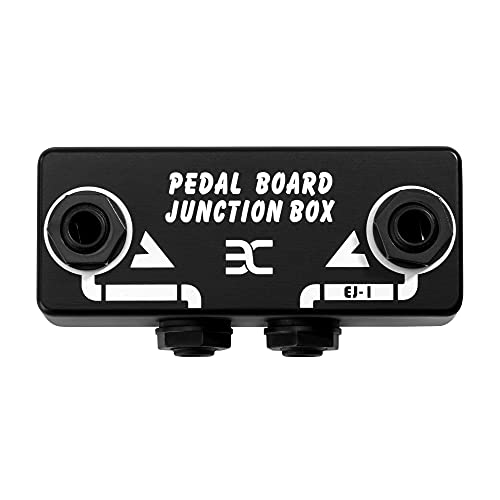
- Combines guitar input and amp output
- Passive design needs no power
- Flexible vertical or horizontal connector placement
Best For: Fast, tidy pedalboard setup and teardown
Modular Routing Hub

- Eight-point modular 1/4-inch TRS design
- Steel enclosure for studio use
- Works with compatible mixers and recording gear
Best For: Modular audio routing and studio setups
Flexible Pedalboard Wiring
Ernie Ball Flat Ribbon Multi-Pack

- Ten cables in four useful lengths
- Flat design helps reduce pedalboard clutter
- Low-profile connectors with strain relief
Best For: Versatile pedalboard layouts and tidy connections
Noise-Resistant Short Links
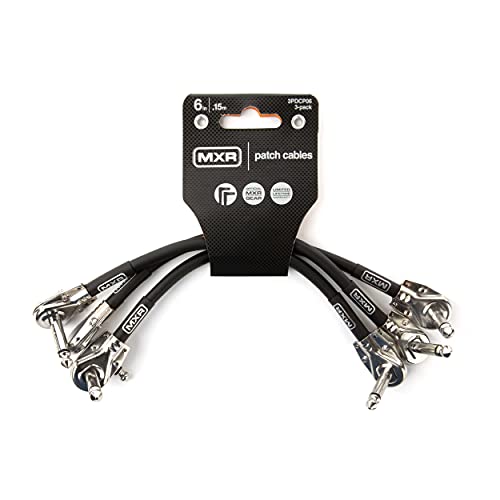
- Three 6-inch pedal patch cables
- 20-AWG oxygen-free copper conductors
- Shielding and strain relief for dependable use
Best For: Compact pedalboards with short cable runs
Space-Saving Pick
Gold-Plated Flat Ribbon Patch Cables
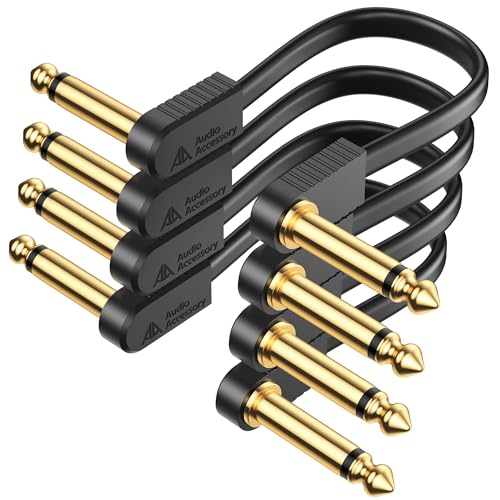
- Low-profile plugs fit spacing as tight as 0.2 inch
- Flat Kevlar-reinforced cables route easily
- Four 6-inch cables with quad-layer shielding
Best For: Dense pedalboards needing compact connections
Value Six-Pack
Amazon Basics Right-Angle Patch Cables

- Includes six 6-inch cables
- Right-angle connectors support close placement
- Shielded construction with full metal casing
Best For: Standard pedalboards needing several short cables
Most Versatile Pack
Multi-Length Gold-Plated Patch Cables

- Ten cables spanning five lengths from 2 to 36 inches
- Low-profile plugs fit tight jack spacing
- Flat Kevlar-reinforced design with quad-layer shielding
Best For: Mixed pedalboard layouts needing varied cable lengths
Rack-Ready Routing Hub – Samson S-Patch Plus
Samson S-Patch Plus Balanced 48-Point 1/4" Patch Bay | 1/4 Inch Phone Connections
Check Price On AmazonIf you need a patch bay for guitar pedals alongside mixers, rack gear, or other studio equipment, the Samson S-Patch Plus offers a centralized, balanced connection point. Its 48 front and 48 rear 1/4-inch TRS connections and selectable routing modes make it suited to more complex setups.
Best For: Rack-based studios and guitarists managing multiple balanced connections.
Pros:
- Provides 48 front and 48 rear 1/4-inch connections.
- Supports normalled, half-normalled, and thru operation.
- 19-inch, 1U rack-mountable metal construction.
- Front-panel switches reduce the need to reach behind equipment.
Cons:
- Its large 48-point format may be more than a small pedalboard needs.
- Designed for rack and studio routing rather than a compact pedalboard footprint.
The S-Patch Plus is the most capable choice here for a sizeable, organized rack system. For a simple pedalboard, its scale may be unnecessary, but its flexible routing and balanced connections are valuable in a studio.
Compact Stereo Pedal Hub – SONICAKE Junction Box
For a compact patch bay for guitar pedals, the SONICAKE Junction Box provides four passive channels in a small enclosure. TRS stereo connectivity, mono compatibility, and a pedalboard-focused layout help consolidate connections without adding a power requirement.
Best For: Guitarists and bassists who want compact pedalboard signal organization.
Pros:
- Offers four passive channels with TRS stereo connections.
- Accepts mono or stereo connection setups.
- Passive, plug-and-play operation requires no power supply.
- Compact design helps save pedalboard space and protect pedal jacks.
Cons:
- Four channels provide less capacity than a rack-style patch bay.
- Its 90-day warranty is relatively limited.
The SONICAKE is a practical option when your priority is a neat, compact pedalboard. Its passive design keeps setup simple, while the stereo-capable TRS connections add flexibility for customized routing.
Studio Cable Organizer – ART Pro Audio P48
The ART Pro Audio P48 is a 48-point balanced patch bay for guitar pedals, mixers, amplifiers, microphones, and other audio equipment. Its fully shielded, rack-installable design helps organize cabling and reduce wear on equipment connectors in studio or live environments.
Best For: Home and professional studios, PA systems, and fixed rack installations.
Pros:
- Provides 48 points for centralized cable organization.
- Fully shielded construction helps support organized signal routing.
- Fits a 19-inch rack installation.
- Compatible with a broad range of audio equipment, including guitars and amplifiers.
Cons:
- Its rack format is not intended for compact pedalboards.
- The supplied notes do not specify selectable normalled or thru modes.
The P48 makes the most sense when you need a straightforward, high-capacity rack solution. It is well suited to organized studio or live-system wiring, though smaller pedalboard users may prefer a dedicated junction box.
Pedalboard Corner Connector – EX Pedalboard Junction Box
The EX Pedalboard Junction Box is a straightforward patch bay for guitar pedals when you want instrument input and amplifier output in one accessible location. Its passive metal enclosure helps simplify setup, reduce repeated cable changes at pedal jacks, and conserve pedalboard space.
Best For: Pedalboards that need quick stage setup and cleaner input/output routing.
Pros:
- Aggregates instrument input and amplifier output in one place.
- Passive operation requires no power supply.
- Helps reduce repeated plugging and unplugging from pedal jacks.
- Supports vertical or horizontal connector insertion for flexible placement.
Cons:
- It is a junction box rather than a multi-channel rack patch bay.
- The supplied notes do not specify stereo or TRS support.
The EX Junction Box is a focused solution for simplifying a pedalboard’s main connections. Its compact, screw-in metal design is especially useful when you want a predictable connection point at the edge or corner of the board.
Modular Routing Hub – Hosa MHB-350 Patchbay
If you need a patch bay for guitar pedals that also connects mixers, recorders, or outboard gear, the Hosa MHB-350 provides an eight-point modular 1/4-inch TRS patchbay format. Its steel enclosure and compact design suit organized studio or rig wiring.
Best For: Guitarists and recording setups that need modular 1/4-inch TRS connections for compatible audio equipment.
Pros:
- Eight-point modular patchbay configuration
- Compatible with mixers, recorders, and outboard gear using compatible connectors
- Steel enclosure with a limited lifetime warranty
Cons:
- It is a patchbay module rather than a pedalboard cable multipack
- Uses 1/4-inch TRS connections, so connector compatibility must be checked
The MHB-350 is the most suitable choice here for centralized signal routing rather than simply linking individual pedals. Confirm your equipment’s connectors and routing needs before buying.
Flexible Pedalboard Wiring – Ernie Ball Flat Ribbon Multi-Pack
For a patch bay for guitar pedals setup that focuses on neat pedal-to-pedal connections, the Ernie Ball Flat Ribbon Multi-Pack offers ten cable lengths. Its flat design helps with positioning and reducing cable clutter across a pedalboard.
Best For: Pedalboards with varied spacing that need multiple low-profile, male-to-male patch cables.
Pros:
- Includes two 3-inch, four 6-inch, two 12-inch, and two 24-inch cables
- Flat ribbon construction allows flexible pedal positioning
- Low-profile metal connectors include built-in strain relief
- Oxygen-free copper, shielding, and a durable PVC jacket support reliable use
Cons:
- These are pedal patch cables, not a rack-style patchbay module
- The included lengths may not suit every pedalboard layout
This multipack is a practical choice when your priority is clean, adaptable pedalboard wiring. The range of lengths makes it easier to accommodate both closely spaced and more separated pedals.
Noise-Resistant Short Links – MXR 6-Inch Patch Cable 3-Pack
The MXR 6-inch 3-pack is a straightforward option for a patch bay for guitar pedals arrangement where short, sturdy links are needed between effects. Its 20-AWG oxygen-free copper wire, shielding, and flexible PVC jacket are designed for clear signal transmission and repeated use.
Best For: Compact pedalboards that need three short, durable male-to-male patch cables.
Pros:
- Three 6-inch cables suit closely spaced pedals
- 20-AWG oxygen-free copper supports clear signal transmission
- Oxygen-free copper spiral and conductive PVC shielding help reduce noise
- Metal ends and heat-shrink strain relief support repeated pedal changes
Cons:
- Only one cable length is included
- Three cables may be insufficient for larger pedalboards
This three-pack is best when your board has short runs and you value a robust, noise-conscious cable design. For varied spacing, a multipack with several lengths may be more convenient.
Space-Saving Pick – Gold-Plated Flat Ribbon Patch Cables
For a crowded patch bay for guitar pedals setup, these 6-inch flat ribbon cables prioritize compact routing and close jack spacing. The low-profile plugs, flexible Kevlar-reinforced construction, and layered shielding make them a practical choice for tightly arranged pedalboards.
Best For: Dense pedalboards needing four compact, closely spaced connections.
Pros:
- Low-profile plugs fit jack spacing as tight as 0.2 inch.
- Flat, flexible cables are easy to route in limited space.
- Quad-layer OFC shielding is designed to reduce interference.
- Includes gold-plated connectors and a lifetime warranty.
Cons:
- The pack includes only four cables.
- All cables are 6 inches long, limiting length flexibility.
This is a strong fit when neat pedalboard organization and connector clearance matter more than having multiple cable lengths.
Value Six-Pack – Amazon Basics Right-Angle Patch Cables
If you need an affordable patch bay for guitar pedals setup, this six-pack covers common short connections with 6-inch, right-angle cables. Its OFC spiral shield, conductive PVC shield, and full metal casing provide a straightforward option for everyday pedalboard wiring.
Best For: Guitarists who want six consistent short cables for standard pedal and bass effects.
Pros:
- Six 6-inch cables provide useful quantity for a pedalboard.
- Right-angle connectors support close pedal placement.
- OFC spiral and conductive PVC shielding help block outside interference.
- Full metal casing is designed for durability.
Cons:
- Only one cable length is included.
- The round cable design may take more routing space than flat alternatives.
This pack makes sense for basic pedalboard builds where consistent length, right-angle connectors, and quantity are the main priorities.
Most Versatile Pack – Multi-Length Gold-Plated Patch Cables
For a patch bay for guitar pedals with mixed spacing, this 10-pack offers five cable lengths, from 2 to 36 inches. Its flat ribbon design, low-profile plugs, Kevlar reinforcement, and quad-layer shielding help accommodate both tight pedal clusters and longer connections.
Best For: Builders arranging varied pedalboard layouts who want multiple cable lengths in one pack.
Pros:
- Includes 2-, 6-, 12-, 24-, and 36-inch options.
- Low-profile plugs fit jack spacing as tight as 0.2 inch.
- Flat Kevlar-reinforced cables are flexible and space-efficient.
- Gold-plated connectors and quad-layer shielding support reliable signal connections.
Cons:
- The mix includes only two 2-inch cables and one each of the longest lengths.
- A multi-length pack may include sizes you do not need for a simple layout.
This is the most adaptable choice of the three for evolving boards, unusual spacing, or layouts that require both very short and extended pedal connections.
How We Picked the Best Patch Bay for Guitar Pedals
We selected these options for practical pedalboard use, comparing connection count, connector type, construction, footprint, shielding, and setup flexibility. The list includes rack-style balanced patch bays, pedalboard-mounted junction boxes, and patch cable multipacks because guitarists use “patch bay” to describe both centralized routing hardware and the short cables that organize pedal connections.
Priority goes to products that can reduce cable clutter, provide reliable signal paths, and make common maintenance tasks easier. Compatibility still matters: a studio patch bay and a compact pedalboard junction box solve different problems.
Quick Comparison
| Type | Best For | What to Check |
|---|---|---|
| 48-point balanced patch bay | Studios and large signal-routing systems | TRS wiring, rear-panel connections, rack space |
| Pedalboard junction box | Accessible input and output connections | Mounting method, jack layout, enclosure size |
| 8-point patch bay module | Compact fixed routing | Available channels and balanced/unbalanced operation |
| Short patch cable multipack | Connecting pedals directly | Length, plug profile, shielding, and flexibility |
Key Buying Factors for a Patch Bay for Guitar Pedals
Connection Type and Channel Count
Count the connections you actually need, including stereo pedals, amplifier effects loops, expression-related routing, and spare outputs. Balanced TRS patch bays are useful in studio and longer-cable applications, while most guitar pedals use unbalanced mono TS connections. Do not assume a TRS unit automatically provides stereo functionality in every configuration.
Layout and Mounting
A rack-style unit such as a 48-point patch bay is intended for centralized equipment routing. A pedalboard junction box is better when you want guitar, amplifier, or effects-loop connections at the board’s edge. Check whether the enclosure mounts with screws, adhesive, brackets, or a compatible pedalboard accessory.
Cable Length and Plug Shape
Use the shortest practical cable between adjacent pedals without putting tension on the jacks. Low-profile or right-angle plugs can save space, but verify clearance around side-mounted pedal sockets. Longer leads may be useful for isolated sections of a board, though excess cable can make troubleshooting harder.
Noise Control and Durability
Look for secure plugs, strain relief, flexible jackets, and effective shielding. Gold-plated contacts may resist corrosion, but overall construction and fit are more important than plating alone. Keep power cables separated from audio cables where possible, and test each connection before permanently securing the board.
Who Should Buy Which Patch Bay for Guitar Pedals?
- Studio users and larger rigs: Choose a high-capacity balanced patch bay when you need centralized access to multiple devices and clearly labeled routing.
- Gigging guitarists: A pedalboard junction box can put the main input and output connections on the board edge, reducing setup time and wear on pedal jacks.
- Compact pedalboard owners: Choose short flat or ribbon-style patch cables with suitable right-angle plugs to maximize usable space.
- Players upgrading gradually: Start with a cable multipack or smaller patch bay module, then leave room for additional pedals and spare connections.
Before buying, map your complete signal chain and measure the available board or rack space. The best Patch Bay for Guitar Pedals is the one that matches your actual routing needs without adding unused connections, awkward cable runs, or unnecessary bulk.