The right direct box can make an acoustic-electric guitar easier to mix, quieter on stage, and more consistent from venue to venue. The best choice depends on your pickup type, available power, tone-shaping needs, and whether you need a simple signal converter or a full acoustic preamp.
We compared 10 popular options, from compact passive DI boxes to feature-rich acoustic guitar preamps, to help performers, recording musicians, and live sound operators find a practical match.
Best 10 Di Boxes for Acoustic Electric Guitars Picks for 2026
Feature-Rich Stage Control
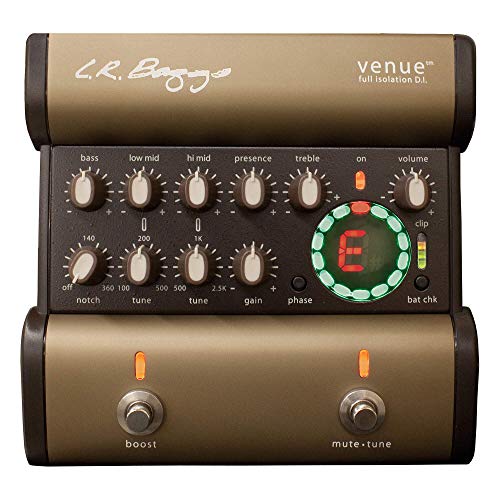
- Gain for passive or active pickups
- Five-band EQ and notch filter
- Tuner, mute, and boost footswitches
Best For: Live acoustic players needing preamp and stage controls
Simple Transformer Reliability
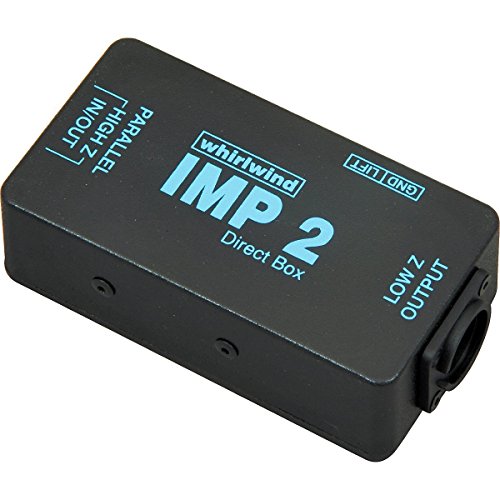
- Passive, no external power required
- Converts unbalanced to balanced mic level
- Compact stainless-steel build
Best For: Affordable basic DI signal conversion
Flexible Acoustic Tone Shaping

- Gain for passive and active pickups
- Five-band EQ with tunable bands
- Battery or 48V phantom power
Best For: Acoustic players needing EQ and feedback control
Plug-and-Play Signal Conversion

- Passive and requires no power
- 1/4-inch TS to balanced XLR3M
- Robust metal construction
Best For: Basic guitar-to-mixer or PA connections
Warmth & Feedback Control

- Analog saturation, compression, and EQ
- Notch filter and high-pass filter for control
- Mute footswitch with 1/4-inch and XLR outputs
Best For: Players wanting tone shaping and feedback management
Simple Hum-Free Signal Routing

- Passive impedance and signal matching
- Transformer isolation reduces hum and buzz
- Thru output plus balanced XLR connection
Best For: Basic stage or studio signal routing
Compact Acoustic Preamp
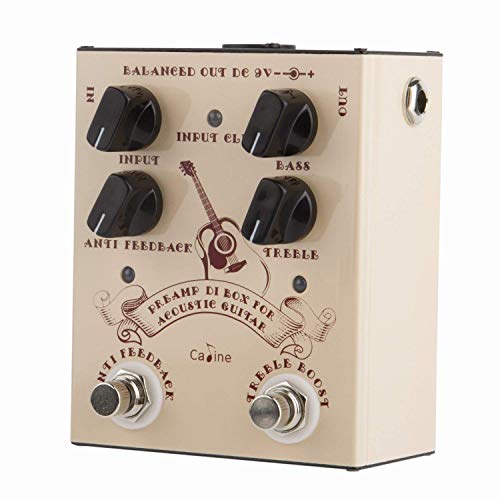
- Acoustic guitar preamp DI format
- True bypass anti-feedback footswitch
- 9-volt operation with higher boost
Best For: Players wanting a compact acoustic pedal
Simple Passive Control

- No power required
- Pad and ground-lift switches
- Balanced XLR output with 1/4-inch through jack
Best For: Basic acoustic electric guitar and keyboard setups
Active Stage Versatility

- Battery or phantom-powered
- Three input level switches
- Phase reversal and ground lift
Best For: Flexible live and recording setups
Two-Channel Convenience
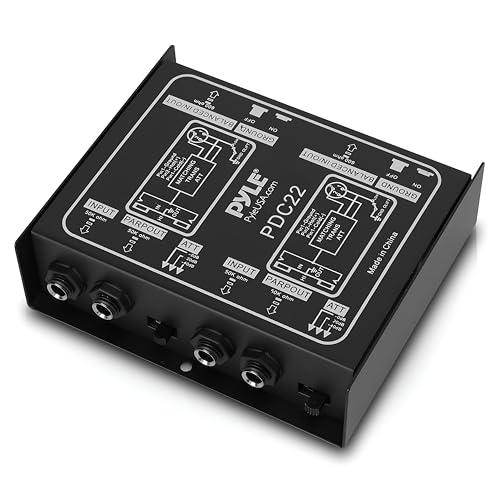
- Two-channel passive design
- Ground-lift buzz and hum cancellation
- Steel chassis for live use
Best For: Multi-source live sound and recording setups
Feature-Rich Stage Control – L.R. Baggs Venue DI
For players comparing di boxes for acoustic electric guitars, the L.R. Baggs Venue DI adds pickup-friendly gain control, tone shaping, feedback management, tuning, and a footswitchable boost in one compact unit. It supports both passive and active pickups and uses a 9V battery.
Best For: Acoustic-electric players who want a stage-oriented preamp and DI with hands-free controls.
Pros:
- Adjustable gain works with passive and active pickups.
- Five-band EQ includes tunable low-mid and high-mid bands.
- Built-in chromatic tuner, notch filter, mute, and volume boost.
Cons:
- More features and controls than a basic passive DI.
- Requires a 9V battery for power.
The Venue DI is a strong choice when you need more than signal conversion, especially for live acoustic performance where feedback control and quick footswitch access matter.
Simple Transformer Reliability – Whirlwind IMP 2 Passive DI
The Whirlwind IMP 2 is a straightforward option for shoppers seeking di boxes for acoustic electric guitars without added EQ or battery requirements. Its passive transformer converts an unbalanced instrument- or line-level signal to a balanced, low-impedance mic-level output.
Best For: Players and setups that need economical, durable basic signal conversion.
Pros:
- Passive design requires no external power.
- Converts unbalanced instrument or line signals to balanced mic level.
- Compact footprint and stainless-steel construction.
Cons:
- Does not provide EQ, tuning, or feedback-control features.
- Offers one channel.
The IMP 2 keeps the job focused on dependable passive DI conversion, making it a practical pick when your mixer or PA handles the rest of the tone shaping.
Flexible Acoustic Tone Shaping – LR Baggs Para Acoustic D.I.
The LR Baggs Para Acoustic D.I. combines pickup-matched gain with five-band tone control, making it a versatile choice among di boxes for acoustic electric guitars. It provides both XLR and 1/4-inch outputs and can run from a 9V battery or 48V phantom power.
Best For: Acoustic-electric guitarists who want onboard EQ, phase control, and flexible power options.
Pros:
- Adjustable gain accommodates passive and active pickups.
- Five-band EQ includes tunable notch and midrange bands.
- Offers phase inversion plus balanced and unbalanced outputs.
Cons:
- More involved to set up than a basic passive DI.
- Requires a 9V battery or access to 48V phantom power.
With its dedicated acoustic-oriented EQ and feedback-related controls, the Para Acoustic D.I. suits players who need to shape their guitar signal before it reaches a mixer or amplifier.
Plug-and-Play Signal Conversion – Hosa DIB-443 Sidekick DI
The Hosa DIB-443 Sidekick is a no-power-needed option for connecting an acoustic-electric guitar to a mixer or PA. For shoppers comparing di boxes for acoustic electric guitars, it converts an unbalanced 1/4-inch TS signal to a balanced XLR3M connection and is built in a robust metal enclosure.
Best For: Simple live or studio connections from guitars, basses, or keyboards to mixing equipment.
Pros:
- Passive operation requires no external power.
- Converts 1/4-inch TS signals to balanced XLR3M.
- Metal construction is suited to live-performance use.
Cons:
- Does not include EQ, gain, tuning, or feedback controls.
- Provides basic signal conversion rather than preamp features.
The Sidekick is a practical, lightweight solution when you need to reduce noise on longer cable runs and send an instrument signal to balanced mixer or PA inputs.
Warmth & Feedback Control – Session DI
For players comparing di boxes for acoustic electric guitars, the L.R. Baggs Session DI is a feature-rich preamp and direct box built around tone shaping and feedback management. Its analog saturation, compression, EQ, notch filter, and variable high-pass filter provide practical tools for refining an acoustic guitar signal before it reaches the PA.
Best For: Acoustic-electric guitarists who want onboard tone shaping, feedback control, and a mute footswitch.
Pros:
- Analog saturation adds warmth and harmonic content.
- Compression and EQ help smooth common problem frequencies.
- Garret Null notch filter and variable high-pass filter address feedback and unwanted low frequencies.
- Mute footswitch works with the 1/4-inch and XLR outputs.
Cons:
- Its multiple processing features may be more than needed for a basic DI setup.
- The listed output channel quantity is one.
The Session DI is a strong choice when a straightforward acoustic guitar direct box is not enough. It suits performers who want signal shaping and feedback tools integrated into one metal-enclosed pedal.
Simple Hum-Free Signal Routing – Donner Special-I DI Box
The Donner Special-I is a practical option among di boxes for acoustic electric guitars when the main goal is clean signal matching and balanced output. This passive DI converts an unbalanced instrument or line signal to a low-impedance balanced mic-level signal while transformer isolation and ground lift help address hum and buzz.
Best For: Stage and studio users who need a compact passive DI with thru output, XLR output, and ground-loop isolation.
Pros:
- Provides impedance and signal matching for mixers and amplifiers.
- Transformer isolation helps eliminate hum and buzz from ground loops.
- Ground Lift switch offers additional ground-loop control.
- Thru signal can feed an amplifier while the balanced output feeds the PA.
Cons:
- As a passive DI, it does not provide the listed preamp, EQ, or boost features of an active acoustic pedal.
- The enclosure uses plastic materials.
The Donner is well suited to a basic, reliable routing setup. Its compact design and simple passive operation make it useful when signal balancing and hum reduction matter more than onboard tone processing.
Compact Acoustic Preamp – Caline CP-40 DI Box
The Caline CP-40 is a compact preamp DI option for acoustic players seeking a simple pedal-format solution. As one of the di boxes for acoustic electric guitars, it emphasizes acoustic-focused operation, true bypass, anti-feedback control, and higher boost in a small cream-colored enclosure.
Best For: Acoustic guitarists who want a compact 9-volt preamp DI with true bypass and anti-feedback switching.
Pros:
- Designed specifically as a preamp DI box for acoustic guitar.
- Includes a true bypass anti-feedback footswitch.
- Offers higher boost for the guitar signal.
- Compact format with 1/4-inch audio connectivity.
Cons:
- Its listed connector is a 1/4-inch audio jack rather than an XLR connector.
- The supplied details identify volume as the audio output effect, so tone-shaping controls are limited in the listing.
- Requires a 9-volt power source.
The CP-40 makes sense for players who prefer a compact acoustic-specific pedal with basic boost and anti-feedback functions. It is less suited to buyers looking for extensive EQ or clearly specified balanced XLR connectivity.
Simple Passive Control – Compact Instrument DI Box
This compact passive direct box is a straightforward choice for acoustic electric guitars and other instruments. It accepts a 1/4-inch input, provides a balanced XLR output, and includes practical controls for handling hot signals and grounding-related buzz.
Best For: Players seeking a no-power-required DI box for acoustic electric guitar, keyboard, or basic live and recording setups.
Pros:
- Passive design requires no power.
- 1/4-inch input and through jacks support signal routing.
- Pad switch helps soften hot sources.
- Ground lift can help reduce buzz from grounding issues.
Cons:
- Offers a single output channel.
- Passive operation may provide fewer features than an active DI.
The Yovus DB-1 keeps the feature set focused and practical. Its metal enclosure, balanced XLR output, pad, and ground-lift switch make it a sensible basic option when simplicity matters.
Active Stage Versatility – BOSS DI-1 Direct Box
The BOSS DI-1 is an active option for acoustic electric guitars when you want flexible level and connection controls. It can run from a 9-volt battery or mixer phantom power and combines sturdy construction with several useful switches.
Best For: Performers and recording users who want an active DI with selectable input levels, phase reversal, and ground lifting.
Pros:
- Operates on a 9-volt battery or phantom power.
- Three input level switches accommodate different signal levels.
- Phase reversal and ground-lift switches add setup flexibility.
- Compact metal design is suited to live use.
Cons:
- Requires a battery or phantom power for operation.
- Heavier than the listed compact passive alternative.
With multiple power options and signal-management controls, the DI-1 is the more feature-oriented pick in this group. It is especially useful when different instruments or venue setups require quick adjustments.
Two-Channel Convenience – Dual Passive Direct Box
The Pyle-Pro PDC22 is a dual-channel passive direct box for acoustic electric guitars and other unbalanced sources. It is designed to connect instruments, keyboards, effects processors, or submixers to a PA or recording mixer while helping address buzz and hum.
Best For: Musicians who need two DI channels for instruments or other unbalanced devices in live sound and recording applications.
Pros:
- Two-channel design supports multiple sources.
- Connects guitars, keyboards, effects processors, and submixers.
- Ground-lift functionality helps with buzz and hum cancellation.
- All-steel chassis is built for durability.
Cons:
- Its larger, heavier enclosure is less compact than a single-channel DI.
- The supplied notes describe it as passive, so it may not offer active DI features.
The PDC22 stands out when channel count is more important than minimal size. Its dual-channel layout and steel chassis make it a practical choice for setups involving more than one unbalanced source.
How We Picked the Best Di Boxes for Acoustic Electric Guitars
We focused on signal compatibility, useful connectivity, reliability, portability, and value. The lineup includes passive models for straightforward impedance and balanced-output conversion, active units with more headroom and control, and acoustic-specific preamps that add EQ, notch filtering, phase switching, gain control, or feedback management.
We also considered how easily each option fits common setups: guitar to pedalboard, guitar to mixer, stage monitor systems, audio interfaces, and front-of-house sound systems. A compact passive box may be ideal for a simple rig, while a preamp DI can be worth the extra cost for players who need repeatable tone shaping.
Quick Comparison
Passive models such as the Whirlwind IMP 2, Hosa Sidekick, and similar compact units generally require no battery and are easy to deploy. They are useful when your guitar already has a strong, well-shaped signal and you primarily need a balanced XLR output with ground isolation.
Active or preamp-equipped options, including the L.R. Baggs Venue DI, Para Acoustic D.I., Session DI, and BOSS DI-1, offer more control or signal-handling flexibility. The Pyle-Pro dual DI is suited to situations involving two channels, while budget models from Donner and Caline can provide a low-cost entry point for basic live connections.
Key Buying Factors for Di Boxes for Acoustic Electric Guitars
Pickup and Power Compatibility
Passive piezo pickups often benefit from a high-input-impedance preamp, which can preserve clarity and low-end response. Active pickups may work well with either active or passive DI boxes, but check battery or phantom-power requirements before buying.
Tone Shaping and Feedback Control
If you need to correct a thin, boomy, or harsh sound at the source, choose a unit with EQ or dedicated acoustic-guitar controls. Notch filtering, phase reversal, and tuners can be especially valuable for loud stages where feedback is a recurring problem.
Connections and Isolation
Look for a 1/4-inch instrument input and balanced XLR output for long cable runs to a mixer or stage box. Ground-lift switches can help resolve hum caused by connected equipment, while a through output is useful for sending the guitar signal to an amplifier or monitor chain.
Portability and Durability
Gigging musicians should prioritize sturdy switches, metal enclosures, dependable jacks, and a footprint that fits comfortably on a pedalboard or in a gig bag. A simple passive box is often the easiest option for fast setup and minimal maintenance.
Who Should Buy Which Di Boxes for Acoustic Electric Guitars?
Choose a basic passive DI if you need affordable, dependable balanced output and already like your guitar’s tone. Choose an active DI when you want more headroom, flexible powering, or better control over varied signal sources. Acoustic players dealing with feedback or inconsistent venue sound should consider a dedicated preamp DI with EQ and stage-oriented controls.
For home recording, prioritize clean output, appropriate impedance, and compatibility with your interface. For live performance, prioritize ground isolation, feedback tools, rugged construction, and easy access to controls. Finally, verify the included power method and connector layout so the unit fits your exact guitar and signal chain.