The best drum machines with sampling combine hands-on rhythm programming with the freedom to capture, chop, shape, and replay your own sounds. That makes them useful for beatmaking, live performance, songwriting, and sound design.
Our 2026 roundup compares compact samplers, hybrid drum machines, and full standalone production systems so you can choose the right balance of workflow, portability, sequencing power, and creative control.
Best 10 Drum Machines with Sampling Picks for 2026
Best Portable Sampler
teenage engineering EP-133 K.O. II
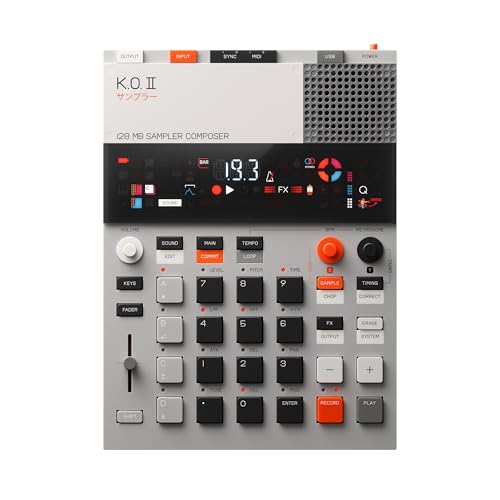
- Built-in microphone and resampling workflow
- Portable, battery-powered design with 128MB memory
- Pattern sequencing with live effects control
Best For: Mobile beatmaking and live sampling
Best Standalone Production Center

- Standalone sampling, sequencing, and song arrangement
- 7-inch touchscreen with 16 expressive MPC pads
- Up to 16 stereo audio tracks and 32 plugin instruments
Best For: Full standalone music production
Best Compact Classic-Sound Drum Machine
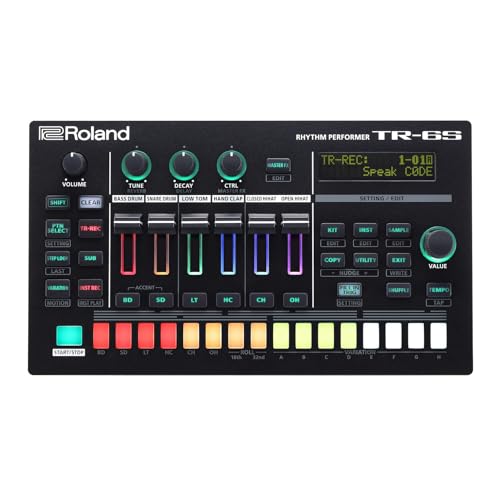
- Authentic models of classic TR drum machines
- Custom samples plus FM sound engine
- Six-track sequencer with motion recording
Best For: Classic electronic rhythms with sample layering
Best Pattern-Based Sampler

- Chain patterns into songs and performance sets
- Hands-on controls for electronic music creation
- Includes Ableton Live Lite and MIDI adapter cables
Best For: Pattern-based electronic performance
Best Hybrid Powerhouse
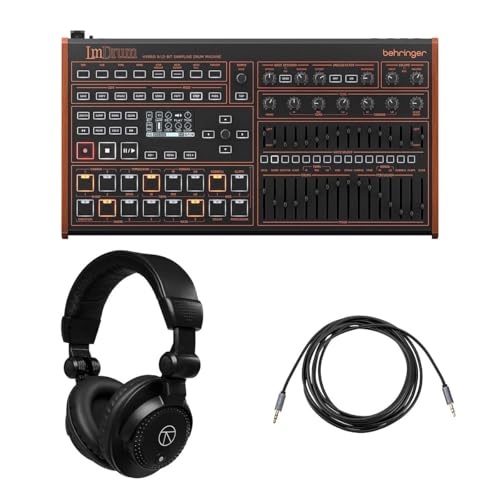
- 16-voice sampling architecture
- 64-step sequencer with performance controls
- 16 independent analog outputs
Best For: Studio producers and live performers needing extensive routing
Best Portable Groovebox

- Eight flexible sample tracks
- Slices, reverses, loops, and resamples audio
- Up to four hours of battery life
Best For: Mobile beatmaking and hands-on live sampling
Best Hybrid Sound Design
KORG drumlogue Hybrid Drum Machine

- Analog, digital, and multi-engine synthesis
- 11 parts with a 64-step sequencer
- USB-C sample support and assignable outputs
Best For: Sound designers wanting expandable hybrid drum synthesis
Performance Powerhouse

- Fast sampling, sequencing, and resampling workflow
- RGB pads and OLED waveform editing
- Portable power with extensive onboard effects
Best For: Performance-focused beatmakers and live sample-based production
Portable Song Builder

- One-touch sampling with slicing and time-stretching
- 16-scene projects with sequencer and audio tracks
- Built-in mic, speaker, effects, and battery operation
Best For: Mobile songwriters and DAWless sampling workflows
Accessible MPC Sampling

- Standalone, battery-powered MPC workflow
- Built-in mic, speaker, pads, and sample chopping
- 60 effects plus USB-C and MIDI connectivity
Best For: Beginners and portable MPC-style beatmaking
Best Portable Sampler – teenage engineering EP-133 K.O. II
The teenage engineering EP-133 K.O. II is a highly portable choice for drum machines with sampling. It combines a built-in microphone, 128MB of memory, 999 sample slots, sequencing, and hands-on effects in a compact battery-powered unit.
Best For: Mobile beatmakers, live performers, and producers who want fast sampling in a small package.
Pros:
- Built-in microphone, line input, resampling, and sample chopping support.
- Four groups with 99 patterns each, plus song mode for extended arrangements.
- Portable design with built-in speaker, USB-C power, MIDI, and sync connectivity.
- Includes six master effects and 12 punch-in effects for live manipulation.
Cons:
- 128MB of memory may be limiting for large sample libraries.
- Its compact controls may be less suitable for detailed studio editing.
The K.O. II prioritizes speed, portability, and performance-friendly experimentation. It is a strong fit when sampling sounds quickly and turning them into beats matters more than extensive workstation-style features.
Best Standalone Production Center – Akai MPC One G2
The Akai Professional MPC One G2 is a full-featured standalone option among drum machines with sampling. Its MPC pads, touchscreen, MPC3 operating system, USB-C sampling, and expanded processing are designed for building beats, arranging songs, and integrating external gear without a laptop.
Best For: Producers who want a standalone workstation for sampling, sequencing, arranging, and hybrid studio production.
Pros:
- Samples directly from phones, tablets, and external devices through USB-C.
- Supports up to 16 stereo audio tracks and 32 plugin instruments per project.
- Includes 16 velocity- and pressure-sensitive RGB-backlit MPC pads.
- Offers USB-C audio and MIDI streaming, Ableton Live integration, and SD card support.
Cons:
- Its broad feature set may require more learning than a simpler beat box.
- It is less pocketable than compact battery-powered samplers.
The MPC One G2 is the most workstation-oriented choice in this group. Choose it if you want drum sampling to be part of a complete standalone production workflow rather than a focused pattern-making device.
Best Compact Classic-Sound Drum Machine – Roland TR-6S Rhythm Performer
The Roland TR-6S is a compact rhythm performer for producers who want classic drum-machine sounds alongside sampling. It provides six tracks, models of iconic TR instruments, a large preset sample library, custom user-sample support, and an advanced sequencer in a battery-powered format.
Best For: Electronic musicians who prioritize classic Roland-style rhythms with flexible sample and FM-based sound options.
Pros:
- Includes detailed models of TR-808, TR-909, TR-606, TR-707, and other classic machines.
- Supports custom user samples and hybrid drum kits.
- Advanced sequencer includes sub-steps, flam, step-loop, and motion recording.
- Also works as a USB audio and MIDI interface.
Cons:
- Six tracks provide less sequencing space than larger production centers.
- It has fewer general-purpose arrangement features than a standalone workstation.
The TR-6S is a focused choice for hands-on rhythm programming with strong classic-sound coverage. Its sampling support expands the palette, while the compact battery-powered design suits portable beatmaking.
Best Pattern-Based Sampler – Korg electribe Sampler
The Korg electribe Sampler is a pattern-focused option for drum machines with sampling and electronic music performance. Its workflow centers on creating patterns, chaining them into songs or sets, and shaping tracks with hands-on controls, while Ableton Live export supports computer-based finishing.
Best For: Electronic performers and producers who want pattern chaining and live-oriented control over sample-based tracks.
Pros:
- Pattern chaining can be used to create full songs or extended performance sets.
- Includes an Ableton Live Lite license and supports Ableton export.
- One-level undo and original-value indication improve editing confidence.
- Ships with MIDI adapter cables and an AC adapter.
Cons:
- The supplied notes do not specify onboard memory or sample-slot capacity.
- Its older Ableton Live Lite inclusion may be less current than newer software bundles.
The electribe Sampler favors immediate pattern creation and performance over a linear studio workflow. It makes sense for users who want to build arrangements from chained patterns and take electronic tracks into live sets.
Best Hybrid Powerhouse – Behringer LM DRUM
The Behringer LM DRUM is a strong choice for producers seeking drum machines with sampling, analog character, and extensive routing. Its 16-voice sampling architecture, 64-step sequencer, and 16 independent analog outputs make it especially suited to detailed studio production and live performance.
Best For: Producers and performers who want sampling, analog circuitry, multitrack outputs, and hands-on sequencing in one unit.
Pros:
- 16 voices of sampling architecture with 8-bit sampling and analog circuitry.
- Powerful 64-step sequencer with polymeter, step repeat, note repeat, real-time triggering, mute, and solo functions.
- 16 independent analog outputs support external processing or multitrack recording.
- Includes headphones and a 10-foot auxiliary cable for immediate setup.
Cons:
- Its 11-pound, 21-inch-wide body is less portable than compact grooveboxes.
- The plastic construction may feel less premium than metal-bodied alternatives.
Choose the LM DRUM if flexible studio routing and a hybrid analog-sampling workflow matter more than portability. Its broad connectivity and dedicated performance controls make it a capable centerpiece for complex setups.
Best Portable Groovebox – Novation Circuit Rhythm
The Novation Circuit Rhythm is a practical pick for anyone shopping for drum machines with sampling in a compact, battery-powered format. It records directly from phones, turntables, or synths, then lets you slice, reverse, loop, resample, and sequence sounds across eight sample tracks.
Best For: Mobile beatmakers and live performers who want hands-on sampling, flexible sequencing, and up to four hours of battery life.
Pros:
- Records samples directly from external sources and supports slicing, reversing, looping, and resampling.
- Eight sample tracks provide dedicated space for building beats and melodic parts.
- Each track supports 32-step patterns chainable to 256 steps.
- Performance effects include lo-fi tape, beat repeat, reverb, delay, and sidechain.
Cons:
- It uses sample tracks rather than the analog-plus-digital architecture found on hybrid drum machines.
- The plastic body may be less rugged than a metal-bodied instrument.
The Circuit Rhythm stands out for portability and immediate sample manipulation. Its grid-based workflow and battery operation make it particularly convenient for sketching ideas away from the studio or adding interactive sampling to a live set.
Best Hybrid Sound Design – KORG drumlogue Hybrid Drum Machine
The KORG drumlogue combines analog, digital, and multi-engine sound generation with sample-loading support through USB-C. For shoppers comparing drum machines with sampling, it offers a broad sound-design platform, hands-on controls, per-part effects, and flexible connections for studio or performance setups.
Best For: Musicians who want analog drums, digital and multi-engine synthesis, sample support, and expandable sound design.
Pros:
- Combines analog, digital, noise, VPM, and open-source multi-engine capabilities.
- Provides 11 parts and a 64-step sequencer with loop and chain functions.
- Offers reverb and delay per part plus master effects.
- Includes stereo and four assignable outputs, audio input, DIN MIDI, USB-C, and audio sync.
Cons:
- Its sample-loading workflow relies on a USB-C connection to a computer or external controller.
- It has fewer sequencer parts than a fully expanded multitrack sampler may offer.
The drumlogue is a compelling option when sampling is only one part of the desired workflow. Its hybrid engines, open-source expansion potential, per-part effects, and assignable outputs give it room to grow as a sound-design and performance instrument.
Performance Powerhouse – Roland SP-404MKII
The Roland SP-404MKII is a strong choice for producers who want drum machines with sampling capabilities centered on hands-on performance. Its responsive pads, rapid sample editing, sequencing, resampling, and extensive effects make it well suited to building and performing beats without a computer.
Best For: Performance-focused beatmakers, portable producers, and sample-heavy live sets.
Pros:
- Fast workflow with 32-voice polyphony, 160 samples per project, and 16 internal projects.
- Detailed sample tools include auto-chop, BPM detection, pitch shifting, envelopes, and resampling.
- Portable design supports USB-C, six AA batteries, a mobile battery, or an AC adapter.
- Includes expressive RGB pads, an OLED display, and a broad collection of classic and new effects.
Cons:
- Its many performance and editing features may take time to learn.
- The supplied details list differing weight figures, so buyers should verify the final specification.
The SP-404MKII stands out when immediate, tactile beat performance matters most. Choose it for a refined performance sampler with substantial effects and flexible power options.
Portable Song Builder – Sonicware SmplTrek
The Sonicware SmplTrek combines sampling, sequencing, and audio recording in a compact, battery-powered unit. For shoppers comparing drum machines with sampling, its one-touch recording, auto-slicing, time-stretching, and multi-scene song structure offer a practical way to develop complete ideas away from a computer.
Best For: Mobile creators, live sketching, vocal or guitar recording, and DAWless song construction.
Pros:
- One-touch sampling with auto-slicing, time-stretching, and pitch-changing tools.
- Each song supports 16 scenes, with 10 sequencer tracks and three additional audio tracks per scene.
- Built-in microphone, speaker, battery-powered operation, and SD card support suit portable work.
- Includes more than 1,000 samples and 30 internal DSP effects.
Cons:
- The compact interface may require adjustment for users accustomed to larger production hardware.
- Its included warranty is listed as one year, so coverage may be less extensive than some alternatives.
SmplTrek is particularly flexible for turning recorded sounds and samples into structured songs. It is a sensible pick when portability, audio inputs, and scene-based arrangement are priorities.
Accessible MPC Sampling – Akai MPC Sample
The Akai Professional MPC Sample offers a straightforward entry into drum machines with sampling through a compact, standalone MPC workflow. With 16 pads, a built-in microphone and speaker, rechargeable battery, sample chopping, resampling, and onboard effects, it is designed for quick beatmaking without a computer.
Best For: Beginners, finger drummers, portable beatmakers, and creators exploring standalone MPC production.
Pros:
- Standalone operation includes a rechargeable battery, built-in speaker, microphone, and microSD storage.
- Instant Sample Chop Mode, real-time timestretching, repitching, and resampling speed up beat creation.
- Four internal effects processors provide 60 effect types with dedicated knob control.
- USB-C audio/MIDI, stereo line connections, headphones, MIDI, sync, and smart-device sampling support flexible setups.
Cons:
- The MIDI DIN adapter is not included.
- Its compact 2.4-inch display may offer less visual space than larger standalone samplers.
MPC Sample is a practical choice for learning the MPC approach while retaining portable, computer-free operation. It balances approachable controls with enough sampling, sequencing, and connectivity for developing complete grooves.
How We Picked the Best Drum Machines with Sampling
We selected these models for their ability to create rhythms and work with sampled audio in a practical, self-contained workflow. We considered sampling features, sequencing flexibility, sound-shaping tools, connectivity, portability, storage, and how quickly each unit supports real-world beatmaking.
The list includes simple performance-focused machines, battery-powered samplers, hybrid instruments, and more comprehensive production centers. Because these devices serve different users, the best choice depends on whether you prioritize immediacy, deep editing, classic drum sounds, portability, or an all-in-one studio setup.
Quick Comparison
| Best For | Look For |
|---|---|
| Fast beatmaking | Hands-on pads, pattern sequencing, and minimal menu diving |
| Full standalone production | Multitrack sequencing, arrangement tools, effects, and broad connectivity |
| Live performance | Reliable pattern changes, performance controls, and immediate sound manipulation |
| Portable production | Battery operation, built-in microphones or speakers, and compact construction |
| Classic drum-machine sounds | Dedicated synthesis engines, modeled circuits, or extensive preset libraries |
Key Buying Factors for Drum Machines with Sampling
Sampling and Audio Editing
Check how the unit records audio, imports files, trims samples, maps them to pads, and handles looping. A built-in microphone is convenient for capturing ideas, while stereo inputs and external storage are more useful for detailed studio work. Also consider sample memory and whether storage can be expanded.
Sequencing Workflow
Pattern-based sequencing is ideal for live jamming and quick loops, while linear arrangements are better for complete songs. Look for probability, parameter locking, resampling, scene changes, automation, and song-mode features if you want more than basic drum patterns.
Sound Design and Effects
Sampling is only part of the sound. Filters, envelopes, distortion, compression, reverb, delay, and performance effects can turn simple recordings into finished parts. Hybrid machines may also combine sampled sounds with modeled or synthesized drum engines.
Portability and Connections
Consider size, weight, battery support, headphone output, MIDI, USB, and audio connections. A compact unit is easier to perform with, but larger devices often provide more pads, controls, inputs, and display space.
Who Should Buy Which Drum Machines with Sampling?
Choose a compact sampler or groovebox if you want immediate beatmaking, portable sessions, and a performance-friendly interface. These are strong choices for beginners, producers who value speed, and musicians who already have a separate computer or synthesizer setup.
Choose a standalone production center if you want to build complete tracks without relying on a computer. Look for deeper sequencing, arrangement, effects, and connectivity when the device will serve as the center of your studio.
Choose a hybrid drum machine if you want the character of dedicated drum synthesis alongside sample-based sounds. This is especially useful for producers who want punchy electronic drums but still need custom one-shots and loops.
Choose a portable production sampler if you record ideas away from the studio or perform with a lightweight setup. Built-in microphones, speakers, and battery power can make the difference between a device that stays at home and one you use every day.