The best multi-effects looper pedals combine a large effects library with recording, rhythm, and amp-modeling features in one compact setup. They can simplify practice, rehearsals, recording, and live performance while reducing the need for multiple stompboxes.
This roundup compares 10 options across different budgets and feature levels, from straightforward practice units to advanced processors with IR loading, MIDI, XLR outputs, and extensive preset control.
Best 10 Multi Effects Looper Pedals Picks for 2026
All-in-One Practice Rig
FLAMMA FX100 Multi-Effects Pedal

- 55 amp models and 151 effects with IR loading
- 80-second looper and 40 drum rhythms
- OTG, USB, headphone, expression, and stereo outputs
Best For: Guitarists seeking extensive tones and practice connectivity
Dedicated Looping Simplicity

- Nine loops and 40 minutes of total recording time
- Unlimited overdubs with undo and redo
- Uncompressed audio, tuner, and USB file transfer
Best For: Guitarists and bassists focused on extended looping
Practice-Friendly Classic
Zoom G1X FOUR Multi-Effects Processor

- 71 effects and 13 amp models
- 30-second looper with 68 rhythm patterns
- Expression pedal and battery-powered operation
Best For: Beginners and guitarists building practice routines
Versatile Starter

- 66 effects with eight effect modules
- 180-second looper and 40 drum rhythms
- 80 preset and 80 user patch locations
Best For: Practical practice, looping, and basic tone building
Feature-Rich Workstation

- 300+ effects with amp, cab, and IR support
- 150.8-second looper with unlimited overdubbing
- Rechargeable battery and extensive recording connectivity
Best For: Portable performance, recording, and advanced tone design
Smart Modern Option

- 240 effects with NAM, MNRS, and IR support
- 80-second stereo looper and built-in rhythms
- 3.5-inch display with app, Bluetooth, and USB-C features
Best For: Connected practice, editing, and modern tone creation
Portable Tone Lab
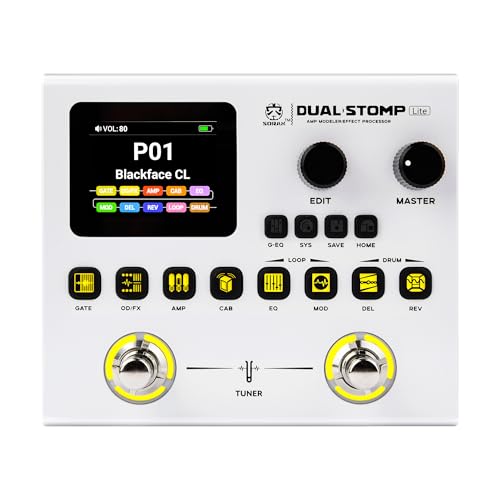
- 125 effects, 99 presets, and 10 simultaneous modules
- 40-second looper with 100 drum rhythms
- USB audio, IR/NAM support, and rechargeable battery
Best For: Portable practice, recording, and flexible guitar or bass tones
Performance Control Pick
MOOER GE150 Pro Multi-Effects Processor

- 200 presets, 170 effects, and 55 amp models
- Four footswitches plus expression pedal
- 80-second stereo looper with drums and metronome
Best For: Live performers needing extensive foot control and looping
Wireless Practice Choice
Pipe Tones Pocket Multi-Effects Processor

- 125 effects with 10 simultaneous modules
- 40-second stereo looper and 100 drum patterns
- Wireless control, USB audio, and included foot pedal
Best For: Portable guitar and bass practice with wireless convenience
All-in-One Practice Rig – FLAMMA FX100 Multi-Effects Pedal
The FLAMMA FX100 is a versatile choice among multi effects looper pedals, combining amp modeling, 151 effects, an 80-second looper, drum rhythms, and an expression pedal. Its headphone, OTG, and USB connections also make it practical for silent practice, recording, streaming, and live setups.
Best For: Guitarists who want extensive tone options, looping, rhythm practice, and recording connectivity in one pedal.
Pros:
- Includes 55 amp models, 151 effects, 26 factory IRs, and 10 third-party IR slots.
- 80-second looper, 40 drum rhythms, metronome options, and tap tempo support solo practice.
- Offers expression control, 200 presets, headphone output, OTG, USB, and stereo outputs.
Cons:
- The broad feature set may take time to learn and configure.
- Its looper is shorter than some dedicated loop pedals.
The FX100 is a strong all-purpose option for players who value breadth and connectivity. It is especially appealing when one pedal needs to cover home practice, demos, streaming, and stage use.
Dedicated Looping Simplicity – LEKATO Looper Guitar Pedal
The LEKATO is a focused option among multi effects looper pedals for players who prioritize long recording time and straightforward foot control. It provides nine loops, up to 40 minutes of total memory, unlimited overdubs, a tuner, and USB file transfer.
Best For: Guitarists and bassists who want a dedicated looper with generous memory and uncomplicated operation.
Pros:
- Stores nine loops with up to 10 minutes per recording and 40 minutes total.
- Supports unlimited overdubbing with record, undo, redo, stop, and erase commands.
- Uses 48 kHz/24-bit uncompressed audio and includes a tuner and USB import/export.
Cons:
- It does not provide amp modeling, drum rhythms, or a broad multi-effects library.
- Controls are centered on a single knob and foot-command operation.
The LEKATO makes the most sense when looping is the main requirement rather than a full effects workstation. Its long memory and USB transfer add useful flexibility for developing and saving loop performances.
Practice-Friendly Classic – Zoom G1X FOUR Multi-Effects Processor
The Zoom G1X FOUR offers a compact, accessible entry into multi effects looper pedals. It combines 71 effects, 13 amp models, a 30-second looper, 68 rhythm patterns, an expression pedal, and headphone or auxiliary connections for practice and basic performance use.
Best For: Beginners and practice-focused guitarists who want built-in rhythms, looping, and expression control.
Pros:
- Provides 71 effects and 13 amp models for varied clean and high-gain tones.
- Includes a 30-second looper and 68 rhythm patterns for timing and songwriting practice.
- Features an expression pedal, aux input, headphone monitoring, and battery-powered operation.
Cons:
- The looper is shorter and the effects selection is smaller than those of the larger processors listed here.
- Its listed signal format is analog despite its USB Micro-B connection and digital editing software.
The G1X FOUR is a practical, approachable choice for players who want a broad starting palette without moving to a larger floor processor. Its rhythms, battery operation, and expression pedal make it particularly useful for practice away from a full rig.
Stage-Ready Modeling Hub – Donner Arena 2000 Multi-Effects Pedal
The Donner Arena 2000 is a performance-oriented entry among multi effects looper pedals, pairing 278 effect types with amp and cabinet modeling, IR support, a 60-second looper, drum rhythms, and extensive output options. XLR, MIDI, USB-C, OTG, and dual expression support make it suitable for moving between practice, recording, and stage setups.
Best For: Players who need deep modeling options, flexible live connections, and hands-on control.
Pros:
- Offers 278 effects, 80 amp simulations, 50 cabinet simulations, and 100 IR positions.
- Includes a 60-second looper, 40 drum rhythms, headphone output, and OTG phone capture.
- Provides customizable control, EXP1/EXP2 support, MIDI, USB-C, XLR, aux, and cabinet-sim output options.
Cons:
- It is larger and heavier than more compact practice pedals.
- It requires corded power and does not include a battery compartment.
- Headphones with impedance above the recommended 32–64 ohms may produce low volume.
The Arena 2000 is the strongest fit here for players who expect a pedal to serve both as a detailed tone platform and a live-control center. Its connectivity is a major advantage, although its larger format and setup depth may be more than casual players need.
Versatile Starter – MOOER GE100
The MOOER GE100 is a practical choice for players seeking multi effects looper pedals with straightforward controls, a useful preset library, and built-in practice tools. It combines 66 effect types, a 180-second looper, drum rhythms, and an expression pedal in a compact unit.
Best For: Guitarists who want an affordable all-in-one practice and tone-building pedal.
Pros:
- Includes 80 preset patches and 80 user patches for organizing tones.
- Offers 66 effect types across eight effect modules.
- 180-second looper and 40 drum rhythms support practice and songwriting.
- Can run from a DC adapter or four AA batteries and includes headphone output.
Cons:
- Its feature set is less extensive than newer processors with amp modeling and IR support.
- The looper is shorter than the approximately 150-second loopers in some competing models.
The GE100 is a sensible, easy-to-use option when core effects, looping, and practice features matter more than advanced connectivity or extensive cabinet simulation.
Feature-Rich Workstation – LEKATO TANK PRO
The LEKATO TANK PRO stands out among multi effects looper pedals for its large modeling library, flexible routing, and recording-friendly connections. It pairs a 150.8-second looper with amp and cabinet modeling, IR loading, drum rhythms, Bluetooth, and a rechargeable battery.
Best For: Players who want a portable pedal for practice, performance, recording, and detailed tone creation.
Pros:
- Provides 300+ effects, including 90 amp models and 90 cabinet simulations.
- Supports AMX files and third-party WAV IR files for expanded tone shaping.
- Includes a looper with auto-record and unlimited overdubbing, plus 100 drum rhythms.
- Offers XLR output, USB audio, Bluetooth audio, USB MIDI, and up to seven hours of battery operation.
Cons:
- Its broad feature set may require more setup time than a simpler multi-effects pedal.
- At 1.8 pounds, it is less lightweight than some compact practice pedals.
For musicians who need one device to cover sound design, looping, backing tracks, and computer recording, the TANK PRO is the most complete workstation in this group.
Smart Modern Option – MOOER GE100 Pro
The MOOER GE100 Pro brings a modern interface to multi effects looper pedals, combining 240 effects with AI-assisted tone creation, app and desktop editing, and support for expanded amp and cabinet files. Its stereo looper, drum machine, Bluetooth, and USB-C connectivity also make it useful for practice and mobile music work.
Best For: Players who value visual controls, software editing, AI tone assistance, and modern connectivity.
Pros:
- Includes 240 effects with support for NAM, MNRS, and third-party IR files.
- Features an 80-second stereo looper, 40 drum rhythms, and 10 metronome patterns.
- Offers a 3.5-inch color display, RGB lighting, Bluetooth audio, and USB-C.
- Works with MOOER Cloud, mobile editing, desktop software, and tone-file sharing.
Cons:
- The 80-second looper is shorter than the loopers in the GE100 and TANK PRO.
- The supplied notes specify AC-adapter power for this model, rather than built-in battery operation.
The GE100 Pro is a strong fit for players who want a more visual, connected workflow and modern tone-expansion options without giving up essential looping and rhythm tools.
Portable Tone Lab – SORAN JME-02 Dual Stomp Lite
The SORAN JME-02 is a compact choice for players comparing multi effects looper pedals with recording and practice features built in. It combines 125 effects, 99 presets, 10 simultaneous modules, amp modeling, a 40-second looper, drum rhythms, and a rechargeable battery in a desktop-friendly enclosure.
Best For: Guitarists and bassists who want portable practice, broad tone shaping, and direct USB recording.
Pros:
- Offers 125 effects, 99 presets, and 10 independent effect modules.
- Includes a 40-second looper, 100 drum rhythms, tuner, and Auto Rec Mode.
- Provides 48 kHz/24-bit USB audio, IR/NAM loading, and 20 customizable slots.
- Rechargeable battery provides up to six hours of continuous operation.
Cons:
- The looper is limited to 40 seconds.
- Its compact control layout may not suit players wanting extensive dedicated foot control.
With its color display, rechargeable design, and wide effect selection, the JME-02 is especially practical for desktop practice, mobile setups, and home recording. Its imported IR/NAM support also gives experienced users room to expand beyond the included tones.
Performance Control Pick – MOOER GE150 Pro Multi-Effects Processor
The MOOER GE150 Pro stands out among multi effects looper pedals for players who need hands-on control during practice or performance. It pairs 200 presets and 170 effects with four multi-purpose footswitches, an expression pedal, an 80-second stereo looper, and amp and cabinet modeling.
Best For: Performers who prioritize foot-controlled patch changes, expression control, and a longer stereo looper.
Pros:
- Includes 200 factory presets, 170 effects, 55 amp models, and 26 cabinet simulations.
- Four multi-purpose footswitches support patch changes, looping, and rhythm control.
- Built-in expression pedal handles parameter or volume control.
- Offers an 80-second stereo looper, 40 drum rhythms, and 10 metronome modes.
Cons:
- The standard version is mains-powered rather than battery-powered.
- Its larger, heavier format is less convenient for highly portable setups.
The GE150 Pro is a strong fit when live workflow matters as much as tone variety. Its four-switch layout, expression pedal, OTG recording, and expanded looper make it more performance-oriented than a simple desktop effects unit.
Wireless Practice Choice – Pipe Tones Pocket Multi-Effects Processor
The Pipe Tones Pocket is a practical option for shoppers seeking multi effects looper pedals in a compact, battery-powered format. It provides 125 effects, 10 simultaneous modules, a 40-second stereo looper, 100 drum patterns, wireless control, and a USB audio interface for guitar and bass practice or recording.
Best For: Players wanting a compact guitar-and-bass processor with wireless operation and included foot control.
Pros:
- Runs 125 effect types across 10 simultaneous modules.
- Includes a 40-second stereo looper with Auto Rec and 100 drum patterns.
- Supports NAM amp imports, third-party IR loading, and 48 kHz/24-bit USB recording.
- Includes an external foot pedal and rechargeable battery for hands-free portable use.
Cons:
- The looper is limited to 40 seconds.
- Its 7.4-inch desktop-style footprint is less compact than a single stompbox.
The Pipe Tones Pocket balances a small desktop footprint with useful live and recording features. Wireless app control, an included external pedal, and separate guitar and bass amp models make it a versatile choice for players who want fewer cables and a flexible practice setup.
How We Picked the Best Multi Effects Looper Pedals
We focused on the features that most affect everyday usability: effect variety, amp and cabinet modeling, looper length, overdub support, drum patterns, preset capacity, connectivity, and control layout. We also included products at several price and complexity levels so beginners, home players, gigging guitarists, and bassists can compare realistic alternatives.
Specifications can vary by firmware version and manufacturer listing, so treat advertised effect counts as a starting point rather than a direct measure of sound quality. A smaller library with easier navigation may be more useful than hundreds of effects buried in menus.
Quick Comparison
| What to Compare | Best For | Why It Matters |
|---|---|---|
| Effect and amp count | Exploring tones | Provides more starting points for building presets. |
| Looper time and overdubs | Practice and performance | Determines how much material you can record and layer. |
| Drum machine | Solo practice | Adds timing and groove without separate equipment. |
| IR, XLR, and MIDI support | Recording and live rigs | Improves direct connectivity and external control. |
| Expression and footswitch layout | Hands-free control | Makes volume, wah, patch changes, and looping easier. |
Key Buying Factors for Multi-Effects Looper Pedals
Looper Design
Check the maximum recording time, whether overdubs are unlimited, and how easily you can stop, undo, redo, and clear a loop. A longer looper is useful for layered arrangements, while a simpler loop function may be sufficient for practice.
Effects and Modeling
Look for the effect categories you actually use, such as drives, modulation, delay, reverb, pitch effects, and compression. Amp models and cabinet simulations matter most when connecting directly to headphones, an audio interface, a mixer, or powered speakers.
Connections and Editing
USB can help with firmware updates, recording, or preset management. MIDI is valuable in larger rigs, while XLR outputs can simplify connection to a mixer or PA. IR loading and capture support are useful for players who want more realistic or personalized cabinet tones.
Control and Portability
Consider the number of footswitches, tap-tempo access, expression control, screen readability, and whether patches can be edited quickly onstage. Compact units save space, but larger processors may be easier to operate without bending down.
Who Should Buy Which Multi Effects Looper Pedals?
Beginners and casual players should prioritize intuitive editing, useful presets, a tuner, and a built-in rhythm section over the highest advertised effect count. Home players may prefer headphone output, a looper, drum patterns, and USB connectivity for quiet practice and basic recording.
Gigging guitarists should look for dependable foot control, preset organization, adequate switching flexibility, and outputs suited to an amplifier, mixer, or PA. Sound-focused players should consider amp modeling, cabinet simulations, IR support, and signal-routing options. If you use multiple external devices, MIDI and flexible connectivity become more important.