The best kalimbas for recording combine a clean, resonant tone with dependable tuning and a design that is easy to mic or connect to your setup. This roundup compares 10- and 17-key beginner-friendly models alongside a larger chromatic option.
Whether you are layering gentle melodies, creating ambient textures, or recording acoustic performances, use the guide below to match the instrument’s wood, range, accessories, and recording needs.
Best 10 Kalimbas for Recording Picks for 2026
Best Overall
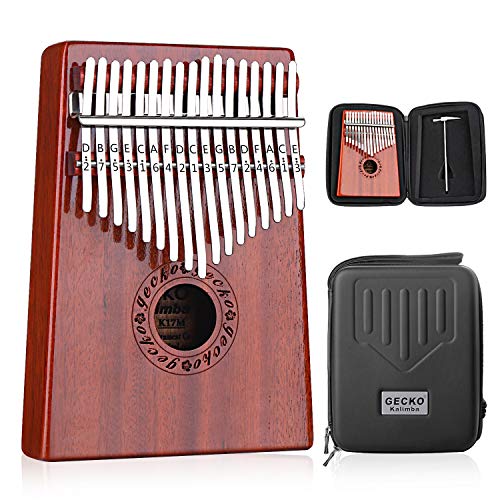
- Mahogany body with alloy-steel bars
- Protective EVA case included
- Video and booklet learning guidance
Best For: Beginners and portable recording setups
Best Beginner Set

- Resonant mahogany construction
- Engraved notes aid learning
- Includes tuning and care accessories
Best For: Students, beginners, and gift buyers
Best Lightweight Pick

- Weighs just 11.52 ounces
- Embossed notes and ergonomic curve
- Includes bag, book, and cleaning fabric
Best For: Travelers and quick practice sessions
Best Complete Package

- Varnished mahogany with clear tones
- 25-song English tablature book
- Waterproof case and display stand
Best For: Ready-to-play practice and recording setups
Clear-Tone Craft Pick

- Bright, clear sound profile
- Handmade African rosewood body
- Case and learning accessories included
Best For: Portable 17-key playing and practice
Portable Recording Starter

- Clear tone from air-dried wood
- Beginner-friendly guidance and song book
- Lightweight kit with tuning hammer and bag
Best For: Beginners practicing or recording on the go
Extended-Range Recording Choice

- 42-key chromatic range
- Solid natural walnut construction
- Secure keys and included EVA case
Best For: Flexible compositions and extended-range recording
Best Beginner Pick

- Solid wood body with crisp, balanced tone
- Embossed notes and ergonomic hand rest
- Includes bag, manual, and cleaning cloth
Best For: Beginners and casual recording
Best Warm-Tone Option

- Warm, resonant tone with harp-like character
- Large accessory package with tuning tools
- Portable for practice, travel, and recording
Best For: Warm-sounding recorded parts
Best Warranty Coverage

- Embossed notes support beginner learning
- Includes case and tune hammer
- 365-day warranty and 180-day returns listed
Best For: Adult beginners seeking support coverage
Best Overall – GECKO 17-Key Kalimba
For shoppers comparing kalimbas for recording, the GECKO 17-key model offers a mahogany body and alloy-steel bars designed for a resonant playing experience. Its included protective case, tuning hammer, and learning materials also make it practical for home sessions, outdoor use, and beginners building confidence.
Best For: Beginners and players who want a portable kalimba with protective storage and study guidance.
Pros:
- Mahogany body and alloy-steel bars
- Includes EVA protective case, tuning hammer, and instruction booklet
- QR-linked video guidance supports learning
- Suitable for performance, recording, relaxation, and travel
Cons:
- At 1.9 pounds, it is heavier than several comparable options
- The notes do not specify an included songbook
The GECKO stands out as a well-equipped choice for buyers who value protection and instruction alongside a traditional 17-key design. Its included case is especially useful when transporting the instrument to recording sessions.
Best Beginner Set – UNOKKI 17-Key Kalimba
Among kalimbas for recording, the UNOKKI 17-key thumb piano is a beginner-friendly option with a dark brown mahogany body and resonant sound profile. Its engraved note names and bundled accessories can simplify practice before you use it for casual recording or travel.
Best For: New players, students, and gift buyers seeking a complete starter set.
Pros:
- Handcrafted mahogany body with resonant sound profile
- Engraved note names make the layout easier to follow
- Includes tuning hammer, instruction book, stickers, cloth bag, polishing cloth, and finger covers
- Compact 1.1-pound design is convenient for travel
Cons:
- The supplied notes do not state a warranty period
- Accessories include a cloth bag rather than a hard protective case
UNOKKI is a sensible pick when easy learning and included accessories matter most. The compact mahogany instrument should suit simple recording ideas, practice, and informal performances without adding much bulk to your setup.
Best Lightweight Pick – Newlam 17-Key Kalimba
For portable kalimbas for recording, the Newlam 17-key model combines air-dried wood, ore-steel bars, and a lightweight 11.52-ounce build. Embossed notes and an ergonomic hand-rest curve make it a practical choice for beginners who want to learn quickly and carry the instrument between sessions.
Best For: Lightweight travel, first-time players, and quick practice sessions.
Pros:
- Natural air-dried wood and ore-steel bars support an ethereal tone
- Embossed letters and notes avoid reliance on stickers
- Curved hand-rest design is intended for comfortable positioning
- Includes instruction book, flannelette bag, and cleaning fabric
Cons:
- The included flannelette bag provides less protection than a hard case
- The notes describe a 180-day warranty rather than longer coverage
Newlam is particularly appealing if weight and straightforward learning are priorities. Its embossed key markings and compact construction make it easy to keep nearby for practice or use as a simple melodic recording instrument.
Best Complete Package – ORORA 17-Key Kalimba
The ORORA 17-key kalimba is a strong all-in-one option for shoppers seeking kalimbas for recording, practice, and relaxation. Its varnished mahogany construction, clear and soothing tone, waterproof case, stand, and 25-song English songbook make it ready for use with few extra purchases.
Best For: Players who want a recording-friendly starter package with songs, storage, and display accessories.
Pros:
- Varnished wood body offers clear, soothing tones
- Includes a waterproof protective case and carrying accessories
- 25-song English tablature book supports immediate practice
- Stand, tuning hammer, and stickers are included
Cons:
- The listed manufacturer warranty is only 30 days
- At 0.98 kg, it is not the lightest option in this group
ORORA is the most complete package for buyers who want to start playing promptly and keep the instrument protected. The songbook is useful for structured practice, while the case and stand add convenience for transport and home use.
Clear-Tone Craft Pick – LingTing K17A Wind Whisperer
If you want kalimbas for recording with a bright, clear sound profile, the LingTing K17A combines a handmade African rosewood body with 17 adjustable carbon-steel tines. Its compact design and included case make it practical for home sessions, lessons, and portable playing.
Best For: Beginners and experienced players seeking a portable 17-key kalimba with a bright, clear tone.
Pros:
- Bright and clear sound profile suited to defined thumb-piano lines.
- Handmade African rosewood body gives each instrument a distinct wood texture.
- Includes an EVA case, cloth, syllable stickers, and learning materials.
- Small and convenient to carry for outdoor, school, or party use.
Cons:
- The 17-key range is less expansive than a chromatic model.
- No dedicated recording-focused output or electronics are listed in the supplied details.
Choose this model when portability, traditional wood construction, and a crisp sound matter more than an extended note range or built-in recording features.
Portable Recording Starter – Ubblove 17-Key Kalimba
For shoppers comparing kalimbas for recording on a budget-friendly, portable setup, the Ubblove 17-key model offers a wood body, alloy-steel bars, and a clear tone. The included book, guidance, tuning hammer, and bag make it especially approachable for first-time players.
Best For: Beginners who want an easy-to-learn, travel-ready kalimba for practice, casual recording, and performance.
Pros:
- Clear tone and natural air-dried wood construction.
- Designed for beginners and professionals, with guidance intended to help users learn a song quickly.
- Compact 300-gram design travels well for camping, picnics, and outdoor use.
- Complete kit includes a tuning hammer, song book, stickers, bag, and cleaning fabric.
Cons:
- The 17-key layout offers less range than an extended chromatic kalimba.
- The supplied details do not list a dedicated pickup or audio output.
- Warranty coverage is listed as one month.
This is a sensible starter choice if you value an accessible learning package and portability; more advanced recording arrangements may call for a kalimba with a wider range or separate microphone setup.
Extended-Range Recording Choice – LingTing K42W Moon Whisperer
When recording arrangements that need more notes, the LingTing K42W stands out with its 42-key chromatic layout and solid walnut body. Its expanded range supports a wider variety of music, while the patented key-fastening design is intended to keep the sound clear and consistent during play.
Best For: Players who need an extended-range kalimba for flexible compositions, arrangements, and studio parts.
Pros:
- 42-key chromatic design provides substantially more range and note flexibility.
- Solid walnut construction showcases natural wood without artificial paint or varnish.
- Patented fastening design helps keep keys secure during playing.
- Includes an EVA case, cleaning cloth, tuning stickers, and gift box.
Cons:
- The larger key count may be less immediately approachable than a standard 17-key model.
- No dedicated pickup, preamp, or recording output is listed.
- The supplied notes show a model-number discrepancy: the title lists K42W, while the details list K34V.
This is the strongest fit of the three for complex recorded parts and broader arrangements, provided you are comfortable with an extended chromatic layout and recording through a separate microphone.
Best Beginner Pick – Portable 17-Key Kalimba
For shoppers seeking kalimbas for recording, this 17-key model offers a practical starting point with crisp, clear, well-balanced tones, embossed markings, and a comfortable curved hand rest. Its compact build and included storage and care accessories also make it convenient for practice, demos, and casual recording sessions.
Best For: Beginners, children, adults, and hobbyists who want an easy-to-use portable kalimba.
Pros:
- Solid wood body and high-grade steel tines are designed for clear, balanced sound.
- Deep embossed note and letter markings are less prone to fading than stickers.
- Includes an instruction manual, flannel storage bag, and cleaning cloth.
- Curved hand-rest design supports a comfortable playing angle.
Cons:
- No warranty is listed in the supplied details.
- Its 17-key range may be limiting for more advanced arrangements.
This is a straightforward choice for building basic kalimba parts and learning melodies without a complicated setup. The crisp tone and stable wood construction make it a sensible beginner-oriented option for home recording.
Best Warm-Tone Option – Mahogany 17-Key Kalimba
Among kalimbas for recording, this mahogany 17-key model stands out for its warm, resonant, harp-like sound. It comes with a broad accessory set, making it useful for beginners who want to learn, tune, and experiment with recorded parts at home or on the go.
Best For: Beginners, music lovers, and players who prefer a warmer resonant tone for practice or recording.
Pros:
- Mahogany body and ore steel bars are designed for warm tone, resonance, and sustain.
- Includes a gift box, cloth bag, instruction book, music score, tuning hammer, finger cot, stickers, and cleaning cloth.
- Portable design suits home use, travel, outdoor playing, and recording.
- 30-day no-hassle return policy is listed in the supplied notes.
Cons:
- The 0.48 kg weight is heavier than some compact kalimba options.
- Sticker-based accessories may require more upkeep than embossed markings.
Its warm mahogany character can add a softer, more rounded layer to simple arrangements. The extensive accessory package is especially helpful if you want a ready-to-play instrument with basic learning and tuning tools included.
Best Warranty Coverage – YUNDIE 17-Key Kalimba
For those comparing kalimbas for recording, the YUNDIE 17-key model combines a portable wood body with embossed notes and a curved hand-rest design. Its included tune hammer and study instruction make it a useful option for beginners who want to learn and prepare the instrument before recording.
Best For: Adult beginners and players who value included tuning support and extended product coverage.
Pros:
- High-quality wood and ore steel bars are intended to produce pure music.
- Embossed letters and notes can help beginners identify keys while learning.
- Portable design works for travel, camping, parties, and casual playing.
- Includes a case and tune hammer, with a listed 365-day warranty and 180-day unconditional return guarantee.
Cons:
- The supplied notes specify that it is not intended for users under 14.
- Only a case and tune hammer are listed as included components, so accessories are more limited.
- The notes do not provide a detailed sound profile or dimensions.
This model is appealing when after-purchase coverage matters as much as portability. The embossed key markings and tuning hammer support a simple learning workflow, while the 17-key format keeps the instrument accessible for basic recording projects.
How We Picked the Best Kalimbas for Recording
We focused on the features that matter most when a kalimba moves from casual practice to a microphone: consistent tuning, clear note separation, useful resonance, comfortable tine spacing, and construction that minimizes unwanted rattles. We also considered portability, included accessories, learning materials, and whether each instrument suits beginners, experienced players, or layered studio work.
Most options in this selection have 17 keys, a practical layout for familiar melodies and uncomplicated overdubs. The 42-key solid-walnut model offers a wider chromatic range, but it may require more setup time and a more deliberate playing technique.
Quick Comparison
| Best For | What to Look For | Recommended Type |
|---|---|---|
| First recordings | Simple tuning, comfortable keys, included hammer | 17-key beginner model |
| Portable recording | Protective case, compact design, accessories | 17-key travel-friendly model |
| Melody layering | Warm resonance and clean note separation | Wooden 17-key kalimba |
| Complex arrangements | Expanded range and chromatic notes | 42-key chromatic kalimba |
Key Buying Factors for Kalimbas for Recording
Tonewood and Resonance
Mahogany commonly produces a warm, rounded sound, while walnut can offer a balanced tone with clear articulation. A resonant body helps the notes project, but excessive sustain can blur fast passages or create problems in a reflective room. Listen for even volume across the keyboard rather than choosing only by appearance.
Tuning Stability
Recording exposes small pitch problems, especially when a kalimba is layered with piano, guitar, or synthesizers. Choose a model with firmly seated tines and an included tuning hammer. Before tracking, tune from the center outward, then recheck after the instrument has acclimated to the room.
Range and Layout
A 17-key kalimba is usually the easiest starting point and works well for hooks, melodies, and ambient parts. A 42-key chromatic model is better for advanced arrangements, accidentals, and playing in more keys, but its wider layout can be less immediate for beginners.
Microphone and Room Setup
Most acoustic kalimbas are recorded with a small-diaphragm condenser placed several inches in front of the soundboard. Move the microphone to control brightness and bass, and use a quieter room to capture delicate notes. If the instrument has pickup or sound-hole features, test them for handling noise and tonal balance rather than assuming they will outperform a microphone.
Who Should Buy Which Kalimbas for Recording?
Beginners and gift buyers: Choose a straightforward 17-key model with a case, tuning hammer, and songbook or instructions. These accessories shorten the learning curve and make recording easier.
Home-studio musicians: Prioritize reliable tuning, a balanced wooden body, and a tone that leaves space for vocals or other instruments. A protective case is useful if you record in multiple rooms.
Experienced players and arrangers: Consider the 42-key chromatic option when you need more notes, accidentals, or independent parts. Confirm that your recording space and playing technique can accommodate its greater complexity.