The best desktop guitar effects processors pack amp models, effects, cabinet simulation, and recording tools into compact units that are easier to manage than a large pedalboard. They can suit bedroom practice, home recording, rehearsals, and live setups.
This roundup compares 10 options across different budgets and workflows, from straightforward multi-effects units to feature-rich processors with IR loading, MIDI, expression control, and USB audio.
Best 10 Desktop Guitar Effects Processors Picks for 2026
Studio Favorite
BOSS GT-001 Desktop Guitar Effects Processor

- GT-100 Version 2.0 amps and effects
- USB audio/MIDI and XLR mic input
- Compact desktop design with Tone Studio support
Best For: Home studios, practice, and mobile recording rigs
Hands-On Choice
BOSS ME-90 Guitar Multi-Effects Processor
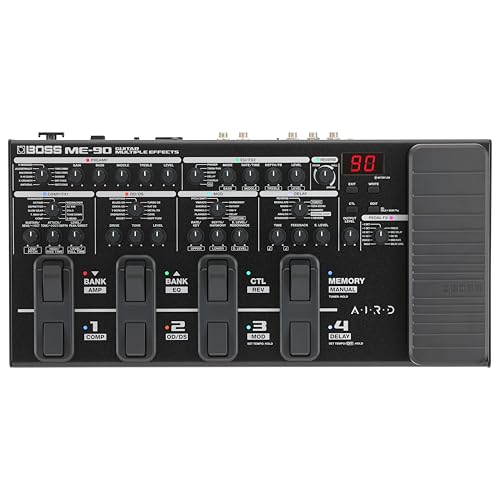
- 60 effects with 11 AIRD amp models
- Eight footswitches and expression pedal
- Battery-powered design with IR loading and effects loop
Best For: Live players wanting quick, tactile tone control
Portable Smart Pick
SONICAKE QME-20 Multi-Effects Pedal

- 130+ effects with NAM and cabinet IR support
- USB audio, Bluetooth MIDI, and app editing
- Rechargeable battery, looper, tuner, and drum rhythms
Best For: Portable practice, wireless setups, and flexible tone editing
Portable Tone Explorer
LEKATO PA-4 Desktop Multi-Effects

- Six effect modules with 80 presets and expandable amp/IR support
- Bluetooth, OTG recording, and app-based signal-chain editing
- 145 g design with approximately nine-hour battery life
Best For: Mobile practice, silent playing, and smartphone recording
Smart Practice Studio

- 3.5-inch display with AI tone assistance, RGB lighting, and Bluetooth
- Supports 240 effects plus MNRS, NAM A2, and third-party IR files
- Includes looper, drum rhythms, metronome patterns, and expression pedal
Best For: Deep tone editing, practice, and creative home recording
Stage-Ready Workhorse

- 240-plus effects, 140-plus amp/cab models, and 256 patch slots
- Built-in expression pedal, 180-second looper, and 100 drum patterns
- Rugged chassis, USB audio interface, and included gig bag
Best For: Live performers, bassists, and advanced recording setups
Best Budget Practice Pick

- 71 effects and 13 amp models
- 30-second looper with 68 rhythm patterns
- Battery-powered with expression pedal
Best For: Practice, songwriting, and portable tone exploration
Best for Preset Variety

- 200 presets and 170 effects
- 55 amp models with 26 cabinet simulations
- Four footswitches, looper, drums, and USB-C
Best For: Tone variety, live control, and home recording
Best Stage and Studio Hub

- 240-plus effects and 11 modules per patch
- Balanced XLR, MIDI, effects loop, and USB-C audio
- 180-second looper with expression pedal
Best For: Stage rigs, studio recording, and guitar or bass
Studio Favorite – BOSS GT-001 Desktop Guitar Effects Processor
The BOSS GT-001 is a compact choice for musicians comparing desktop guitar effects processors for recording, practice, or a mobile rig. It combines GT-100 Version 2.0 amp and effects sounds with hands-on controls, USB audio/MIDI, and a useful XLR microphone input.
Best For: Home-studio guitarists, mobile recording setups, and players who also need vocal or acoustic-instrument connectivity.
Pros:
- Includes acclaimed GT-100 Version 2.0 amps and effects.
- USB audio/MIDI connects directly to a DAW.
- XLR mic input and stereo auxiliary input expand recording and practice options.
- BOSS Tone Studio supports editing, librarian functions, and custom patches.
Cons:
- Designed for desktop use rather than foot-controlled live operation.
- Requires corded power and does not include a built-in expression pedal.
The GT-001 stands out when a small footprint and direct computer connectivity matter more than stage-style switching. Its combination of guitar, microphone, and auxiliary inputs makes it particularly versatile for a compact studio.
Feature-Packed Pick – Donner Arena 2000 Multi-Effects Processor
The Donner Arena 2000 is a strong option among desktop guitar effects processors for players who want a broad digital rig in a compact unit. It offers 278 effect types, amp and cabinet simulations, IR support, looping, drum rhythms, and connections suited to both computer-based work and live performance.
Best For: Guitarists who want extensive sound variety, practice tools, and flexible stage or recording connectivity.
Pros:
- Provides 278 effect types, including 80 amp and 50 cabinet simulations.
- Supports 100 IRs, with 50 additional banks for third-party IRs.
- Includes a 60-second looper, 40 drum rhythms, headphone output, and OTG phone capture.
- Offers customizable controls, expression-pedal support, MIDI, USB-C, and XLR outputs.
Cons:
- Does not include a battery compartment.
- Headphone performance is recommended with 32–64-ohm headphones.
With its large effects library and stage-friendly I/O, the Arena 2000 is built for experimentation and flexible routing. It is especially appealing to players who want one processor for practice, demos, and live setups.
Hands-On Choice – BOSS ME-90 Guitar Multi-Effects Processor
BOSS ME-90 Guitar Multi-Effects Guitar Processor | All-In-One Guitar Processor
Check Price On AmazonThe BOSS ME-90 is a practical choice for guitarists seeking desktop guitar effects processors with immediate, stompbox-style control. Its knob-based interface, eight multifunction footswitches, expression pedal, AIRD amp models, IR loading, and effects loop cover both performance and practice needs.
Best For: Performing guitarists who want fast hands-on tone shaping and a portable all-in-one processor.
Pros:
- Includes 60 effects derived from the GT-1000 processor.
- Features 11 AIRD amp models, IR loading, and an effects loop.
- Eight multifunction footswitches and an expression pedal support live control.
- Offers battery operation, Tone Studio integration, and 36 preset plus 36 user patches.
Cons:
- Optional Bluetooth audio/MIDI requires an additional adaptor.
- Its larger footprint is less desktop-friendly than a small studio-only unit.
The ME-90 prioritizes tactile control, making it a good fit for players who adjust sounds during performance instead of relying primarily on computer editing. Its battery capability also adds flexibility for rehearsals and portable use.
Portable Smart Pick – SONICAKE QME-20 Multi-Effects Pedal
The SONICAKE QME-20 brings a wide range of tools to players comparing desktop guitar effects processors for portable practice, performance, and recording. It combines more than 130 effects with amp and cabinet IR support, USB audio, mobile and computer editing, and a rechargeable battery.
Best For: Guitarists who want portable wireless operation, deep preset editing, and built-in practice or performance tools.
Pros:
- Offers more than 130 effects, 100 preset slots, and nine simultaneous modules.
- Supports third-party NAM and cabinet IR files through its editing software.
- Includes a 20-second looper, tuner, metronome, and 100 drum rhythms.
- Provides USB audio, Bluetooth MIDI, stereo outputs, and a rechargeable battery rated for up to 3.5 hours.
Cons:
- Package does not include a 9V DC or USB cable.
- Firmware updates should currently be avoided on Windows 11; Windows 10 or Mac is recommended.
- Warranty coverage is listed as 90 days.
The QME-20 is a compelling compact option when portability and modern connectivity are priorities. Its rechargeable battery and extensive editing support make it useful beyond a fixed desktop setup, while the built-in rhythm and looping tools support standalone practice.
Portable Tone Explorer – LEKATO PA-4 Desktop Multi-Effects
For players seeking desktop guitar effects processors for practice, recording, and portable use, the LEKATO PA-4 combines six effect modules, amp modeling, cabinet IR support, and app-based editing in a compact battery-powered unit. Its Bluetooth and OTG features also make it practical for silent practice and mobile content creation.
Best For: Mobile practice, headphone playing, quick recording, and players who want customizable tones in a lightweight format.
Pros:
- Offers 80 presets, 20 amp simulations, 20 cabinet IRs, and third-party IR/amp file support.
- Supports app-based drag-and-drop signal-chain editing on desktop and mobile devices.
- Provides Bluetooth backing tracks, OTG recording, and loopback mixing for guitar-plus-backing-track videos.
- Compact 145-gram design delivers approximately nine hours of battery life and can charge while in use.
Cons:
- An OTG adapter is required for smartphone recording and is sold separately.
- Its compact touch-control design may offer less hands-on control than a larger stage pedalboard.
The PA-4 is a strong choice when portability and connected practice matter more than extensive physical controls. It is especially appealing for creators and home players who want a flexible, headphone-friendly processor.
Smart Practice Studio – MOOER GE100 Pro Multi-Effects
The MOOER GE100 Pro is one of the more feature-rich desktop guitar effects processors for players who want visual control, AI-assisted tone creation, and a broad editing ecosystem. Its color display, Bluetooth input, software support, and built-in practice tools make it useful beyond basic effects switching.
Best For: Home practice, tone experimentation, mobile or desktop editing, and players who want looping and rhythm tools in one unit.
Pros:
- Includes a 3.5-inch color display, RGB lighting, Bluetooth audio input, and USB Type-C connectivity.
- Supports desktop software, the MOOER Cloud app, MNRS and NAM A2 files, and third-party IRs.
- Built-in AI assistance can help create tones, while the unit also includes 240 effects.
- Offers an 80-second stereo looper, 40 drum rhythms, 10 metronome patterns, and an expression pedal.
Cons:
- The supplied details list AC power for the standard GE100 Pro, so it may be less convenient for unplugged use.
- Its many editing, AI, and audio-separation features may take time to learn.
With its screen-led interface and extensive software ecosystem, the GE100 Pro suits players who enjoy shaping and organizing sounds in depth. It is also a capable practice hub for looping, rhythms, and instrumental study.
Stage-Ready Workhorse – Valeton GP-200 Multi-Effects
The Valeton GP-200 is a stage-oriented option among desktop guitar effects processors, combining substantial amp and effect modeling with foot control, flexible routing, and a rugged metal chassis. The included gig bag and USB audio features also support rehearsal, live work, and recording setups.
Best For: Gigging guitarists and bassists who need extensive presets, hands-on control, live looping, and a durable all-in-one processor.
Pros:
- Provides more than 240 effects, 140-plus amp and cabinet models, and up to 11 simultaneous modules.
- Offers 256 patch slots, 20 user cabinet IRs, a 180-second looper, 100 drum patterns, and a chromatic tuner.
- Includes a built-in expression pedal, customizable footswitch layout, and 4.3-inch TFT color display.
- USB-C supports a 6-in/4-out audio interface with loopback and re-amping across Windows, macOS, iOS, and Android.
Cons:
- At 2.37 kg, it is substantially less portable than compact battery-powered processors.
- Its corded-electric power design is less suited to fully untethered playing.
- The extensive routing and modeling options may be more than casual players need.
The GP-200 prioritizes live usability and connectivity over minimal size. Its foot controls, large preset capacity, long looper, and robust chassis make it a compelling centerpiece for performance-focused rigs.
Best Budget Practice Pick – Zoom G1X Four
The Zoom G1X Four is a compact choice for guitarists shopping for desktop guitar effects processors with plenty of sounds for practice, basic recording, and experimentation. Its 71 effects, 13 amp models, expression pedal, looper, rhythm patterns, tuner, and battery operation make it especially flexible for home use.
Best For: Practice, songwriting, silent headphone sessions, and players who want a wide variety of effects in a small unit.
Pros:
- Includes 71 effects, 13 amp models, and an expression pedal.
- 30-second looper and 68 rhythm patterns support practice and idea development.
- Battery-powered operation, aux input, headphone monitoring, and Guitar Lab editing add convenience.
Cons:
- Its 30-second looper is shorter than the looping time offered by the other processors here.
- It has fewer amp models and effects than the more advanced options in this roundup.
The G1X Four is a sensible starting point for players who value portability and approachable practice features over extensive stage connectivity. It offers a lot of creative range without requiring a larger, more complex setup.
Best for Preset Variety – MOOER GE150 Pro
The MOOER GE150 Pro suits guitarists looking for desktop guitar effects processors with extensive preset and modeling options. It combines 200 factory presets, 170 effects, 55 amp models, cabinet simulations, an expression pedal, four footswitches, and USB-C connectivity in a performance-oriented format.
Best For: Players who want broad tone selection, hands-on patch control, looping, rhythm practice, and USB or phone recording.
Pros:
- Provides 200 presets, 170 effects, 55 amp models, 26 cabinet simulations, and 20 AMP and CAB sample slots.
- Four multi-purpose footswitches and an expression pedal offer flexible live control.
- Includes an 80-second stereo looper, 40 drum rhythms, 10 metronome modes, USB-C, OTG recording, aux, and headphone connections.
Cons:
- The standard GE150 Pro is corded electric rather than battery powered.
- Its feature-rich design may take more time to learn than a simpler practice processor.
The GE150 Pro is a strong middle-ground option for musicians who want a large sound library and practical performance controls. Its recording and rhythm features also make it useful beyond basic effects processing.
Best Stage and Studio Hub – Valeton GP-200
Valeton GP-200 Multi-Effects Processor for Guitar & Bass, Expression Pedal, MIDI, USB Interface
Check Price On AmazonThe Valeton GP-200 is built for guitarists and bassists who need desktop guitar effects processors with extensive routing, stage outputs, and recording connectivity. It offers more than 240 effects, 140-plus amp and cab models, flexible signal modules, MIDI, an effects loop, balanced XLR outputs, and a USB-C audio interface.
Best For: Stage and studio setups requiring broad instrument support, detailed patch control, MIDI, re-amping, and professional-style I/O.
Pros:
- Supports guitar, bass, and acoustic applications with more than 240 effects and up to 11 movable modules per patch.
- Includes balanced XLR outputs, an effects loop, five-pin MIDI, aux and headphone outputs, and USB-C 6-in/4-out audio with re-amping.
- Features an optical expression pedal, 180-second looper, 100 drum patterns, 20 user IR slots, and a 4.3-inch color screen.
Cons:
- It is not battery powered and requires the included 9V power supply.
- At about 2.37 kg, it is less portable than the compact Zoom unit.
The GP-200 is the most connectivity-focused choice in this group. Its extensive I/O, MIDI support, flexible routing, and audio-interface functions make it particularly well suited to players building a central stage-and-recording rig.
How We Picked the Best Desktop Guitar Effects Processors
We focused on the features that most affect everyday use: available effects and amp models, preset capacity, cabinet or impulse-response support, editing controls, connectivity, expression control, looping, and recording capability. We also considered whether each processor is better suited to quick plug-and-play use, detailed sound design, or integration with a larger rig.
Because specifications vary widely, the right choice depends less on the highest effects count and more on how easily a unit fits your playing, monitoring, and performance setup.
Quick Comparison
| Priority | Look for | Best suited to |
|---|---|---|
| Simple practice and small setups | Clear controls, tuner, presets, and headphone or compact outputs | Beginners and home players |
| Recording | USB audio, amp modeling, cab simulation, and IR loading | Home studios and demo work |
| Live performance | Fast preset access, expression control, dependable footswitches, and MIDI | Gigging guitarists |
| Deep sound design | Extensive effects, routing, editing, and preset storage | Experienced players and flexible rigs |
Key Buying Factors for Desktop Guitar Effects Processors
Effects, Amp Models, and IR Support
Count and variety matter, but model quality and editing flexibility matter more. Amp and cabinet modeling can provide a complete direct-to-PA or recording signal, while IR loading is useful when you want to use third-party cabinet captures. Check whether the processor supports the file formats and software workflow you already prefer.
Controls and Preset Management
A desktop-style unit may be ideal for tabletop editing, while a floorboard with footswitches is more practical for live changes. Consider screen size, knob layout, bank switching, preset organization, and whether an expression pedal is included. A large preset library is valuable only if you can navigate it quickly.
Connectivity and Expansion
USB audio can reduce the need for a separate interface during recording. MIDI is important for synchronized devices, external controllers, and advanced live rigs. Also check for XLR outputs, amplifier outputs, headphone connections, auxiliary input, effects loops, and firmware or editor support.
Practice and Performance Tools
Built-in tuners, loopers, drum patterns, and headphone outputs can make a processor much more useful for practice. For stage use, prioritize sturdy switching, reliable output options, and easy access to tap tempo, tuning, and volume controls.
Who Should Buy Which Desktop Guitar Effects Processors?
Choose a simpler, compact processor if you mainly practice at home and want quick access to common delays, reverbs, modulation effects, and amp sounds. A unit with an expression pedal is especially useful for volume, wah, pitch, or effect-depth control without adding another pedal.
For home recording, prioritize USB audio, amp and cabinet modeling, IR loading, and an editor that makes detailed adjustments manageable. Players building a direct-to-PA setup should look for balanced outputs, dependable preset switching, and enough routing flexibility for their monitoring needs.
Experienced guitarists with complex rigs should favor broad connectivity, MIDI, extensive preset storage, and flexible signal paths. If you play both guitar and bass, verify the available models, input handling, and output options before buying. Finally, compare the physical workflow—not just the specification list—so the processor feels natural to use every time you plug in.