Choosing the right EQ can make recorded vocals sound clearer, more polished, and easier to place in a mix. The best audio equalizers for recording vocals help you shape tone without overprocessing.
In this roundup, we focus on practical, studio-friendly options that support home recording, live vocal chains, and rack-based setups.
Best 10 Audio Equalizers for Recording Vocals Picks for 2026
31-Band Precision Equalizer
dbx 231s Dual Channel 31-Band Equalizer

- Dual 31-band constant-Q control
- Switchable 6 dB or 12 dB ranges
- Front bypass and LED level monitoring
Best For: Engineers needing detailed rack EQ control for vocal shaping
Clarity and Presence Enhancer
882i Professional Audio Exciter Processor & Sonic Maximizer
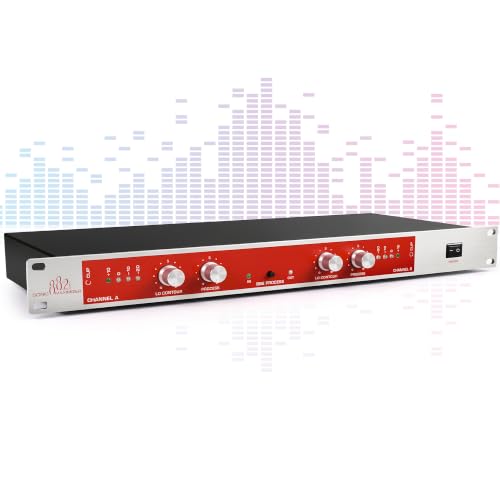
- Enhancement-focused dual-channel processor
- Adds clarity, presence, and low-end compensation
- Balanced XLR and TRS rack connections
Best For: Vocal chains needing clarity enhancement rather than traditional EQ
15-Band Stereo Rack EQ
Stereo Graphic Equalizer 15-Band EQ for Home Audio System

- 15 bands per channel with ±12 dB range
- Low-cut helps reduce unwanted low-end noise
- Balanced XLR and 1/4-inch TRS connectivity
Best For: Users needing flexible rack EQ with low-cut control for vocals
DSP Vocal Control Mixer
Digital Karaoke Mixer Audio Processor System

- DSP processing with 13-band EQ tuning
- Mic priority and feedback suppression tools
- Bluetooth, USB, optical, and multiple mic inputs
Best For: Singers and streamers wanting vocal enhancement with feedback control
Home Studio Friendly EQ
20-Band Noise Reduction Equalizer

- 20-band adjustment for detailed vocal shaping
- Noise-gate helps cut ambient noise and howl
- 31-band display makes changes easy to track
Best For: Home recording, streaming, and simple vocal cleanup
Pro Dual-Channel EQ
31-Band Stereo Graphic Equalizer

- Dual-channel 31-band control for precise shaping
- Low-cut switch helps reduce rumble and hum
- XLR and TRS I/O fit studio and live setups
Best For: Studio, live, and install users needing pro connectivity
Rack-Mount Vocal EQ
31-Band DSP Equalizer with Sub Output

- 31-band DSP EQ with real-time spectrum display
- 10 presets and noise reduction for easy recall
- Rack-mount design with XLR/TRS compatibility
Best For: Rack setups and users who want presets plus visual monitoring
Dual-Channel Rack EQ
15-Band Stereo Graphic Equalizer
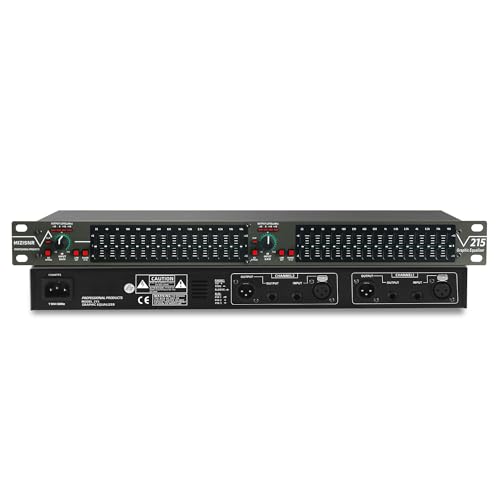
- 15-band dual-channel design with ±12dB range
- LOW-CUT switch helps reduce rumble and hum
- XLR and 1/4" TRS connections fit many setups
Best For: Home studios and live vocal cleanup
Digital Precision EQ

- 31-band dual-channel EQ with PC software control
- 10 presets plus bypass mode for quick comparison
- LED display and noise reduction support cleaner monitoring
Best For: Vocal users wanting detailed digital control
Feature-Rich Spectrum EQ
31-Band Digital Audio Analyzer

- 31-band EQ with real-time LED spectrum display
- Bluetooth 5.2 and USB playback add source flexibility
- 10 presets, bypass, and XLR/TRS connectivity
Best For: Studios and venues needing visual feedback and playback options
31-Band Precision Equalizer – dbx 231s Dual Channel 31-Band Equalizer
If you want a straightforward rack EQ for audio equalizers for recording vocals, the dbx 231s gives you dual-channel, 31-band control with constant-Q bands for detailed shaping. It’s a practical choice when you need precise tonal adjustments, switchable boost/cut ranges, and a bypass option for quick A/B checks.
Best For: Engineers who want a hands-on dual-channel graphic EQ for detailed vocal shaping in rack setups.
Pros:
- Dual 31-band, 1/3-octave constant-Q design for fine frequency control
- Switchable 6 dB or 12 dB boost/cut ranges for flexible adjustments
- Front-panel bypass switch makes comparison easy during setup
- LED ladders help monitor output levels at a glance
Cons:
- Uses a rackmount format, so it’s not a portable vocal EQ solution
- Focused on manual EQ shaping rather than digital vocal effects
The 231s is best when you need dependable, no-frills equalization control in a live or studio rack. It’s built for clean signal management rather than onboard processing extras.
Clarity and Presence Enhancer – 882i Professional Audio Exciter Processor & Sonic Maximizer
For audio equalizers for recording vocals, the 882i is less of a traditional EQ and more of a signal enhancer that adds clarity, presence, and low-end compensation. Its dual-channel layout, bypass control, and balanced rack connections make it suitable when you want to restore brightness without introducing harshness or heavy distortion.
Best For: Vocal chains that need added clarity and presence from a dual-channel rack processor.
Pros:
- Advanced harmonic processing aims to improve clarity and presence
- Dual-channel independent controls for separate signal paths
- Lo Contour bass adjustment adds low-frequency compensation
- Balanced XLR and 1/4″ TRS I/O for rack integration
Cons:
- It is a sonic maximizer, not a conventional multi-band vocal EQ
- Best results depend on careful use of its enhancement controls
This model makes sense if your goal is more vocal sheen and perceived openness rather than surgical EQ moves. It fits well in setups where you want a processed, clearer sound from a single rack unit.
15-Band Stereo Rack EQ – Stereo Graphic Equalizer 15-Band EQ for Home Audio System
If you’re comparing audio equalizers for recording vocals and want a rack unit with a bit more control than a basic shelf EQ, the EQX-215S offers 15 bands per channel and a low-cut feature. Its dual-channel layout, bypass mode, and balanced/unbalanced connectivity make it a practical fit for home or pro audio workflows.
Best For: Users who want a 15-band stereo equalizer with low-cut control for flexible vocal and system tuning.
Pros:
- 15 bands per channel with adjustable ±12 dB range
- Low-cut feature helps remove unwanted low-end noise
- Dedicated bass output with adjustable frequency
- XLR balanced and 1/4″ TRS connections for easy integration
Cons:
- Still a rackmount unit, so it’s not ideal for mobile recording setups
- Focused on graphic EQ control rather than vocal-specific digital processing
Overall, this is a solid middle-ground rack equalizer for users who want hands-on tuning and flexible I/O. It’s a good fit when you need basic vocal shaping plus system-level low-end control.
DSP Vocal Control Mixer – Digital Karaoke Mixer Audio Processor System
For audio equalizers for recording vocals, this DSP karaoke mixer goes beyond EQ by combining vocal processing, feedback suppression, and multi-source input support in one box. The 13-band EQ, mic priority, and one-touch vocal enhancement features make it useful when you need practical control over speech or singing instead of a pure graphic equalizer.
Best For: Singers, hosts, and streamers who want vocal enhancement plus feedback control in a compact processor.
Pros:
- DSP processing with cleaner vocals and reduced noise
- One-touch vocal enhancement, mic priority, and FBX suppression
- 13-band EQ tuning for voice shaping
- Bluetooth, USB, optical, coaxial, AUX, and multiple mic inputs
Cons:
- It is a processor/mixer, not a dedicated standalone EQ unit
- Best suited to vocal and karaoke workflows rather than pure studio mastering
This is the most feature-rich option in the group if you want vocal tools built around EQ control. It’s especially appealing for setups that need fast adjustments, feedback suppression, and multiple input types.
Home Studio Friendly EQ – 20-Band Noise Reduction Equalizer
If you’re comparing audio equalizers for recording vocals, this home audio unit stands out for its 20-band control and built-in noise-gate. It is aimed at users who want finer vocal shaping, cleaner background rejection, and a simple way to monitor changes with the 31-band spectrum display.
Best For: Home recording setups, live streaming, and users who want easy vocal shaping with noise reduction.
Pros:
- 20 independent bands for detailed tuning of vocals, bass, and mids.
- Built-in intelligent noise-gate helps reduce ambient noise and microphone howling.
- 31-band spectrum display gives real-time visual feedback while adjusting sound.
- Bluetooth 6.0, USB, and optical/coaxial inputs add flexible playback options.
Cons:
- Uses RCA output, so it may be less direct for some pro studio signal chains.
- Focused on home stereo and recording use rather than a full rack-style pro setup.
For vocal work, this model is more about practical control and cleaner monitoring than advanced studio features. The combination of preset modes, memory saving, and noise reduction makes it a convenient entry point for users building a simple vocal chain.
Pro Dual-Channel EQ – 31-Band Stereo Graphic Equalizer
For buyers evaluating audio equalizers for recording vocals, this dual-channel graphic EQ offers the kind of hands-on control that matters in a studio or live setting. Its 31-band layout, low-cut filtering, and balanced I/O make it useful when you need to trim rumble and shape a vocal signal with precision.
Best For: Studio, live, and installation users who want detailed dual-channel EQ control with balanced connections.
Pros:
- Dual-channel 31-band design with adjustable range from +/-6dB to +/-12dB.
- LOW-CUT switch helps remove wind noise, floor rumble, and electrical hum.
- XLR balanced and 1/4" TRS inputs/outputs support flexible pro audio routing.
- BYPASS switch and LED ladders make troubleshooting and monitoring easier.
Cons:
- No built-in digital playback or wireless features.
- More suited to pro audio workflows than casual plug-and-play use.
This is the most traditional pro-style option in the group, especially if your vocal chain needs balanced connectivity and deeper manual adjustment. The low-cut and bypass tools add practical value for fast setup changes and cleaner vocal results.
Rack-Mount Vocal EQ – 31-Band DSP Equalizer with Sub Output
If you want audio equalizers for recording vocals with rack-friendly features, this 31-band DSP model is built for controlled tuning and quick recall. It combines spectrum display monitoring, noise reduction, and a dedicated subwoofer output, making it a versatile choice for audio systems that need both detail and flexibility.
Best For: Rack-mounted setups, studio use, and users who want preset recall plus a subwoofer output.
Pros:
- 31-band DSP equalizer with real-time spectrum display for monitoring changes.
- 10 preset modes let you save and recall settings quickly.
- Independent noise reduction helps keep playback cleaner.
- XLR/TRS compatibility and rack-mount design suit broader audio systems.
Cons:
- Subwoofer output is more useful for full systems than vocal-only setups.
- Feature set may be more than needed if you only want basic vocal EQ.
This model is a strong fit if you want a more expanded control surface than a basic equalizer and value saved presets for repeated sessions. For vocal recording, its main appeal is the combination of precise band control, visual feedback, and cleaner signal handling.
Dual-Channel Rack EQ – 15-Band Stereo Graphic Equalizer
If you need audio equalizers for recording vocals with straightforward rack gear, this 15-band stereo EQ focuses on practical tone shaping and cleanup. Its dual-channel design, ±12dB adjustment range, and low-cut switch make it a useful option for reducing rumble and refining a vocal signal in a home studio or live setup.
Best For: Home studio users and live engineers who want a simple dual-channel graphic EQ with low-cut filtering.
Pros:
- 15 bands per channel with up to ±12dB adjustment for broad tonal control
- LOW-CUT switch helps reduce wind noise, floor rumble, and electrical hum
- Bypass switch makes A/B checks and troubleshooting easier
- XLR balanced and 1/4" TRS input/output support adds flexibility
Cons:
- No digital presets or software tuning
- More basic than a full feature DSP equalizer
- Designed as a rack unit, so it is less portable than compact desktop gear
Overall, this EQ is a solid analog-style choice when you want simple hands-on control and basic noise cleanup rather than advanced processing.
Digital Precision EQ – 31-Band EQ with PC Tuning
For buyers comparing audio equalizers for recording vocals, this 31-band digital model offers a more detailed approach to shaping sound. It combines PC tuning, a real-time LED display, and preset modes, making it well suited to users who want fine control over vocal EQ and noise reduction in a studio or live environment.
Best For: Users who want detailed digital control, preset recall, and PC-assisted tuning for vocal work.
Pros:
- 31-band dual-channel EQ gives detailed frequency control
- PC software allows fine-tuning beyond the front-panel controls
- 10 presets and bypass mode support fast comparisons and quick setup
- Integrated noise reduction helps clean up background distractions
Cons:
- Requires more setup than a simple analog graphic EQ
- Digital features may be more than needed for basic vocal adjustment
- Rack-mount form factor is less convenient for grab-and-go use
It stands out for users who want a more controlled and visually guided EQ workflow, especially when vocal polish and repeatable settings matter.
Feature-Rich Spectrum EQ – 31-Band Digital Audio Analyzer
This rack EQ is aimed at users who want audio equalizers for recording vocals with extra convenience features built in. Along with 31-band control and noise reduction, it adds Bluetooth 5.2, USB playback, preset modes, and a real-time LED spectrum display, making it a versatile choice for vocal monitoring and system tuning.
Best For: Studios or venues that want a digital rack EQ with wireless playback and visual frequency feedback.
Pros:
- 31-band digital EQ with real-time LED spectrum indication
- 10 preset modes and BYPASS support faster setup and A/B testing
- Bluetooth 5.2 and USB playback add flexible source options
- XLR and 1/4" TRS inputs/outputs support studio and live gear
Cons:
- Wireless and playback features may be unnecessary for simple vocal EQ tasks
- Rack-mount design is not ideal for portable recording setups
- Feature set may be more complex than a straightforward analog unit
Overall, this is the most feature-packed option here, especially if you value visual monitoring and multiple playback inputs alongside vocal equalization.
How We Picked These Audio Equalizers for Recording Vocals
We focused on units that are useful for vocal work first: reliable frequency control, stereo or dual-channel operation where helpful, low-noise performance, and formats that fit real recording setups. We also favored models with straightforward controls, since vocal EQ often rewards fast, precise adjustments over complicated features.
Quick Comparison
For home studios, a 15-band or 31-band graphic EQ gives you enough control to clean up harshness, remove muddiness, and add presence. If you want broader system tuning or more detailed shaping, digital models with extra processing may suit you better. Rack-mount designs are usually the best fit for outboard vocal chains, while karaoke and preamp-style units are more specialized for live or all-in-one use.
Key Buying Factors for Audio Equalizers for Recording Vocals
Band Count
More bands usually mean finer control. A 31-band EQ is typically better for surgical vocal shaping and room correction, while a 15-band EQ is simpler and faster for broad tone adjustments.
Noise and Transparency
For vocals, low noise matters. Look for equalizers that preserve clarity when boosting presence or trimming problem frequencies. A clean signal path is especially important if you record quiet performances or use condenser microphones.
Channel Layout
Dual-channel units are useful if you track stereo sources, manage two vocal paths, or want matching settings across channels. For a single vocal chain, one well-implemented channel may be enough.
Connectivity and Form Factor
Check that the equalizer fits your setup, whether that means rack mount, desktop, or integrated mixer use. If you work in a compact studio, space and wiring convenience can matter as much as the specs.
Extra Processing
Some Audio Equalizers for Recording Vocals include DSP, exciter functions, or noise reduction. These can be helpful, but they should support the vocal rather than replace good mic placement, gain staging, and room treatment.
Who Should Buy Which Audio Equalizers for Recording Vocals?
If you want the simplest path to cleaner vocals, choose a straightforward graphic EQ with enough bands for basic tonal fixes. If you need more control for a treated or untreated room, step up to a 31-band model. If you are building a more flexible vocal chain for live performance or karaoke-style use, a DSP-equipped option may be the better fit.
In short, the best choice depends on how much control you need, how much rack space you have, and whether your priority is studio precision or all-in-one convenience.