Clear speech can make or break an interview. The right condenser microphone helps voices sound detailed and focused while reducing distracting room noise, handling challenges, and camera limitations.
These 10 picks cover smartphone reporting, wireless street interviews, USB recording, DSLR video, and professional XLR workflows, so you can match the microphone to your equipment, location, and production style.
Best 10 Condenser Microphones for Interviews Picks for 2026
Best Wired Smartphone Interview Mic
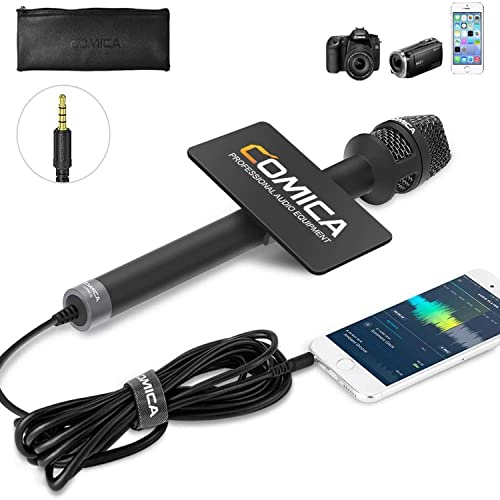
- Cardioid pickup reduces side sound
- All-metal handheld construction
- 3.5mm TRRS plug-and-play connection
Best For: Wired smartphone interviews and reports
Best Wireless Lavalier Setup

- Wireless clip-on design
- Lightning and USB-C adapters included
- Up to six hours per charge
Best For: Mobile interviews and creator videos
Best Camera-Mounted Shotgun Mic

- Super-cardioid shotgun pickup
- XLR with phantom or AA power
- Shock mount and wind protection included
Best For: Camera and broadcast-style interviews
Best Wireless Handheld Interview Mic
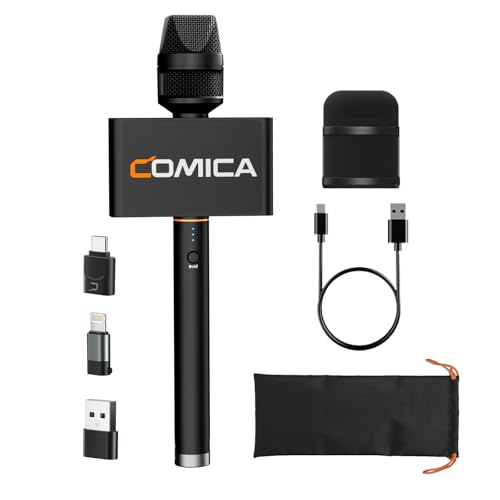
- Cardioid 14mm condenser capsule
- 48kHz/24-bit wireless recording
- Up to 15 hours of battery use
Best For: Wireless handheld reporting and phone interviews
Plug-and-Play Podcast Interviews
ZealSound K66 USB Condenser Mic

- Cardioid USB recording with no driver installation
- Built-in noise reduction, mute, and level controls
- Headphone monitoring with included mobile adapters
Best For: Desk-based podcast and remote interviews
Complete Broadcast Kit
VidPro XM-55 Shotgun Microphone Kit

- Includes 13 pieces for varied recording setups
- Supports XLR, 3.5mm, and 6.3mm connections
- Battery-powered unidirectional shotgun design
Best For: Flexible indoor, outdoor, and broadcast interviews
Best Plug-and-Play Pick
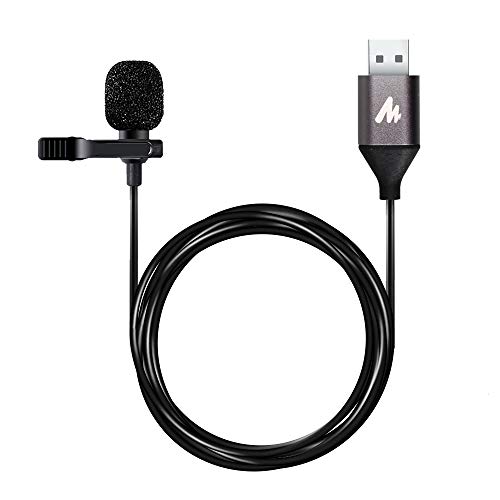
- USB plug-and-play recording
- Omnidirectional lavalier design
- Supports up to 192kHz/24-bit
Best For: Computer-based interviews, meetings, and vlogging
Best Wireless Interview Handheld

- Broadcast-grade condenser capsule
- GainAssist level adjustment
- Over 40 hours of 32-bit float recording
Best For: Wireless interviews with compatible RØDE equipment
Best Camera-Mounted Directional Option

- Cardioid pickup for focused voice capture
- 11-inch camera-friendly design
- Includes stand, windscreen, and XLR cable
Best For: Camera-mounted interviews and video production
Best Wired Smartphone Interview Mic – COMICA HRM-S
For creators seeking condenser microphones for interviews with a straightforward phone connection, the COMICA HRM-S is a practical wired handheld option. Its cardioid pattern helps emphasize the speaker while reducing sound from the sides, and its all-metal construction is designed for regular field use.
Best For: Smartphone interviews, speeches, reports, and social media videos where a handheld wired mic is suitable.
Pros:
- Cardioid pickup helps isolate the intended speaker.
- 3.5mm TRRS connection supports plug-and-play use with compatible devices.
- All-metal construction and low self-noise support clear, natural recordings.
- Includes a one-year warranty service.
Cons:
- iPhone and USB-C Android users need an appropriate original or compatible adapter.
- Its wired design offers less mobility than a wireless microphone.
The HRM-S makes sense when dependable handheld operation matters more than wireless convenience. Confirm your phone’s connector before buying, especially if it lacks a 3.5mm TRRS jack.
Best Wireless Lavalier Setup – Mini Mic Pro
The Mini Mic Pro is a compact alternative for creators comparing condenser microphones for interviews and wanting hands-free recording. It includes Lightning and USB-C adapters, noise reduction, wind protection, and a rechargeable battery for mobile shoots.
Best For: Phone-based interviews, TikTok and YouTube videos, voiceovers, and outdoor creator content.
Pros:
- Wireless design clips to clothing and weighs under an ounce.
- Includes both USB-C and Lightning adapters for broad device compatibility.
- Noise reduction and included foam and deadcat covers help with background and wind noise.
- Provides up to six hours of use per charge.
Cons:
- Its omnidirectional pattern may capture more surrounding sound than a directional handheld mic.
- Requires battery charging for wireless operation.
Choose the Mini Mic Pro when portability and quick setup are priorities. Its lavalier format is less suited to traditional reporter-style handheld interviews, but it is convenient for mobile creators and two-microphone recording.
Best Camera-Mounted Shotgun Mic – BOYA BY-BM6060
For camera crews evaluating condenser microphones for interviews, the BOYA BY-BM6060 offers a directional shotgun format with an XLR output. Its super-cardioid pattern, shock mount, and wind protection make it suited to video production, ENG/EFP work, and outdoor recording.
Best For: Camera-based interviews, documentaries, independent films, broadcast-style production, and outdoor shoots.
Pros:
- Super-cardioid pickup focuses on sound from the front.
- Supports 24–48V phantom power or one AA battery.
- Includes a suspension shock mount, fur windshield, and foam windshield.
- Cold-shoe mounting and a 1/4-inch thread support cameras and stands.
Cons:
- Requires an XLR-compatible camera, recorder, or audio interface.
- The shotgun form factor is less convenient for casual phone interviews.
- Directional placement is important for consistent results.
The BY-BM6060 is the strongest fit here for users already working with camera or broadcast equipment. Check that your setup supplies phantom power or plan to carry an AA battery.
Best Wireless Handheld Interview Mic – COMICA Revo S
The COMICA Revo S combines a handheld reporter format with wireless digital transmission, making it a compelling option among condenser microphones for interviews. Its 14mm condenser capsule, cardioid pattern, 48kHz/24-bit recording, and one-key noise reduction target clear mobile production.
Best For: Wireless phone interviews, news-style reporting, podcasts, video production, and live streaming.
Pros:
- Handheld 14mm condenser capsule uses a cardioid pattern for focused pickup.
- Wireless digital output avoids a cable between the microphone and phone.
- Supports 48kHz/24-bit recording and one-key CalMix noise reduction.
- Offers three gain levels and up to 15 hours of battery use.
Cons:
- Lightning devices require a USB-C-to-Lightning adapter with OTG support.
- Wireless operation requires charging the built-in battery.
The Revo S is a strong choice for a traditional interview appearance without a cable running to the recording device. Its gain controls and long battery life also make it useful for longer shoots and varied speaking levels.
Focused Field Interviews – BOYA BY-BM6060 Shotgun Microphone
For camera-mounted recording, the BOYA BY-BM6060 is one of the more focused condenser microphones for interviews. Its super-cardioid pickup pattern emphasizes sound in front of the mic, while the low-cut filter can help reduce air-conditioning and traffic rumble.
Best For: DSLR, camcorder, and ENG-style interviews, documentary work, and film production where directional pickup matters.
Pros:
- Super-cardioid pattern helps reduce side and rear sound.
- Switchable low-cut filter addresses some low-frequency environmental noise.
- Supports 24–48V phantom power or one AA battery.
- Includes shock mount, foam windscreen, fur windshield, and storage bag.
Cons:
- Uses an XLR connection, so compatible recording equipment or an adapter is required.
- Its shotgun design is better suited to targeted, forward-facing capture than broad group recording.
The BY-BM6060 is a practical choice when interview audio must be captured from a defined direction. Its dual power options and included wind protection make it flexible for camera and field setups.
Plug-and-Play Podcast Interviews – ZealSound K66 USB Condenser Mic
The ZealSound K66 is a convenient USB option among condenser microphones for interviews, especially for desk-based conversations and remote content. Its cardioid capsule focuses on the speaker, while built-in controls make monitoring and level adjustments straightforward.
Best For: Podcast interviews, video calls, online classes, streaming, and voice recording on computers or compatible mobile devices.
Pros:
- Plug-and-play operation requires no drivers or software.
- Cardioid pickup is designed to reduce unwanted background sound.
- Noise reduction mode can help with keyboard, fan, air-conditioner, and chatter noise.
- Includes zero-latency headphone monitoring, volume, gain, echo, and mute controls.
Cons:
- USB connectivity is less suitable for traditional XLR mixers and field recorders.
- Noise reduction is a selectable mode rather than a substitute for a quiet recording space.
Choose the K66 when ease of setup and direct control are more important than a larger studio signal chain. Its adapters and monitoring features also make it useful for creators moving between desktop and mobile recording.
Complete Broadcast Kit – VidPro XM-55 Shotgun Microphone Kit
The VidPro XM-55 is a broad equipment package for shoppers comparing condenser microphones for interviews and video production. Its unidirectional shotgun design provides off-axis attenuation, while the included mounts, cables, wind protection, and battery support multiple recording configurations.
Best For: Indoor and outdoor interviews, film shoots, broadcast work, and creators who need a versatile camera- or stand-mounted kit.
Pros:
- Unidirectional pickup helps limit off-axis sound.
- 13-piece kit includes shock mount, stand mount, camera adapter, hand grip, cables, and wind protection.
- Works with XLR, 3.5mm, and 6.3mm connections through the included accessories.
- Runs on one included AA battery.
Cons:
- The kit weighs 2.4 pounds, making it less convenient for lightweight setups.
- Its listed frequency response reaches 16 kHz, which is narrower than some broader-range microphones.
- Accessory-heavy kits may be more than needed for a simple camera interview.
The XM-55 stands out for flexibility rather than minimalism. It is a sensible pick when an interview setup may shift between a camera shoe, tripod, boom pole, stand, or handheld configuration.
Best Plug-and-Play Pick – MAONO UL10 USB Lavalier
For interviews where hands-free placement and simple computer connectivity matter, the MAONO UL10 is a practical option among condenser microphones for interviews. Its omnidirectional lavalier design clips to clothing, while the USB connection supports plug-and-play recording on compatible computers and laptops.
Best For: Interviews, meetings, vlogging, podcasts, and online video recorded on a PC, Mac, or laptop.
Pros:
- Omnidirectional pickup captures speech without requiring precise positioning.
- USB plug-and-play connection works with Windows PCs, Macs, laptops, and other USB 2.0 devices.
- Supports up to 192kHz/24-bit recording and includes a metal clip and foam windscreen.
Cons:
- USB connectivity limits use with cameras and other non-USB recording setups.
- The omnidirectional pattern may pick up more surrounding sound than a directional microphone.
The UL10 is a lightweight, low-fuss choice for seated interviews and spoken-word content, especially when recording directly to a computer. Choose another model if you need wireless operation or stronger background-noise rejection.
Best Wireless Interview Handheld – RØDE Interview PRO
The RØDE Interview PRO is a wireless handheld condenser microphone for interviewers who want a professional, presenter-friendly setup. It works with RØDE Series IV receivers and combines an omnidirectional broadcast-grade capsule with onboard recording for added flexibility.
Best For: Wireless interviews, media work, and content creation using compatible RØDE receivers.
Pros:
- Broadcast-grade omnidirectional condenser capsule is designed for detailed voice recording.
- GainAssist automatically adjusts levels for balanced audio.
- Over 40 hours of 32-bit float onboard recording provides a backup recording option.
- Supports timecode synchronization with compatible receivers such as the Wireless PRO.
Cons:
- Compatibility is centered on RØDE Series IV receivers and consoles.
- Requires battery power and a compatible wireless ecosystem for its main workflow.
This is the most feature-rich choice here for mobile interview production, particularly if you already use RØDE wireless equipment. Its handheld format is convenient for interviewer-to-subject exchanges, while onboard recording adds useful security against connection issues.
Best Camera-Mounted Directional Option – Ruittos Shotgun Mic
For camera crews that need focused pickup, the Ruittos shotgun microphone is a practical alternative among condenser microphones for interviews. Its cardioid pattern emphasizes the primary sound source, and the compact 11-inch body is designed to stay unobtrusive when mounted on a camera or camcorder.
Best For: Camera-mounted interviews, conferences, stage work, film, and television recording.
Pros:
- Cardioid pickup helps isolate the main sound source and reduce background noise.
- Compatible with cameras and camcorders using 3.5mm or 6.35mm microphone inputs.
- Includes a stand, anti-wind foam cap, and approximately 8-meter XLR cable.
- A 1.5V battery can provide about 26 hours of operation.
Cons:
- Camera and battery are not included.
- It is wired rather than wireless, so cable management may be needed.
- A hot-shoe adapter may be required for Sony or Minolta cameras.
The Ruittos makes sense for video interviews where a directional, camera-based microphone is preferable to a clipped lavalier. Verify your camera’s input and mounting requirements before buying, and plan to supply the required battery.
How We Picked the Best Condenser Microphones for Interviews
We focused on microphones designed for spoken-word recording and compared their pickup patterns, connection types, power requirements, portability, included accessories, and compatibility with common interview setups. The selection includes handheld, lavalier, shotgun, USB, and wireless models rather than treating one microphone type as suitable for every situation.
We also considered practical details such as monitoring and gain controls, wind protection, shock mounting, cable or transmitter convenience, and whether a microphone is better suited to a phone, camera, computer, or audio interface.
Quick Comparison
| Microphone type | Best for | Main advantage | Watch out for |
|---|---|---|---|
| Handheld | Street and reporter interviews | Direct, professional presentation | Requires someone to hold it consistently |
| Wireless or lavalier | Mobile video and two-person shoots | Freedom of movement | Battery life and wireless interference |
| Shotgun | Camera-mounted or boom recording | Focused pickup from the front | Placement and room acoustics matter |
| USB | Desk interviews and remote recording | Simple computer connection | Less convenient for moving subjects |
| XLR | Film, broadcast, and studio work | Expandable professional signal chain | Needs an interface, recorder, or phantom power |
Key Buying Factors for Condenser Microphones for Interviews
Pickup Pattern and Placement
Cardioid and super-cardioid microphones prioritize sound from the front, which can help isolate an interviewer or guest. Shotgun models are useful when the microphone must stay outside the frame, but they still need careful aiming. Handheld microphones should remain close and consistently positioned near the speaker.
Connection and Power
Check whether your device accepts 3.5mm TRRS, USB, USB-C, wireless output, or XLR. Condenser microphones may require plug-in power, batteries, USB power, or 24V/48V phantom power. An adapter alone does not always provide the required signal or power.
Noise Control and Monitoring
Look for a suitable windscreen when recording outdoors and a shock mount for camera or boom use. Headphone monitoring, gain control, mute functions, and a clean preamp can make it easier to catch clipping or connection problems before recording.
Portability and Workflow
For fast-moving interviews, a compact wireless or handheld microphone may be more useful than a technically superior studio model. For controlled indoor sessions, USB or XLR microphones can offer easier level management and more consistent results.
Who Should Buy Which Condenser Microphones for Interviews?
- Phone reporters: Choose a compatible handheld, wireless, or lavalier microphone with the correct phone connector.
- Creators filming on cameras: A shotgun microphone with a mount and windscreen is a practical starting point.
- Podcasters and desk-based interviewers: A USB model with gain adjustment, mute control, and headphone monitoring simplifies setup.
- Professional video teams: Consider an XLR shotgun or broadcast-style handheld microphone with phantom-power support and a proper recorder.
- Traveling creators: Prioritize low weight, simple controls, reliable battery life, and accessories that fit your existing kit.
The best Condenser Microphones for Interviews are not necessarily the most expensive. Choose the pickup style and connection that fit your recording distance, environment, and equipment first; then prioritize durability, monitoring, and included accessories.