Automotive drilling demands more than a basic handheld drill. A stable table, dependable speed control, and enough torque can make the difference between a clean hole and damaged material.
We selected 10 drill presses for automotive work across benchtop, radial-arm, floor-style, and magnetic designs so you can match the machine to your garage, fabrication project, or repair workflow.
Best 10 Drill Presses for Automotive Work Picks for 2026
Heavy-Duty Magnetic Choice
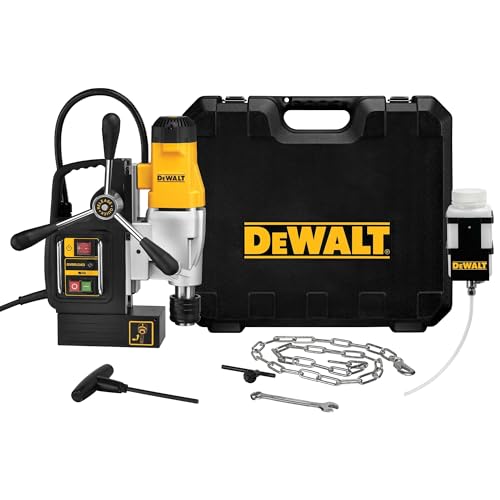
- 10-amp motor with two speed settings
- Magnetic base for suitable metal surfaces
- 4-inch drill travel with overload protection
Best For: Heavy-duty automotive metal drilling and fabrication
Compact Variable-Speed Pick

- Five speeds from 630 to 3,300 RPM
- 10-inch swing in a compact benchtop design
- Tilting table and standard 120-volt operation
Best For: Space-conscious garages and routine automotive drilling
Budget-Friendly Precision Pick
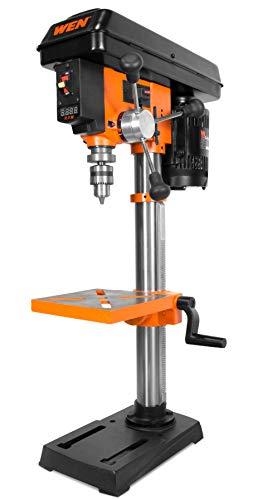
- Variable speed from 530 to 3,100 RPM
- Digital speed readout and laser guide
- 10-inch swing with adjustable depth stop
Best For: Home garages and hobby automotive projects
Heavy Benchtop Workhorse

- 16 speeds from 200 to 3,630 RPM
- 3/4-hp motor and 15-inch swing
- 3-1/8-inch quill travel with cast-iron head
Best For: Dedicated automotive shops needing a stable benchtop machine
Wide-Reach Pick
WEN 33-Inch Radial Arm Drill Press

- 11- to 33-inch adjustable swing
- Five speeds up to 3,100 RPM
- Cast-iron table and base
Best For: Automotive workshops needing broad reach and adjustable head positioning
Heavy Metal Pick
VEVOR 1550W Magnetic Drill Press

- 2-inch core drilling capacity
- 2,922 lbf magnetic holding force
- Overload protection and rapid cooling
Best For: Portable steel fabrication and equipment installation
Precision Benchtop Pick
SKIL 10-Inch 5-Speed Drill Press

- Laser alignment and depth stop
- Five speeds up to 2,800 RPM
- Tilting table and LED work light
Best For: Garage users handling smaller, accurately positioned drilling tasks
Best Budget Pick
VEVOR 10-Inch Benchtop Drill Press

- 3.2-amp induction motor
- Five speeds from 650-3100 RPM
- 0-45° tilting worktable
Best For: Budget-conscious DIY shop users
Best Stability Features
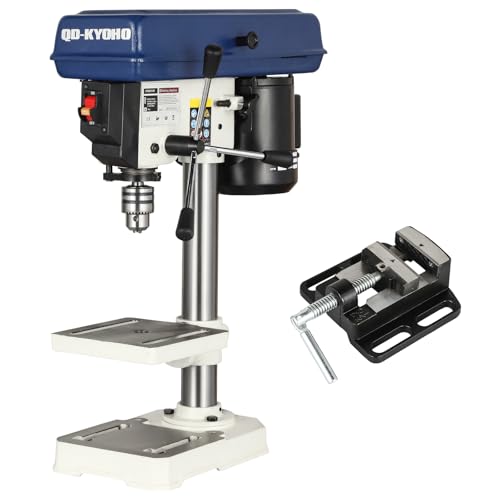
- All-cast-iron construction
- Included precision vise
- Five speeds from 620-3100 RPM
Best For: Stable home workshop drilling
Best Power and Precision
VEVOR 12-Inch Variable-Speed Drill Press

- 1 HP motor with 6.2 amps
- 530-3140 RPM variable speed
- Laser, LED light, and digital readout
Best For: Heavier-duty automotive DIY and fabrication
Heavy-Duty Magnetic Choice – DEWALT DWE1622K
For demanding automotive work, the DEWALT DWE1622K is a magnetic drill press built around a 10-amp motor, two speed settings, and a 4-inch drill travel. Its magnetic base and portable coolant setup make it suited to drilling through substantial metal when a conventional benchtop press is impractical.
Best For: Heavy-duty metal drilling and automotive fabrication where magnetic mounting is useful.
Pros:
- 10-amp motor with two speed settings
- Magnetic base supports secure drilling on suitable metal surfaces
- Overload protection electronics help prevent motor damage
- Quick-change chuck system and coolant bottle offer convenient setup
Cons:
- Its magnetic-drill format is less suitable for general benchtop drilling
- At 33 pounds, it is portable but not especially lightweight
- The listed 450-rpm speed is focused on heavy-duty drilling rather than high-speed work
The DWE1622K stands out when automotive projects call for controlled, high-capacity drilling in metal. Choose it over a standard drill press when magnetic positioning and long 4-inch travel are more important than a permanent shop setup.
Compact Variable-Speed Pick – JET JWDP-10
The JET JWDP-10 is a compact benchtop option for automotive workspaces that need flexible speed control without a full-size floor machine. Its five-speed range runs from 630 to 3,300 RPM, while the tilting table supports angled drilling and the 120-volt design works with standard household power.
Best For: Space-conscious garages and light-to-moderate automotive drilling tasks requiring variable speeds.
Pros:
- Five optimized speeds from 630 to 3,300 RPM
- 10-inch swing accommodates a range of workpieces
- Table tilts 45 degrees in either direction
- 48.5-pound benchtop design is relatively easy to reposition
Cons:
- Its listed metal drilling capacity is 0.5 inch
- 1/3-hp motor is less powerful than heavier-duty machines
- It requires a stable bench despite its portable design
With a useful speed range, tilting table, and manageable footprint, the JWDP-10 is a practical choice for smaller automotive shops. It is better suited to routine drilling and varied materials than especially deep or heavy metal work.
Budget-Friendly Precision Pick – WEN DP1062V
The WEN DP1062V brings useful control features to a benchtop drill press for automotive work, including mechanical variable speed from 530 to 3,100 RPM and a digital speed readout. Its 10-inch swing, laser guide, adjustable depth stop, and beveling table help with repeatable layout and positioning.
Best For: Home garages and hobbyists who want variable speed, a laser guide, and straightforward benchtop drilling.
Pros:
- Variable speed can be adjusted from 530 to 3,100 RPM
- Digital readout displays the current spindle speed
- Laser guide and adjustable depth stop support alignment and repeatability
- Beveling work table and 1/2-inch keyed chuck add versatility
Cons:
- Listed metal drilling capacity is 0.5 inch
- Its 6.2-amp motor is intended for benchtop use rather than the heaviest work
- The 33.9-inch height may require careful bench placement
The DP1062V is a feature-rich choice for automotive maintenance and fabrication projects that benefit from visible speed feedback and guided alignment. Its compact format and modest stated capacity make it more appropriate for general shop work than large, deep holes.
Heavy Benchtop Workhorse – JET J-2530
JET 15-Inch Benchtop Drill Press, 16 Speed, 3/4 HP, 115/230V 1Ph (Model J-2530)
Check Price On AmazonThe JET J-2530 is a substantial 15-inch benchtop drill press for automotive work, combining a 3/4-hp motor with 16 speeds from 200 to 3,630 RPM. Its cast-iron head, large steel column, and 3-1/8-inch quill travel emphasize stability and control for demanding shop applications.
Best For: Established automotive shops needing a stable, wide-range benchtop drill press.
Pros:
- 16 speed settings cover 200 to 3,630 RPM
- 3/4-hp motor provides more power than compact benchtop models
- 15-inch swing and 3-1/8-inch quill travel support larger workpieces
- Cast-iron head and steel column promote rigidity
Cons:
- At 157 pounds, it is difficult to move or reposition
- Its 39.5-inch height demands substantial bench or stand space
- The supplied notes list a 0.03-inch metal drilling capacity, so verify suitability for intended automotive jobs
The J-2530 offers the largest and most substantial platform in this group, with extensive speed selection and long quill travel. Its weight and footprint favor a dedicated shop location, while the stated capacity detail should be checked carefully before metal-heavy automotive work.
Wide-Reach Pick – WEN 33-Inch Radial Arm Drill Press
For automotive work that calls for flexible positioning and a large drilling area, the WEN radial arm model offers a useful benchtop-style setup with an adjustable swing from 11 to 33 inches. Its cast-iron construction and five speed settings make it a versatile option for workshop drilling in wood or metal.
Best For: Automotive workshops needing broad reach and adjustable head positioning.
Pros:
- Sliding and swiveling head adjusts the swing from 11 to 33 inches.
- Five speeds from 600 to 3,100 RPM accommodate different drilling tasks.
- Includes a tilting 10-inch cast-iron table, cast-iron base, and 5/8-inch keyed chuck.
Cons:
- At 105 pounds, it is substantially heavier than a typical compact benchtop press.
- Its 6.2-amp motor and 1-inch listed metal drilling capacity may be limiting for especially demanding work.
The adjustable radial design is the main reason to consider this model for automotive work. It provides more positioning freedom than a conventional compact press, though its large footprint and weight suit a dedicated shop location better than frequent relocation.
Heavy Metal Pick – VEVOR 1550W Magnetic Drill Press
For automotive fabrication and installation tasks involving steel, the VEVOR magnetic drill press combines a 1,550-watt motor with a high-strength magnetic base. It is designed for portable metal drilling, with a stated 2-inch coring capacity and holding force intended to stabilize the tool on suitable steel plates.
Best For: Steel fabrication, equipment installation, and portable drilling on steel plates at least 0.39 inches thick.
Pros:
- Magnetic base provides 2,922 lbf of holding force for stable operation.
- Handles core drilling up to 2 inches in diameter and 2 inches deep.
- Includes overload protection, rapid cooling, a coolant setup, and a security rope.
- Built-in scale, ergonomic handles, and extended cranks support controlled positioning.
Cons:
- Not suitable for stainless steel or cast iron according to the supplied notes.
- Requires a steel workpiece at least 0.39 inches thick for the magnetic base.
- For inverted or horizontal drilling, the supplied guidance calls for using a security rope.
This is a specialized choice among drill presses for automotive work rather than a general-purpose benchtop machine. Its magnetic base is valuable when drilling structural steel in place, but material compatibility and safe orientation requirements deserve careful attention.
Precision Benchtop Pick – SKIL 10-Inch 5-Speed Drill Press
SKIL 6.2 Amp 10 In. 5-Speed Benchtop Drill Press with Laser Alignment & Work Light - DP9505-00
Check Price On AmazonThe SKIL DP9505-00 is a compact option for automotive work where repeatable drilling and straightforward benchtop operation matter. Its 6.2-amp induction motor, five speed settings, laser alignment, adjustable depth stop, and tilting table provide useful control for smaller wood and metal drilling jobs.
Best For: Home garages and DIY users handling smaller, accurately positioned drilling tasks.
Pros:
- Five speeds range from 610 to 2,800 RPM for different materials.
- Laser alignment and an adjustable depth stop support consistent drilling.
- Work surface tilts 45 degrees left and right for angled drilling.
- LED work light and bump-off switch add convenience and control.
Cons:
- Its listed 0.5-inch chuck and 0.5-inch metal drilling capacity are suited to smaller jobs.
- It offers less reach and capacity than the larger radial-arm and magnetic options.
With its guidance features and compact dimensions, the SKIL is a practical starting point for garage projects and light automotive drilling. Choose it when precision and ease of use are more important than large-hole capacity or in-place steel fabrication.
Best Budget Pick – VEVOR 10-Inch Benchtop Drill Press
For shoppers comparing drill presses for automotive work on a budget, this VEVOR benchtop model offers a compact 10-inch swing, a 3.2-amp induction motor, and five selectable speeds. Its cast-iron frame and tilting table make it suitable for general shop drilling in wood and light metal applications.
Best For: DIY users who want an affordable benchtop press for routine metal drilling, fabrication, and workshop projects.
Pros:
- Five preset speeds from 650 to 3100 RPM accommodate different materials and bits.
- 0-45-degree tilting worktable supports angled drilling.
- Includes the chuck, chuck key, table hardware, and hex wrenches.
- Compact 41.9-pound benchtop design is practical for smaller workspaces.
Cons:
- The maximum chuck size is 1/2 inch.
- Its listed 0.5-inch metal drilling capacity may limit heavier automotive tasks.
- Speed selection is preset rather than continuously variable.
This is a sensible entry-level choice when space and cost matter more than maximum capacity. For demanding automotive drilling, confirm that the half-inch chuck and stated metal capacity match your tooling and workpieces.
Best Stability Features – 8-Inch Benchtop Drill Press
Among drill presses for automotive work, this 8-inch benchtop model stands out for its all-cast-iron head, table, and base. The 3.1-amp motor, five speed settings, included vise, and tilting table provide a practical setup for controlled drilling on a home workshop bench.
Best For: Beginners and home mechanics who value a stable, ready-to-use drill press with a work-holding vise.
Pros:
- All-cast-iron construction is designed to absorb vibration.
- Included vise has 2-1/2-inch jaws and a 2-1/4-inch opening.
- Five speeds range from 620 to 3100 RPM.
- Table tilts 0-45 degrees and includes scales for repeatable positioning.
Cons:
- The 1/2-inch chuck limits the size of compatible tooling.
- The listed metal drilling capacity is 0.5 inch.
- It uses preset speeds rather than a continuously variable control.
The included vise and heavy cast-iron construction make this a convenient option for repeatable bench work. It is best matched with light to moderate drilling rather than large-diameter or especially demanding automotive jobs.
Best Power and Precision – VEVOR 12-Inch Variable-Speed Drill Press
For heavier-duty drill presses for automotive work, this VEVOR model offers the strongest specifications in the group: a 1-horsepower motor, 12-inch swing, and 6.2-amp electrical rating. Variable speed from 530 to 3140 RPM, a digital readout, X-laser, LED work light, and adjustable tilting table support more precise shop work.
Best For: Automotive DIYers and fabricators who need more motor power, larger swing, and convenient positioning aids.
Pros:
- 1 HP motor provides substantially more listed power than the other models.
- Variable speed from 530 to 3140 RPM includes a digital readout.
- X-laser and LED work light help with positioning and visibility.
- 12-inch swing and 0-45-degree tilting, height-adjustable table improve workpiece flexibility.
Cons:
- At 84.3 pounds, it is less convenient to move than lighter benchtop presses.
- The maximum chuck size is listed as 0.6 inch, so tooling compatibility should be checked.
- Its larger footprint and 37.4-inch height require substantial bench space.
This is the most capable option here for users who prioritize power and control over portability. The larger swing and digital variable-speed system are especially useful when automotive projects involve varied materials and drilling positions.
How We Picked the Best Drill Presses for Automotive Work
We compared these models by the features that matter most in automotive garages and fabrication spaces: motor output, speed range, chuck capacity, worktable adjustability, construction, portability, and control. We also considered whether each press is better suited to light-duty drilling, repeated work in steel, large parts, or on-site repairs.
Because automotive projects vary widely, the list includes compact benchtop presses, higher-capacity shop machines, radial-arm designs, and magnetic drill presses. Product specifications can vary by seller or configuration, so confirm voltage, included accessories, and chuck details before ordering.
Quick Comparison
| Type | Best for | Main advantage |
|---|---|---|
| Compact benchtop | Small garages and light repairs | Lower cost and smaller footprint |
| Large benchtop or floor-style | Repeated drilling and larger workpieces | More capacity and stability |
| Radial-arm | Awkwardly shaped or oversized parts | Greater reach and positioning flexibility |
| Magnetic drill | Drilling mounted steel or vehicle structures | Portable, secure operation on ferrous surfaces |
Key Buying Factors for Drill Presses for Automotive Work
Speed and Torque
Steel generally requires slower speeds than wood or plastics, while small bits can tolerate higher speeds. Variable-speed control or multiple belt settings makes it easier to match the tool to the bit diameter and material. A higher-powered motor is useful for larger holes, thick steel, and repeated drilling, but it does not replace correct feed pressure and cutting fluid.
Capacity and Work Envelope
Check swing, spindle travel, chuck capacity, and throat depth. Larger automotive brackets, plates, and suspension components may need more clearance than a compact press provides. A tilting or height-adjustable table adds versatility, while a radial arm can help position the spindle over parts that do not fit neatly beneath a conventional column.
Stability, Accuracy, and Safety
Cast-iron tables and bases usually reduce vibration. Look for a positive depth stop, secure table locking, a reliable chuck, and a guarded belt or spindle area. A laser or work light can improve alignment, but it should supplement—not replace—measuring, clamping, and test drilling. Always secure the workpiece and wear eye protection.
Portability and Power Requirements
Magnetic drills are practical when the work cannot be moved to a bench, but they require a suitable ferrous surface and careful positioning. For stationary presses, confirm available voltage, bench strength, ceiling clearance, and whether the machine needs a dedicated circuit.
Who Should Buy Which Drill Presses for Automotive Work?
Choose a compact benchtop press if you handle small brackets, hardware, and occasional metal drilling in a space-constrained garage. Choose a larger benchtop or floor-style model for frequent fabrication, bigger bits, and improved stability. Choose a radial-arm press when reach and access around irregular parts matter most. Choose a magnetic drill for portable drilling on structural steel, frames, or large assemblies that are difficult to transport.
Before buying, prioritize the work you perform most often, then select the smallest machine that provides adequate capacity and rigidity. That approach keeps costs and space requirements manageable without limiting your automotive projects.