The right headphone amplifier can make monitoring cleaner, more flexible, and easier to manage—especially when your setup uses balanced XLR or XLR/TRS connections. This roundup covers compact in-ear monitor amps, portable headphone amplifiers, and multi-channel studio units.
Use the comparison and buying advice below to match the amplifier’s inputs, outputs, power, impedance support, and controls to your recording, rehearsal, or listening setup.
Best 10 Headphone Amplifiers with Xlr Output Picks for 2026
Best Balanced Desktop DAC/Amp
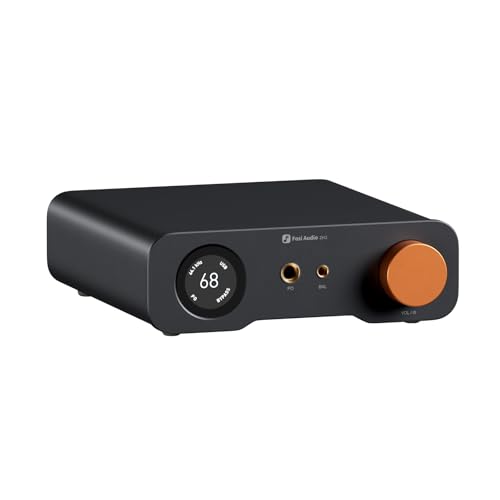
- XLR and RCA preamp outputs
- PCM 768kHz/32-bit and DSD512 support
- 4.4mm balanced output with three gain levels
Best For: Desktop listeners building a flexible balanced HiFi setup
Best Portable Dual-Channel IEM Amp

- Hybrid XLR/TRS inputs
- Mono, dual-mono, and stereo mix modes
- Built-in limiter and portable metal enclosure
Best For: Musicians managing a personal monitor mix on stage
Best for XLR Microphone Monitoring
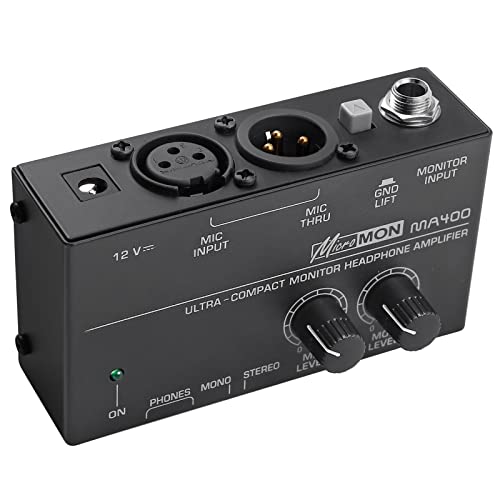
- Phantom power for condenser microphones
- Independent microphone and mixer volume controls
- 6.35mm and 3.5mm headphone outputs
Best For: Compact microphone and headphone monitoring setups
Best Simple Stage Monitor Amp

- Locking XLR/TRS combo input
- Mono/stereo switch and 3.5mm output
- Up to 12 hours on two AAA batteries
Best For: Portable rehearsal and live-performance monitoring
Best Multi-Listener Hub
Bolanle PH800 8-Channel Headphone Amplifier

- 16 outputs across 3.5mm and 6.35mm connections
- Drives headphones up to 250Ω
- Mono/stereo switching for flexible monitoring
Best For: Bands, studios, and group headphone monitoring
Best Battery-Powered XLR Monitor
Bolanle P2 Portable In-Ear Monitor Amplifier

- XLR and 1/4-inch TRS inputs
- Stereo/mono switching for stage monitoring
- Battery-powered metal belt-clip design
Best For: Portable personal monitoring for live performers
Best Portable Dual-Input Monitor
Donner EM2 Headphone Amplifier
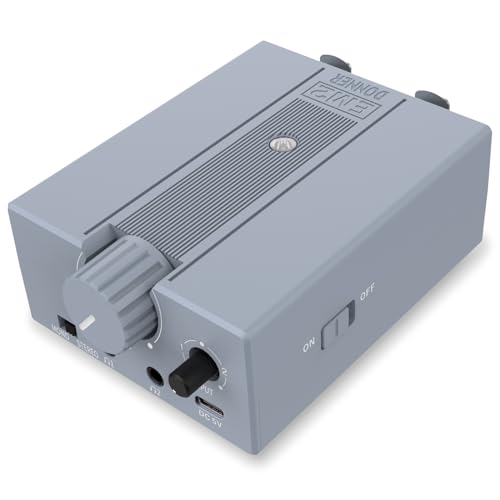
- Two XLR/TRS input connections
- Two headphone outputs for simultaneous use
- Rechargeable battery rated for up to 12 hours
Best For: Portable personal monitoring with dual headphone connections
Compact Rack-Mount Pick

- XLR and TRS inputs
- Stereo/mono switching
- 3.5mm output and metal build
Best For: Studio monitoring and live performance setups
Rechargeable Performer Pick

- Up to 12-hour rechargeable battery
- Locking XLR and TRS inputs
- Belt-clip portable metal design
Best For: Mobile in-ear and on-ear monitoring
Battery-Powered Stage Pick
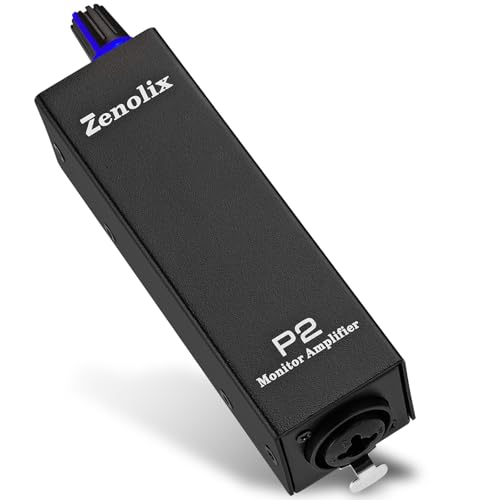
- Locking XLR/TRS inputs
- Stereo/mono switching
- Belt clip with AAA battery power
Best For: Portable live-performance monitoring
Best Balanced Desktop DAC/Amp – Fosi Audio ZH3
For listeners comparing headphone amplifiers with XLR output, the Fosi Audio ZH3 is a versatile desktop option that combines a DAC, headphone amplifier, and preamp. It offers balanced and single-ended headphone connections, plus XLR and RCA outputs for connecting downstream equipment.
Best For: Desktop HiFi users who want one unit for digital conversion, headphone listening, and balanced preamp duties.
Pros:
- Provides XLR, RCA, 4.4mm balanced, and 6.35mm outputs.
- Supports USB, optical, coaxial, and RCA inputs, with PCM up to 768kHz/32-bit and DSD512.
- Offers three gain levels and substantial balanced output power for headphones from 16 to 300 ohms.
- Includes bass and treble adjustment, six filter types, a remote, and a 24-month warranty.
Cons:
- RCA and XLR output levels differ significantly, so matching the output to downstream equipment matters.
- EQ adjustments apply to headphone output only, not the preamp outputs.
The ZH3 is the strongest all-around choice here for a desktop system that specifically needs XLR output. Its broad connectivity and configurable headphone section make it more flexible than a simple portable or stage monitor amplifier.
Best Portable Dual-Channel IEM Amp – Coda IEM-Pro
The Coda IEM-Pro is a battery-powered personal monitor amplifier for musicians who need flexible stage monitoring. Its hybrid inputs accept XLR or TRS connections, while the dual-channel design supports mono, dual-mono, or stereo mixes.
Best For: Performers and rehearsing musicians who need a compact personal IEM mixer with locking XLR input capability.
Pros:
- Accepts both XLR and TRS input connections.
- Supports mono, dual-mono, and stereo monitoring with mix panning.
- Independent control of mix elements helps create a more personalized monitor balance.
- Built-in limiter, belt-clip-friendly portable design, and metal construction suit stage use.
Cons:
- This is primarily an IEM monitoring system, not a desktop DAC or XLR-output headphone amplifier.
- The supplied notes do not specify battery runtime or detailed headphone output specifications.
Choose the IEM-Pro when your priority is controlling a personal stage mix rather than connecting an amplifier through XLR outputs. Its input flexibility and limiter make it particularly practical for live monitoring.
Best for XLR Microphone Monitoring – LiNKFOR MA400
The LiNKFOR MA400 is a compact headphone amplifier designed around XLR microphone and audio-signal monitoring. It provides phantom power, separate microphone and mixer volume controls, and both 6.35mm and 3.5mm headphone outputs.
Best For: Small studio or performance setups that need simple microphone monitoring with independent level adjustment.
Pros:
- Supports condenser microphones with phantom power.
- Provides separate volume controls for microphone and mixer or HiFi signals.
- Includes 1/4-inch and 1/8-inch headphone outputs for broad headphone compatibility.
- Compact, lightweight metal housing and included 12V power adapter suit portable use.
Cons:
- Its XLR connection is intended for microphone or audio input, not XLR output to downstream equipment.
- Maximum output power is listed as 60mW, which may be limiting for demanding headphones.
- It has one channel and fewer desktop DAC features than the Fosi Audio option.
The MA400 is a practical choice if you need XLR microphone connectivity and straightforward headphone monitoring. However, shoppers specifically seeking headphone amplifiers with XLR output should note that this model’s XLR role is input-focused.
Best Simple Stage Monitor Amp – P2 Portable IEM Amp
The P2 is a compact battery-powered monitor amplifier for musicians who need a secure stage connection. Its locking XLR/TRS combo input feeds a 3.5mm headphone output, with mono and stereo modes for adapting to different monitoring setups.
Best For: Vocalists and instrumentalists who want an inexpensive, portable personal monitor amp for rehearsals and live performances.
Pros:
- Uses a locking XLR/TRS combo input to help prevent accidental cable disconnection.
- Offers selectable mono and stereo monitoring modes.
- Runs on two AAA batteries with up to 12 hours of operation according to the supplied notes.
- Lightweight metal housing, belt-clip portability, and a quick-access volume control suit stage use.
Cons:
- The 3.5mm connection is a headphone output; the XLR/TRS connection is an input rather than an XLR output.
- AAA batteries are not included.
- No noise-control feature is listed in the supplied specifications.
The P2 is best viewed as a straightforward personal IEM amplifier rather than a balanced desktop amplifier with XLR output. Its secure input and battery operation make it convenient for mobile monitoring, while the mono/stereo switch adds useful flexibility.
Best Multi-Listener Hub – Bolanle PH800 8-Channel Headphone Amplifier
If you need headphone amplifiers with xlr output for a rehearsal room or recording setup, the PH800 is worth considering for its high channel count and support for demanding headphones. Note that its listed headphone connections are 3.5mm and 6.35mm, rather than XLR outputs.
Best For: Bands, studios, and group monitoring setups needing multiple headphone outputs.
Pros:
- Provides 16 headphone outputs: eight 3.5mm and eight 6.35mm.
- Designed to drive headphones with impedance up to 250Ω.
- Offers selectable mono or stereo monitoring.
- Metal housing and a seven-color illuminated volume knob suit studio or stage use.
Cons:
- Does not list XLR output connectivity.
- Requires a DC 12V/2A power supply and is not wireless.
The PH800 is a practical distribution amplifier when several performers need individual headphone feeds. Choose it for output quantity, not for direct XLR output support.
Best Battery-Powered XLR Monitor – Bolanle P2 Portable In-Ear Monitor Amplifier
Among headphone amplifiers with xlr output, the Bolanle P2 stands out as a compact personal monitor with XLR and 1/4-inch TRS input flexibility. It is built for musicians who need a portable stage monitoring solution rather than a multi-output distribution unit.
Best For: Drummers, keyboardists, guitarists, and bass players who need mobile personal monitoring.
Pros:
- Accepts both balanced XLR and 1/4-inch TRS inputs.
- Switches between stereo and mono monitoring.
- Runs on two AAA batteries without phantom power, USB, or charging cables.
- Rugged metal construction and a belt clip support live use.
Cons:
- Has one output channel, so it is intended for individual monitoring.
- Battery life depends on replaceable AAA batteries.
- The supplied details identify XLR input connectivity, not XLR output.
The P2 is a strong fit when portability and straightforward XLR/TRS input compatibility matter most. Its single-channel design makes it better for personal stage monitoring than shared studio distribution.
Best Portable Dual-Input Monitor – Donner EM2 Headphone Amplifier
The Donner EM2 is a portable option for shoppers comparing headphone amplifiers with xlr output, although its supplied specifications describe two XLR and 1/4-inch TRS inputs rather than XLR outputs. Its rechargeable design and dual headphone connections make it useful for personal monitoring on the move.
Best For: Performers needing portable stereo or mono monitoring with two simultaneous headphone connections.
Pros:
- Includes two XLR and 1/4-inch TRS input connections with locking mechanisms.
- Supports headphones from 8Ω to 250Ω.
- Two independent headphone outputs can be used simultaneously.
- Rechargeable battery provides up to 12 hours of stated runtime.
Cons:
- Does not list XLR output connectivity.
- Designed for headphone monitoring and does not support microphones.
- Its compact battery-powered format may be less suitable for large multi-user installations.
The EM2 balances portability, input flexibility, and two-person monitoring in a small belt-pack format. It is a sensible choice for mobile setups, provided you need XLR inputs rather than XLR outputs.
Compact Rack-Mount Pick – StudioMan PA7
The StudioMan PA7 is a practical choice for shoppers comparing headphone amplifiers with xlr output connectivity. It accepts both XLR and 1/4-inch TRS inputs, provides stereo/mono switching, and sends audio to headphones through a 3.5mm output.
Best For: Studio monitoring, live performance, and rack-mounted or portable setups.
Pros:
- XLR and TRS inputs support professional audio connections.
- Stereo/mono switch adds monitoring flexibility.
- Metal construction, volume control, and rack-mountable design.
- Compact format can clip onto clothing or fit a 1U rack space.
Cons:
- Uses a 3.5mm headphone output rather than a larger headphone jack.
- Wired design has no wireless connectivity.
- No built-in noise control or carrying case is listed.
Choose the PA7 if you want a straightforward personal monitor amplifier with flexible professional inputs and a compact metal enclosure. Its stereo/mono control makes it especially useful when monitoring needs vary between setups.
Rechargeable Performer Pick – Donner EM1
The Donner EM1 is a portable option for shoppers seeking headphone amplifiers with xlr output connectivity for personal monitoring. Its XLR and TRS inputs, locking connectors, 3.5mm output, and rechargeable battery are suited to mobile performance use.
Best For: Performers who need a compact, rechargeable in-ear or on-ear monitor amplifier.
Pros:
- Accepts both XLR and TRS inputs with locking connectors.
- Rechargeable Li-ion battery provides up to 12 hours of operation.
- Compact metal body includes a belt-clip design.
- Stereo/mono source switch supports different cable setups.
Cons:
- Does not support microphones.
- Headphone connection is limited to a 3.5mm output.
- High-power positioning may be more than needed for basic listening.
The EM1 stands out when portability and battery life matter. Its locking professional inputs and belt clip make it a practical monitoring companion for performers moving between rehearsals and live environments.
Battery-Powered Stage Pick – Zenolix P2
The Zenolix P2 is a compact stage-focused choice among headphone amplifiers with xlr output connectivity. It combines locking XLR/TRS inputs, a 3.5mm headphone output, stereo/mono operation, and a belt clip for performers who need personal monitoring on the move.
Best For: Guitarists, drummers, bass players, keyboardists, and other live performers.
Pros:
- Locking XLR and TRS inputs help maintain a secure connection.
- Switchable stereo/mono operation suits varied performance setups.
- Durable metal construction with a belt clip.
- Seven-color breathing lights provide a visual cue on the volume control.
Cons:
- Requires two AAA batteries, which are not included.
- Battery access is tool-free but not rechargeable.
- Support is listed through the seller rather than a stated manufacturer warranty.
The P2 is a sensible fit for performers who prioritize a secure input connection and quick battery replacement during shows. Its stereo/mono switch and compact belt-clip form factor add useful flexibility for stage monitoring.
How We Picked These Headphone Amplifiers with Xlr Output
We selected these models based on connection flexibility, portability, channel count, headphone-output formats, stated impedance support, and practical monitoring features. The list includes dedicated XLR-input monitor amplifiers, balanced desktop DAC/headphone amps, portable belt-clip units, and multi-output distribution amplifiers.
Because “XLR output” can describe different parts of an audio chain, check the specifications carefully. Some products accept XLR or XLR/TRS signal inputs, while others provide balanced preamp outputs or are designed primarily for distributing a signal to headphones. The correct choice depends on where the amplifier sits in your system.
Quick Comparison
| Best For | Look For | Models In This Roundup |
|---|---|---|
| Desktop listening and DAC use | USB, optical, coaxial, RCA, balanced connectivity | Fosi Audio ZH3 |
| Personal IEM monitoring | Compact size, battery power, 3.5mm output, volume control | Coda, P2, Donner EM1, Donner EM2 |
| XLR/TRS stage monitoring | Balanced inputs, stereo/mono switching, belt clip | Bolanle P2, StudioMan PA7, P2 XLR/TRS |
| Multiple listeners | Several channels and 3.5mm or 6.35mm outputs | Bolanle PH800 |
Key Buying Factors for Headphone Amplifiers with Xlr Output
Connection Type and Signal Routing
Confirm whether you need XLR input, XLR output, or both. XLR/TRS combination inputs are useful for studio and live sources, while USB, optical, coaxial, and RCA connections are more relevant to desktop DAC and hi-fi systems. Also check whether the unit supports stereo, mono, or a selectable mode.
Headphone Compatibility and Power
Match the amplifier to your headphones or IEMs. Sensitive in-ear monitors generally need low noise and precise volume control rather than high power. Full-size or high-impedance headphones may benefit from an amplifier that explicitly supports higher impedance loads, such as 250-ohm headphones.
Outputs, Controls, and Channel Count
A 3.5mm output suits IEMs and portable headphones, while a 6.35mm jack works with many studio headphones. If several performers need independent monitoring, choose a multi-channel amplifier instead of a single-user portable model. Separate volume controls are especially useful in rehearsal and recording environments.
Portability and Power
Rechargeable units are convenient for stage use, instruments, and mobile monitoring. Desktop models can offer more connectivity and power but require a fixed setup. Review battery information, charging requirements, included adapters, and mounting or belt-clip options before buying.
Who Should Buy Which Headphone Amplifiers with Xlr Output?
Choose the Fosi Audio ZH3 if you want a versatile desktop DAC and headphone amplifier with multiple digital and analog inputs. Choose a compact Coda, P2, Donner, or StudioMan unit for individual IEM monitoring, rehearsals, or stage use. The Bolanle P2 and StudioMan PA7 are better suited to systems needing XLR/TRS inputs and stereo/mono flexibility. For several listeners, the Bolanle PH800’s multiple channels and outputs are the practical choice.