Choosing the best multitrack recorder for electronic drums means balancing input capacity, track count, monitoring, effects, and workflow. The right unit can capture a stereo drum module feed, add vocals or instruments, and keep your setup independent from a computer.
We compare 10 portable and tabletop recorders for different recording styles, from quick practice sessions to more elaborate home-studio productions.
Best 10 Multitrack Recorder for Electronic Drums Picks for 2026
Best Compact Choice

- 32-bit float recording minimizes clipping concerns
- Two XLR/TRS combo inputs for flexible sources
- Four tracks with bounce and 80+ rhythm patterns
Best For: Portable demos and layered electronic-drums ideas
Best Portable Legacy Workhorse

- Four-track simultaneous recording with eight-track playback
- Built-in effects, microphones, and drum machine
- Battery, USB, and AC-powered operation
Best For: Self-contained portable song sketches
Best Touchscreen Workflow
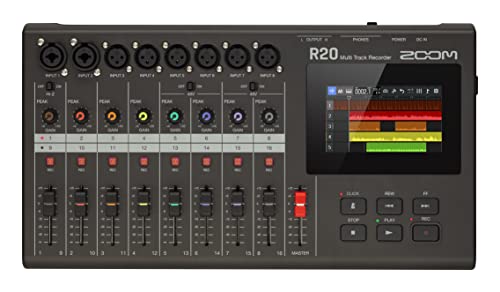
- Up to 16 tracks and eight simultaneous inputs
- Six XLR inputs for expanded setups
- Touchscreen editing plus effects and rhythms
Best For: Computer-free electronic-drums production
Best Mixer-Style Studio Hub

- 12-channel mixer and digital multitrack recorder
- 12-in/10-out USB interface with DAW control
- MIDI, tap-tempo click, EQ, and compression
Best For: Permanent electronic-drums studio setups
Best Portable Pick

- Eight-track recording with touchscreen editing
- Built-in drum loops, FM synths, and MIDI
- USB-C interface with battery operation
Best For: Portable electronic-drum recording and sketching
Best High-Capacity Choice

- 24-track digital Portastudio recording
- Eight XLR inputs for multiple sources
- Onboard effects and mastering with color screen
Best For: Large home-studio and band recording setups
Best Simple Portastudio

- Simple eight-track, two-input recording workflow
- Built-in microphones, tuner, and metronome
- Onboard editing and mastering effects
Best For: Beginners and simple electronic-drum sessions
Compact Track Builder

- Eight-track simultaneous recording
- Built-in stereo microphones and pad sampler
- USB interface with SDHC recording
Best For: Portable electronic drum recording and demos
Effects-Ready Workstation

- Eight combo inputs and eight-channel recording
- 135 built-in recording and mixing effects
- 16-channel playback with SDHC storage
Best For: Electronic drum setups needing inputs and onboard effects
Large-Project Recorder

- 24-track recording and playback
- Up to 48 kHz WAV recording
- Two units can provide 16 simultaneous tracks
Best For: Complex electronic drum arrangements and overdubs
Best Compact Choice – Zoom R4
The Zoom R4 is a practical multitrack recorder for electronic drums when you want a compact, battery-powered unit for capturing ideas, instruments, or drum-related sessions without worrying about clipping. It records up to four tracks, accepts microphones and line-level sources through XLR/TRS combo inputs, and includes built-in rhythms for practice and songwriting.
Best For: Portable recording, quick demos, and musicians who want simple gain-free recording with room to layer parts.
Pros:
- 32-bit float recording helps prevent clipping without manual gain adjustments.
- Two XLR/TRS combo inputs accommodate microphones, instruments, and keyboards.
- Four-track recording with bouncing lets you continue adding layers.
- Includes more than 80 built-in rhythm patterns and works as a USB audio interface.
Cons:
- Four-track capacity is more limited than larger tabletop recorders.
- Its included rhythm library may be less useful if you already rely on an electronic drum module.
The R4 stands out for portability and forgiving recording levels. It is a good fit for electronic-drums workflows built around quick sketches, overdubs, and mobile sessions rather than large multichannel projects.
Best Portable Legacy Workhorse – BOSS BR-800
The BOSS BR-800 is a portable multitrack recorder for electronic drums and other instruments, offering four-track simultaneous recording, eight-track playback, and a dedicated stereo rhythm track. Its built-in effects, microphones, drum machine, and battery operation make it suited to self-contained song sketches.
Best For: Musicians who want an all-in-one portable recorder with effects, rhythm tools, and USB connectivity.
Pros:
- Records four tracks simultaneously and plays back up to eight tracks plus a stereo rhythm track.
- Built-in stereo condenser microphones support quick recording without extra microphones.
- Includes guitar, bass, and vocal effects derived from BOSS processors.
- Works as a USB audio interface and DAW control surface.
Cons:
- Its 32GB SDHC support and four-track simultaneous recording are more limited than newer, larger systems.
- At 890 g, it is less lightweight than compact modern recorders.
- It requires six AA batteries when used away from USB or AC power.
The BR-800 combines multitrack recording, effects, rhythm production, and portability in one older-style workstation. It makes sense for players who value a broad set of built-in songwriting tools over the newest recording interface.
Best Touchscreen Workflow – Zoom R20
The Zoom R20 is a strong multitrack recorder for electronic drums when you need more inputs and tracks for a complete project. Its touchscreen interface supports recording, editing, and mixing directly on the device, while six XLR inputs and up to eight simultaneous recording tracks provide room for expanded setups.
Best For: Electronic-drums projects, demos, and hands-on multitrack production without a computer.
Pros:
- Supports up to 16 tracks and records up to eight simultaneously.
- Six XLR inputs and combo connectivity accommodate larger recording setups.
- Touchscreen controls enable drag-and-drop editing and mixing on the unit.
- Includes EQ, compression, 150 rhythm patterns, and an onboard synth with 18 sounds.
Cons:
- At 4.3 pounds, it is less portable than compact handheld recorders.
- The maximum sample rate listed is 44.1 kHz.
- Its larger feature set may be more than needed for simple two-input sketches.
The R20 is the most production-oriented option in this group. Its track count, input capacity, touchscreen editing, and onboard rhythms make it better suited to developing full electronic-drums arrangements than quick, minimal recordings.
Best Mixer-Style Studio Hub – Tascam Model 12
The Tascam Model 12 is a mixer-style multitrack recorder for electronic drums, built for a more permanent studio setup. It combines a 12-channel digital multitrack mixer with a 12-in/10-out USB audio interface, onboard MIDI functionality, click output with tap tempo, compressors, EQ, and dual headphone outputs.
Best For: Desktop or studio rigs that need hands-on mixing, multiple outputs, MIDI support, and DAW integration.
Pros:
- Provides 12 channels for managing larger recording and mixing setups.
- Offers 12-in/10-out USB connectivity for DAW recording and routing.
- Includes onboard MIDI functionality and click output with tap tempo.
- Each input module includes a one-knob compressor and three-band EQ.
Cons:
- Its corded design and 13.3-pound weight make it less suitable for mobile recording.
- The mixer-style footprint is substantially larger than portable recorders.
- The supplied notes do not specify a built-in microphone or onboard rhythm library.
The Model 12 is best viewed as the control center of an electronic-drums recording setup rather than a grab-and-go sketchpad. Choose it when channel count, physical mixer controls, MIDI, and extensive USB I/O matter more than portability.
Best Portable Pick – Zoom R12
The Zoom R12 is a practical multitrack recorder for electronic drums when you want a compact setup with onboard rhythm tools and computer-free editing. It records up to eight tracks, offers two XLR/TRS inputs, and includes a touchscreen for arranging, editing, and mixing.
Best For: Electronic drummers and musicians who want portable recording, built-in loops, and MIDI-friendly workflow.
Pros:
- Records up to eight tracks and supports DAW-style editing without a computer.
- Includes 150 drum loops, 18 FM synth instruments, and MIDI support.
- Works as a USB-C audio interface and DAW control surface.
- Runs for up to five hours on four AA batteries.
Cons:
- Only two XLR/TRS combo inputs are provided.
- Battery operation is limited to about five hours.
The R12 stands out for mobile electronic-drum projects because it combines multitrack recording, rhythm content, MIDI tools, and touchscreen editing in one portable unit.
Best High-Capacity Choice – Tascam DP-24SD 24-Track
The Tascam DP-24SD is a strong multitrack recorder for electronic drums when you need substantial track capacity and multiple microphone connections. Its 24-track design, eight XLR inputs, onboard effects, mastering, and color screen support larger recording projects.
Best For: Home studios and band-oriented setups that need many tracks and up to eight XLR inputs.
Pros:
- Provides 24-track recording for complex arrangements.
- Includes eight XLR inputs for connecting multiple sources.
- Offers onboard effects, mastering, and a color screen.
- Includes USB 2.0 connectivity and 32 GB of listed storage capacity.
Cons:
- Its listed 13.7-pound weight makes it less portable than compact recorders.
- The supplied details do not specify dedicated electronic-drum or MIDI features.
Choose the DP-24SD when expansion and input count matter more than portability. Its 24-track architecture gives electronic-drum arrangements plenty of room for layered parts and additional instruments.
Best Simple Portastudio – Tascam DP-03SD 8-Track
The Tascam DP-03SD is a straightforward multitrack recorder for electronic drums for musicians who prefer dedicated controls over a computer-based workflow. It records eight tracks, accepts two simultaneous inputs, and includes built-in microphones, mastering effects, a tuner, and a metronome.
Best For: Beginners and songwriters who want an affordable, cassette-style recording workflow with basic multitrack capability.
Pros:
- Offers intuitive eight-track recording with two-channel simultaneous input.
- Supports condenser microphones plus guitar and keyboard connections.
- Includes onboard mastering effects and editing functions.
- Built-in stereo condenser microphones, tuner, and metronome add convenience.
Cons:
- Its eight-track capacity is more limited than the DP-24SD.
- It provides only two simultaneous inputs.
- The supplied details do not identify dedicated electronic-drum or MIDI features.
The DP-03SD is best suited to uncomplicated recording sessions and basic electronic-drum arrangements. Its dedicated controls and built-in tools make it approachable, though larger projects may outgrow its eight-track format.
Compact Track Builder – Zoom R8
The Zoom R8 is a practical multitrack recorder for electronic drums when you want portable recording, hands-on control, and up to eight inputs for simultaneous tracking. It records 16- or 24-bit WAV files at 44.1 kHz to SD or SDHC cards and can also function as a USB audio interface.
Best For: Electronic drummers who need a compact recorder with multiple inputs, onboard microphones, and flexible standalone or computer-based recording.
Pros:
- Records up to eight tracks simultaneously with 16-track playback.
- Two XLR combo inputs and built-in stereo condenser microphones.
- Includes a pad sampler, rhythm machine, and USB audio interface functionality.
- Supports up to 32GB SDHC cards.
Cons:
- Maximum sample rate is 44.1 kHz.
- Provides fewer built-in effects than the R16.
The R8 balances portability and track capacity well. Its eight-track simultaneous recording capability is suitable for electronic drum setups, while the built-in microphones and rhythm tools add useful flexibility for sketches and demos.
Effects-Ready Workstation – Zoom R16
The Zoom R16 is a multitrack recorder for electronic drums aimed at users who want eight combo inputs, onboard processing, and a straightforward tabletop workflow. It supports 16-channel playback, eight-channel simultaneous recording, and recording to SDHC cards.
Best For: Electronic drum players who value multiple balanced inputs, built-in effects, and phantom-powered microphone connectivity.
Pros:
- Eight balanced XLR-1/4-inch combination inputs.
- Records up to eight channels simultaneously with 16-channel playback.
- Includes 135 built-in effects for recording, mixing, and mastering.
- Offers 48V phantom power on two tracks.
Cons:
- Recording time and storage depend on SDHC cards up to 32GB.
- The built-in microphones are stereo rather than multichannel.
With its eight inputs and extensive effects library, the R16 is a strong fit for more involved electronic drum recording setups. It is especially useful when you want to shape sounds without relying entirely on computer software.
Large-Project Recorder – Zoom R24
The Zoom R24 is a multitrack recorder for electronic drums designed for projects that need substantial playback capacity and flexible overdubbing. It records 16- or 24-bit WAV files at up to 48 kHz and can connect two R24 units for 16 tracks of simultaneous recording.
Best For: Electronic drummers working on larger arrangements, overdubs, or sessions that may benefit from expanded track capacity.
Pros:
- Provides 24-track recording and playback capacity.
- Supports 16- or 24-bit recording at 44.1 or 48 kHz.
- Can connect two R24 units for 16 tracks of simultaneous recording.
- Includes built-in stereo condenser microphones, phantom power, and vocal effects.
Cons:
- Reaching 16 simultaneous recording tracks requires two R24 units.
- Storage is limited to SD and SDHC cards up to 32GB.
The R24 is the most expandable option in this group. Its 24-track capacity suits complex electronic drum productions, while USB connectivity, onboard effects, and overdubbing support make it useful beyond basic rhythm tracking.
How We Picked the Best Multitrack Recorder for Electronic Drums
We focused on features that matter when recording electronic drums: reliable line-level connectivity, enough inputs for stereo or multichannel drum-module outputs, practical track counts, monitoring flexibility, and straightforward editing. We also considered portability, onboard effects, built-in microphones, USB connectivity, and whether each recorder can support a growing home-studio setup.
Because electronic drum kits vary widely, input design matters as much as the advertised number of tracks. A compact recorder may be ideal for a stereo module feed, while a larger model is better for separating kick, snare, toms, cymbals, and room channels.
Quick Comparison
| Best For | What to Prioritize | Recommended Type |
|---|---|---|
| Simple stereo drum recording | Clean line inputs and easy operation | Compact portable recorder |
| Layering drums with vocals and instruments | More tracks, effects, and overdub controls | 8- or 16-track recorder |
| Multichannel drum-module recording | Multiple simultaneous inputs | Large tabletop portastudio |
| Computer-integrated production | USB audio interface and DAW control | Recorder with USB connectivity |
Key Buying Factors for a Multitrack Recorder for Electronic Drums
Inputs and Drum-Module Compatibility
Check the outputs on your electronic drum module before choosing a recorder. Stereo left/right outputs are sufficient for a finished kit mix, but separate outputs provide more control over kick, snare, toms, and percussion during mixing. XLR/TRS combo inputs offer flexibility for microphones, balanced outputs, and other instruments.
Track Count and Overdubbing
A higher track count gives you room for drum takes, bass, guitars, vocals, backing tracks, and alternate versions. If you mainly record a stereo kit and one or two additional sources, eight tracks may be enough. Choose 16 or more tracks if you expect layered arrangements or frequent overdubs.
Monitoring and Workflow
Look for direct monitoring, a clear display, physical faders, and controls that make punch-ins and take management easy. A tabletop recorder can be faster than a computer for rehearsals, while USB support is valuable if you want to transfer tracks to a DAW for detailed editing.
Effects, Loops, and Portability
Built-in effects can help shape drums, vocals, and instruments without external hardware. Drum loops may support songwriting, but they are less important if your electronic kit supplies the performance. Compact models suit mobile recording; larger units trade portability for inputs, faders, and hands-on control.
Who Should Buy Which Multitrack Recorder for Electronic Drums?
- Choose a compact recorder if you want quick stereo captures, rehearsals, or portable songwriting.
- Choose an 8-track model for a practical balance of drum recording, overdubs, effects, and size.
- Choose a 16-track recorder if you regularly combine electronic drums with several instruments or vocals.
- Choose a 24-track portastudio for complex arrangements, many simultaneous sources, and a more traditional studio workflow.
- Choose a mixer-style recorder if hands-on faders, multiple inputs, and live-session control matter more than maximum portability.
Before buying, confirm the recorder’s input type, simultaneous-recording limits, storage requirements, and compatibility with your drum module’s output level. Those details determine whether it will simply capture a stereo performance or give you full mixing control over the kit.