If you want a cleaner signal path, better component matching, and modern streaming support, a network audio player with balanced outputs is a smart upgrade.
This 2026 roundup focuses on models that balance sound quality, connectivity, and real-world usability for home hi-fi systems.
Best 10 Network Audio Player with Balanced Outputs Picks for 2026
Flagship All-in-One Streamer
EVERSOLO DMP-A10 Hi-end Music Streamer

- Fully balanced preamp with XLR/RCA support
- ES9039PRO DAC with isolation-focused design
- Built-in room correction and broad streaming support
Best For: High-end systems needing streaming, DAC, and preamp duties in one unit
Balanced Output Streamer
Cambridge Audio EXN100 Network Audio Player

- Balanced XLR output for premium connectivity
- ESS Sabre DAC with Bluetooth 5 aptX HD
- HDMI eARC plus USB, optical, coaxial, and Ethernet
Best For: Systems needing a balanced streamer with TV-friendly inputs
Multi-Room Hi-Res Streamer
Bluesound Node Icon Hi-Res Wireless Streamer

- Balanced XLR outputs with dual-mono DAC design
- BluOS multi-room streaming and library access
- HDMI eARC plus optional Dirac Live upgrade
Best For: Whole-home listeners who also want balanced stereo output
Clock-Focused DAC Streamer
Gustard X30 Network Streaming Decoder

- Four ES9039SPRO DACs in a fully balanced architecture
- OCXO clocking with external 10M clock support
- Roon, AirPlay, UPnP, NAA, and Spotify support
Best For: Detail-focused systems that value clocking and advanced decoding
Reference-Grade Digital Transport
Eversolo T8 Streamer Transport

- Dual femtosecond clocks for low-jitter playback
- Balanced AES/EBU plus isolated digital outputs
- Works with TIDAL, Qobuz, Spotify Connect, and Roon
Best For: High-end systems that need a network source with balanced digital outputs and external DAC support
Headphone-First Streaming Hub
Naim Uniti Atom Headphone Edition

- Balanced 4-pin XLR and 4.4mm headphone outputs
- Supports Qobuz, TIDAL, Spotify, AirPlay 2, and Roon
- Works as a headphone streamer or compact preamp
Best For: Headphone users who want a balanced-output streamer and preamp in one box
Standalone Touchscreen Streamer
Music Hub C1 Touchscreen Streamer

- Standalone Android touchscreen with direct music apps
- Balanced XLR output plus RCA and optical connections
- Built-in DAC, 5-band EQ, and vocal remover
Best For: People who want a phone-free streamer with balanced XLR output and easy on-device control
Premium streamer/CD hub
Network CD Player with HDMI ARC and Digital Preamp

- High-resolution streaming up to PCM 384 kHz/32 bit and DSD 128
- Built-in HDMI ARC for easy TV, movie, and game audio
- Digital pre-amp lets you control volume into a power amp
Best For: Serious two-channel systems that need streaming, CD playback, and TV input flexibility
Full-size tuner streamer
Wide Hi-Fi Internet Radio Tuner with Bluetooth and Ethernet

- Internet radio, podcasts, FM, and UPnP/DLNA playback
- Optical, coaxial, and stereo RCA outputs for easy hookup
- Wi-Fi, Ethernet, and Bluetooth 5.0 connectivity
Best For: Traditional stereo systems needing radio, podcasts, and multiple output options
Portable balanced streamer
Portable Hi-Res Player with 4.4mm Balanced Out
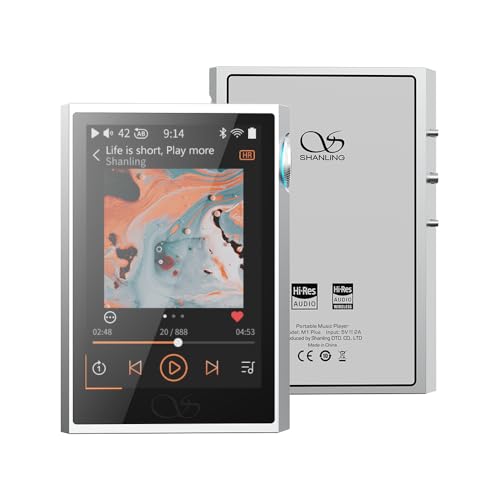
- True 4.4mm balanced headphone output plus 3.5mm jack
- Wi-Fi with DLNA/AirPlay and Bluetooth 5.2 wireless support
- ESS ES9069Q DAC with coaxial digital output for desktop use
Best For: Portable or desktop listeners who want balanced headphone playback and streaming
Flagship All-in-One Streamer – EVERSOLO DMP-A10 Hi-end Music Streamer
If you want a network audio player with balanced outputs that also works as a DAC and preamp, the EVERSOLO DMP-A10 is built for a serious all-in-one setup. It combines streaming, fully balanced analog circuitry, room correction, and isolation-focused design, making it a strong fit for a reference system where low noise and control matter.
Best For: Listeners building a flagship streamer/DAC/preamp chain with room correction and balanced analog connectivity.
Pros:
- Fully balanced analog preamp circuit with XLR/RCA support
- ES9039PRO DAC with very low distortion and noise figures
- Built-in room correction with microphone-based calibration
- Supports major streaming services including TIDAL, Qobuz, and Amazon Music
Cons:
- Subwoofer output features are limited to PCM signals below 192kHz
- Feature set is broad, which may be more than casual users need
- Premium positioning suggests it is aimed at high-end systems
The DMP-A10 stands out as a feature-dense choice for buyers who want precision, balance, and flexibility in one chassis. If you need a streamer that can anchor a high-end system, this one is designed to do exactly that.
Balanced Output Streamer – Cambridge Audio EXN100 Network Audio Player
The Cambridge Audio EXN100 is a practical pick if you want a network audio player with balanced outputs and straightforward connectivity. Its ESS Sabre DAC, XLR output, and support for HDMI eARC, USB, optical, coaxial, Ethernet, and Bluetooth make it a flexible hub for both music playback and TV integration.
Best For: Buyers who want a balanced-output network player with broad inputs and easy home-cinema hookup.
Pros:
- Balanced XLR output for premium analog connectivity
- ESS Sabre ES9028Q2M DAC for digital-to-analog conversion
- HDMI eARC support simplifies TV and home theater use
- Multiple wired and wireless inputs, including Bluetooth 5 with aptX HD
Cons:
- Less feature-heavy than some flagship all-in-one streamers
- Product details provided do not mention room correction or preamp functions
For buyers who value balanced output and versatile connections more than ultra-complex processing, the EXN100 is an efficient and well-equipped solution. It reads like a clean network player designed to slot into an existing system without unnecessary extras.
Multi-Room Hi-Res Streamer – Bluesound Node Icon Hi-Res Wireless Streamer
The Bluesound Node Icon is a compelling network audio player with balanced outputs for listeners who want hi-res streaming and a polished app ecosystem. Its dual-mono DAC design, balanced XLR outputs, and BluOS multi-room support make it a strong option for whole-home listening and serious stereo systems alike.
Best For: Hi-res streaming fans who want balanced outputs, multi-room control, and TV integration.
Pros:
- Balanced XLR outputs and a dual-mono DAC design
- BluOS access for streaming services and personal libraries
- HDMI eARC support for simple TV connection
- Dirac Live upgrade available for room-acoustic correction
Cons:
- Dirac Live requires an additional purchase and calibration kit
- Headphone and multi-room features may be more than some buyers need
The Node Icon is especially attractive if you want a streamer that can grow with a whole-home setup while still serving as a serious two-channel component. Its balanced output and feature set make it versatile without feeling stripped down.
Clock-Focused DAC Streamer – Gustard X30 Network Streaming Decoder
The Gustard X30 is aimed at buyers who want a network audio player with balanced outputs and a heavy emphasis on clocking and digital processing. With four ES9039SPRO DAC chips, a fully balanced architecture, OCXO clocking, and support for network playback formats like Roon, AirPlay, UPnP, NAA, and Spotify, it is clearly built for detail-focused systems.
Best For: Audiophiles who prioritize advanced clocking, balanced decoding, and network playback support.
Pros:
- Four ES9039SPRO DAC chips in a fully balanced design
- OCXO constant-temperature clock and external 10M clock support
- DSP filtering and FPGA-based digital processing features
- Supports Roon, AirPlay, UPnP, NAA, and Spotify
Cons:
- Product notes emphasize decoding and clocking more than everyday simplicity
- Details provided do not clearly describe balanced analog outputs by connector type
- May be more specialized than general-purpose streamers
The X30 is best viewed as a performance-first digital front end for systems built around precision. If your priority is advanced DAC architecture and network decoding rather than convenience features, this one is squarely in that lane.
Reference-Grade Digital Transport – Eversolo T8 Streamer Transport
If you’re shopping for a network audio player with balanced outputs feeding an external DAC or preamp, the Eversolo T8 is built more like a digital transport than an all-in-one streamer. It supports major services and control ecosystems, and its fully isolated outputs, including AES/EBU with a balanced XLR design, are aimed at reducing noise and preserving signal integrity in a serious hi-fi setup.
Best For: Listeners who want a high-end streaming transport to pair with an external DAC and balanced digital connections.
Pros:
- Supports TIDAL, Qobuz, Spotify Connect Lossless, Roon Ready, TIDAL Connect, and Qobuz Connect.
- Dual femtosecond clocks and electrically isolated outputs are designed to reduce jitter and ground-loop noise.
- AES/EBU uses a balanced XLR interface, and it also includes IIS, coaxial, USB Audio, and optical output options.
- Touchscreen, remote, app control, and built-in room calibration/EQ add flexibility for setup and tuning.
Cons:
- It is a transport, so it needs an external DAC or compatible audio system to play sound.
- SFP modules are sold separately if you want to use the optical network option.
- Its feature set is best suited to users who already have or plan a more advanced system.
This is a strong fit if you want a network source focused on digital output quality rather than onboard analog convenience. The T8 emphasizes isolation, clocking, and balanced digital connectivity, which makes it especially appealing in resolving systems.
Headphone-First Streaming Hub – Naim Uniti Atom Headphone Edition
The Naim Uniti Atom Headphone Edition is a network audio player with balanced outputs designed around personal listening, but it can also work as a compact streaming preamp. If you want a single box that handles music services and delivers balanced headphone connections, it offers a practical route into a refined desktop or rack setup.
Best For: Headphone listeners who want a premium streaming player with balanced 4-pin XLR and 4.4mm outputs.
Pros:
- Headphone-optimized streaming system with Qobuz, TIDAL, Spotify, AirPlay 2, Chromecast built-in, and Roon Ready support.
- Balanced headphone outputs include 4-pin XLR and 4.4mm Pentaconn.
- Can also serve as a streaming preamp for active speakers or a power amp.
- Includes remote control and a compact form factor for flexible placement.
Cons:
- Best value is tied to headphone use; it is not a traditional all-in-one speaker streamer.
- Does not emphasize speaker output features the way some broader streamers do.
- Premium positioning may be more than casual listeners need.
For buyers prioritizing balanced headphone connections, this is one of the most focused options in the group. It combines streaming convenience with the kind of output flexibility serious headphone setups tend to need.
Standalone Touchscreen Streamer – Music Hub C1 Touchscreen Streamer
The Music Hub C1 is a network audio player with balanced outputs for buyers who want a phone-free control center and straightforward system hookup. It combines Android app access, a built-in DAC, and XLR output, making it a flexible option for everyday streaming into active speakers or an amplifier.
Best For: Listeners who want a standalone touchscreen streamer with balanced XLR output and no need for a phone.
Pros:
- 6-inch touchscreen with Android OS lets you install streaming apps directly on the unit.
- Built-in DAC supports up to 384kHz/32-bit PCM and lists a 130dB SNR.
- Balanced XLR output plus RCA and optical connections make it easy to integrate.
- Physical 5-band EQ, shortcut keys, and vocal remover add hands-on control.
Cons:
- It is more of a music hub/source component than a full speaker system.
- Feature depth may be more than some users need if they only want basic streaming.
- Battery-powered portability is nice, but it still depends on the rest of your audio chain.
This is a strong pick if you want the simplicity of a standalone streamer with balanced output options. The combination of touchscreen control, XLR connectivity, and built-in apps makes it especially practical for casual-to-midrange hi-fi setups.
Premium streamer/CD hub – Network CD Player with HDMI ARC and Digital Preamp
If you want a network audio player with balanced outputs for a more traditional hi-fi setup, the Marantz CD 50n stands out as a versatile source component. It combines high-resolution streaming playback with CD support, HDMI ARC for TV audio, and a built-in digital pre-amp so you can control volume directly when feeding a power amplifier.
Best For: Listeners building a serious two-channel system who want streaming, CD playback, and direct-to-amp flexibility in one component.
Pros:
- Supports up to PCM 384 kHz/32 bit and DSD 128 for high-resolution playback.
- Built-in HDMI ARC adds a simple one-cable connection for TV, movies, and games.
- Digital pre-amp function lets you adjust volume directly when driving a power amplifier.
- Combines modern network features with traditional CD playback in one unit.
Cons:
- The supplied details do not list any balanced analog output.
- Headphone support is included, but the focus is clearly on stereo system integration.
- It may be more component than a casual streaming-only listener needs.
Overall, the CD 50n is a strong choice if you want a refined hub for both discs and streaming in a hi-fi stack. Its flexibility is especially useful for users who want one player to cover music playback and TV audio without adding extra boxes.
Full-size tuner streamer – Wide Hi-Fi Internet Radio Tuner with Bluetooth and Ethernet
The Ocean Digital WR-50 is a practical network audio player with balanced outputs alternative in a broad sense, but it is really aimed at users who want a full-size tuner-style source for a stereo system. It brings internet radio, podcasts, FM, and network playback together with plenty of output options, making it easy to slot into a traditional component stack.
Best For: Stereo owners who want internet radio, podcast access, and flexible analog/digital hookups in a standard-width component.
Pros:
- Supports internet radio, podcasts, and FM in one component.
- Offers optical, coaxial, and stereo RCA outputs for system integration.
- Includes Wi-Fi, Ethernet, Bluetooth 5.0, and UPnP/DLNA playback support.
- Front-panel display, control dial, and remote make it easy to use without a phone.
Cons:
- The supplied specs list RCA, optical, and coaxial outputs, not balanced analog outs.
- Its focus is on tuner and streaming convenience rather than high-end audio playback features.
- It is larger and more component-like than portable network players.
For a home stereo that needs flexible radio and network access, the WR-50 is a straightforward and capable source. It is especially appealing if you want a full-size component with multiple connection choices and simple front-panel control.
Portable balanced streamer – Portable Hi-Res Player with 4.4mm Balanced Out
If you are shopping for a network audio player with balanced outputs in a compact format, the SHANLING M1 Plus is the most directly relevant pick here. It pairs Wi-Fi streaming features with a true 4.4mm balanced headphone output, plus coaxial digital out and Bluetooth 5.2 for flexible use at home or on the go.
Best For: Portable listeners who want balanced headphone output, wireless streaming, and a small hi-res player they can also use at a desk.
Pros:
- Includes a 4.4mm balanced output alongside a standard 3.5mm jack.
- Supports Wi-Fi streaming with DLNA and AirPlay, plus Bluetooth 5.2.
- Uses an ESS ES9069Q DAC and SGM8262 amps with up to 660 mW at 32 ohms.
- Also provides a 3.5mm coaxial S/PDIF digital output for desktop systems.
Cons:
- The balanced output is for headphones, not balanced line-level system connections.
- Battery life is solid, but this is still a compact portable player rather than a full-size streamer.
- The small 3.2-inch screen may feel limited compared with larger network components.
Overall, the M1 Plus is the best fit if balanced headphone listening is your priority and you still want network streaming support. It is a versatile portable source that can also bridge into a desktop setup through its digital output.
How We Picked the Best Network Audio Player with Balanced Outputs
We focused on devices that combine balanced analog outputs with strong streaming support, dependable app control, and DAC performance that makes sense for the price. We also favored models that fit different use cases, from all-in-one streamers to transport-first and desktop-friendly options.
Quick Comparison
Not every Network Audio Player with Balanced Outputs serves the same role. Some are designed to be a full front end with DAC and preamp functionality, while others are better as pure streamers or digital transports paired with an external DAC. The best choice depends on whether you want simplicity, upgrade flexibility, or maximum system integration.
Key Buying Factors for a Network Audio Player with Balanced Outputs
Balanced Output Type
Look for true XLR or other balanced analog outputs if you plan to connect to a compatible amplifier or powered speaker setup. Balanced connections can help reduce noise in longer cable runs and in more complex systems.
DAC and Output Stage Quality
Some buyers need an internal DAC that can do most of the work; others already have a favorite external DAC. Pay attention to whether the unit is a streamer, streamer-DAC, or transport so you do not pay for features you will never use.
Streaming Support and Software
Make sure the player supports the services and protocols you use most, such as Tidal, Qobuz, AirPlay, Chromecast, Roon, Bluetooth, or local network playback. A great streamer is only useful if its software fits your listening habits.
System Role and Connectivity
Check for coaxial, optical, USB, HDMI ARC, subwoofer output, and preamp functions if you want one box to do more than streaming. For many buyers, the best Network Audio Player with Balanced Outputs is the one that best matches the rest of the system.
Who Should Buy Which Network Audio Player with Balanced Outputs?
Choose an all-in-one streamer DAC if you want a simple setup with fewer boxes and cables. Choose a transport if you already own a high-end DAC and want the strongest digital output path. Choose a premium streamer-preamp if you want balanced outputs, volume control, and direct connection to active speakers or a power amp. If you are building a desk or compact system, prioritize size, interface quality, and headphone or line-level flexibility over excess features.
In short, the right Network Audio Player with Balanced Outputs should match your system goals, not just the spec sheet. Focus on output type, streaming ecosystem support, and how much conversion you want the player to handle itself.