The right orbital sander can make automotive prep faster, smoother, and more consistent, whether you are feathering repaired panels, removing old paint, or refining a finish before polishing.
This roundup compares 10 options across pneumatic, cordless, and corded formats, with attention to control, vibration, power, pad size, and the practical demands of garage and body-shop work.
Best 10 Orbital Sanders for Automotive Work Picks for 2026
Versatile Mini Air Pick
1/2/3-Inch Random Orbital Air Sander
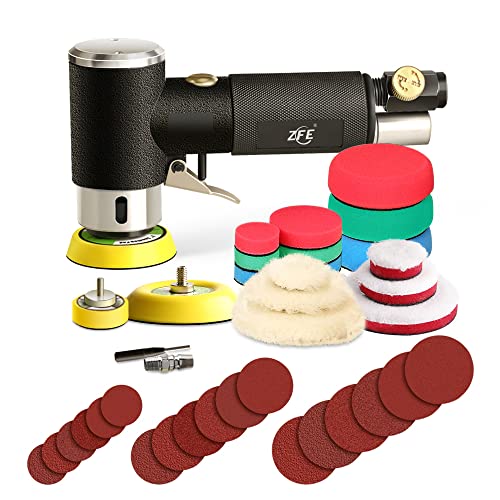
- Three backing-plate sizes for focused work
- Includes pads, sandpapers, and accessories
- Up to 15,000 RPM for sanding and polishing
Best For: Automotive spot repairs, rust removal, and detailing
Adjustable Pneumatic Workhorse
PROSHI 6-Inch Random Orbit Air Sander
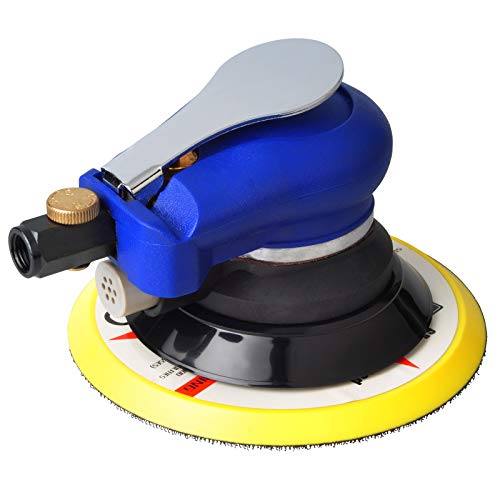
- 6-inch hook-and-loop sanding face
- Built-in regulator for adjustable speed
- Suitable for sanding, polishing, and waxing
Best For: Larger automotive surfaces and general finishing
Cordless Convenience Choice

- Brushless 20V cordless motor
- Variable 8,000–12,000 OPM control
- Low-profile body with dust-collection options
Best For: Mobile automotive sanding and hose-free shop work
Professional Pneumatic Standard
3M 5-Inch Random Orbital Sander
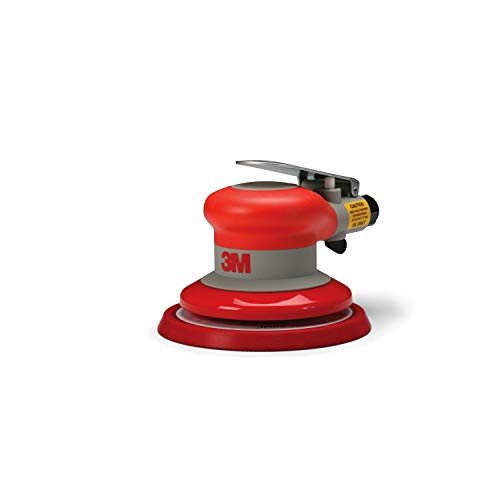
- 0.28-HP pneumatic motor for finishing work
- Balanced low-profile design for control
- Includes Stikit adhesive-disc pad
Best For: Professional sanding and finishing on metal and composites
Garage-Ready Air Pick

- 2,500–12,000 RPM adjustable speed
- Lightweight, low-vibration palm design
- Includes pads, cloths, mitt, and air fitting
Best For: Automotive refinishing and detailing with compressed air
Versatile Pneumatic Kit
5- and 6-Inch Random Orbital Sander

- Includes two backing plate sizes
- Lightweight 1.5-pound palm design
- Includes abrasives, polishing pads, and dust bag
Best For: Mixed automotive sanding and polishing projects
Corded Electric Control
DEWALT 5-Inch Variable-Speed Sander

- 3-amp motor with 8,000–12,000 OPM
- Counterweight and rubber overmold reduce fatigue
- Dust bag and collector compatibility included
Best For: Corded workshop sanding and automotive surface preparation
Professional Pneumatic Pick
6-Inch Air Random Orbital Sander

- 6-inch pad for broad panel coverage
- Low vibration and balanced design
- 12,000-rpm air-powered motor
Best For: Large automotive panels and overhead sanding with an air compressor
Workshop Reliability Pick
DEWALT 5-Inch Corded Orbital Sander
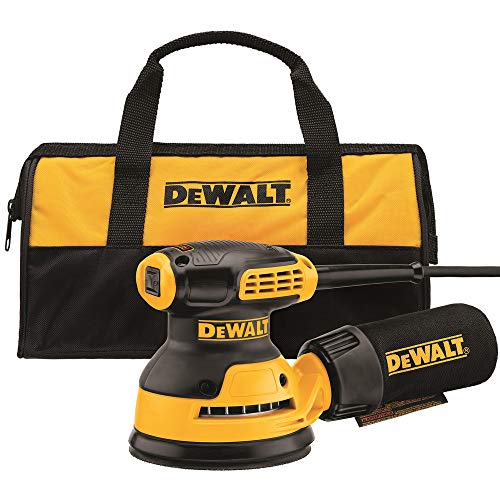
- 3-amp motor reaches 12,000 OPM
- Counterweight helps reduce vibration
- Includes dust bag and carrying bag
Best For: Garage workshops that favor corded power and dust collection
Compact Air-Finish Pick
5-Inch Dual-Action Pneumatic Sander

- 10,000-rpm speed-adjustable motor
- Dual-action design for swirl-free results
- 8-CFM air consumption with 5-inch pad
Best For: Automotive prep and finishing with a compatible compressor
Versatile Mini Air Pick – 1/2/3-Inch Random Orbital Air Sander
For detailers comparing orbital sanders for automotive work, this compact pneumatic model stands out for its interchangeable 1-, 2-, and 3-inch backing plates. It reaches up to 15,000 RPM and includes polishing pads, sandpapers, and accessories for spot sanding, rust removal, and finishing tasks.
Best For: Automotive spot repairs, polishing, rust-spot removal, and detailed work in tight areas.
Pros:
- Includes multiple backing plates, 15 buffing pads, and 18 sandpapers.
- Compact 2.3-pound design is suited to focused sanding and polishing.
- Double-rotation polishing method is designed for a more uniform finish.
- High speed up to 15,000 RPM with reportedly low vibration and energy consumption.
Cons:
- Requires an air supply, so it is less convenient than a cordless model.
- The small pad sizes are aimed at detail work rather than broad panels.
This is a flexible choice when automotive work involves localized imperfections, edges, or polishing rather than extensive surface preparation. Its included accessory assortment also makes it useful for buyers building a compact air-powered detailing setup.
Adjustable Pneumatic Workhorse – PROSHI 6-Inch Random Orbit Air Sander
For shoppers seeking orbital sanders for automotive work with a larger contact area, the PROSHI 6-inch pneumatic sander offers a hook-and-loop face and a built-in speed regulator. Its adjustable control supports sanding, polishing, and waxing across metal and other materials.
Best For: Larger automotive surfaces, general sanding, polishing, and waxing where compressed air is available.
Pros:
- 6-inch pad covers more area than compact detail sanders.
- Built-in regulator helps adjust working speed for different applications.
- Hook-and-loop face makes abrasive changes straightforward.
- Can be used on iron, wood, plastic, metal, rubber, stone, and marble.
Cons:
- Requires compressed air for operation.
- Its 10,000-RPM maximum is lower than some specialized mini air sanders.
- The package includes only one sander, connector, and wrench, with abrasives not listed.
The larger pad and adjustable regulator make this a practical general-purpose option for bodywork and finishing. It is especially sensible for users who already have an air compressor and want one tool for multiple surface types.
Cordless Convenience Choice – DEWALT 20V MAX Orbital Sander
DEWALT 20V MAX Orbital Sander, Tool Only (DCW210B) | Brushless motor, dust collection
Check Price On AmazonAmong orbital sanders for automotive work, the DEWALT DCW210B is a convenient cordless option for mobile repairs and shop areas without an air hose. Its brushless motor, variable 8,000-to-12,000-OPM control, low-profile body, and dust-collection compatibility support controlled surface preparation.
Best For: Cordless automotive sanding, mobile work, and users who prioritize dust management and tool-free abrasive changes.
Pros:
- Brushless motor is designed for runtime and efficiency.
- Variable-speed control ranges from 8,000 to 12,000 OPM.
- Low-profile height supports closer, more precise sanding.
- Hook-and-loop pad and dust-sealed switch add convenience and durability.
Cons:
- This tool-only kit does not include a battery or charger.
- Dust collectors and the universal hose connector are sold separately.
- Its 5-inch pad covers less area per pass than a 6-inch pneumatic sander.
The DCW210B is a strong fit when portability matters more than continuous pneumatic operation. Plan for the additional battery, charger, and possible vacuum accessories when comparing total setup cost.
Professional Pneumatic Standard – 3M 5-Inch Random Orbital Sander
For professional users evaluating orbital sanders for automotive work, this 3M pneumatic model combines a 0.28-HP motor with a balanced low-profile design and a 3/16-inch orbit. Its included Stikit pad is made for adhesive-backed discs and supports repeatable sanding and finishing work.
Best For: Professional or industrial sanding and finishing on metal, composites, and other prepared surfaces.
Pros:
- 0.28-HP motor is intended for sanding and finishing applications.
- Precision-balanced motor is designed for smooth operation and control.
- Includes a 3M Stikit disc pad for adhesive-backed sanding discs.
- Aluminum body and composite cover are built for durability.
Cons:
- Requires compressed air and is intended for industrial or occupational use.
- Uses adhesive-backed Stikit discs rather than hook-and-loop abrasives.
- The non-vacuum design does not provide integrated vacuum dust extraction.
This 3M sander is geared toward controlled, sustained professional use rather than casual DIY projects. Its balanced construction and Stikit compatibility make it a logical choice for users already invested in 3M abrasive systems.
Garage-Ready Air Pick – 5-Inch Dual-Action Air Sander
For automotive refinishing and surface preparation, this 5-inch pneumatic tool is a practical option among orbital sanders for automotive work. Its adjustable 2,500–12,000 RPM range, compact palm design, and low-vibration operation support controlled sanding across paint, metal, and wood projects.
Best For: Automotive refinishing, metal prep, detailing, and users with a compressed-air setup.
Pros:
- Variable speed control from 2,500 to 12,000 RPM.
- Lightweight 3.1-pound design with a cushioned grip.
- Includes a 5-inch hook-and-loop pad, contour sponge pads, microfiber supplies, and air fitting.
- Supports sanding, polishing, grinding, and compound application.
Cons:
- Requires a compressed-air source.
- The included abrasive specification is listed as medium, with 120 grit noted.
Its speed range and accessory bundle make it convenient for varied automotive tasks, while the pneumatic power source means buyers should confirm their compressor and fittings are suitable.
Versatile Pneumatic Kit – 5- and 6-Inch Random Orbital Sander
This pneumatic random orbital sander is a flexible choice for orbital sanders for automotive work, especially when projects span paint, metal, fiberglass, and composite surfaces. It includes both 5- and 6-inch backing plates, adjustable speed up to 10,000 RPM, and accessories for sanding and polishing.
Best For: DIY garages and workshops handling automotive paint correction, metal polishing, deburring, and mixed-material projects.
Pros:
- Includes 5- and 6-inch backing plates for added flexibility.
- Lightweight 1.5-pound palm-style design.
- Integrated regulator supports speed adjustment up to 10,000 RPM.
- Comes with sandpapers, polishing pads, microfiber cloths, a washing mitt, and a dust-collection bag and tube.
Cons:
- Requires a pneumatic power source.
- The included dust bag and tube may be less convenient than a direct shop-vac connection.
- Its listed maximum speed is lower than the 12,000 RPM models in this roundup.
The multiple backing plates and broad accessory set give this sander strong project versatility. It is a particularly practical package for buyers who want to begin sanding and polishing without sourcing many extras.
Corded Electric Control – DEWALT 5-Inch Variable-Speed Sander
DEWALT Random Orbit Sander, Variable Speed, 5-Inch (DWE6423), Power Source Corded Electric
Check Price On AmazonThe DEWALT DWE6423 is a corded-electric alternative for orbital sanders for automotive work, offering a 3-amp motor with variable speed from 8,000 to 12,000 OPM. Its counterweight, rubber overmold, and dust-collection features are aimed at making extended surface preparation more comfortable and controlled.
Best For: Workshop users who prefer corded electric power and need a 5-inch sander for paint and surface-preparation tasks.
Pros:
- Variable 8,000–12,000 OPM speed range.
- Separate counterweight design helps reduce vibration.
- Dust-sealed switch and one-handed locking dust bag support cleaner operation.
- Dust port is designed for select DEWALT collectors and can adapt to 1-1/4-inch hoses with the DWV9000 connector.
Cons:
- Requires access to a corded electrical outlet.
- A universal quick connector for other 1-1/4-inch vacuum systems is not included in the listed components.
- It is supplied with a dust bag rather than a broader sanding and polishing accessory kit.
Choose this model when consistent corded power, vibration control, and dust-management compatibility matter more than pneumatic portability or included accessories. Its 5-inch format suits controlled automotive surface work.
Professional Pneumatic Pick – 6-Inch Air Random Orbital Sander
For automotive work that calls for broad coverage and a swirl-free finish, this 6-inch pneumatic random orbital sander combines a lightweight build with a low-vibration, low-center-of-gravity design. Its 12,000-rpm air motor is suited to sanding panels, including vertical and overhead surfaces.
Best For: Automotive users with a suitable air compressor who want a balanced 6-inch tool for larger sanding areas and overhead work.
Pros:
- 6-inch pad covers more surface area per pass.
- Low vibration and balanced sanding pad support swirl-free finishes.
- Lightweight air-motor assembly is useful for vertical and overhead sanding.
- 12,000-rpm maximum speed supports fast sanding.
Cons:
- Requires an air compressor and pneumatic setup.
- The supplied specifications identify an 80-grit configuration, which may require additional discs for finer finishing.
- It is larger than a 5-inch sander for tighter areas.
This is a practical choice when panel coverage, low vibration, and maneuverability matter more than cordless convenience. Confirm your compressor setup and keep finer abrasives available for finishing stages.
Workshop Reliability Pick – DEWALT 5-Inch Corded Orbital Sander
Among orbital sanders for automotive work, the DEWALT DWE6421K is a convenient corded option for users who prefer a standard electrical outlet over compressor equipment. Its 3-amp motor reaches 12,000 OPM, while the separate counterweight and rubber over-mold help make extended sanding more comfortable.
Best For: Home garages and workshops needing a compact 5-inch corded sander with built-in dust-management features.
Pros:
- 3-amp motor delivers up to 12,000 OPM.
- Separate counterweight design reduces vibration.
- Dust-sealed switch helps protect against dust ingestion.
- Dust bag and ports support connection to compatible DEWALT dust collectors or a 1-1/4-inch hose with the specified adapter.
Cons:
- Corded operation limits mobility compared with pneumatic or cordless tools.
- Its 5-inch pad covers less area per pass than a 6-inch model.
- A universal quick connector is needed for other vacuum systems using 1-1/4-inch hoses.
The DWE6421K suits a garage setup where predictable electric power and dust collection are priorities. Its 5-inch format is easier to manage in smaller work areas, though users working on large panels may prefer a larger pad.
Compact Air-Finish Pick – 5-Inch Dual-Action Pneumatic Sander
This 5-inch pneumatic dual-action sander is a compact option for orbital sanders for automotive work, particularly prep and finishing tasks where controlled, swirl-free sanding is useful. Its speed-adjustable 10,000-rpm motor, palm-grip housing, and 8-CFM air consumption balance capability with manageable handling.
Best For: Automotive body prep, metal work, and finishing jobs where a lightweight 5-inch air sander and standard hook-and-loop discs are preferred.
Pros:
- Dual-action motion is designed for swirl-free sanding and polishing.
- Standard 5-inch hook-and-loop pad accepts commonly available sandpaper.
- Speed-adjustable motor reaches 10,000 rpm for controlled material removal.
- Lightweight palm grip and vibration-dampening composite housing help reduce fatigue.
Cons:
- Requires an air compressor capable of supplying the listed 8 CFM.
- Its 5-inch pad is less efficient than a 6-inch model on broad panels.
- The supplied specifications list a coarse 36-grit configuration, so finer abrasives may be needed for finishing.
With adjustable speed and a standard hook-and-loop pad, this model offers useful flexibility for automotive prep and finishing. Check compressor capacity before buying, and plan on using the appropriate grit sequence for the surface.
How We Picked the Best Orbital Sanders for Automotive Work
We focused on tools suited to automotive sanding and surface preparation rather than general-purpose woodworking alone. The selection includes pneumatic dual-action sanders, corded electric models, and a cordless option so you can match the tool to your workspace and existing equipment.
Our comparison emphasizes orbit size, variable-speed control, pad compatibility, dust-management design, vibration, handling, and the supplies each sander needs. We also considered whether a model is better suited to occasional garage projects, mobile repairs, detailing, or continuous professional use.
Quick Comparison
| Type | Best For | Main Advantage | Watch For |
|---|---|---|---|
| Pneumatic | Body shops and frequent use | Lightweight, continuous operation | Requires a capable compressor |
| Corded electric | Garages and fixed work areas | Simple setup and steady power | Power cord limits mobility |
| Cordless | Mobile repairs and convenience | No hose or electrical cable | Battery runtime and tool cost |
Key Buying Factors for Orbital Sanders for Automotive Work
Orbit Size and Pad Diameter
A 5-inch pad is a versatile choice for panels, spot repairs, and general refinishing. Six-inch models can cover more area efficiently, while compact one-, two-, or three-inch tools are useful around contours, trim, and confined sections. Smaller orbits generally offer more control for finishing; larger orbits remove material faster.
Power Source and Air Requirements
Pneumatic sanders are often preferred for long sessions because they are light and do not need battery changes, but compressor output matters. Check the tool’s required CFM and operating pressure, and make sure your compressor can sustain them under load. Corded models are easier for many home garages, while cordless sanders are convenient where hoses and outlets are impractical.
Speed, Vibration, and Control
Variable speed helps you slow down near edges and increase productivity on broad, flat areas. Low vibration reduces fatigue and makes it easier to maintain an even finish. A comfortable palm grip, balanced body, and accessible controls are especially important when sanding large panels.
Dust Collection and Abrasive Compatibility
Confirm the backing-plate size, hole pattern, hook-and-loop compatibility, and included pads before buying. Built-in dust collection or vacuum compatibility can improve visibility and reduce cleanup, although some professional air sanders are designed for dedicated shop extraction systems.
Who Should Buy Which Orbital Sanders for Automotive Work?
Choose a pneumatic model if you have a suitable compressor and expect frequent bodywork. These are typically the best fit for sustained shop use.
Choose a corded electric sander for dependable garage projects without compressor maintenance. It is a practical option for paint prep, filler smoothing, and occasional restoration work.
Choose a cordless model when portability is the priority or you already own compatible batteries. Keep a spare battery available for larger jobs.
Choose a compact sander for spot repairs, curved areas, trim, and detail work, but use a full-size five- or six-inch model for broad panels and faster material removal.