If you’re looking to elevate your podcasting game, choosing the right portable recorder is essential. With so many options available, it can be overwhelming to find the perfect fit for your needs. From compact devices for solo recordings to more advanced models that accommodate multiple guests, the right equipment can make all the difference. Let’s explore some of the top contenders that can enhance your audio quality and streamline your podcasting process.
Zoom PodTrak P4 Podcast Recorder

The Zoom PodTrak P4 Podcast Recorder is an excellent choice for podcasters who need versatility and quality in a compact design. With four XLR mic inputs and headphone outputs, you can easily connect multiple guests. Its battery-powered feature means you can record anywhere, making it perfect for on-the-go interviews. The multi-track recording capability allows you to edit your podcast seamlessly, while the programmable sound pads add a creative touch. Plus, the automatic mix-minus function guarantees clear call-in interviews. Whether you’re using it for remote interviews or live sessions, the PodTrak P4 delivers professional sound every time.
Best For: Podcasters seeking a portable and versatile recording solution for multiple guests and remote interviews.
Pros:
- High-quality microphone inputs with phantom power for professional audio capture.
- Battery-powered operation allows for recording in various locations without the need for an outlet.
- Multi-track recording capability facilitates seamless editing and production of podcasts.
Cons:
- Limited battery life of 3.5 hours may require frequent recharging or replacement during extended sessions.
- The compact design may limit the number of additional features compared to larger, more complex recording setups.
- Some users may find the learning curve for programming sound pads and settings challenging.
Zoom H1 Essential Stereo Recorder for Voice, Music, Podcasting & Film

For podcasters seeking high-quality audio without the hassle of manual gain adjustments, the Zoom H1 Essential Stereo Recorder stands out as an ideal choice. Its 32-bit float recording guarantees you capture perfect sound every time. With high-quality X/Y stereo microphones, you’ll enjoy clean audio even at 120 dB SPL. The device records at a sample rate of up to 96kHz to an SD card, delivering exceptional fidelity. Plus, its USB functionality lets you connect seamlessly to PC, Mac, or mobile devices. Accessibility features, like audio guidance, enhance usability, making it a versatile tool for all podcasters.
Best For: Podcasters and content creators looking for high-quality audio recording without the complexity of manual adjustments.
Pros:
- 32-bit float recording ensures perfect sound quality without the need for gain adjustments.
- High-quality X/Y stereo microphones capture clean audio even at high sound pressure levels.
- USB functionality allows for easy connection to various devices, enhancing versatility.
Cons:
- Limited to recording directly to an SD card, which may not suit all users’ workflows.
- No built-in editing features, requiring separate software for post-production.
- Battery life may be a concern during extended recording sessions, needing careful management.
TASCAM DR-40X Portable Handheld Field Recorder

If you’re seeking a reliable and versatile option for podcasting, the TASCAM DR-40X Portable Handheld Field Recorder stands out with its dual adjustable unidirectional stereo microphones. You can record in A-B or X-Y positions, ensuring exceptional sound quality. With two XLR/TRS inputs, it supports various recording modes, including dual recording and nondestructive overdub. Plus, it functions as a 2-in/2-out USB audio interface, perfect for Mac, PC, and iOS. Weighing just 7.4 ounces, it’s lightweight and portable. With an average rating of 4.5 stars, it’s a favorite among podcasters seeking high-quality audio on the go.
Best For: Podcasters and content creators seeking a portable and high-quality audio recording solution.
Pros:
- Dual adjustable microphones allow for versatile recording positions (A-B and X-Y).
- Lightweight and portable design makes it easy to carry for on-the-go recording.
- Functions as a USB audio interface, enhancing compatibility with various devices for seamless integration.
Cons:
- Battery-operated, which may require frequent battery changes during extended use.
- Limited media format support, as it primarily records in WAV format.
- No built-in rechargeable battery, which could be inconvenient for some users.
Zoom H1 Portable Audio Recorder

Designed with portability in mind, the Zoom H1 Portable Audio Recorder is an ideal choice for podcasters on the go. Weighing just 6.4 ounces and measuring 5.8 x 3.8 x 1.9 inches, it fits easily in your bag. With 32-bit float recording and dual A/D converters, you’ll capture clip-free audio at up to 96kHz. The dual XLR/TRS locking combo inputs and 3.5mm stereo mic/line input offer flexibility for different setups. Plus, the USB-C port guarantees seamless connectivity with various devices. Rated 4.6 stars by users, it’s a reliable tool for anyone looking to elevate their podcasting game.
Best For: The Zoom H1 Portable Audio Recorder is best for musicians, podcasters, filmmakers, and content creators looking for a lightweight and versatile audio recording solution.
Pros:
- Compact and lightweight design makes it easy to carry for on-the-go recording.
- 32-bit float recording and dual A/D converters ensure high-quality, clip-free audio.
- Flexible input options with dual XLR/TRS inputs and a 3.5mm stereo mic/line input.
Cons:
- Limited internal storage may require additional media for extended recording sessions.
- Voice guidance feature may not be sufficient for all visually impaired users.
- No built-in battery; requires external power for operation.
Zoom H6 6-Track Stereo Recorder

The Zoom H6 6-Track Stereo Recorder stands out as an ideal choice for podcasters seeking high-quality audio without the hassle of gain adjustments. With 32-bit float recording, you’ll capture pristine sound effortlessly. This device supports six tracks simultaneously, allowing you to record up to 135 dB SPL, ensuring clarity in any environment. Its four XLR/TRS combo inputs, paired with ultra-clean Zoom preamps, enhance your audio quality. Plus, the 3.0 interchangeable mic capsule system gives you the flexibility to adapt to various recording scenarios. The audio guidance feature also makes it accessible for visually impaired users, broadening your podcasting possibilities.
Best For: Podcasters and audio professionals seeking high-quality sound recording with ease of use and flexibility.
Pros:
- High-quality 32-bit float recording allows for pristine audio capture without gain adjustments.
- Versatile recording options with six simultaneous tracks and four XLR/TRS combo inputs.
- Interchangeable mic capsule system provides adaptability for various recording environments.
Cons:
- Higher price point compared to basic recorders may not suit budget-conscious users.
- Learning curve for beginners unfamiliar with advanced recording equipment.
- Limited battery life when using multiple inputs and features simultaneously.
Zoom H4 Essential 4-Track Stereo Recorder

With its 4-tracks of 32-bit float recording, the Zoom H4 Essential 4-Track Stereo Recorder is perfect for podcasters who want high-quality audio without the hassle of setting gain levels. You’ll enjoy recording up to 96kHz directly to an SD card, capturing impressive sound with its X/Y mics, capable of handling up to 130 dB SPL. The ultra-clean Zoom preamps guarantee clarity, while dual XLR/TRS combo inputs give you flexibility. Plus, the USB interface lets you connect to PC, Mac, iOS, or Android, allowing simultaneous recording. Its accessible design, including audio guidance, caters to a wide range of users.
Best For: The Zoom H4 Essential 4-Track Stereo Recorder is best for podcasters and musicians seeking high-quality audio recording without the complexity of manual gain adjustments.
Pros:
- High-quality 32-bit float recording allows for exceptional sound clarity and detail.
- User-friendly design with no need to set gain, making it accessible for beginners and professionals alike.
- Versatile connectivity options including USB interface for simultaneous recording to SD card and computer.
Cons:
- Limited battery life may require frequent recharging during extended recording sessions.
- Size and weight could be less portable compared to smaller recording devices.
- Learning curve for advanced features may be challenging for some users.
136GB Digital Voice Recorder with Playback

If you’re a student, journalist, or music lover seeking high-quality audio recordings, the GB Digital Voice Recorder with Playback is an excellent choice. With dual noise reduction microphones and 1536 kbps PCM HD audio, it captures clear sound effortlessly. Its 136GB storage, including a 128GB TF card, holds up to 9000 hours of recordings. The lightweight design and sleek metal casing make it portable and durable for travel. You’ll appreciate the one-click recording, voice-activated features, and easy USB-C file transfers. Plus, the large LCD screen guarantees user-friendly operation, while password protection keeps your recordings secure.
Best For: Students, journalists, and music lovers seeking high-quality audio recordings with extensive storage capacity.
Pros:
- High recording quality with dual noise reduction microphones and 1536 kbps PCM HD audio.
- Large storage capacity of 136GB, allowing up to 9000 hours of recordings.
- User-friendly features like one-click recording, voice activation, and easy USB-C file transfers.
Cons:
- Weight of 97 grams might be slightly heavier for some users seeking ultra-light devices.
- Limited battery life of 68 hours may require recharging for extended use.
- Password protection feature may complicate access for some users who prefer simplicity.
Zoom H5 4-Track Portable Recorder for Audio
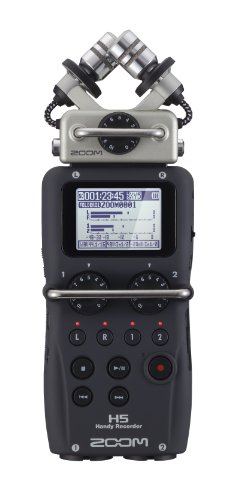
For podcasters seeking a reliable and versatile recording solution, the Zoom H5 4-Track Portable Recorder stands out with its interchangeable input capsules. Its detachable X/Y capsule provides exceptional sound quality while minimizing handling noise. You’ll appreciate the two mic/line inputs with XLR/TRS combo connectors, each with selectable phantom power and a -20dB pad for flexibility. With the ability to record four tracks simultaneously, your audio capture will be detailed and clear. Plus, it operates on just 2 AA batteries, making it perfect for on-the-go recording. The H5 also functions as a USB audio interface, enhancing your editing capabilities.
Best For: Podcasters and content creators looking for a versatile, high-quality portable audio recording solution.
Pros:
- Interchangeable input capsules offer versatility for different recording needs.
- Four-track simultaneous recording allows for detailed and layered audio capture.
- Portable design powered by 2 AA batteries makes it ideal for on-the-go use.
Cons:
- Limited to 32GB maximum capacity for SD/SDHC cards, which may restrict longer recordings.
- Requires additional investment for extra input capsules for expanded functionality.
- Battery life may be limited with intensive use, necessitating frequent replacements.
Zoom H8 12-Track Portable Recorder

The Zoom H8 12-Track Portable Recorder stands out as an excellent choice for podcasters who need versatility and quality in one device. With four mic inputs and two XLR/TRS combo connectors, you can capture multiple audio sources simultaneously. Its interchangeable input capsules and 12-track recording capability make it adaptable for various recording needs. The large color LCD touchscreen simplifies navigation, while the USB audio interface mode allows direct recording or streaming to your computer or iPad. Plus, with over 20 hours of battery life on four AA batteries, it’s perfect for on-the-go podcasting, music production, and video recording.
Best For: The Zoom H8 12-Track Portable Recorder is best for podcasters, musicians, and videographers seeking a versatile and high-quality audio recording solution.
Pros:
- Multiple Input Options: Features four mic inputs and two XLR/TRS combo connectors for simultaneous audio capture.
- User-Friendly Interface: Large color LCD touchscreen simplifies navigation and operation.
- Long Battery Life: Operates over 20 hours on four AA alkaline batteries, making it ideal for portable use.
Cons:
- Price Point: May be considered expensive for casual users or beginners.
- Learning Curve: Some users might find the array of features overwhelming initially.
- Limited Built-in Effects: Lacks advanced built-in audio effects compared to other professional recorders.
Zoom PodTrak P4 Portable Podcast Recorder Bundle

Whether you’re a seasoned podcaster or just starting out, the Zoom PodTrak P4 Portable Podcast Recorder Bundle is an excellent choice for creating professional-quality audio. It comes with two Zoom M-1 Podcast mics, headphones, windscreens, XLR cables, and tabletop stands, making it a complete podcasting kit. You’ll appreciate the independent headphone mixes, ensuring everyone hears clearly. Plus, its call-in features let you connect remote guests easily, accommodating two at once. With optional Bluetooth connectivity, you can stream audio wirelessly. This bundle is perfect for two-person setups, giving you everything you need for a smooth podcasting experience.
Best For: Podcasters looking for a comprehensive and user-friendly kit to create high-quality audio in two-person setups.
Pros:
- Independent headphone mixes for hosts and guests ensure clear audio for all participants.
- Versatile call-in features allow for seamless connections with remote guests, accommodating two at once.
- Complete package of accessories including mics, headphones, and stands simplifies setup and enhances overall podcasting experience.
Cons:
- Bluetooth receiver sold separately may add extra cost for those wanting wireless connectivity.
- Limited to two-person setups, which may not suit larger podcasting teams.
- Portability could be a concern if transporting multiple accessories becomes cumbersome.
Factors to Consider When Choosing Portable Recorders for Podcasting
When choosing a portable recorder for podcasting, you’ll want to take into account several key factors. Think about audio quality standards, input and output options, and how easy it is to use. Don’t forget to evaluate portability, weight, and battery life to make certain it fits your podcasting needs.
Audio Quality Standards
Choosing the right portable recorder for podcasting is vital to achieving high audio quality, as various factors directly impact your recordings. Look for devices that support high-quality audio formats like 32-bit float recording. This feature eliminates the need for setting gain levels, capturing audio without distortion. A recommended sample rate of up to 96 kHz guarantees clarity and detail in both voice and music. The ability to handle high sound pressure levels (SPL) up to 135 dB is essential for maintaining sound quality in dynamic environments. Multi-track recording capabilities are also important for interviews and discussions. Finally, features like phantom power for condenser microphones can greatly elevate audio quality, especially with professional-grade gear.
Input and Output Options
Input and output options play an essential role in selecting the right portable recorder for podcasting. Look for models that offer multiple XLR/TRS combo inputs to accommodate various microphones, enhancing your recording versatility. A recorder should also have headphone outputs with individual volume control, allowing each participant to monitor their audio comfortably. USB connectivity is vital for seamless integration with computers and mobile devices, making audio transfer and editing a breeze. Additionally, consider features like built-in microphones or interchangeable input capsules for different recording scenarios. Finally, check for extra input options, such as TRRS ports, which can greatly boost your podcasting capabilities for remote interviews or call-ins. This flexibility can make a big difference in your recordings.
Portability and Weight
Portability and weight are essential factors to take into account for any podcaster on the go. When you’re selecting a portable recorder, aim for devices that weigh under 1 pound. This keeps your gear light and manageable. Look for compact recorders, ideally under 6 inches in length, so they fit easily into bags or pockets. Lightweight designs, around 6-8 ounces, make a noticeable difference during long recording sessions or while traveling. Opt for battery-powered options to enhance your portability, allowing you to record in diverse locations without needing a power source. Finally, choose an ergonomic form factor that enables easy handling and operation, ensuring comfort during extended use. Your podcasting experience should be seamless, not cumbersome.
Battery Life Considerations
While it might be tempting to focus solely on features and sound quality when selecting a portable recorder for podcasting, battery life is equally important. Consider how long the device can operate on a single charge or set of batteries. For instance, the Zoom PodTrak P4 runs for about 3.5 hours on 2 AA batteries, but some models last considerably longer. Look for recorders with rechargeable batteries to extend recording times and minimize battery changes. A power-saving mode can help during lengthy sessions, while devices that allow USB power while recording can keep you going without draining your batteries. Finally, balance weight and portability; heavier devices often require more power, affecting overall recording time.
User Interface Usability
When you’re deep into recording a podcast, the last thing you want is to struggle with complicated controls or a confusing display. User interface usability is essential for a smooth recording experience. Look for portable recorders that feature intuitive controls and a large color LCD touchscreen to easily navigate settings. A well-organized control layout can make a significant difference. Quick access features like one-click recording or dedicated buttons for essential functions streamline your workflow. Additionally, consider models that offer audio guidance functions, especially for visually impaired users, ensuring everyone can operate the device effectively. Voice guidance or audio feedback can also provide real-time updates on your recording status, making it easier to focus on your content.
Recording Formats Supported
Choosing a portable recorder for podcasting means considering the recording formats it supports, as this can greatly impact your audio quality and flexibility. Most portable recorders offer various audio formats like WAV and MP3, giving you versatile options for different applications. Look for models that provide high-resolution recording with sample rates up to 96 kHz, ensuring exceptional audio fidelity. Some recorders even feature 32-bit float recording, which eliminates the hassle of setting gain levels and reduces the risk of clipping during loud sounds. Also, check the storage capacity; a recorder that accommodates large audio data allows for extended recording sessions without interruptions. Finally, compatibility with USB connections simplifies file transfers and enhances usability.
Connectivity Features
Understanding recording formats is just the beginning; connectivity features play a significant role in the overall functionality of portable recorders for podcasting. Look for USB functionality that connects easily to PCs, Macs, iOS, or Android devices, making file transfers and recording a breeze. Many models also offer multiple XLR/TRS combo inputs, allowing you to hook up professional microphones for superior sound quality. If you plan on conducting interviews, consider devices with Bluetooth support for easy wireless audio streaming, or TRRS inputs for remote call-ins. Additionally, explore recorders with various recording modes like dual recording and overdubbing, which can greatly enhance your podcast’s versatility and production quality.
Price and Budget Factors
Setting a budget is essential for selecting the right portable recorder for podcasting, especially since prices can range from a few hundred dollars to over a thousand. Start by defining a clear budget range, as entry-level options often cost between $100 and $500, providing various features suitable for different podcasting levels. Don’t forget to factor in additional costs like microphones, headphones, and cables, which can greatly impact your overall setup budget. Higher-priced models may offer advanced features such as multi-track recording and phantom power, which are vital for professional-quality production. Ultimately, evaluate long-term value versus upfront cost; investing in a reliable recorder can enhance audio quality and save you money on future upgrades.