When it comes to capturing high-quality audio on the go, choosing the right portable recorder with XLR inputs can make a significant difference. You’ll find that models like the Zoom H1 and TASCAM DR-40X offer impressive features for professionals. But what should you really look for in a recorder? Let’s explore some top contenders and key factors that could impact your decision-making process.
Zoom H1 XLR Portable Audio Recorder

The Zoom H1 XLR Portable Audio Recorder is perfect for musicians, podcasters, and filmmakers looking for high-quality audio on the go. With its 32-bit float recording and dual A/D converters, you’ll capture clip-free audio every time. The dual XLR/TRS locking combo inputs and 3.5mm stereo mic/line input offer versatility for various setups. Weighing only 6.4 ounces and measuring 5.8 x 3.8 x 1.9 inches, it’s incredibly portable. Plus, the USB-C port guarantees seamless connectivity with your devices. Rated 4.6 out of 5 stars, it’s a top choice for anyone serious about sound quality. Enjoy professional audio wherever you are!
Best For: Musicians, podcasters, and filmmakers seeking high-quality, portable audio recording solutions.
Pros:
- 32-bit float recording ensures clip-free audio capture in various environments.
- Dual XLR/TRS locking combo inputs provide versatile connectivity options for different audio setups.
- Lightweight and compact design makes it easy to carry for on-the-go recording.
Cons:
- Limited media format options as it only records in WAV format.
- Voice guidance feature may not be sufficient for all visually impaired users.
- No built-in storage means users must provide their own media for recording.
Zoom H4 Essential 4-Track Stereo Recorder

If you’re a musician, podcaster, or anyone needing high-quality recordings on the go, the Zoom H4 Essential 4-Track Stereo Recorder is an excellent choice. With 4 tracks of 32-bit float recording and a sample rate of up to 96kHz, it captures every nuance of your sound. You won’t have to worry about setting gain, thanks to its ultra-clean Zoom preamps. Two XLR/TRS combo inputs allow for versatile connections, and the simultaneous recording to SD card and USB makes it incredibly convenient. Plus, its accessible design, including audio guidance, guarantees it’s user-friendly for everyone.
Best For: Musicians, podcasters, and content creators seeking high-quality portable recording solutions.
Pros:
- 4 tracks of 32-bit float recording for professional sound quality.
- User-friendly design with audio guidance for visually impaired users.
- Simultaneous recording to SD card and USB for added convenience.
Cons:
- Limited to a maximum sample rate of 96kHz, which may not meet the needs of some audiophiles.
- Battery life may vary depending on usage, potentially requiring extra power sources for extended sessions.
- Lacks advanced editing features, as it primarily focuses on recording rather than post-production.
TASCAM DR-40X Portable Handheld Field Recorder

For musicians, filmmakers, or podcasters seeking a versatile recording solution, the TASCAM DR-40X Portable Handheld Field Recorder stands out with its dual adjustable unidirectional microphones. You can record in A-B and X-Y positions, ensuring high-quality audio capture. With 2 XLR/TRS inputs that support +48V, you’re equipped for various recording modes, including dual recording and nondestructive overdub. Plus, it functions as a 2-in/2-out USB audio interface for seamless connectivity with your Mac, PC, or iOS device. Weighing just 7.4 ounces, it’s lightweight and portable, perfect for on-the-go recordings. Enjoy the benefits of professional sound quality wherever you are.
Best For: Musicians, filmmakers, and podcasters looking for a portable and versatile audio recording solution.
Pros:
- High-Quality Audio: Features dual adjustable unidirectional microphones for excellent sound capture in various recording positions.
- Versatile Connectivity: Functions as a 2-in/2-out USB audio interface, compatible with Mac, PC, and iOS devices.
- Lightweight and Portable: Weighs only 7.4 ounces, making it easy to carry for on-the-go recordings.
Cons:
- Battery Operated: Requires 3 AAA batteries, which may limit recording time compared to rechargeable options.
- Limited Media Format: Only supports WAV media format, which may not suit all users’ needs.
- USB 2.0 Connectivity: Uses USB 2.0, which may be slower compared to newer USB standards.
Zoom H8 12-Track Portable Recorder

Designed with versatility in mind, the Zoom H8 12-Track Portable Recorder excels for podcasters and musicians who need a reliable recording solution. With four mic inputs and two XLR/TRS combo connectors, you can capture high-quality audio effortlessly. Its interchangeable input capsules enhance your recording options, while the ability to record 12 tracks simultaneously guarantees nothing gets missed. The large color LCD touchscreen makes navigation simple, and the USB audio interface mode allows for easy streaming to your computer or iPad. Plus, with over 20 hours of battery life on four AA batteries, you’ll never run out of power during sessions.
Best For: The Zoom H8 12-Track Portable Recorder is best for podcasters, musicians, and videographers seeking a versatile and high-quality recording solution.
Pros:
- High-quality audio capture with four mic inputs and two XLR/TRS combo connectors.
- Interchangeable input capsules provide flexibility for different recording scenarios.
- Long battery life of over 20 hours on four AA batteries ensures extended recording sessions.
Cons:
- Larger form factor compared to some other portable recorders, which may impact portability.
- Learning curve for new users due to advanced features and touchscreen interface.
- Price point may be higher than basic recorders, making it less accessible for casual users.
TASCAM 4-Channel Portable Audio Recorder (DR-60DmkII)

The TASCAM DR-60DmkII stands out as an excellent choice for videographers seeking a portable audio solution. This compact 4-channel recorder, measuring just 3.07 x 5.24 x 3.67 inches and weighing 1.12 pounds, easily fits under DSLR rigs. With two combo XLR/TRS mic inputs featuring 48V phantom power and two additional inputs for wireless mics, you can record up to four channels simultaneously. Its upgraded HDDA preamps deliver up to 64dB gain with minimal noise. Plus, it captures high-resolution audio at 96kHz/24-bit WAV format, ensuring professional sound quality for your projects.
Best For: The TASCAM DR-60DmkII is best for videographers looking for a compact and high-quality audio recording solution.
Pros:
- Up to 4 channels of simultaneous recording for versatile audio capture.
- High-resolution audio recording at 96kHz/24-bit WAV format for professional sound quality.
- Compact design fits neatly under DSLR camera rigs, making it portable and convenient.
Cons:
- Requires 4 AA batteries, which may need frequent replacement during extended use.
- Limited display size of 1.75 inches may make it challenging to navigate settings.
- Average customer reviews indicate some users may experience issues with durability over time.
Zoom PodTrak P4 Podcast Recorder

If you’re a podcaster looking to elevate your audio quality, the Zoom PodTrak P4 Podcast Recorder is an excellent choice. With four XLR mic inputs and individual headphone outputs, you can easily manage multiple guests. It features automatic mix-minus for seamless phone interviews, making remote conversations a breeze. Plus, you can record multi-tracks for all inputs and sound pads, ensuring flexibility in post-production. The P4 is powered by batteries, lasting up to 3.5 hours, so you can take it anywhere. With USB and phone inputs, this recorder adapts to your needs, delivering professional sound wherever you go.
Best For: Podcasters seeking high-quality audio recording with multiple inputs and easy remote interview capabilities.
Pros:
- High-quality audio with 4 XLR mic inputs and phantom power for professional sound.
- Convenient battery operation allows for portability and on-the-go recording.
- Multi-track recording enables flexibility in post-production editing.
Cons:
- Limited battery life of up to 3.5 hours may not be sufficient for longer recording sessions.
- Requires additional adapters for certain remote interview setups, which may add complexity.
- The price point may be higher for beginner podcasters on a budget.
Zoom H5 4-Track Portable Recorder
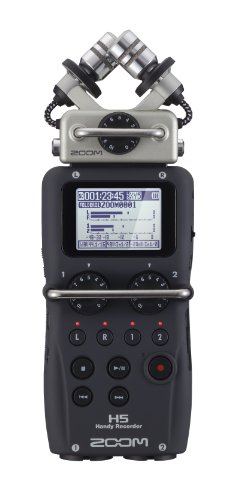
For audio professionals and enthusiasts seeking versatility, the Zoom H5 4-Track Portable Recorder stands out with its interchangeable input capsules, allowing you to customize your setup like changing camera lenses. It features a detachable X/Y capsule (XYH-5) that minimizes handling noise while capturing detailed audio. With two mic/line inputs using XLR/TRS combo connectors, you can easily select phantom power or apply a -20dB pad. You’ll enjoy four-track simultaneous recording, storing audio on SD/SDHC cards up to 32GB. Powered by 2 AA batteries, it’s perfect for on-the-go recording, and it also functions seamlessly as a USB audio interface.
Best For: Audio professionals and enthusiasts looking for a versatile and portable recording solution for music, video, and podcasting.
Pros:
- Interchangeable input capsules allow for customizable recording setups.
- Four-track simultaneous recording captures detailed audio from multiple sources.
- Portable design powered by 2 AA batteries makes it ideal for on-the-go recording.
Cons:
- Maximum SD card capacity of 32GB may limit longer recording sessions.
- Battery-operated can lead to concerns about power management during extended use.
- Requires additional input capsules for full versatility, which may incur extra costs.
TASCAM 4-Channel Portable Audio Recorder (DR-70D)

Filmmakers and documentarians will find the TASCAM 4-Channel Portable Audio Recorder (DR-70D) an invaluable tool, thanks to its four balanced XLR mic inputs and phantom power support. This compact recorder mounts effortlessly above or below your camera, making it ideal for any shoot. With individual gain controls and high-quality HDDA mic preamps providing 64dB gain, you can capture even the quietest performances. The built-in microphones enhance versatility, while the Dual Recording mode safeguards your audio against distortion. Plus, it records directly to SD, SDHC, or SDXC cards, accommodating up to 128GB for extensive recording needs.
Best For: Filmmakers, television producers, advertisers, and documentarians looking for a versatile and high-quality audio recording solution.
Pros:
- Four balanced XLR mic inputs with phantom power for professional audio capture.
- Compact design allows for easy mounting on cameras for seamless integration.
- Dual Recording mode provides a safety copy of audio to prevent distortion.
Cons:
- May require additional accessories for optimal use, such as external microphones or cables.
- Limited battery life may necessitate frequent recharging or use of external power sources.
- The interface may have a learning curve for users unfamiliar with portable audio recorders.
Zoom H6 6-Track Stereo Recorder

The Zoom H6 6-Track Stereo Recorder stands out as the ideal choice for audio professionals seeking flexibility and high-quality sound. With its 32-bit float recording, you won’t need to worry about gain adjustments, capturing pristine audio effortlessly. You can record up to 6 tracks simultaneously, handling SPL levels up to 135 dB, whether to an SD card or via USB. The four XLR/TRS combo inputs feature ultra-clean preamps for exceptional clarity. Plus, the interchangeable mic capsule system offers versatility for various scenarios, while the audio guidance function guarantees accessibility for visually impaired users, making it a truly thorough tool for any recording situation.
Best For: Audio professionals and enthusiasts looking for a versatile and high-quality recording solution.
Pros:
- Versatile recording options with 6 tracks and simultaneous USB and SD card recording.
- Ultra-clean preamps ensure exceptional audio clarity for professional sound quality.
- Interchangeable mic capsule system allows for flexibility in various recording scenarios.
Cons:
- Higher price point compared to entry-level recorders, which may not suit budget-conscious users.
- Learning curve for new users unfamiliar with multi-track recording systems.
- Limited battery life when using phantom power for microphones, potentially requiring additional power sources for extended use.
Zoom F3 Professional Field Recorder

Equipped with dual XLR inputs and high-quality mic preamps, the Zoom F3 Professional Field Recorder is ideal for audio professionals seeking pristine sound in a portable package. This 2-channel recorder features 32-bit float recording, allowing you to capture clip-free audio without adjusting gain settings. With dual AD converters, it delivers an impressive dynamic range and records up to 192 kHz in WAV format. Its compact, rugged metal casing guarantees durability, while the ability to support SD cards up to 512GB provides ample storage. Whether you’re on location or in the studio, the F3 is your reliable companion for high-quality recordings.
Best For: Audio professionals and content creators seeking a portable, high-quality field recorder with advanced features.
Pros:
- Clip-free audio capture thanks to 32-bit float recording, eliminating the need for gain adjustments.
- Rugged metal casing ensures durability in various recording environments.
- Supports large SD cards up to 512GB, providing extensive storage for long recording sessions.
Cons:
- Limited to 2 channels, which may not be sufficient for complex recording needs.
- Battery powered, which could require frequent battery changes depending on usage.
- Higher price point compared to basic recorders, potentially limiting accessibility for beginners.
Factors to Consider When Choosing Portable Recorders With XLR Inputs
When you’re choosing a portable recorder with XLR inputs, it’s essential to take into account several key factors. Pay attention to recording quality specifications, input versatility options, and power supply types to guarantee it meets your needs. Additionally, connectivity features and built-in microphone capabilities can greatly enhance your recording experience.
Recording Quality Specifications
Choosing a portable recorder with XLR inputs hinges on understanding recording quality specifications that directly impact your audio projects. Look for devices supporting high sample rates, ideally up to 192 kHz, to capture more detail in your recordings. Consider models with 32-bit float recording capabilities—this feature eliminates the need for constant gain adjustments and minimizes clipping during loud sounds. Dual A/D converters are essential for providing clip-free audio, resulting in a wider dynamic range and better sound fidelity. Additionally, check the maximum input levels, such as SPL ratings, to guarantee the recorder can handle loud sounds without distortion. Finally, verify the recorder has high-quality mic preamps to reduce noise and enhance overall sound clarity.
Input Versatility Options
To guarantee your recordings meet diverse audio needs, consider the versatility of input options on portable recorders with XLR inputs. Look for models that offer multiple XLR/TRS combo inputs, which let you connect various microphones and instruments effortlessly. Adjustable input gain is another essential feature, as it guarantees ideal audio capture across different recording scenarios without distortion. Check if the recorder supports phantom power for condenser microphones, enhancing professional audio quality. You’ll also want compatibility with various input formats, allowing both microphone and line-level signals. Finally, evaluate the presence of dual recording modes; these create safety copies of audio at lower levels to protect against potential distortion from high sound levels.
Power Supply Types
Considering the power supply options is essential for maximizing the functionality of portable recorders with XLR inputs. You’ll find that recorders can be powered by disposable batteries, rechargeable batteries, or AC power adapters, giving you flexibility for various recording environments. Battery-powered models often deliver longer operational times, with some lasting over 20 hours, making them perfect for field recording. If convenience is key, opt for recorders with built-in rechargeable batteries that charge via USB, eliminating the hassle of disposables. Additionally, some devices allow operation while charging, letting you record for extended periods without interruptions. Choosing the right power supply not only enhances portability but also guarantees you’re always ready to capture high-quality sound.
Connectivity Features
When selecting portable recorders with XLR inputs, you’ll want to pay close attention to connectivity features that enhance usability and flexibility. Look for models with USB connectivity, as they allow easy interfacing with PCs, Macs, and mobile devices for seamless file transfers and real-time audio streaming. Confirm the recorder has locking XLR/TRS combo inputs, which secure microphone connections and minimize accidental disconnections. Multiple XLR inputs expand your recording options, making them ideal for multi-instrumental or collaborative projects. Also, check for support of high sample rates up to 192 kHz, guaranteeing superior audio fidelity for professional applications. Finally, consider devices with audio guidance features to assist visually impaired users in maneuvering settings effectively.
Built-in Microphone Capabilities
Portable recorders with XLR inputs often come equipped with built-in microphones that greatly enhance their versatility. You can capture audio spontaneously without needing external mics, making these devices perfect for on-the-go recording. Many models feature high-quality microphones designed to handle a wide range of sound pressure levels, accommodating up to 130 dB SPL. Some even offer interchangeable microphone capsules, allowing you to adapt to different environments and sound sources effectively. Advanced technologies, like shock mounting, help minimize handling noise, ensuring clear audio capture during movement. However, remember that the audio quality can vary considerably; some recorders provide 32-bit float recording capabilities, allowing for clip-free audio and a greater dynamic range to meet your professional needs.
Design and Portability
Choosing a portable recorder with XLR inputs requires careful thought about design and portability, as these factors greatly impact your recording experience. Look for models that are compact, ideally around 5.8 x 3.8 x 1.9 inches and weighing about 6.4 ounces, for easy transport. A lightweight design, preferably under 1 pound, makes it simpler to handle during long sessions. Opt for battery-powered units so you can record anywhere without needing an outlet. Locking XLR inputs are essential for secure microphone connections, preventing disruptions while you’re on the move. Additionally, consider rugged materials like stainless steel or metal casings that can withstand the challenges of field recording while keeping things compact and durable.
User Accessibility Functions
Accessibility functions play an essential role in the usability of portable recorders with XLR inputs, ensuring that everyone can effectively utilize these devices. Many models include audio guidance features, which assist visually impaired users by providing voice prompts for recording status, battery life, and settings adjustments. This helps you monitor your recording process effortlessly. Look for recorders with adjustable settings tailored to your navigation preferences, enhancing ease of use. Ergonomic designs can also benefit users with limited dexterity, making it easier to handle controls and connections. In addition, certain devices offer remote control options, allowing those with mobility challenges to operate the recorder without needing to physically interact with it. These features make recording more accessible for everyone.