Choosing among the best saxophones means balancing playability, build quality, sound, and budget. The right instrument should feel comfortable in your hands while supporting your current ability and musical goals.
This roundup covers student-friendly alto and tenor models, professional instruments, complete starter kits, and a digital option for quieter practice. Use the guide below to narrow your choices before buying.
Best 10 Saxophones Picks for 2026
Student Alto Pick

- E-flat alto saxophone for students
- Includes case
- High F# and front F auxiliary keys
Best For: Students wanting a Yamaha alto with useful upper-register features
Warm-Tone Tenor Kit

- B-flat tenor with warm sound profile
- Includes case, stand, reeds, and cleaning items
- One-year warranty included
Best For: Beginners wanting an accessory-packed tenor starter kit
Professional Alto Upgrade
Yamaha YAS-62III Professional Alto

- Professional E-flat alto saxophone
- Brass body with gold lacquer finish
- Includes case
Best For: Advanced players seeking a professional Yamaha alto
Student-to-Intermediate Tenor
Jean Paul TS-400 Tenor Saxophone

- U.S. technician setup and play-test
- Includes case, mouthpiece, reed, and accessories
- High F# key and adjustable thumb rest
Best For: Students progressing toward intermediate tenor playing
Best Beginner Kit
Beginner Alto Saxophone E Flat
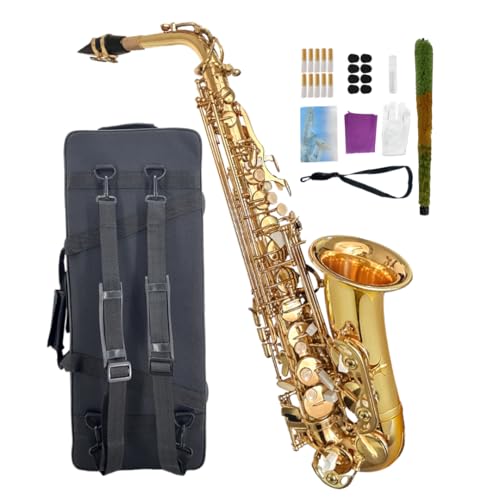
- Complete starter package with case and 10 reeds
- Ergonomic keys and responsive action for new players
- Gold-lacquered brass with included care accessories
Best For: First-time students and school-band practice
Best Digital Option
Yamaha YDS-150 Digital Saxophone

- 73 preset voices for varied sounds and styles
- Acoustic mouthpiece and familiar fingerings
- Headphone, AUX, micro USB, and app connectivity
Best For: Quiet practice and portable digital performance
Best Setup Support
Jean Paul AS-400 Alto Saxophone
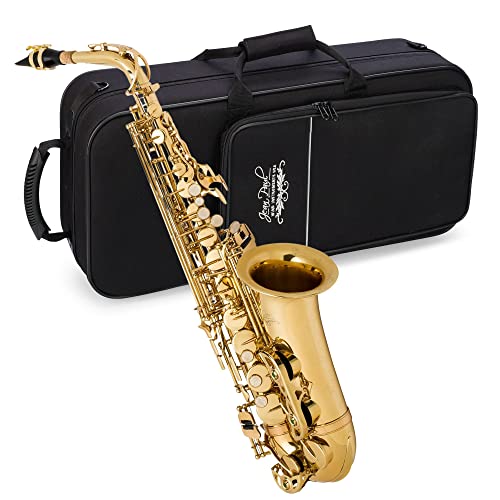
- Technician setup and play-testing before delivery
- Precise intonation with a High F# key
- Reinforced protective carrying case included
Best For: Beginners and advancing players seeking a ready-to-play acoustic saxophone
Reliable Yamaha Pick

- Adjustable thumb-rest
- Durable neck receiver
- Improved Low B-C# connection
Best For: Players wanting a Yamaha alto saxophone with practical design updates
Complete Starter Bundle
EASTROCK E-Flat Alto Saxophone

- Accessory-rich package
- Factory-adjusted design
- Black-and-gold lacquered finish
Best For: Beginners and students wanting a ready-to-practice saxophone kit
Classic Beginner Setup

- E-flat alto configuration
- Polished brass construction
- Canvas suitcase and cleaning accessories
Best For: Beginners wanting a classic gold saxophone with basic supplies
Student Alto Pick – Yamaha YAS-280
For players seeking dependable saxophones for lessons and early development, the Yamaha YAS-280 offers a straightforward alto setup in E-flat. Its gold lacquer finish, high F# key, and front F auxiliary key provide useful features as students build technique.
Best For: Students who want a Yamaha alto saxophone with a case and expanded upper-register keywork.
Pros:
- Made by Yamaha, a well-known instrument manufacturer.
- Includes a case for transport and storage.
- Features high F# and front F auxiliary keys.
- Gold lacquer finish gives it a traditional appearance.
Cons:
- The supplied notes do not list additional accessories beyond the case.
- Its E-flat alto format may not suit players specifically seeking a tenor saxophone.
The YAS-280 is a practical student-focused option when compact alto ergonomics and Yamaha branding are priorities. Confirm the included setup and accessories before purchase if you need a complete starter package.
Warm-Tone Tenor Kit – Eastar TS-II Tenor Saxophone
The Eastar TS-II is a B-flat tenor saxophone aimed at beginners and advancing players who want a warmer, fuller sound than an alto. This gold-lacquered kit includes several practical accessories for getting started with lessons, practice, or ensemble playing.
Best For: Beginners and developing players who want a tenor saxophone starter kit with accessories and a one-year warranty.
Pros:
- Tenor range is described as warm, rich, and expressive.
- Includes a case, neck strap, gloves, reeds, cleaning cloth, and stand.
- Leather pads are designed for airtightness and easy maintenance.
- Backed by a 12-month warranty and customer support.
Cons:
- The supplied notes do not specify professional-level setup or adjustment.
- Its 8.69 kg listed weight may feel substantial for some beginners.
With its broad accessory bundle and tenor voice, the TS-II can simplify the first purchase for a new player. Buyers should still check the included mouthpiece and setup carefully, particularly if consistent playability is a priority.
Professional Alto Upgrade – Yamaha YAS-62III Professional Alto
Players shopping saxophones for more advanced performance may consider the Yamaha YAS-62III Professional Alto Saxophone. This E-flat alto uses a brass body with a gold lacquer finish and comes with a case, making it suited to musicians seeking a professional Yamaha model.
Best For: Advanced alto players looking for a professional Yamaha instrument with a traditional gold finish.
Pros:
- Professional-style Yamaha alto saxophone.
- Brass construction with a gold lacquer finish.
- Includes a case for protection and transport.
- E-flat alto format suits standard alto repertoire.
Cons:
- The supplied notes provide limited information about included accessories beyond the case.
- As a professional model, it may exceed the needs of a first-time student.
The YAS-62III is the most performance-oriented alto in this selection based on its professional designation. Its feature information is limited, so prospective buyers should verify the exact model, condition, and included setup before ordering.
Student-to-Intermediate Tenor – Jean Paul TS-400 Tenor Saxophone
The Jean Paul TS-400 is a B-flat tenor saxophone designed to support students from early lessons into intermediate playing. Its U.S. technician setup, warm full-bodied profile, and included accessories make it a practical option for school programs, rehearsals, and jazz-oriented playing.
Best For: Students and advancing tenor players who value technician setup, durable construction, and a complete starter set.
Pros:
- Set up and play-tested in the U.S. by a NAPBIRT-certified technician.
- Includes a semi-hard case, mouthpiece, ligature and cap, reed, cloth, and neck strap.
- High F# auxiliary key supports intermediate repertoire and jazz solos.
- Adjustable thumb rest, blue steel springs, and solid rib construction support student use.
Cons:
- It is a tenor saxophone, so its larger size may be less convenient than an alto for younger players.
- The included Rico #2 reed may not suit every player’s preferred strength.
The TS-400 stands out for combining a student-oriented design with technician preparation and intermediate-friendly features. It is especially compelling when buyers want a tenor package that can continue serving as playing demands increase.
Best Beginner Kit – Beginner Alto Saxophone E Flat
This beginner alto saxophone is a practical starting point for adults and students who want a complete setup for lessons, school band, or home practice. Its lightweight brass body, ergonomic keys, and included accessories help reduce the need for additional purchases.
Best For: First-time players, middle school band students, and daily home practice.
Pros:
- Includes a hard-shell case, mouthpiece, neck strap, 10 reeds, and care accessories.
- Ergonomic key placement and responsive action are designed for beginner-friendly playability.
- Gold-lacquered brass body and mother-of-pearl inlaid keys offer a polished appearance.
Cons:
- The included 90-day warranty is shorter than some competing options.
- Its 5-pound weight may still feel substantial for younger players.
Choose this saxophone if you want an accessible, ready-to-play package with starter maintenance supplies. It is especially convenient for students who need the basic equipment in one purchase.
Best Digital Option – Yamaha YDS-150 Digital Saxophone
The Yamaha YDS-150 is a flexible digital saxophone for musicians who want to practice quietly, explore multiple sounds, or connect to recording and playback equipment. It combines familiar saxophone fingerings and an acoustic mouthpiece with digital controls and connectivity.
Best For: Portable practice, headphone playing, sound experimentation, and connected setups.
Pros:
- Offers 73 preset voices for exploring different tones and styles.
- Includes an acoustic saxophone mouthpiece and familiar fingerings for a natural playing feel.
- Headphone, AUX, and micro USB connections support quiet practice and flexible use.
- The dedicated app allows adjustments to sounds, fingerings, and instrument controls.
Cons:
- It is a digital instrument rather than a traditional acoustic saxophone.
- At 7.1 pounds, it is heavier than the listed acoustic alternatives.
This is a strong choice for players who value convenience and versatility over a conventional acoustic setup. The included soft case, strap, synthetic reed, and one-year warranty add practical support for regular use.
Best Setup Support – Jean Paul AS-400 Alto Saxophone
The Jean Paul AS-400 is a traditional E-flat alto saxophone aimed at beginners and advancing players who want a ready-to-play instrument. Its professional setup, play-testing, precise intonation, and protective carrying case make it a practical option for lessons and performance preparation.
Best For: Beginners and advancing players who want technician setup and dependable transport protection.
Pros:
- Each instrument is set up and play-tested by NAPBIRT-certified technicians.
- Precise intonation is designed to support accurate pitch across the range.
- The High F# key adds flexibility for reaching higher notes.
- Fabric-covered case with ABS reinforcement and high-density foam helps protect the instrument.
Cons:
- The listing identifies this as a saxophone-only style, so accessory coverage is less extensive than a full starter kit.
- It has a traditional lacquered brass design without the digital connectivity of an electronic model.
The AS-400 stands out for its technician setup and included one-year manufacturer warranty. It is a sensible pick when play-ready condition, intonation, and case protection matter more than bundled extras.
Reliable Yamaha Pick – YAS-26 Alto Saxophone
The Yamaha YAS-26 is a lacquered E-flat alto saxophone with practical refinements for players comparing dependable saxophones. Its adjustable thumb-rest, nickel-plated keys, and updated neck receiver support comfortable handling and routine use.
Best For: Players seeking a Yamaha alto saxophone with straightforward ergonomic and mechanism updates.
Pros:
- Adjustable thumb-rest helps accommodate different hand positions.
- New neck receiver is designed for durability.
- Improved Low B-C# connection supports smoother key operation.
- Nickel-plated keys provide a durable finish detail.
Cons:
- It is listed as a professional-style instrument, which may be more than a casual player needs.
- The supplied notes do not indicate that accessories are included.
Choose this model if Yamaha construction and focused mechanical updates matter more than an included starter bundle. Its E-flat alto configuration and 5.3 kg listed weight make it a clearly specified option for saxophone shoppers.
Complete Starter Bundle – EASTROCK E-Flat Alto Saxophone
The EASTROCK E-flat alto saxophone is aimed at beginners, students, and players who want saxophones with a broad accessory package. It features a black-and-gold lacquered copper body, factory adjustment, and included supplies for practice and transport.
Best For: Beginners, students, schools, and players who want an all-in-one saxophone kit.
Pros:
- Includes a hard carrying case, mouthpiece, reeds, neck strap, cleaning supplies, gloves, and cushion pads.
- Factory adjustment is intended to support sound without noise and responsive button feedback.
- Upgraded leather and copper needle spring are designed to improve airtightness and smooth operation.
- Black-and-gold finish offers a distinctive appearance.
Cons:
- The 5.08 kg listed weight may be worth considering for younger players.
- Its bold black-and-gold finish may not suit players seeking a traditional appearance.
This is a practical choice when accessories and presentation are priorities. The included case, cleaning items, and playing accessories reduce the need to assemble a separate beginner setup.
Classic Beginner Setup – Gold Alto Saxophone
This gold E-flat alto saxophone is a beginner-focused option for shoppers comparing accessible saxophones with basic accessories included. Its polished brass construction and classic styling are paired with a canvas suitcase, cleaning items, glove, neck strap, and other listed supplies.
Best For: Beginners seeking a classic-looking E-flat alto saxophone with starter accessories.
Pros:
- Includes a canvas suitcase for carrying the instrument.
- Accessory set includes a brush, glove, wipe cloth, neck strap, and other supplies.
- Polished gold finish and classic style provide a traditional visual approach.
- Brass material is specified for the instrument.
Cons:
- The supplied notes provide fewer playing and adjustment details than some competing listings.
- The notes do not specify included reeds or a mouthpiece.
Consider this model if appearance, a simple accessory bundle, and beginner-oriented positioning are central to your purchase. Verify the exact accessory contents before ordering if a mouthpiece or reeds are essential to your setup.
How We Picked These Saxophones
We selected these Saxophones to represent the main needs of new and experienced players: dependable student instruments, affordable starter kits, tenor and alto options, professional-level construction, and technology-assisted practice. We also considered key practical concerns such as included accessories, lacquer finish, portability, reputation, and suitability for school band, lessons, performance, or home use.
Because Saxophones vary widely in size and design, the best choice is not necessarily the most expensive model. A properly adjusted instrument with comfortable keywork can be more useful to a beginner than an advanced horn that is difficult to control.
Quick Comparison
| Best For | Recommended Type | What to Look For |
|---|---|---|
| Most beginners | Alto saxophone | Comfortable keywork, reliable pads, and a manageable size |
| Lower, fuller sound | Tenor saxophone | Strong neck strap, secure case, and comfortable reach |
| Advanced players | Professional alto | Precise action, refined response, and consistent intonation |
| Quiet practice | Digital saxophone | Headphone support, adjustable sounds, and breath-sensitive controls |
| Maximum value | Complete starter kit | Useful accessories without sacrificing basic playability |
Key Buying Factors for Saxophones
Alto or Tenor
Alto Saxophones are usually the easiest starting point because they are lighter, more compact, and commonly recommended for students. Tenor models produce a deeper sound but require more air, have wider key spacing, and can feel heavier during long practice sessions.
Playability and Setup
Look for smooth keys, responsive pads, comfortable palm keys, and a neck that seals securely. Beginner instruments should make it easy to produce a stable note; leaks or poorly aligned keys can create frustration regardless of price. Professional setup by a qualified technician is valuable, especially after shipping.
Materials and Finish
Most Saxophones in this roundup use brass with a lacquered finish. Color is largely a matter of preference, while construction quality, pad sealing, spring response, and intonation matter more to performance. Treat unusually low-priced instruments cautiously and check warranty and return terms.
Accessories and Maintenance
A case, mouthpiece, neck strap, reeds, cork grease, cleaning swab, and basic care tools can make a starter package more convenient. Reeds are consumable and mouthpieces strongly affect tone, so budget for replacements and possible upgrades.
Who Should Buy Which Saxophones?
Students beginning lessons or school band will generally do best with a reliable alto such as the Yamaha YAS-280, YAS-26, Jean Paul AS-400, or a well-equipped beginner kit. Players specifically seeking a tenor should compare the Eastar TS-II and Jean Paul TS-400, paying close attention to size, setup, and included support gear.
More experienced performers should consider the Yamaha YAS-62III for its professional orientation and finer control. For apartment practice, late-night sessions, or players who want multiple sounds and headphone use, the Yamaha YDS-150 digital saxophone offers a different solution. Whichever model you choose, prioritize fit, serviceability, and a return policy that allows enough time to confirm the instrument plays comfortably.