Choosing one of the best studio subwoofers for large rooms can transform how you hear low end, especially when you need tighter translation and more reliable mix decisions.
Below, we focus on models that offer the output, control, and integration features larger spaces demand.
Best 10 Studio Subwoofers for Large Rooms Picks for 2026
Club-Ready Low End
JBL LSR310S 10-Inch Studio Subwoofer
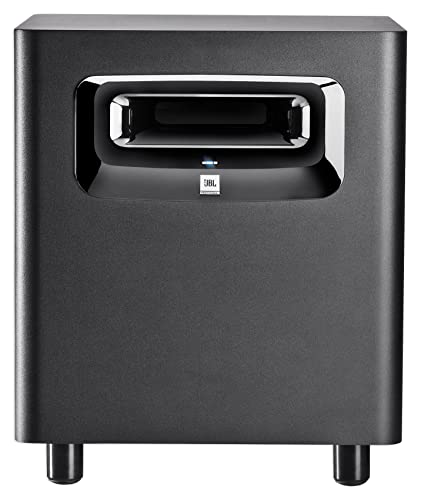
- 10-inch driver reaches into the 20 Hz region
- XLF mode adds club-style bass tuning
- Balanced XLR and 1/4-inch inputs/outputs
Best For: Larger control rooms and dance-focused studio setups
Compact Wireless Bass
PreSonus Eris Sub 8BT Wireless 8-Inch Subwoofer

- Bluetooth 5.0 plus wired inputs for easy hookup
- Crossover controls help match main monitors
- Compact 8-inch design with 30 Hz low-end
Best For: Compact studios and flexible desktop monitoring
Reference-Style Punch
Yamaha HS8S 8-Inch Powered Studio Subwoofer

- 150W amplifier with 22Hz to 150Hz response
- LOW CUT, HIGH CUT, and PHASE controls
- XLR input support for studio connections
Best For: Recording and live-music monitoring chains
Deep DSP Power
SVS SB-2000 Pro 12-Inch Sealed Subwoofer

- 12-inch sealed sub with high-excursion driver
- 550W RMS and 1,500W peak output
- DSP smartphone app for tuning
Best For: Large rooms needing powerful, adjustable bass
Compact Bluetooth Studio Bass
Mackie CR8SBT 8” Powered Subwoofer

- Bluetooth streaming plus wired TRS/RCA inputs
- Desktop remote with crossover and polarity controls
- 8-inch woofer with custom-tuned ports
Best For: Users who want a flexible studio sub with Bluetooth and desktop control
High-Output Room Filler
Klipsch RP-1000SW 10" Subwoofer

- 10-inch Cerametallic woofer with 500W max output
- Front-firing design with Aerofoil slot port
- Class D amp for cleaner low-frequency reproduction
Best For: Large rooms that need powerful, polished bass
Reference Monitor Low-End Upgrade
KRK S8.4 Powered Studio Subwoofer

- 8-inch woofer with bass extension to 30 Hz
- Front-firing port and curved cabinet for placement flexibility
- XLR input and Class D amplification
Best For: Music production and recording studios needing compact bass support
Flagship Deep Bass Performer
SVS SB-3000 R|Evolution Sealed Subwoofer

- 13-inch high-excursion driver for authoritative bass
- Advanced DSP with real-time performance monitoring
- Auto Room EQ and app control simplify setup
Best For: Large rooms and users who want powerful, accurate bass
Budget Bass Starter

- 300W RMS Class A/B amp for clean bass
- MDF enclosure helps minimize resonance
- RCA and LFE inputs keep setup simple
Best For: Entry-level home theater systems and smaller rooms
Compact Studio Companion
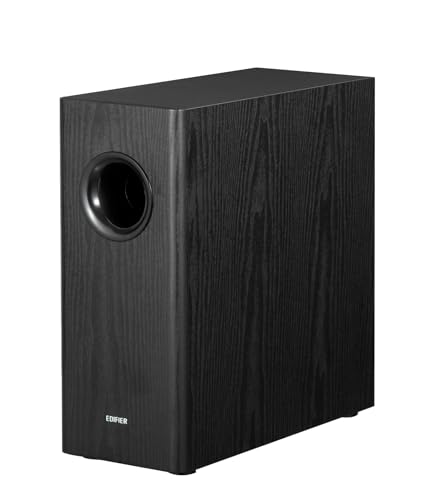
- 8-inch long-throw woofer reaches 35Hz bass
- Low-pass and phase controls aid integration
- Compact MDF cabinet keeps resonance low
Best For: Small studios, desktops, and bookshelf speaker setups
Club-Ready Low End – JBL LSR310S 10-Inch Studio Subwoofer
If you want studio subwoofers for large rooms, the JBL Professional LSR310S brings the kind of deep, controlled low end that can help a bigger space feel properly anchored. Its 10-inch down-firing driver, patented port design, and XLF tuning are aimed at extending bass with strong output for studio monitoring or LFE use.
Best For: Larger control rooms, dance-oriented production, and monitoring setups that need powerful low-frequency extension.
Pros:
- 10-inch down-firing driver with deep response into the 20 Hz region
- XLF setting adds a club-style bass tuning option
- Balanced XLR and 1/4-inch connections for flexible studio integration
- 113 dB peak output for strong playback at full rated power
Cons:
- Large-room performance still depends on proper placement and system setup
- Wired-only design may be less convenient for casual use
- No built-in wireless or app control features
Overall, the LSR310S is a straightforward pick if you need studio-focused bass with professional connectivity and a tuning option that leans toward higher-energy material. It is built to extend a monitor system rather than replace it.
Compact Wireless Bass – PreSonus Eris Sub 8BT Wireless 8-Inch Subwoofer
For studio subwoofers for large rooms, the PreSonus Eris Sub 8BT is more of a compact support piece than a room-shaking centerpiece, but it still adds useful low-end control. The front-firing 8-inch design, Bluetooth 5.0, and crossover controls make it a practical option when you want accurate bass for production, listening, or gaming.
Best For: Compact studios, multimedia desks, and users who want flexible wired and Bluetooth subwoofer options.
Pros:
- Bluetooth 5.0 plus TRS, RCA, and front-panel aux input options
- Highpass and lowpass crossover controls help blend with main monitors
- Adjustable tuning controls for room size and speaker orientation
- Rated down to 30 Hz with a 100-watt amplifier
Cons:
- 8-inch cabinet is compact rather than massive for very large rooms
- Designed to complement compact Eris monitors more than big systems
- Not the highest-output choice in this roundup
The Eris Sub 8BT makes sense when convenience and accurate integration matter more than sheer size. It is a flexible sub for smaller-to-mid setups, with enough control to keep bass tight and usable.
Reference-Style Punch – Yamaha HS8S 8-Inch Powered Studio Subwoofer
If you are shopping for studio subwoofers for large rooms, the Yamaha HS8S is a practical monitor partner with enough output and tuning control to support a serious setup. Its 8-inch bass-reflex design, 150W amplifier, and adjustable low-cut/high-cut controls are built for integrated low-frequency monitoring.
Best For: Recording and live-music setups that need a straightforward powered subwoofer with crossover control.
Pros:
- 8-inch bass-reflex powered design with 22Hz to 150Hz response
- 150W amplifier for solid studio monitoring support
- LOW CUT, HIGH CUT, and PHASE controls for tuning
- XLR connectivity suited to professional audio setups
Cons:
- 8-inch size may not feel as expansive as larger 12-inch subs
- Wired connection only
- No app-based control or wireless features
The HS8S is a no-frills studio sub that focuses on integration and control rather than extra features. For users who want reliable bass management in a monitoring chain, it keeps the signal path simple.
Deep DSP Power – SVS SB-2000 Pro 12-Inch Sealed Subwoofer
When comparing studio subwoofers for large rooms, the SVS SB-2000 Pro stands out for sheer output and control. Its 12-inch sealed design, 550-watt RMS amplifier, and app-based DSP management make it a strong candidate when you want substantial bass performance with modern adjustment tools.
Best For: Large rooms, demanding low-end playback, and users who want app control with a high-output sealed sub.
Pros:
- 12-inch high-excursion driver in a sealed cabinet
- 550 watts RMS and 1,500 watts peak power
- DSP smartphone app available for control
- Bluetooth and Wi-Fi connectivity support listed
Cons:
- More home-theater oriented than a traditional studio-monitor sub
- Heavier feature set may be more than some small desk setups need
- Only wired subwoofer connectivity is listed
The SB-2000 Pro is the most powerful and most adjustable option here, making it especially appealing if your room needs serious low-end authority. Its sealed design and DSP controls give it a polished, flexible feel.
Compact Bluetooth Studio Bass – Mackie CR8SBT 8” Powered Subwoofer
If you want studio subwoofers for large rooms without overcomplicating your setup, the Mackie CR8SBT adds controlled low-end punch with flexible wired and Bluetooth connectivity. Its 8-inch woofer, custom-tuned ports, and adjustable crossover make it a practical pick for desktops, home studios, or small-to-medium listening spaces that still need real bass reinforcement.
Best For: Music makers or home listeners who want an easy-to-place sub with Bluetooth and desktop volume control.
Pros:
- Bluetooth support lets you stream directly or add wireless playback to compatible systems.
- 8-inch polypropylene woofer with custom-tuned ports for deeper bass extension.
- Includes TRS and RCA connectivity plus a desktop remote for volume control.
- Hands-on crossover and polarity controls help tailor the bass response.
Cons:
- 8-inch design may be less suited to very large rooms than bigger subwoofers.
- Frequency response is listed at 40 Hz, so it is not the deepest-reaching option here.
- Best fit is with CR Series monitors, though it can work with other powered speakers.
This is the most versatile option in the group if you care about convenience as much as bass quality. It is especially appealing when you want studio-friendly controls and wireless streaming in one compact cabinet.
High-Output Room Filler – Klipsch RP-1000SW 10" Subwoofer
For studio subwoofers for large rooms, the Klipsch Reference Premiere RP-1000SW stands out with a 10-inch high-excursion driver and a high-efficiency Class D amp. Its front-firing design, Aerofoil slot port, and 500-watt output are built for strong, detailed low frequencies when you need more room-filling bass.
Best For: Large spaces and buyers who want powerful, polished bass with flexible placement.
Pros:
- 10-inch Cerametallic woofer and 500-watt maximum output for serious bass headroom.
- Front-firing driver and slot port help with placement flexibility.
- Class D amplifier and analog preamp design aim for cleaner reproduction.
- Premium cabinet details like rounded corners and a woven cloth grille.
Cons:
- It is a larger, heavier subwoofer at 55 pounds.
- Designed primarily for home theater use rather than studio monitoring.
- RCA connectivity is listed, so it may require the right matching setup.
If your priority is maximum low-end impact in a big room, this is the strongest bass-focused choice in the lineup. It leans more toward high-output performance than compact convenience.
Reference Monitor Low-End Upgrade – KRK S8.4 Powered Studio Subwoofer
If you are comparing studio subwoofers for large rooms, the KRK S8.4 is a compact but capable option built for music production and recording studios. Its 8-inch glass aramid composite woofer, front-firing port, and 30 Hz bass extension make it useful when you want to extend monitoring low without taking over the room.
Best For: Producers and recording setups that need a studio-oriented sub with a small footprint.
Pros:
- Extends bass down to 30 Hz with a max SPL of 112 dB.
- Front-firing bass port and curved design offer placement flexibility.
- Powered by lightweight Class D amplification.
- XLR connectivity fits studio-style wired setups.
Cons:
- 8-inch driver is not the biggest option for very large rooms.
- Rated at 109 watts, so it is more modest than higher-output competitors.
- Footswitch is supported but not included.
The S8.4 is best viewed as a monitoring tool rather than a sheer-output sub. It makes sense if you want accurate studio bass in a compact cabinet and do not need the biggest possible slam.
Flagship Deep Bass Performer – SVS SB-3000 R|Evolution Sealed Subwoofer
If you’re comparing studio subwoofers for large rooms, the SVS SB-3000 R|Evolution is built for situations where you want deep, controlled low end without giving up precision. Its high-excursion 13-inch driver, advanced DSP, and auto room EQ are aimed at delivering authoritative bass that can be tuned to the space rather than just turned up.
Best For: Large rooms, home theater setups, and pro audio users who want deep bass with strong room correction tools.
Pros:
- 13-inch high-excursion driver is engineered for high-output bass with strong detail.
- Advanced DSP continuously monitors power, thermal, and driver behavior in real time.
- Auto Room EQ helps optimize in-room response for smoother integration.
- SVS control app makes setup and fine-tuning easier from a smartphone.
Cons:
- Sealed design may not be the best fit if you specifically want a ported-style output profile.
- At 54.8 pounds, it is relatively heavy to move and position.
This is the most capable option here for buyers who want a serious subwoofer that can take control of a larger listening area. The combination of DSP, room EQ, and a large driver makes it a strong pick when accuracy matters as much as output.
Budget Bass Starter – 10" Powered Home Subwoofer
WMQ 10" Powered Home Subwoofer, 300W RMS, High-Fidelity Bass, MDF Enclosure with Heat Sink
Check Price On AmazonThis 10-inch powered subwoofer is a straightforward choice for adding bass to a system, but it is a better fit for moderate spaces than studio subwoofers for large rooms. With 300W RMS, an MDF enclosure, and RCA/LFE inputs, it focuses on simple installation and basic low-frequency support.
Best For: Smaller home theater setups or entry-level systems that need easy-to-add bass.
Pros:
- 300W RMS Class A/B amplifier is designed to deliver clean, powerful bass.
- MDF enclosure helps reduce unwanted resonance.
- RCA line input and dedicated LFE input support broad compatibility.
- Simple setup is useful for receivers, TVs, and media players.
Cons:
- 10-inch driver and 300W output are less suited to very large rooms.
- Notes do not indicate advanced tuning tools or room correction.
- Frequency response is listed as 20 KHz in the supplied details, which is not especially informative for sub-bass planning.
For buyers who want an uncomplicated subwoofer rather than a high-end room-tuning solution, this model covers the basics. It makes sense as an affordable add-on, but it is not the strongest match when the goal is filling a large room with studio-style bass control.
Compact Studio Companion – Edifier T5s Powered Subwoofer
The Edifier T5s is a compact powered subwoofer that can work well in desktop or smaller studio-style setups, but it is not the most obvious choice among studio subwoofers for large rooms. Its 8-inch long-throw woofer, 35Hz bass extension, and adjustable low-pass and phase controls make it useful when you want tight bass and easy integration.
Best For: Compact home audio, bookshelf speaker systems, and smaller studio setups that need controlled bass.
Pros:
- 8-inch long-throw woofer delivers 35Hz deep bass for its size.
- Low-pass filter and phase selector help match different speaker setups.
- Front-firing driver and acoustic port are designed for clean, tight bass.
- Auto-standby and included cables make it convenient to use.
Cons:
- 70W RMS output is modest for very large rooms.
- Compact cabinet is better suited to nearfield or small-room use.
- Works through RCA connections, so it is less flexible than models with broader input options.
As a compact sub, the T5s is more about precision and easy placement than room-filling power. That makes it a solid pick for smaller spaces and desktop systems, while larger rooms will likely need more output.
How We Picked the Best Studio Subwoofers for Large Rooms
For Studio Subwoofers for Large Rooms, we prioritized output capability, extension, tuning controls, and integration flexibility. In bigger spaces, a sub needs more than deep bass; it must stay controlled at useful monitoring levels and blend cleanly with nearfield or midfield monitors.
We also looked for practical features like adjustable crossover, phase or polarity controls, wired and wireless input options where relevant, and enclosure designs that suit different room sizes and placement constraints.
Quick Comparison
In general, 8-inch models can work for smaller control areas or as support in moderately sized rooms, but 10-inch and 12-inch designs are usually better suited to larger studios. Sealed subs often give tighter transient response and easier integration, while ported or higher-output designs may deliver more impact if your room can handle it.
Key Buying Factors for Studio Subwoofers for Large Rooms
Driver Size and Output
A larger driver usually helps with headroom, but wattage and cabinet design matter too. For bigger rooms, look for enough reserve output so the sub does not sound strained when you push monitoring levels.
Frequency Extension and Accuracy
Deep extension is useful, but accuracy matters more for mixing. A sub that reaches low without excessive boom will help you judge kick, bass guitar, and synth balance more confidently.
Crossover, Phase, and Placement Control
Good integration is critical. Adjustable crossover and phase or polarity controls make it easier to align the sub with your main monitors and room acoustics. In large rooms, placement flexibility can be just as important as raw bass output.
Sealed Versus Ported
Sealed designs are often preferred in studios for tighter response and more predictable behavior. Ported models can play louder and lower, but they may need more careful tuning in reflective or asymmetrical spaces.
Who Should Buy Which Studio Subwoofers for Large Rooms?
If you mix in a large control room and want the most precise low-end picture, a high-quality sealed 10-inch or 12-inch sub is usually the safest choice. If you need maximum impact for production, sound design, or hybrid work, higher-output models may be the better fit.
For smaller studios that still want extended bass support, compact 8-inch options can be a practical starting point, especially if your monitors are already well matched. The best choice depends on room size, listening distance, and how much control you need over the bottom octave.