Choosing synthesizers for recording is about more than great sounds. You need instruments that fit your workflow, connect cleanly to your setup, and inspire ideas without slowing down sessions.
This roundup highlights ten options for home studios, portable writing rigs, and hybrid production setups, so you can match the right synth to your recording needs.
Best 10 Synthesizers for Recording Picks for 2026
Experimental Hybrid Pick
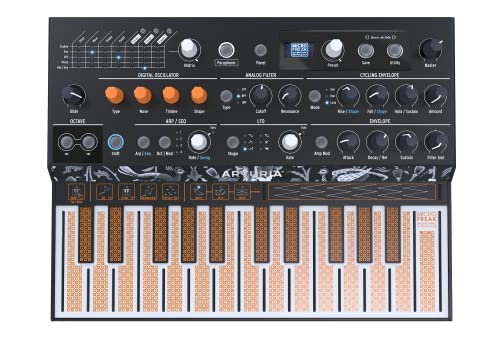
- 17 oscillator modes from multiple sound engines
- Hybrid digital oscillators plus resonant analog filter
- Poly-aftertouch touch keyboard with CV/USB/MIDI
Best For: Experimental recording setups and compact sound design
Portable Chord Machine

- 100 chord sets and 64 user patterns
- JUNO-60 engine with ACB sound modeling
- USB-C audio/MIDI plus sync and AIRA Link
Best For: Mobile songwriting and chord-based recording
Classic Monosynth Choice
Moog Messenger Monophonic Analog Synth

- Two VCOs with wavefolding, sync, and FM
- Next-gen ladder filter with RES BASS compensation
- 32-key semi-weighted keyboard with aftertouch
Best For: Analog bass, leads, and expressive studio parts
Compact Sketch Pad

- Built-in speaker with 100+ internal sounds
- 25-key keybed plus 8 velocity-sensitive MPC pads
- USB MIDI, arpeggiator, and included software
Best For: Portable beat-making and quick recording sketches
Portable FM Recording Synth
M-VAVE Wireless FM Synthesizer

- Battery-powered with built-in speaker
- 128 presets plus FM SYSEX import
- Arpeggiator and 16-step sequencer
Best For: Portable recording and quick FM sketching
DAW-Friendly MIDI Controller
Arturia MiniLab 37 MIDI Keyboard

- 37 slim keys for two-handed play
- Pads, faders, mini display, and DAW control
- Arpeggiator and Chord mode for writing
Best For: Recording software synths in compact studios
Starter Recording Bundle
PreSonus AudioBox Go Creator Kit

- Includes interface, mic, headphones, and software
- Portable 2-channel USB-C recording setup
- Works with major DAWs and 24-bit/96 kHz audio
Best For: All-in-one beginner recording setups for synths
Retro Pocket Synth
Stylophone Original Pocket Synthesizer

- Iconic analog-style sound with a retro feel
- Pocket-sized and battery powered for grab-and-go use
- 3.5mm connection supports computer recording
Best For: Portable lo-fi parts and quick recording ideas
Hands-On MIDI Controller

- 25 velocity-sensitive keys in a compact format
- 8 pads and 4 faders for DAW control
- USB-C hookup for software-based recording
Best For: Software synth players and compact home studios
Sequencer Keyboard Controller

- 37 keys with pads, knobs, and DAW control
- CV/Gate and MIDI I/O for hardware integration
- Built-in 64-step sequencer for computer-free ideas
Best For: Hybrid producers using software, hardware, and sequencing
Experimental Hybrid Pick – Arturia MicroFreak
If you want synthesizers for recording that can move from strange textures to usable parts fast, the Arturia MicroFreak is built for that kind of studio workflow. Its hybrid engine combines digital oscillator modes with a resonant analog filter, and the compact touch-plate keyboard keeps it easy to fit into a crowded desk setup.
Best For: Producers who want experimental sound design, paraphonic options, and deep modulation in a compact instrument.
Pros:
- 17 oscillator modes, including Arturia, Mutable Instruments, and Noise Engineering designs
- Hybrid sound path with digital engines and a resonant analog filter
- Poly-aftertouch touch keyboard with CV, USB, and MIDI connectivity
- Built-in sequencer tools with automation, Spice and Dice, and randomization
Cons:
- 25-key PCB-style keyboard will not suit players who prefer traditional keys
- Experimental interface may be better for sound designers than straightforward pianists
The MicroFreak stands out when your recording needs call for unusual tones, evolving patterns, and fast idea generation. It is especially appealing if you want one compact synth that can cover a lot of sonic ground without taking over the studio.
Portable Chord Machine – Roland AIRA Compact J-6
For synthesizers for recording on the go, the Roland AIRA Compact J-6 is a practical song-building tool with a strong focus on chords, patterns, and quick ideas. It combines a portable form factor with Roland’s JUNO-60 engine, so you can sketch progressions, shape the sound, and add motion without building a full rig.
Best For: Writers and mobile producers who want an easy chord-based synth for fast recording ideas and sketching songs.
Pros:
- 100 chord sets and 64 user patterns for flexible songwriting
- Authentic JUNO-60 four-voice synth engine with ACB technology
- Filter and envelope controls for real-time sound shaping
- USB-C audio and MIDI interface plus audio, MIDI, sync, and AIRA Link connections
Cons:
- Focused more on chord sequencing than hands-on keyboard performance
- Compact design may feel limited if you want a more traditional synth workflow
The J-6 is a smart pick if your recording process starts with harmony and progression. It is designed to help you move from idea to usable part quickly, while still giving you authentic Roland tone and enough connectivity to sit inside a modern setup.
Classic Monosynth Choice – Moog Messenger Monophonic Analog Synth
If you are comparing synthesizers for recording and want a focused analog voice, the Moog Messenger is built around the kind of sound Moog is known for. It pairs classic monosynth character with modern control features, making it a strong fit for bass, leads, and other parts that need a big, immediate tone in the mix.
Best For: Players and producers who want a portable Moog monosynth with expressive performance controls and deep analog bass.
Pros:
- Two wavefolding VCOs with sync, FM, and a sub-oscillator for low-end weight
- Next-gen ladder filter with multiple responses and RES BASS compensation
- 32 semi-weighted full-size keys with velocity and aftertouch
- 64-step sequencer, arpeggiator, 256 presets, and extensive CV/MIDI connectivity
Cons:
- Monophonic design limits it to one note at a time
- Larger and heavier than ultra-compact desktop synth options
The Messenger is a strong recording tool when you want a dedicated analog voice with plenty of hands-on control. It is especially useful for parts that benefit from rich bass, expressive modulation, and the familiar feel of a full-size keybed.
Compact Sketch Pad – Akai MPK Mini Play MK3
The Akai Professional MPK Mini Play MK3 is a handy option if you want synthesizers for recording ideas without needing a full keyboard synth. It combines a compact controller layout with built-in sounds, a speaker, and USB MIDI support, so you can sketch beats and melodies almost anywhere.
Best For: Beat makers, songwriters, and mobile producers who want a small controller with onboard sounds and speaker playback.
Pros:
- Built-in speaker and over 100 internal drum and instrument sounds
- 25-key Gen 2 dynamic keybed with 8 velocity-sensitive MPC pads
- Arpeggiator, note repeat, and 4 encoder knobs for performance control
- USB MIDI support plus bundled software, lessons, and expansion packs
Cons:
- Not a full standalone synth engine in the traditional sense
- Small keybed is best for ideas, not extended piano-style playing
This is a practical pick for quick writing sessions and portable recording setups. It gives you enough built-in sound and control to capture ideas fast, while still fitting easily into a laptop-based workflow.
Portable FM Recording Synth – M-VAVE Wireless FM Synthesizer
If you want a compact option among synthesizers for recording, this M-VAVE model is built for fast idea capture and flexible sound design. It combines battery power, a built-in speaker, 128 presets, FM SYSEX import support, and three MIDI connections, making it easy to move from sketching to connecting with a larger setup.
Best For: Mobile musicians who want a battery-powered FM synth for quick recording ideas and MIDI integration.
Pros:
- Battery operation and built-in speaker make it highly portable
- 128 factory presets cover FM sounds like pianos, strings, basses, and synths
- Supports FM SYSEX sound bank import for more sound options
- Built-in arpeggiator, 16-step sequencer, and six effects add creative flexibility
Cons:
- 27-key silicone layout is compact, so it is not ideal for full two-handed piano-style parts
- FM sound design may take more editing than simpler preset-focused instruments
This is a practical pick if portability matters more than a large keyboard. It works well as a grab-and-go synth for recording quick parts, layering FM textures, and using it as either a controller or sound module in a small portable workflow.
DAW-Friendly MIDI Controller – Arturia MiniLab 37 MIDI Keyboard
For synthesizers for recording workflows that rely on software instruments, the Arturia MiniLab 37 is a compact MIDI controller with enough room for two-handed playing. Its 37 slim keys, DAW-integrated pads and faders, mini display, arpeggiator, and Chord mode make it a practical desktop control surface for writing and recording parts in a DAW.
Best For: Producers who want a small MIDI keyboard for recording software synth parts in a space-conscious setup.
Pros:
- 37-key slim keybed supports more comfortable two-handed play than smaller controllers
- DAW-integrated pads and faders help with hands-on production and clip launching
- Built-in arpeggiator and Chord mode support creative songwriting
- Lightweight, compact design fits desktop and mobile rigs
Cons:
- It is a controller, so it does not generate its own synth sounds
- Mini keys may not suit players who prefer full-size keybeds
This is a strong choice if your recording setup is centered on software instruments and DAW control rather than standalone synthesis. It gives you more playable space than ultra-small controllers while staying easy to place in a tight studio.
Starter Recording Bundle – PreSonus AudioBox Go Creator Kit
If you are shopping for synthesizers for recording and need the rest of the signal chain, this PreSonus bundle is built to get you started quickly. It includes a compact USB audio interface, condenser microphone, monitoring headphones, and Studio One 6 Artist Edition, so you can record vocals, instruments, and synth parts on a laptop or desktop.
Best For: Beginners and mobile creators who need an all-in-one starter recording setup for synths and other sources.
Pros:
- Includes a USB audio interface, microphone, headphones, and recording software
- Compact interface is designed for portable music performance and production
- Compatible with major DAWs including Ableton Live, FL Studio, Cubase, Pro Tools, Logic Pro, and Reaper
- 24-bit/96 kHz support provides solid recording specs for a starter rig
Cons:
- Only two channels, so it is better for simple recording setups than larger sessions
- It is a bundle, not a synth or controller, so you still need an instrument to play
This bundle makes the most sense if you need recording hardware first and foremost. It is a convenient way to start capturing synth performances without piecing together an interface, mic, headphones, and software separately.
Retro Pocket Synth – Stylophone Original Pocket Synthesizer
If you want one of the more playful synthesizers for recording, the Stylophone brings a very specific lo-fi character that can be easy to slot into a track. Its compact, battery-powered design, built-in speaker, and headphone output make it simple to sketch ideas anywhere, while the 3.5mm connection lets you record and manipulate the sound in your computer or preferred software.
Best For: Musicians who want a portable, retro-sounding synth for quick parts, textures, and easy recording experiments.
Pros:
- Iconic analog-style sound with a warm, vintage, retro organ-like character
- Very portable at less than 12 cm wide and powered by 3 AA batteries
- Easy touch-style play with stylus control, suitable for beginners and experienced players
- Can connect to a computer via 3.5mm stereo cable for recording
Cons:
- Limited playing approach compared with a full keyboard synth
- Best suited to simple lines and textures rather than complex performance control
- Requires separate software and gear if you want to record and process it extensively
The Stylophone is less about full-size control and more about character, portability, and immediacy. For recording, that makes it a strong choice when you want a distinct voice fast rather than a deep workstation-style instrument.
Hands-On MIDI Controller – Arturia MiniLab 3
For producers shopping synthesizers for recording, the Arturia MiniLab 3 is really a hands-on MIDI controller built to streamline software-based music making. It gives you 25 velocity-sensitive keys, 8 pads, and 4 faders, so you can control instruments, trigger drums, and shape performances without leaning on the mouse.
Best For: Bedroom producers and laptop-based musicians who want compact, tactile control over recording sessions and software synths.
Pros:
- 25 velocity-sensitive keys in a compact, easy-to-use layout
- 8 multi-color pads plus 4 faders for practical DAW and instrument control
- USB-C connectivity for straightforward hookup to computer-based setups
- Built to adapt to workflow, including instrument control, track muting, and drum input
Cons:
- Does not generate sound on its own; it needs software or external instruments
- Smaller key count may not suit players who want a larger keyboard range
- Best results depend on a DAW or compatible music software environment
This is a practical controller for recording setups that live inside a laptop or DAW. If your synth workflow is software-driven, the MiniLab 3 adds useful tactile control without taking up much desk space.
Sequencer Keyboard Controller – Akai MPK Mini Plus 37-Key
If you want a more performance-oriented option among synthesizers for recording, the Akai MPK Mini Plus adds a deeper control set than a basic controller. Its 37-key layout, 8 pads, 8 knobs, CV/Gate and MIDI I/O, and built-in 64-step sequencer make it useful for both DAW work and hands-on hardware setups.
Best For: Producers who want a compact controller that can work with software instruments, modular gear, and sequenced ideas without always needing a computer.
Pros:
- 37-key keybed gives you three full octaves for melodic and harmonic work
- CV/Gate and MIDI I/O support external sound sources and modular gear
- Built-in 64-step sequencer lets you create without a computer
- 8 MPC pads and 8 assignable knobs offer solid hands-on control
Cons:
- Still a controller, so it does not produce sound by itself
- More features may be more than you need if you only want a simple keyboard
- Requires compatible software or hardware to take advantage of its full connectivity
The MPK Mini Plus is the most flexible of this group for recording workflows that mix software and hardware. It is especially appealing if you want sequencing, DAW control, and external synth connectivity in one compact unit.
How We Picked These Synthesizers for Recording
We focused on instruments that make recording easier in real-world studio use: dependable connectivity, useful sound design potential, compact footprints, and fast integration with DAWs and interfaces. We also considered whether each option works well for sketching ideas, layering parts, or serving as a main performance controller in a recording setup.
Quick Comparison
For a fast decision, think in three groups. Some models are true sound sources, best if you want to record original tones directly. Others are MIDI controllers that help you trigger software instruments efficiently. A few combine both approaches, which can be ideal if you want portability without giving up recording flexibility.
Key Buying Factors for Synthesizers for Recording
Sound Engine Vs. Controller
If you want to capture audio directly, choose a hardware synth with strong onboard sounds and outputs. If your studio is built around virtual instruments, a MIDI controller may give you better control and more compact workflow support.
Connectivity
Look for USB-MIDI, standard MIDI I/O, audio outputs, and headphone monitoring when relevant. For recording, clean integration matters as much as the sound itself.
Keys, Pads, and Controls
Smaller keybeds can be fine for basslines, leads, and sketching, while larger or more expressive layouts help with detailed parts. Useful knobs, arpeggiators, pads, and chord tools can speed up writing sessions.
Portability and Power
If you record away from your main desk, battery power, compact size, and built-in speakers can be valuable. For a fixed studio, sturdier construction and deeper control may matter more.
Recording Workflow
Some Synthesizers for Recording are best for capturing audio takes, while others are designed to control software synths and samplers. Pick the style that matches how you actually build tracks.
Who Should Buy Which Synthesizers for Recording?
Choose a hardware synth if you want immediate sound creation and hands-on tone shaping. Choose a controller if your productions rely on plug-ins and you want better note entry and parameter control. Choose a hybrid or portable unit if you need a writing tool that can travel, sketch ideas quickly, and still fit comfortably into a studio chain.
For most buyers, the best choice is the one that shortens the path from idea to recorded part. The right synth should help you work faster, stay inspired, and get sounds into your session with minimal friction.