Finding the right recorder can make the difference between usable audio and a wasted take. The best voice recorders for field recording balance sound quality, portability, battery life, and simple controls.
Below, we’ve narrowed the field to 10 standout options for interviews, ambience capture, music, lectures, and mobile production workflows.
Best 10 Voice Recorders for Field Recording Picks for 2026
Field-Pro Option
Zoom F3 Professional Field Recorder for Filmmakers & Musicians

- 32-bit float recording for sudden peaks and quiet dialogue
- Dual locking XLR inputs for secure field setups
- Ultra-low-noise preamps for cleaner capture in tough conditions
Best For: Filmmakers and recordists working in unpredictable environments
Budget Spoken-Word Pick
EVISTR 64GB Digital Voice Recorder with Playback

- Voice activation helps cut silent gaps and save storage
- 64GB capacity and long battery life for extended use
- Simple controls and playback features make it easy to use
Best For: Students and professionals recording lectures, meetings, and interviews
Flexible Creator Pick
Zoom H4 Essential Handheld Recorder

- 32-bit float recording helps prevent distorted takes
- Built-in stereo mics plus two XLR/TRS inputs
- USB-C recording and SD backup for flexible workflows
Best For: Creators who need a guided handheld recorder for interviews and field audio
High-Capacity Organizer
EVIDA 128GB Voice Activated Recorder
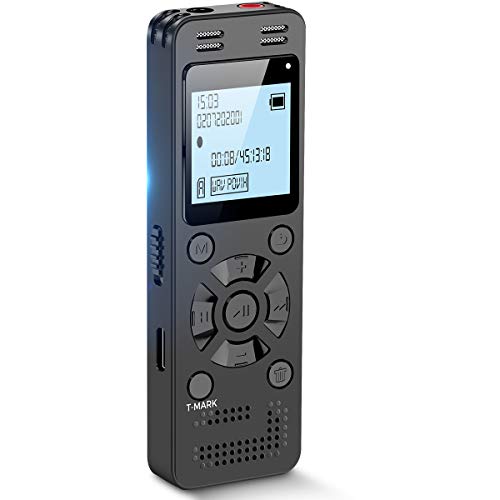
- 128GB storage and up to 54 hours of recording
- Voice activation with 6 sensitivity levels
- Four-folder storage plus password protection
Best For: Long spoken-word sessions where storage and file organization matter
Field-Ready Stereo Recorder
Zoom H1 Essential for portable stereo capture

- 32-bit float stereo recording
- X/Y mics for ambience and voices
- USB-C mic mode for flexible use
Best For: Portable stereo capture for ambience, interviews, and content creators
Compact Field Workhorse
TASCAM DR-05XP with flexible recording modes

- 32-bit float, 24-bit, and 16-bit support
- USB-C interface for computer recording
- Built-in mics handle loud environments
Best For: Flexible field recording, audio-for-video, and portable USB-C use
High-Capacity Voice Recorder
Tonfarb 136GB recorder with long battery life

- 136GB storage with huge claimed capacity
- Up to 68 hours of battery life
- Voice activation and noise reduction
Best For: Long lectures, interviews, and simple voice capture
Field Capture Pick
TASCAM DR-07XP Stereo Field Recorder

- 32-bit float recording with stereo AB/XY mics
- USB-C interface mode for computer recording
- Up to 17.5 hours on AA batteries
Best For: portable stereo field recording and video/audio capture
Budget Speech Recorder
16GB Pocket Voice Recorder with Playback
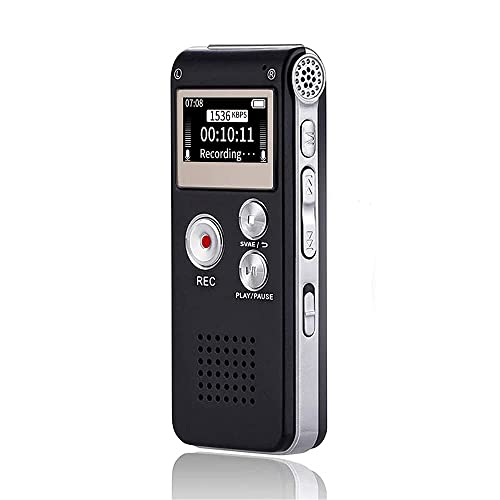
- One-button recording with easy playback
- Voice activation and noise reduction
- Up to 30 hours of recording time
Best For: simple lectures, interviews, and everyday dictation
Long-Run Voice Recorder
16GB Rechargeable Voice Recorder with Voice Activation

- Voice activation with noise reduction
- 16GB storage and MP3/WAV support
- Up to 20 hours of continuous recording
Best For: long speech sessions, meetings, and interviews
Field-Pro Option – Zoom F3 Professional Field Recorder for Filmmakers & Musicians
If you want voice recorders for field recording that can handle unpredictable sound, the Zoom F3 is built for exactly that job. Its 32-bit float recording and ultra-low-noise preamps make it a strong fit for run-and-gun work where dialogue, peaks, and changing conditions can all happen in the same take.
Best For: Filmmakers and recordists who need secure XLR inputs and worry-free capture in the field.
Pros:
- 32-bit float recording helps capture quiet audio and sudden peaks without constant level adjustments.
- Dual locking XLR inputs keep connections secure in mounted or mobile rigs.
- Ultra-low-noise preamps are designed for cleaner recording in uncontrolled environments.
- Flexible power and USB workflows support long days on set or on location.
Cons:
- Only two XLR/TRS inputs, so it is not the right choice for larger multi-mic sessions.
- Its pro-oriented design is less convenient for casual, one-button voice memos.
For field work where reliability matters more than simplicity, the F3 is a focused recorder that keeps audio capture steady under pressure. It is best viewed as a compact professional tool rather than a general-purpose voice memo device.
Budget Spoken-Word Pick – EVISTR 64GB Digital Voice Recorder with Playback
For buyers comparing voice recorders for field recording on a budget, the EVISTR L357 focuses on portability, long battery life, and easy operation. It is geared toward lectures, meetings, interviews, and other spoken-word recording where voice activation and file management matter most.
Best For: Students, professionals, and note-takers who want a small recorder with voice activation and playback.
Pros:
- Voice activation can reduce silent sections and help conserve storage space.
- 64GB storage and up to 32 hours of continuous recording support long sessions.
- Simple two-button operation makes it quick to start and save recordings.
- Playback features include A-B repeat, rewind, and variable speed control.
Cons:
- Built around spoken-word use rather than multi-input field capture.
- Less advanced than pro recorders for complex rigs or external microphones.
If your priority is a small, easy recorder for interviews or classroom-style capture, the EVISTR keeps the feature set practical and approachable. It is a strong everyday option, but not a replacement for a more advanced field recorder.
Flexible Creator Pick – Zoom H4 Essential Handheld Recorder
If you need voice recorders for field recording that can also handle music, podcasts, and video audio, the Zoom H4 Essential offers a flexible middle ground. Its 4-track design, built-in stereo mics, and XLR/TRS inputs make it useful when you need more than a basic voice recorder but do not want a full mixer-style setup.
Best For: Creators who want a guided handheld recorder for interviews, field audio, and small production work.
Pros:
- 32-bit float recording helps protect against distorted takes.
- Built-in stereo microphones and two XLR/TRS inputs cover a range of recording setups.
- USB-C recording and SD card backup support both live capture and file saving.
- Spoken menu guidance makes it easier to navigate for more users.
Cons:
- Battery life is listed at 10 hours, which may be limiting on longer shoots.
- Its larger feature set may be more recorder than casual voice-note users need.
The H4 Essential is a practical choice when you want more recording flexibility without giving up portability. It stands out for creators who need dependable audio capture across interviews, field recordings, and basic production work.
High-Capacity Organizer – EVIDA 128GB Voice Activated Recorder
Among voice recorders for field recording, the EVIDA model is aimed at users who want lots of storage, voice activation, and straightforward file handling. It is especially practical for lectures, meetings, and interviews where long recording time and easy transfers are more important than advanced production features.
Best For: Users who want a high-capacity recorder for long spoken-word sessions and organized file storage.
Pros:
- 128GB storage and up to 54 hours of continuous recording support long sessions.
- Voice activation with multiple sensitivity levels helps reduce blank or low-volume segments.
- Four-folder storage and password protection help keep files organized and secure.
- Also works as an USB flash drive and MP3 player for added flexibility.
Cons:
- Mono recording and built-in mic design are better suited to spoken-word use than complex field rigs.
- No headphone jack is listed in the supplied specs.
The EVIDA is a sensible pick if you need a lot of recording capacity and simple file management in one portable device. It is built around efficiency for spoken content rather than broader professional field-production needs.
Field-Ready Stereo Recorder – Zoom H1 Essential for portable stereo capture
If you want voice recorders for field recording that are simple to carry but still capture more polished sound than a phone or camera, the Zoom H1 Essential is a strong fit. Its built-in X/Y stereo mics, 32-bit float recording, and USB-C microphone mode make it useful for capturing ambience, interviews, rehearsals, and everyday audio in a compact handheld format.
Best For: Creators who want a lightweight stereo recorder for ambience, voice, and on-the-go content capture.
Pros:
- X/Y stereo microphones capture clear stereo audio for ambience, room tone, and content audio.
- 32-bit float recording helps make clips easier to capture without worrying as much about levels.
- USB-C microphone mode adds flexibility for livestreams, calls, voiceovers, and desktop recording.
- Works for music, podcasts, lectures, interviews, and other real-world recording tasks.
Cons:
- Runs on 2 AAA batteries, which may be less convenient than built-in rechargeable designs.
- Designed as a stereo handheld recorder rather than a feature-heavy field production unit.
Overall, the H1 Essential is a practical choice if you want straightforward field recording with cleaner stereo capture and easy portability. It is especially appealing when you need a recorder that can move between voice, music, and environmental sound without much setup.
Compact Field Workhorse – TASCAM DR-05XP with flexible recording modes
For buyers comparing voice recorders for field recording, the TASCAM DR-05XP stands out as a compact handheld option with built-in omnidirectional condenser microphones and flexible recording formats. It is designed for music, audio-for-video, meetings, dictation, and podcasting, while also doubling as a 2-in/2-out USB-C audio interface for direct computer recording.
Best For: Field users who want a handheld recorder with multiple recording formats and USB-C interface support.
Pros:
- Supports 32-bit float, 24-bit, and 16-bit recording for flexible capture workflows.
- Built-in omnidirectional condenser mics are rated to handle loud sources up to 125 dB SPL.
- USB-C 2-in/2-out audio interface mode expands its use beyond standalone recording.
- Up to 17.5 hours of operation on 2 AA batteries helps for longer recording days.
Cons:
- SD card and batteries are not included.
- Uses AA batteries rather than a built-in rechargeable battery.
The DR-05XP is a sensible choice if you want a portable recorder that can handle a range of recording scenarios without feeling overly complex. Its mix of field-friendly mics, USB-C connectivity, and long battery life makes it especially practical for everyday recording work.
High-Capacity Voice Recorder – Tonfarb 136GB recorder with long battery life
If your priority is a simple voice recorder for field recording, lectures, and interviews, the Tonfarb 136GB model focuses on storage, battery life, and easy operation. It offers PCM recording, automatic noise reduction, voice-activated recording, and a one-click record/save design, making it straightforward for users who want quick capture without a complicated setup.
Best For: Students, journalists, and meeting recorders who want long runtime and simple one-touch operation.
Pros:
- 136GB total storage and claims of up to 9775 hours of recording capacity provide lots of space.
- Up to 68 hours of battery life supports extended classes, meetings, and interviews.
- PCM recording and automatic noise reduction are aimed at clearer speech capture.
- Voice-activated recording, A-B repeat, and password protection add practical convenience.
Cons:
- It is more voice-focused than a dedicated stereo field recorder.
- Uses a built-in microphone and simpler interface rather than advanced production controls.
This model makes sense when you want a pocketable recorder that emphasizes endurance, storage, and easy speech capture. For users who value straightforward recording over advanced field-production features, it offers a practical all-in-one approach.
Field Capture Pick – TASCAM DR-07XP Stereo Field Recorder
If you want voice recorders for field recording that can also handle music, video work, and meetings, the TASCAM DR-07XP is built for flexible, higher-level capture. Its 32-bit float recording, 96kHz support, and adjustable stereo AB/XY microphones make it a strong fit when you need more control over loud or unpredictable sources.
Best For: Field recordists, videographers, and podcasters who want flexible stereo capture with 32-bit float recording.
Pros:
- Records in 32-bit float, 24-bit, or 16-bit with up to 96kHz support
- Adjustable stereo AB/XY condenser mics handle loud environments up to 125dB SPL
- Works as a 2-in/2-out USB-C audio interface for computer recording
- Runs up to 17.5 hours on 2 AA batteries
Cons:
- Memory card is not included
- Batteries are sold separately
- Uses built-in mics, so it is less expandable than XLR-based recorders
Overall, the DR-07XP stands out if you want a portable recorder that can move from field capture to USB interface duty without much fuss. Its strength is clean, versatile stereo recording rather than a feature-heavy production workflow.
Budget Speech Recorder – 16GB Pocket Voice Recorder with Playback
For buyers comparing voice recorders for field recording on a budget, this compact unit focuses on straightforward operation and long runtime. It offers one-button recording, voice activation, and noise reduction, making it practical for lectures, interviews, meetings, and basic on-the-go note capture.
Best For: Students, interviewers, and casual users who want an easy-to-use pocket recorder with voice activation.
Pros:
- One-button recording with simple playback controls
- Voice-activated recording helps reduce silent gaps and save time
- Built-in noise reduction and sensitive mic for clearer speech capture
- Up to 30 hours of recording time with 16GB storage
Cons:
- Mono microphone mode is less suited to stereo field work
- Includes basic playback and speaker features rather than pro controls
- Designed around speech, not higher-end ambient or music recording
This is a practical pick if your priority is simple speech recording instead of advanced field audio features. It is best treated as a lightweight dictation and lecture recorder rather than a professional field unit.
Long-Run Voice Recorder – 16GB Rechargeable Voice Recorder with Voice Activation
If you need voice recorders for field recording that emphasize storage, battery life, and easy file handling, this 16GB model is a solid practical option. It includes voice-activated recording, noise reduction, and support for both WAV and MP3, which makes it useful for lectures, meetings, and interviews where speech clarity matters most.
Best For: Users who want a rechargeable voice recorder with voice activation, long storage capacity, and simple transfer.
Pros:
- Voice-activated recording can reduce silent sections and save space
- 16GB storage with multiple bitrate options for long recording capacity
- Supports MP3 and WAV formats plus easy USB file transfer
- Rechargeable battery supports up to 20 hours of continuous recording
Cons:
- Built-in microphone design is better for speech than advanced field capture
- Voice activation setup adds an extra step before use
- Small device is geared toward utility, not pro monitoring flexibility
As a speech-focused recorder, this model is a good fit when convenience and battery life matter more than studio-grade expandability. It gives you a dependable mix of voice activation, playback features, and long-duration recording in a compact package.
How We Picked These Voice Recorders for Field Recording
We focused on practical features that matter outside the studio: reliable recording formats, low handling noise, portable designs, easy file transfer, and enough storage for real-world sessions. We also favored models that suit different use cases, from quick voice notes to higher-fidelity field capture.
Quick Comparison
For simple notes and interviews, compact voice recorders can be the most convenient. For music, sound design, and unpredictable environments, handheld recorders with better onboard mics, adjustable input settings, or 32-bit float recording offer more headroom and fewer ruined files. If you need a device that doubles as a computer interface, USB-C models are especially useful.
Key Buying Factors for Voice Recorders for Field Recording
Audio Quality and Recording Format
Look for stereo capture, low-noise microphones, and formats that preserve detail. 32-bit float is especially valuable when levels may jump suddenly, since it helps reduce clipping risk.
Mic Flexibility
Some field recorders rely on built-in microphones, while others support external mics or adjustable pickup patterns. If you expect interviews, outdoor ambiences, or instruments, flexibility matters.
Storage and Battery Life
Higher-capacity models can store long sessions without constant file management. Rechargeable power is convenient, but check endurance if you plan to record all day.
Size and Controls
Smaller recorders are easier to carry, but larger handheld units often offer better ergonomics, more physical controls, and clearer displays for fast field use.
Transfer and Workflow
USB-C connectivity, card support, and simple file organization save time when you’re backing up audio on location or moving projects into editing software.
Who Should Buy Which Voice Recorders for Field Recording?
If you want a lightweight option for lectures, meetings, or interviews, choose a compact voice recorder with voice activation and generous built-in storage. If you record music, ambience, film audio, or unpredictable outdoor sound, a professional handheld model is a smarter investment. Creators who need an all-purpose tool should prioritize the best balance of portability, clean preamps, and reliable recording controls.
In short, the best Voice Recorders for Field Recording depend on how demanding your sessions are. Match the recorder to your environment first, then choose the features that make your workflow faster and your audio safer.