Clear speech can make or break an interview, whether you are recording a quick street conversation, a podcast, or a polished video production. The right wireless microphone reduces cable clutter while helping voices sound more focused and consistent.
These 10 picks cover compact lavalier systems, phone-friendly kits, handheld microphones, and more flexible setups for cameras and computers. Use the guide below to match features, connectivity, and workflow to the way you record.
Best 10 Wireless Microphones for Interviews Picks for 2026
Best Overall
DJI Mic Mini with Charging Case

- Two lightweight transmitters for two-person interviews
- Up to 48 hours with the charging case
- Noise cancellation and automatic limiting
Best For: Two-person interviews and extended shoots
Best Handheld
COMICA Revo S Interview Microphone
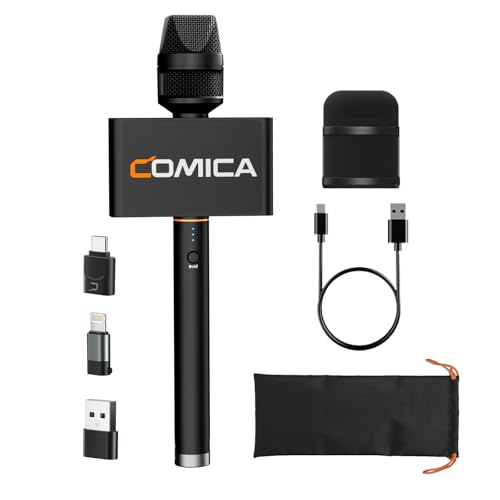
- Cardioid 14 mm condenser capsule
- 48 kHz/24-bit audio with one-key denoise
- Up to 15 hours of battery life
Best For: Handheld smartphone interviews and reporting
Best Mobile Setup
DJI Mic Mini Mobile Receiver Kit

- Two 10 g transmitters for two-person interviews
- USB-C mobile receiver and plug-and-play setup
- Noise cancellation and 300 m maximum range
Best For: Phone-based interviews and mobile content creation
Best UHF Range
COMICA CVM-WM100H Handheld System
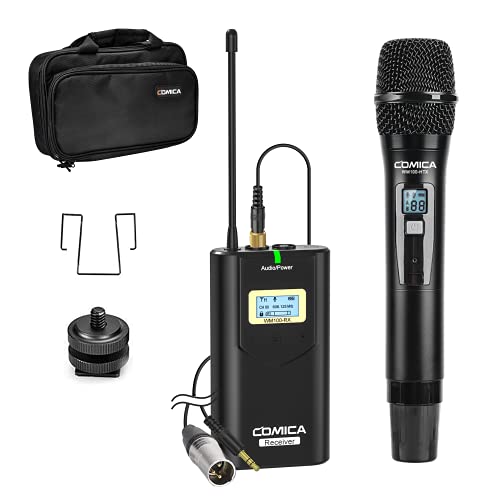
- 48 selectable UHF channels
- Up to 328 feet in open areas
- Real-time monitoring with 3.5 mm and XLR outputs
Best For: Camera interviews and larger shooting environments
Best Plug-and-Play Pick

- USB-C and Lightning adapters included
- Wind protection for outdoor recording
- Up to 6 hours of battery life
Best For: Mobile interviews and quick creator recordings
Best Handheld Interview Setup

- Handheld adapter included
- Up to 10 hours of battery life
- Stated range up to 164 feet
Best For: Street interviews and iPhone reporting
Best Multi-Device Value

- 3-in-1 receiver for phones and cameras
- Two transmitters for interviews
- Up to 7 hours of working time
Best For: Two-person interviews across multiple devices
Best All-Around Pick
Wedaniya WM189 Mini Microphone

- Two transmitters for interviews
- USB-C and Lightning support
- Monitoring and wind protection
Best For: Two-person mobile interviews and vlogging
Best for Voice Sync
Labstandard K9 Wireless Lavalier

- Dual microphones for interviews
- Low-latency auto-sync technology
- Lightning and USB-C compatibility
Best For: Synchronized smartphone interviews and podcasts
Best for Phone-Case Convenience

- Longer receiver works with many cases
- USB-C and Lightning support
- Automatic plug-and-play pairing
Best For: Mobile creators switching between phones and tablets
Best Overall – DJI Mic Mini with Charging Case
For creators comparing wireless microphones for interviews, the DJI Mic Mini offers a versatile two-transmitter setup, a dedicated receiver, and a charging case. Its lightweight transmitters, noise cancellation, automatic limiting, and long total battery life make it practical for both indoor conversations and noisy outdoor shoots.
Best For: Two-person interviews, frequent travel, livestreaming, and extended recording sessions.
Pros:
- Two 10 g transmitters are discreet and comfortable for on-camera use.
- Up to 48 hours of use with the charging case.
- Up to 400 m transmission range, plus two noise-cancellation levels.
- Automatic limiting helps prevent clipping when audio gets too loud.
Cons:
- The full kit is more equipment than a solo interviewer may need.
- Some DJI ecosystem features depend on compatible Osmo devices.
This is the strongest all-around choice when an interview setup needs two channels, dependable range, and enough battery for long production days. The included case also keeps the system organized and charged between shoots.
Best Handheld – COMICA Revo S Interview Microphone
The COMICA Revo S is a handheld option for wireless microphones for interviews, with a plug-and-play USB-C receiver and a reporter-style design. Its cardioid condenser capsule focuses on sound in front of the microphone, while one-key denoise and adjustable gain help tailor recordings for different environments.
Best For: Smartphone interviews, street reporting, podcasts, and video production where a handheld microphone is preferred.
Pros:
- 14 mm condenser capsule and cardioid pattern capture clear, focused speech.
- 48 kHz/24-bit recording supports detailed audio.
- One-key denoise and three gain levels simplify recording adjustments.
- Built-in battery provides up to 15 hours of use.
Cons:
- The included receiver uses USB-C; Lightning devices require a compatible OTG adapter.
- It is a one-microphone system rather than a two-transmitter kit.
Choose the Revo S when interview presentation matters as much as portability. Its handheld format is especially suitable for asking questions on camera, while the receiver and included adapters support a range of phones and computers.
Best Mobile Setup – DJI Mic Mini Mobile Receiver Kit
For mobile creators seeking wireless microphones for interviews, this DJI Mic Mini kit pairs two transmitters with a mobile receiver designed for USB-C phones, tablets, and computers. The compact transmitters, plug-and-play workflow, active noise cancellation, and 300 m maximum range suit fast-moving interview and content-creation setups.
Best For: Smartphone interviews, mobile creators, livestreaming, and two-person recordings without a full camera receiver setup.
Pros:
- Two 10 g transmitters support interviewer-and-subject recording.
- Mobile receiver works with compatible iPhone, Android, PC, and tablet devices.
- Two noise-cancellation levels help manage changing environments.
- Automatic limiting helps protect recordings from sudden loud input.
Cons:
- Maximum operating time is listed as 11.5 hours, less than the charging-case version.
- The mobile receiver uses USB-C, so device compatibility should be checked before buying.
This is a focused choice for phone-first production. It keeps the setup compact and straightforward while retaining two transmitters, making it useful when interviews need to be recorded directly to a mobile device.
Best UHF Range – COMICA CVM-WM100H Handheld System
The COMICA CVM-WM100H is a traditional UHF wireless system for buyers who need wireless microphones for interviews with cameras, camcorders, or smartphones. It offers 48 selectable channels, real-time receiver monitoring, and a stated 328-foot open-area range, giving videographers more control for larger shooting spaces.
Best For: Camera-based interviews, event coverage, broadcasting, and outdoor shoots requiring longer working distance.
Pros:
- 48 selectable UHF channels help manage potential signal interference.
- Up to 328 feet of open-area transmission distance.
- Real-time audio monitoring helps confirm operation while recording.
- Includes 3.5 mm and XLR output cables for camera and audio compatibility.
Cons:
- The system requires channel matching through auto-scan and IR sync before use.
- Its stated range drops to about 200 feet in areas with obstacles.
- The setup is less plug-and-play than the listed USB-C mobile systems.
This system is a good fit for users who value UHF channel selection and camera connectivity over the smallest possible footprint. Its monitoring function and included output options are useful for more deliberate video-production workflows.
Best Plug-and-Play Pick – Mini Mic Pro
For creators who want wireless microphones for interviews that work with minimal setup, the Mini Mic Pro is a compact option for iPhone, Android, tablets, and laptops. It includes USB-C and Lightning adapters, noise-reduction features, wind protection, and two lavalier microphones for mobile recording.
Best For: Mobile interviews, TikTok and YouTube creators, and users who want simple plug-and-play recording.
Pros:
- Works with iPhone, Android, tablets, and laptops using USB-C and Lightning adapters.
- Includes foam and dead-cat wind protection for outdoor recording.
- Lightweight design with up to 6 hours of battery life.
- Allows simultaneous charging of the connected device while recording.
Cons:
- Its listed 2.4 GHz wireless system is intended for a single channel.
- The advertised battery life is shorter than some competing options.
The Mini Mic Pro is a practical choice when portability and fast setup matter most. Its included adapters and wind accessories make it flexible for quick interviews across indoor and outdoor locations.
Best Handheld Interview Setup – Movo Wireless Mini DU
The Movo Wireless Mini DU is one of the more interview-focused wireless microphones for interviews, pairing a clip-on transmitter with a Lightning receiver and a handheld adapter. The adapter lets you hold the microphone like a reporter’s mic or mount it on a stand.
Best For: Street interviews, reporting, presentations, and iPhone-based content creation.
Pros:
- Includes a handheld adapter for a more natural interview format.
- Offers up to 10 hours of battery life.
- Provides a stated transmission range of up to 164 feet.
- Comes with a carrying pouch and windscreens for portable use.
Cons:
- The Lightning receiver is designed for iPhone use rather than universal device compatibility.
- The system uses a unidirectional microphone pattern, which may be less flexible for some recording setups.
Choose this Movo kit if your interviews benefit from a handheld microphone feel. Its long battery rating, reported range, and included handle make it especially suitable for mobile reporters and street content.
Best Multi-Device Value – PQRQP GT16
The PQRQP GT16 stands out among wireless microphones for interviews because its 3-in-1 receiver supports iPhone, Android, and camera connections. It also includes two transmitters, making it useful for conversations with two speakers and for recording in varied locations.
Best For: Two-person interviews, creators switching between phones and cameras, and outdoor recording.
Pros:
- Supports USB-C, Lightning, and 3.5 mm connections through its universal receiver.
- Includes two wireless transmitters for dual-microphone recording.
- Offers active noise reduction and windproof fleece accessories.
- Provides up to 7 hours of working time and can charge while in use.
Cons:
- Some Android and USB-C devices may require OTG to be enabled manually.
- The supplied 3.5 mm connector is not suitable for laptop audio input according to the product notes.
- The listed wireless transmission distance is 65 feet.
The GT16 is a flexible pick for interviewers who need two microphones and broad device compatibility. Its setup is still straightforward, but users should check connector and OTG requirements before recording.
Best All-Around Pick – Wedaniya WM189 Mini Microphone
For shoppers seeking wireless microphones for interviews, the Wedaniya WM189 is a flexible two-microphone kit with USB-C and Lightning receivers. Plug-and-play pairing, windshields, DSP noise reduction, and real-time monitoring make it practical for mobile interviews in both indoor and outdoor settings.
Best For: Two-person interviews, podcasts, vlogs, and smartphone video recording.
Pros:
- Includes two transmitters for recording an interviewer and guest.
- Works with Android, iOS, laptops, tablets, and smartphones through USB-C or Lightning.
- Includes deadcat and sponge windshields plus DSP noise reduction for outdoor recording.
- Offers receiver headphone monitoring and Standard, Reverb, and Mute modes.
Cons:
- Its listed frequency response is 4.8 GHz, so compatibility should be checked for the intended setup.
- The stated recording time is up to six hours, which may require recharging during longer productions.
The WM189 stands out as a versatile interview kit because it combines dual-mic recording, broad device support, monitoring, and useful wind protection in a compact package.
Best for Voice Sync – Labstandard K9 Wireless Lavalier
The Labstandard K9 is designed for wireless microphones for interviews where synchronized dialogue matters. Its dual lavalier microphones use real-time auto-sync, low-latency 2.4G transmission, and noise reduction, while the included Lightning adapter helps it work across Lightning and USB-C devices.
Best For: Smartphone interviews, podcasts, livestreams, and two-person voice recording.
Pros:
- Includes two wireless microphones for interviewer-and-guest setups.
- Claims approximately 0.008-second latency for close audio-video synchronization.
- Noise reduction is designed to preserve voices in various environments.
- Supports Lightning and USB-C devices with a rechargeable Lightning adapter.
Cons:
- The product details list Bluetooth connectivity while also describing 2.4G transmission, so buyers should confirm the connection method they need.
- The listed battery life is about six hours.
With dual microphones and a strong emphasis on synchronization, the K9 is a sensible option for creators who want interview dialogue to align closely with smartphone video.
Best for Phone-Case Convenience – MAYBESTA WM356-1 Wireless Mic
The MAYBESTA WM356-1 is a convenient choice among wireless microphones for interviews, especially when you record with different phones. Its longer receiver is designed to fit many phone cases, and automatic pairing, omnidirectional pickup, and noise reduction keep setup straightforward for mobile creators.
Best For: Interviews, vlogs, livestreams, and creators who frequently switch between USB-C and Lightning devices.
Pros:
- Supports Android phones, iPhones, iPads, laptops, and tablets through USB-C and Lightning connections.
- The extended receiver interface is designed to work with most phone cases.
- Automatic plug-and-play connection requires no app or adapter.
- Includes two lavalier microphones and noise-reduction windscreen accessories.
Cons:
- The specifications list one channel, which may be less flexible for more advanced multi-source setups.
- The supplied notes do not specify an exact wireless range or battery runtime.
The WM356-1 is particularly practical for phone-based interview workflows where removing a case is inconvenient. Its broad compatibility and simple setup make it approachable for everyday content production.
How We Picked the Best Wireless Microphones for Interviews
We focused on the factors that matter most when recording spoken conversations: voice clarity, connection reliability, compatibility, portability, battery practicality, and ease of use. The selection includes systems designed for iPhone and Android devices, cameras, computers, and mixed-device workflows.
We also considered microphone format. Clip-on lavaliers are discreet and convenient for seated interviews, while handheld microphones are useful for street interviews, presentations, and situations where the interviewer needs to control mic placement. Noise reduction and active noise cancellation can help in busy environments, but they should complement—not replace—good microphone positioning.
Quick Comparison
| Best For | Recommended Type | What to Prioritize |
|---|---|---|
| Phone interviews | Compact wireless lavalier kit | Correct connector, plug-and-play setup, battery life |
| Street interviews | Wireless handheld system | Handling, range, wind protection, dependable receiver |
| Two-person conversations | Dual-transmitter kit | Two transmitters, independent audio channels, charging case |
| Camera production | Camera-compatible wireless system | Receiver output, mounting, gain control, monitoring |
| Mixed devices | Multi-connector system | USB-C, Lightning, camera support, included adapters |
Key Buying Factors for Wireless Microphones for Interviews
Device Compatibility
Check whether the receiver matches your recording device. USB-C and Lightning phone connections are not interchangeable, and camera systems commonly use a 3.5mm input. If you record across phones, cameras, and computers, a kit with multiple receiver options or adapters can be worth the extra cost.
Microphone Style and Placement
Lavalier microphones attach near the speaker’s collar and keep both hands free, but clothing movement can create noise. Handheld microphones are easier to position and often suit unscripted interviews, though they are more visible and require active handling.
Noise Control and Sound Quality
Noise reduction can improve speech in moderate background noise, but aggressive processing may make voices sound unnatural. Look for clear voice reproduction, sensible gain control, and a windscreen or other protection if you will record outdoors.
Battery, Range, and Workflow
Consider how long you typically record and whether the transmitters and receiver can be recharged in a case. Reliable range matters more for moving subjects, while simple pairing and automatic connection are especially valuable for fast mobile recordings.
Who Should Buy Which Wireless Microphones for Interviews?
Choose a compact phone lavalier kit if you mainly create interviews, reels, vlogs, or podcasts with an iPhone or Android phone. A dual-transmitter system is the better choice for interviewer-and-guest conversations or two-person panels. Select a wireless handheld microphone for street reporting, walk-and-talk content, and situations where the speaker will pass the microphone between people.
For camera-based productions, prioritize a dedicated camera receiver and manual control over a phone-only kit. If you switch between devices, choose the most versatile system in the roundup and verify every included connector before buying. Whichever style you select, test placement and levels before the interview begins; consistent positioning usually improves results as much as the microphone itself.