If your mixes fall apart on headphones, car speakers, or streaming platforms, the low end may be the problem. A good studio subwoofer helps you hear bass more accurately so you can make better balance and EQ decisions.
Below, we’ve rounded up 10 of the best 10-inch studio subwoofers for different room sizes, budgets, and monitoring setups.
Best 10 10 Inch Studio Subwoofers Picks for 2026
JBL Club-Style Low-End
JBL LSR310S 10-Inch Studio Monitor Subwoofer
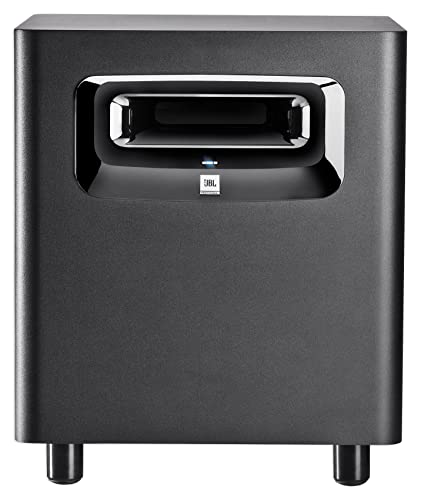
- Deep bass into the 20 Hz region
- XLF mode for club-style tuning
- Balanced XLR and 1/4-inch inputs/outputs
Best For: Studio monitoring and LFE-style low-end extension
ADAM T-Series Match
ADAM Audio T10S Active 10-Inch Subwoofer

- Compact active subwoofer for studio use
- Adjustable crossover, phase rotation, and volume
- Footswitch bypass for quick mix checks
Best For: Small studios using ADAM T5V or T7V monitors
KRK Front-Port Power
KRK S10.4 10-Inch Powered Studio Subwoofer

- 160W powered sub with Class D amplification
- Front-firing port for easier placement
- Bass extension to 28 Hz and 117 dB max SPL
Best For: Producers needing flexible placement and strong bass extension
Polk Budget Bass
Polk Audio PSW10 10-Inch Powered Subwoofer
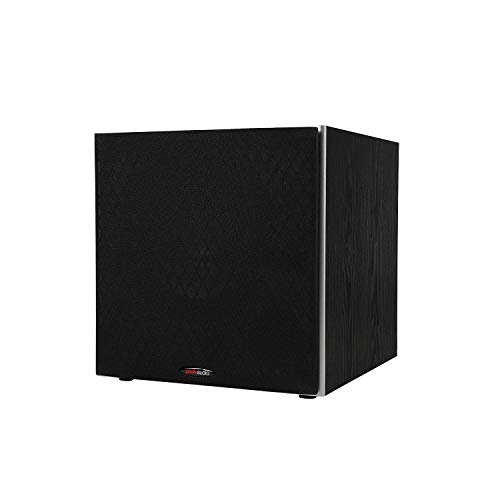
- 10-inch Dynamic Balance woofer
- Built-in 50W RMS amp, up to 100W
- Variable crossover and easy wired hookups
Best For: Budget home audio and small-room bass support
Serious Home Studio Pick

- 170W RMS Class AB amp with up to 113 dB SPL
- Front-firing 10-inch driver with variable lowpass and highpass filters
- Balanced XLR/TRS, RCA, and pass-through outputs
Best For: Producers who want a flexible, studio-focused sub for accurate low-end extension
Home Theater Value
Yamaha NS-SW100BL 10-Inch Powered Subwoofer

- 10-inch woofer with Twisted Flare Port for tight bass
- Advanced YST II powered design with 100W output
- Remote control and simple wired setup
Best For: Listeners who want an easy powered sub for movies, music, and home theater
Studio Budget Choice
Samson MediaOne 10S Active Studio Subwoofer

- 100W active design with 10-inch copolymer woofer
- Down-firing tuned bass reflex port
- Variable low-pass control and speaker-level connections
Best For: Budget buyers who need simple bass support for a home studio or desktop setup
Compact bass for home theater
Sony SA-CS9M2 10-Inch Compact Subwoofer
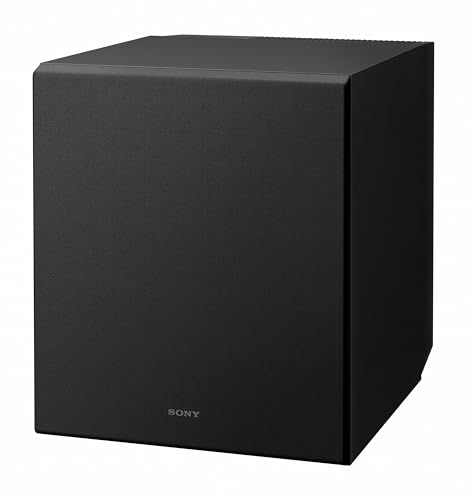
- 10-inch active subwoofer
- Bass reflex ducts reduce unwanted noise
- Compact body fits tight spots
Best For: Small home theater rooms needing deep, controlled bass
Studio-style low end control
Yamaha HS8 Powered Studio Subwoofer

- LOW CUT, HIGH CUT, and PHASE controls
- 150W powered bass-reflex design
- XLR inputs for studio systems
Best For: Recording and mixing setups that need tunable bass
High-power active bass
Herdio 10-Inch Powered Subwoofer

- 800W peak, 200W RMS output
- 40Hz low-end response
- Adjustable crossover, volume, and phase
Best For: Rooms that need powerful bass with easy tuning
JBL Club-Style Low-End – JBL LSR310S 10-Inch Studio Monitor Subwoofer
If you want 10 inch studio subwoofers that can add real depth to a mix, the JBL LSR310S is built for exactly that job. Its down-firing 10-inch driver, patented port design, and XLF club-style tuning are aimed at delivering deep, dynamic bass without losing control at higher playback levels.
Best For: Studio setups that need extended low end for mixing, monitoring, or LFE duties.
Pros:
- Reaches deep low frequencies into the 20 Hz region.
- XLF mode adds a club-inspired bass tuning option.
- Balanced XLR and 1/4-inch connections make studio integration straightforward.
- Rated for 113 dB peak output for demanding sessions.
Cons:
- Down-firing design may limit placement choices in some rooms.
- Built for studio use, so it is not a casual compact sub.
Overall, the LSR310S stands out if you want a studio subwoofer that emphasizes extension, output, and flexible connectivity. It is especially appealing for producers who want to hear the lowest octave with more confidence.
ADAM T-Series Match – ADAM Audio T10S Active 10-Inch Subwoofer
The ADAM Audio T10S is a practical pick among 10 inch studio subwoofers if you want a compact active model designed to extend the low end without taking over your workspace. It uses a downward-facing 10-inch woofer, adjustable crossover settings, phase rotation, and dedicated volume control to help you dial it in for accurate studio monitoring.
Best For: Small studio setups, especially with ADAM Audio T5V or T7V monitors.
Pros:
- Compact active design made for studio bass extension.
- Adjustable crossover, phase, and volume help match your room.
- Footswitch bypass makes A/B checking with and without bass easy.
- XLR/RCA connectivity supports flexible studio wiring.
Cons:
- It is specifically engineered to complement T-Series monitors.
- 130W output is solid, but not the highest in this group.
For producers who want a straightforward subwoofer that is easy to calibrate, the T10S offers a strong balance of control and compact size. Its feature set is especially useful when accurate low-end decisions matter more than sheer punch.
KRK Front-Port Power – KRK S10.4 10-Inch Powered Studio Subwoofer
The KRK S10.4 is a strong choice if you are comparing 10 inch studio subwoofers for production, mixing, and listening. Its 10-inch glass aramid composite woofer, front-firing bass port, and 160-watt Class D amplification are designed to give you tight bass extension with more placement flexibility.
Best For: Music production and mixing setups that need flexible placement and solid low-end extension.
Pros:
- 10-inch glass aramid composite woofer for studio bass duties.
- Front-firing port helps with placement flexibility.
- Bass extension to 28 Hz with 117 dB max SPL.
- Footswitch control can disable the sub and crossover filter.
Cons:
- Footswitch is not included.
- Its 1-year warranty is shorter than some alternatives.
If you want a subwoofer that combines power, useful control, and a design that works in tighter spaces, the S10.4 is an appealing option. It is especially well suited to users who need a studio-friendly low end without giving up flexibility.
Polk Budget Bass – Polk Audio PSW10 10-Inch Powered Subwoofer
While it is geared more toward home audio than studio work, the Polk Audio PSW10 still deserves a look if you are shopping 10 inch studio subwoofers on a tighter budget and need added bass for a small-to-mid size room. Its 10-inch Dynamic Balance woofer, directed port, and built-in 50-watt RMS amp are aimed at delivering fuller low-end support with simple integration.
Best For: Budget buyers who want compact extra bass for home audio or small rooms.
Pros:
- 10-inch woofer with a directed port for added bass depth.
- Built-in 50-watt RMS amp, rated up to 100 watts.
- Continuously variable crossover from 80-160 Hz.
- Speaker-level and line-level connections make hookup easy.
Cons:
- Primarily designed for home audio, not studio monitoring.
- Lower output than the more studio-focused models here.
The PSW10 is a practical, affordable way to add bass punch, but it is not the most specialized option for critical studio use. It fits best when you want straightforward low-end support rather than a reference-minded production tool.
Serious Home Studio Pick – PreSonus Eris Pro Sub 10
If you want one of the more capable 10 inch studio subwoofers for a serious mix room, the PreSonus Eris Pro Sub 10 is built to add low-end weight without taking over the balance of your monitors. Its 10-inch front-firing driver, front port, and variable crossover controls make it easier to match with full-range speakers in a home studio or professional production setup.
Best For: Producers and engineers who want a powerful, flexible studio subwoofer for accurate low-end extension.
Pros:
- 170W RMS Class AB amplification and up to 113 dB SPL for strong output
- Continuously variable lowpass filter from 50 Hz to 130 Hz
- Switchable 80 Hz highpass filter helps integrate main monitors
- Balanced XLR/TRS and unbalanced RCA inputs plus pass-through outputs
Cons:
- Designed for wired studio setups, not portable use
- More control options may be more than casual users need
- At 37 pounds, it is not the lightest option
This is a practical choice if you need a studio-focused sub that gives you real control over crossover, phase, and system integration. The included footswitch bypass is especially useful when you want to check your mix without the sub in the chain.
Home Theater Value – Yamaha NS-SW100BL 10-Inch Powered Subwoofer
Among 10 inch studio subwoofers and small-room bass solutions, the Yamaha NS-SW100BL is aimed more at clean, compact low end for movies, music, and home theater than at full studio monitoring control. Its 10-inch woofer, Twisted Flare Port, and Advanced YST II design are meant to deliver tight bass in a simple powered subwoofer package.
Best For: Home theater or music listeners who want a straightforward 10-inch powered subwoofer with a compact footprint.
Pros:
- Twisted Flare Port is designed to help keep bass clear and tight
- Advanced YST II technology supports smoother low-frequency output
- 100W powered design suits smaller rooms and basic setups
- Remote control makes operation convenient
Cons:
- Fewer studio-specific controls than a dedicated monitor sub
- Frequency response is listed to 180 Hz, so it is not aimed at ultra-deep extension
- Wired connectivity only
If you want an easy-to-use powered sub for a living room or compact media setup, this Yamaha focuses on straightforward bass support. It is less of a mixing tool and more of a reliable home audio upgrade.
Studio Budget Choice – Samson MediaOne 10S Active Studio Subwoofer
The Samson MediaOne 10S is a practical entry in the 10 inch studio subwoofers category if you want added bass for a home studio, gaming setup, or desktop listening system. Its 10-inch copolymer woofer, down-firing tuned bass reflex port, and variable low-pass control keep the design focused on simple, usable low-frequency support.
Best For: Budget-conscious users who need a straightforward active subwoofer for music production or general desktop audio.
Pros:
- 100 watts of power with a 10-inch copolymer woofer
- Down-firing tuned bass reflex port helps reinforce low end
- Variable low-pass frequency control for basic tuning
- Speaker-level inputs and outputs support stereo system connections
Cons:
- Less advanced than studio subs with balanced inputs and crossover features
- Maximum output is modest compared with higher-end studio models
- Frequency response is listed to 300 Hz, so it is not especially deep on paper
This is a sensible pick if you want an affordable 10-inch sub that can slot into a home studio or entertainment setup without a lot of complexity. The auto sleep mode is also helpful for everyday use.
Compact bass for home theater – Sony SA-CS9M2 10-Inch Compact Subwoofer
If you want one of the more practical 10 inch studio subwoofers for home entertainment, the Sony SA-CS9M2 is built around a 10-inch active design with bass reflex ducts to help suppress unwanted noise. It is aimed at tight spaces, so it can add deep, powerful low end without taking up much room.
Best For: Home theater setups that need compact, accurate bass in a small footprint.
Pros:
- 10-inch active subwoofer with bass reflex design for deep bass
- Reinforced cellular cone helps suppress unwanted vibration for tighter low end
- Compact size makes it easier to place in tight spots
- Premium componentry is built for home entertainment use
Cons:
- Designed for home theater use rather than studio monitoring
- Uses coaxial connectivity, which may not suit every setup
This is a sensible pick if your priority is clean, compact bass support for movies and TV. It focuses on controlled low-frequency output rather than feature-heavy tuning, which makes it straightforward for a simple setup.
Studio-style low end control – Yamaha HS8 Powered Studio Subwoofer
Among 10 inch studio subwoofers, the Yamaha HS8 stands out for users who want precise low-end control in a pro-style monitoring setup. It is an 8-inch powered subwoofer, but it brings studio-friendly tools like LOW CUT, HIGH CUT, and PHASE controls, along with XLR connectivity.
Best For: Recording, mixing, and desktop or small studio systems that need adjustable bass management.
Pros:
- LOW CUT, HIGH CUT, and PHASE controls for more flexible tuning
- Powered 150W design with bass-reflex construction
- XLR connectivity suits studio and pro audio setups
- Wide 22Hz – 150Hz frequency response for low-frequency extension
Cons:
- Only an 8-inch subwoofer, not a 10-inch model
- More suited to recording and live music than casual home theater use
If you value adjustment over simplicity, this model gives you the kind of control that helps integrate bass with monitors. It is a strong fit for users building a focused listening or production space.
High-power active bass – Herdio 10-Inch Powered Subwoofer
If you are comparing 10 inch studio subwoofers for a home theater, gaming room, or small studio, the Herdio powered subwoofer is built for strong output and simple control. It uses a 10-inch driver, an MDF enclosure, and adjustable crossover, volume, and phase settings to help you tailor the bass to your room.
Best For: Users who want a powerful 10-inch active subwoofer with adjustable bass controls.
Pros:
- 10-inch powered design with 800W peak and 200W RMS output
- Reaches down to 40Hz for deep bass response
- MDF cabinet helps reduce unwanted resonance and vibration
- Adjustable volume, crossover, and phase controls support easier tuning
Cons:
- Wired RCA connectivity only
- Product dimensions are listed inconsistently in the supplied details
This model is a good match if you want big bass with straightforward customization. Its compact MDF build and broad use case make it versatile, but it is best chosen by shoppers who want power first.
How We Picked the Best 10 Inch Studio Subwoofers
For this roundup, we focused on 10 Inch Studio Subwoofers that make sense for real-world mixing and editing. That means usable frequency extension, controllable crossover options, practical connectivity, and output that can support nearfield monitors without overpowering a small room. We also gave preference to models that are easy to integrate with common studio speakers and that offer the kind of tuning flexibility home and project studios usually need.
Quick Comparison
When comparing options, look first at extension and control. Some subwoofers are built for flat, accurate monitoring, while others lean more toward entertainment or general bass reinforcement. Also check whether the sub is front-firing or down-firing, whether the inputs match your interface or monitor outputs, and whether the level, phase, and crossover controls are easy to access.
Key Buying Factors for 10 Inch Studio Subwoofers
Room Size and Placement
A 10-inch sub can work well in small to medium studios, but placement matters as much as power. In tighter rooms, a more controlled sub is usually easier to integrate than a louder one. Down-firing designs can sound different from front-firing models depending on the floor and room layout.
Crossover and Integration
The best 10 Inch Studio Subwoofers let you blend bass smoothly with your monitors. A variable crossover is important because it helps you avoid a gap or overlap in the low end. If your main monitors already extend fairly low, you may want finer control rather than brute force.
Connectivity and Signal Routing
Look for the connections that fit your setup, such as XLR, TRS, or RCA. Balanced connections are generally better for studio use because they help reduce noise over longer cable runs. If you use multiple monitor sources, straightforward routing can save time and frustration.
Accuracy Versus Extra Bass
Not every sub is designed for the same purpose. Some 10 Inch Studio Subwoofers are aimed at neutral monitoring, while others are better suited to casual listening, multimedia, or home theater. If your goal is mixing, prioritize accuracy, controllability, and consistent low-end response over sheer output.
Who Should Buy Which 10 Inch Studio Subwoofers?
If you produce, mix, or master in a project studio, choose a subwoofer that emphasizes control, calibration, and balanced connectivity. If you mainly want fuller playback for music creation or content work, a flexible active model with easy setup may be enough. For larger rooms or hybrid studio/home setups, consider models with stronger output and broader tuning options. If your monitors are already bass-heavy, pair them with a sub that is known for restraint and adjustability rather than maximum boom.