The best dynamic microphone for streaming helps your voice sound focused and clear while reducing keyboard noise, room reflections, and other distractions. USB models simplify setup, while XLR microphones offer more control for advanced audio systems.
We compared 10 strong options from FIFINE, Audio-Technica, RØDE, Shure, Elgato, and MAONO to help you choose the right fit for your setup, budget, and streaming style.
Best 10 Dynamic Microphone for Streaming Picks for 2026
Best Hybrid Pick

- USB and XLR connectivity
- Tap-to-mute and headphone monitoring
- RGB lighting for gaming setups
Best For: Beginner and upgrade-minded streamers
Best for Vocal Isolation
- Hypercardioid noise rejection
- Integrated shock mount
- Multistage pop filtering
Best For: Streaming and podcasting in less-treated rooms
Best Broadcast Value

- Speech-tuned dynamic capsule
- Internal pop filter and shock mount
- Durable all-metal construction
Best For: XLR-based podcast and streaming setups
Best Professional Upgrade
- Warm, balanced vocal capture
- Cardioid isolation with pop filtering
- Rugged, shielded XLR design
Best For: Professional streamers with high-gain XLR equipment
Best for Easy Setup

- USB and XLR connectivity
- Built-in mute, gain, and headphone controls
- Windscreen and shock mount included
Best For: Streamers wanting flexible USB and XLR recording
Best XLR Simplicity

- Speech-optimized dynamic capsule
- No signal booster required
- Swivel mount and thread adapters included
Best For: XLR-based streaming and broadcast voice work
Best USB Monitoring
- Plug-and-play USB connection
- Hypercardioid voice-focused pickup
- Headphone monitoring and soft-touch mute
Best For: USB streamers and podcasters needing easy monitoring
Best All-Rounder

- USB and XLR outputs
- Cardioid dynamic capsule
- Software EQ and tap-to-mute
Best For: Streamers wanting flexible connectivity and detailed USB controls
Best Premium Features

- Auto level and real-time denoising
- Customizable LED touch panel
- USB-C and XLR connectivity
Best For: Creators seeking automated audio control and advanced streaming features
Best Starter Kit

- Boom arm and shock mount included
- USB/XLR dual connectivity
- RGB and software audio controls
Best For: New streamers building a complete gaming microphone setup
Best Hybrid Pick – FIFINE AmpliGame AM8
The FIFINE AmpliGame AM8 is a flexible dynamic microphone for streaming, gaming, and podcasting. Its USB connection makes setup simple, while XLR connectivity provides an upgrade path for creators who later add an audio interface or mixer.
Best For: Beginner and growing streamers who want USB convenience, RGB lighting, and future XLR compatibility.
Pros:
- USB plug-and-play connectivity with tap-to-mute and an LED mute reminder.
- XLR output supports later use with an audio interface or mixer.
- Cardioid pickup, windscreen, headphone monitoring, and gain control support clear voice recording.
- Controllable RGB lighting adds a gaming-focused look when using USB.
Cons:
- XLR cable is not included.
- RGB, function keys, and some controls work only through USB.
- Recommended recording distance is relatively close at 2 to 6 inches.
With both connection types and practical onboard controls, the AM8 is a strong all-around choice for streamers who want an easy starting point without giving up a future upgrade route.
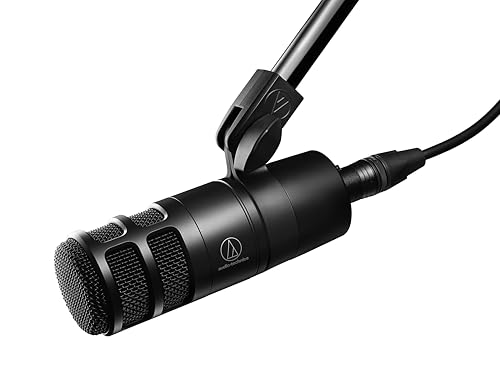
Best for Vocal Isolation – Audio-Technica AT2040
The Audio-Technica AT2040 is a focused dynamic microphone for streaming and podcasting, particularly useful in rooms where unwanted side and rear noise can be distracting. Its hypercardioid pattern, integrated shock mount, and multistage windscreen emphasize clean spoken-word capture.
Best For: Podcasters and streamers seeking strong vocal isolation and built-in protection against pops, vibration, and handling noise.
Pros:
- Hypercardioid pickup pattern reduces sound from the sides and rear.
- Large diaphragm delivers warm, assertive broadcast-style audio.
- Integrated shock mount helps reduce stand, boom, and vibration noise.
- Multistage foam mesh windscreen provides internal pop filtering.
Cons:
- Uses XLR connectivity, so an audio interface or mixer is required.
- Less convenient for users seeking direct USB connection.
The AT2040 is a practical choice when room-noise control matters more than plug-and-play simplicity. Its included mount, adapter, and pouch also make it a well-equipped dedicated vocal microphone.
Best Broadcast Value – RØDE PodMic
The RØDE PodMic is a dedicated XLR dynamic microphone for streaming, podcasting, and broadcast-style speech. Its tuned capsule, internal pop filter, shock mounting, and sturdy metal body make it suited to close-up voice work in untreated spaces.
Best For: Streamers and podcasters who already have an XLR interface, mixer, or RØDECaster and want a durable speech-focused microphone.
Pros:
- Broadcast-oriented dynamic capsule is tuned for spoken voice.
- Cardioid pickup helps reject room noise in untreated spaces.
- Internal pop protection and shock mounting reduce plosives and desk thumps.
- All-metal construction is designed for long-term use.
Cons:
- Requires an XLR interface or mixer and is not a USB microphone.
- Its 937-gram build may be substantial for some mounting setups.
The PodMic keeps the setup focused on essential broadcast performance rather than extra onboard controls. It is especially compelling for creators building around an existing XLR recording system.
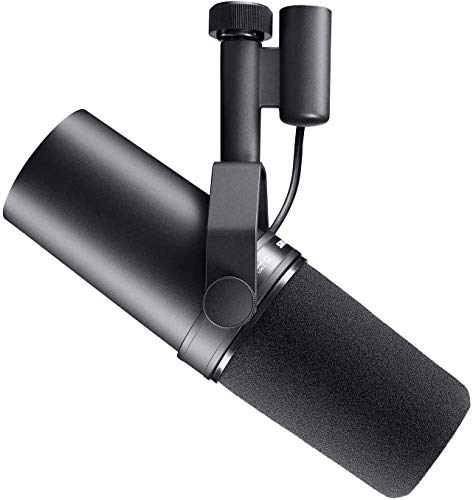
Best Professional Upgrade – Shure SM7B
The Shure SM7B is a professional XLR dynamic microphone for streaming, podcasting, voiceover, and vocal recording. It combines a warm, balanced sound with cardioid isolation, pop filtering, electromagnetic shielding, and a rugged metal design.
Best For: Experienced streamers, broadcasters, and vocal creators who want a studio-style microphone and already have suitable XLR gain.
Pros:
- Wide-range dynamic cartridge captures warm, balanced vocals.
- Cardioid pickup and air suspension help reduce room interference and vibration.
- Built-in pop filtering and included windscreens help control plosives and breath noise.
- Rugged metal construction and electromagnetic shielding support reliable use.
Cons:
- Requires an XLR interface or mixer.
- At least 60 dB of gain is recommended for its characteristic tone, which may require an external preamp.
- It does not include a USB connection.
The SM7B is a serious upgrade for creators who can support its gain requirements. Its refined vocal sound and isolation-focused design make it a strong long-term choice for professional streaming and broadcast work.
Best for Easy Setup – FIFINE AmpliTank K688
The FIFINE AmpliTank K688 is a flexible dynamic microphone for streaming, podcasting, and recording. Its USB and XLR outputs let you start with a direct computer connection and later pair it with a mixer or audio interface.
Best For: Streamers and creators who want both plug-and-play USB convenience and an upgrade path to XLR.
Pros:
- USB and XLR connectivity supports multiple recording setups.
- Cardioid pickup helps reduce computer-fan and hard-drive noise.
- USB controls include tap-to-mute, gain adjustment, headphone monitoring, and volume control.
- Included windscreen and shock mount help reduce plosives and desk vibration.
Cons:
- Arm stand, mic stand, and XLR cable are not included.
- Front-panel controls and monitoring features are available only over USB.
- It is intended for close-distance recording.
Choose the K688 if you value setup flexibility and hands-on controls. It is especially practical for users who may move from computer-based streaming to a more advanced XLR setup.
Best XLR Simplicity – Elgato Wave DX
The Elgato Wave DX is a straightforward XLR dynamic microphone for streaming and broadcast-style voice work. Its speech-optimized capsule, cardioid pattern, and room-noise rejection are designed to keep attention on your voice.
Best For: Streamers with an XLR preamp or audio interface who want a broadcast-ready microphone without needing a signal booster.
Pros:
- Speech-optimized capsule delivers detailed, warm, true-to-life sound.
- Works with any XLR preamp or audio interface without a signal booster.
- Room-noise rejection helps reduce unwanted background sound.
- Included swivel mount supports flexible positioning and includes thread adapters.
Cons:
- XLR connectivity requires a compatible preamp or audio interface.
- No USB output or onboard mute and volume controls are listed.
- A separate stand or boom arm may be needed for a complete setup.
The Wave DX makes sense when you already have an XLR workflow and prioritize clean, speech-focused capture. Its included swivel mount simplifies positioning, while the wide cardioid acceptance angle is forgiving if you shift slightly while speaking.
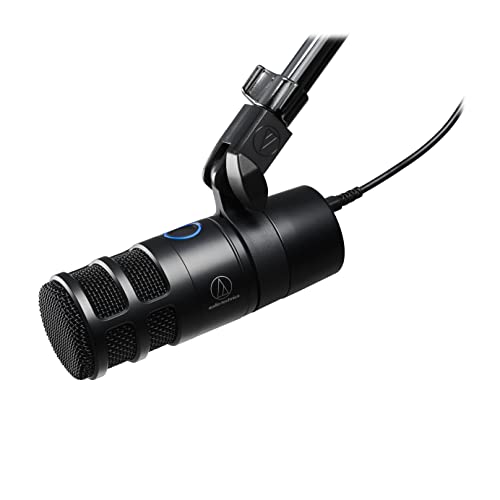
Best USB Monitoring – Audio-Technica AT2040USB
The Audio-Technica AT2040USB is a convenient dynamic microphone for streaming, podcasting, and content creation. Its plug-and-play USB connection, hypercardioid pickup, and built-in monitoring controls make it easy to focus on voice quality without extra interface hardware.
Best For: USB-first streamers and podcasters who want focused voice pickup, direct headphone monitoring, and simple mute control.
Pros:
- Plug-and-play USB operation suits streamers, podcasters, and creators.
- Hypercardioid pickup focuses on your voice and minimizes room noise and echo.
- Built-in headphone jack, high-output amplifier, and volume control support real-time monitoring.
- Soft-touch mute button and two-state LED ring provide clear mute feedback.
Cons:
- USB is the only listed connectivity option.
- The microphone does not offer an XLR upgrade path.
- Its focused pickup pattern may require more careful positioning.
The AT2040USB is a strong fit for creators who want a simple computer-based setup with useful monitoring features. Select it when USB convenience and voice isolation matter more than adding an XLR interface later.
Best All-Rounder – MAONO PD400X
The MAONO PD400X is a versatile dynamic microphone for streaming, podcasting, recording, and voice-over work. Its cardioid pickup pattern helps reduce unwanted room noise, while USB and XLR outputs let you start simply and upgrade to an audio interface later.
Best For: Streamers and creators who want software controls, headphone monitoring, and both USB and XLR connectivity.
Pros:
- Cardioid dynamic design helps reject background noise.
- USB plug-and-play operation plus XLR output for mixers and interfaces.
- MAONO Link offers EQ, limiter, compressor, gain, and monitor-mix controls in USB mode.
- Includes a desktop stand, wind foam, and both USB and XLR cables.
Cons:
- Advanced software controls require a USB connection.
- Its 40–16kHz frequency range may be less expansive than some studio microphones.
With tap-to-mute, a headphone jack, and a multifunction control knob, the PD400X combines useful streaming features with a flexible upgrade path. It is a practical choice for creators who want one microphone to cover several setups.
Best Premium Features – Shure MV7+
The Shure MV7+ is a premium dynamic microphone for streaming with USB-C and XLR connectivity. It adds Voice Isolation Technology, auto level adjustment, real-time denoising, and a customizable LED touch panel for creators who want more automated control over their audio setup.
Best For: Streamers, podcasters, and video creators who prioritize automated gain control, noise reduction, and polished monitoring features.
Pros:
- Auto Level Mode adjusts gain based on speaking distance and volume.
- Real-time denoising and Voice Isolation help keep vocals clear.
- USB-C and XLR outputs support computers, mobile devices, interfaces, and mixers.
- Full-color LED touch panel provides level monitoring and tap-to-mute control.
Cons:
- It is listed at 1.9 pounds, so a sturdy support may be useful.
- The supplied notes list a USB-C cable but do not mention an XLR cable.
The MV7+ is designed for creators who want a more guided recording experience. Its combination of automatic level management, denoising, USB-C convenience, and XLR flexibility makes it a strong fit for demanding streaming and podcast workflows.
Best Starter Kit – MAONO PD200XS RGB Kit
The MAONO PD200XS is a practical dynamic microphone for streaming that includes a boom arm, shock mount, RGB lighting, and USB/XLR connectivity. Its cardioid pickup pattern focuses on vocals, while MAONO Link software adds EQ, compression, limiter, and lighting controls when using USB mode.
Best For: Gamers and new streamers who want a complete desktop setup with a boom arm and customizable RGB lighting.
Pros:
- Includes an adjustable boom arm and shock mount.
- USB plug-and-play connection and XLR output support different setups.
- MAONO Link provides EQ, limiter, compressor, vocal-tone, and RGB controls in USB mode.
- Headphone jack, gain/volume knob, and one-click mute support live monitoring.
Cons:
- An XLR cable is not included.
- Software features are available only in USB mode.
- The supplied notes identify the kit as including a boom arm, but do not specify its adjustment range.
For a first streaming setup, the PD200XS offers more of the necessary hardware in one package than a microphone-only purchase. The included arm and USB controls make it especially convenient for gaming desks and beginner creator stations.
How We Picked the Best Dynamic Microphone for Streaming
We focused on microphones designed for close-range speech, gaming, podcasting, and live broadcast use. Key considerations included voice clarity, background-noise rejection, connection options, onboard controls, software support, mounting flexibility, and overall value. USB/XLR models received extra attention because they can work with a simple computer setup today and a more advanced audio interface later.
A dynamic microphone generally needs less gain than some condenser designs? Actually, many broadcast dynamics require substantial clean gain, so compatibility with an interface, mixer, or inline preamp also matters. We considered both easy plug-and-play microphones and models aimed at experienced creators.
Quick Comparison
| Best For | Recommended Type | Why It Stands Out |
|---|---|---|
| Simple streaming setup | USB dynamic microphone | Connects directly to a computer with minimal equipment |
| Flexible upgrades | USB/XLR microphone | Supports current and future recording setups |
| Professional broadcast sound | XLR dynamic microphone | Works with mixers and interfaces for greater control |
| Shared or untreated rooms | Directional dynamic microphone | Helps limit room noise and sound from the sides |
Key Buying Factors for a Dynamic Microphone for Streaming
USB, XLR, or Both
USB is the easiest choice for a solo streamer using a computer, console, or laptop. XLR requires an audio interface or mixer but can provide more routing, processing, and upgrade flexibility. A dual USB/XLR microphone is useful if you want simple setup now without closing the door to future equipment.
Polar Pattern and Noise Rejection
Most streaming dynamics use a cardioid or hypercardioid pattern. These designs prioritize sound from the front and reduce pickup from the rear or sides. They can help with keyboards, fans, and room reflections, but placement still matters: keep the microphone close, aim the rear or least-sensitive area toward the noise source, and use a boom arm when possible.
Gain, Controls, and Monitoring
Check whether your interface can provide enough clean gain, especially with broadcast-focused XLR models. Headphone monitoring, a mute button, gain controls, and software-based EQ can make live use easier. USB models with built-in headphone outputs are particularly convenient for monitoring without noticeable delay.
Size, Mounting, and Accessories
Confirm that the microphone fits your desk, boom arm, shock mount, and camera framing. Some kits include stands, pop filters, cables, or lighting, while others assume you already own compatible accessories. A sturdy mount and consistent speaking distance often improve results as much as changing microphones.
Who Should Buy Which Dynamic Microphone for Streaming?
For Beginners
Choose a USB model or a USB/XLR microphone with onboard controls. It will be faster to configure and easier to use for gaming, voice chat, and casual streaming.
For Growing Creators
A dual-connection microphone offers the best balance of convenience and longevity. Start over USB, then move to an interface or mixer when you need better monitoring, processing, or multiple microphones.
For Professional Podcasters and Streamers
Choose an XLR broadcast microphone when you already have suitable audio hardware and want a controlled, expandable signal chain. Prioritize reliable gain, consistent off-axis rejection, and comfortable positioning over extra RGB or software features.
For Noisy Rooms
Select a directional dynamic microphone and keep it close to your mouth. No microphone eliminates background noise on its own, so combine good placement with sensible gain levels, acoustic improvements, and software noise reduction when needed.