A portable DAC with battery can give headphones cleaner amplification, higher-resolution playback, and more flexibility than a phone or laptop alone. The right model depends on whether you prioritize Bluetooth, wired USB performance, balanced output power, or compact everyday use.
We selected 10 notable options across premium Bluetooth receivers, powerful DAC amplifiers, and portable listening upgrades so you can match features and spending to your setup.
Best 10 Portable Dac with Battery Picks for 2026
Best Magnetic Hi-Fi Pick

- 96g, 7.85mm slim design with AMOLED display
- Bluetooth 5.4 plus 3.5mm and 4.4mm outputs
- 2100mAh battery with up to 11 hours wireless playback
Best For: MagSafe-equipped iPhone users and mobile hi-fi listening
Best Power and EQ Control

- Up to 600mW balanced output power
- Dual CS43198 DAC chips and dual amplifiers
- Persistent 10-band parametric EQ
Best For: Demanding headphones and customized listening profiles
Best Lightweight Bluetooth Option

- Only 28.6g for easy everyday carry
- PC, Bluetooth, and phone mode switch
- LDAC support with 3.5mm and 4.4mm outputs
Best For: Commuters and users switching among multiple devices
Best Hi-Res Bluetooth Features

- Bluetooth 5.1 with LDAC and aptX Adaptive
- PCM 384kHz, native DSD256, and MQA support
- 3.5mm and 4.4mm outputs with built-in microphone
Best For: Hi-res Bluetooth and USB DAC listeners
High-Resolution Control

- Dual CS43198 DACs with PCM768 and DSD256 support
- 3.5mm and 4.4mm outputs with adjustable gain
- OLED display, physical controls, and power-saving mode
Best For: Listeners wanting flexible outputs and detailed on-device control
Wireless Flagship Power

- Bluetooth 5.4 with LDAC and aptX Lossless support
- Dual ES9069Q DACs and DSD512 decoding
- PC, Bluetooth, and phone modes with desktop power
Best For: Listeners needing wireless and wired flexibility in one device
Simple Balanced Portability

- 6–8 hours of rechargeable battery life
- 400mW amplifier output for varied headphones
- USB input with 3.5mm and 4.4mm outputs
Best For: Phone and computer listeners wanting simple wired performance
Best Ultra-Light Option
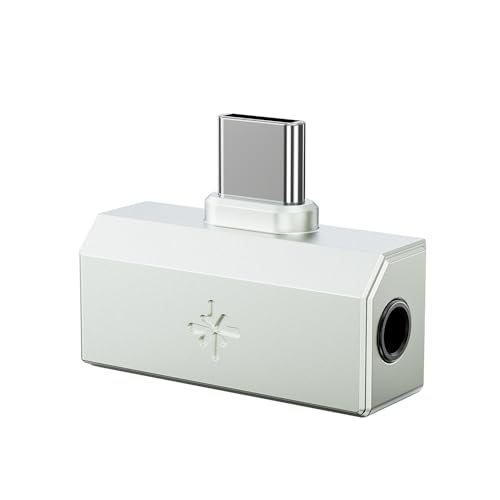
- 7g aluminum plug-in design
- PCM 384kHz/DSD256 support
- 10-band PEQ and simultaneous charging
Best For: Android listeners prioritizing minimal size and adjustable sound
Best for High-Resolution Power

- PCM 768kHz and DSD512 decoding
- 3.5mm and 4.4mm balanced outputs
- 32-band PEQ and spatial enhancement
Best For: Critical listening, gaming, and balanced headphone setups
Best Simple Dual-Output Pick

- PCM 384kHz and DSD256 support
- 3.5mm plus 4.4mm balanced outputs
- 60-step physical volume controls
Best For: Everyday mobile listening across phones, tablets, and computers
Best Magnetic Hi-Fi Pick – Khadas Tea Pro
The Khadas Tea Pro is a versatile portable DAC with battery for listeners who want wired and wireless playback in a slim, phone-friendly design. It combines a 2100mAh battery, Bluetooth 5.4, a display, and both 3.5mm and 4.4mm outputs in a 96g aluminum enclosure.
Best For: iPhone users, travelers, and listeners who want a lightweight MagSafe-compatible DAC amp with long playback time.
Pros:
- Supports wired and Bluetooth inputs with codecs including LDAC, aptX HD, and aptX Adaptive.
- Offers both 3.5mm single-ended and 4.4mm balanced outputs.
- Provides up to 11 hours of wireless playback and includes a 0.95-inch AMOLED display.
- MagSafe-compatible magnetic docking works with iPhone 12–17.
Cons:
- Battery life drops to up to 8 hours in wired use.
- The magnetic docking feature is most useful with compatible iPhones.
The Tea Pro stands out when portability and everyday convenience matter as much as audio specifications. Its display, dual outputs, broad device compatibility, and built-in battery make it a strong all-rounder for mobile listening.
Best Power and EQ Control – Protocol Max Portable DAC Amp
The Protocol Max is a portable DAC with battery built for listeners who want substantial headphone-driving power and detailed sound customization. Its dual CS43198 DACs, 600mW balanced output, persistent 10-band parametric EQ, and two power modes make it suited to demanding setups.
Best For: Headphone enthusiasts, professionals, and users who want adjustable EQ and high balanced output power.
Pros:
- Uses dual Cirrus Logic CS43198 DAC chips for high-resolution conversion.
- Delivers up to 600mW through the 4.4mm balanced connection.
- Includes a 10-band parametric EQ that can save profiles directly to the device.
- Provides both 3.5mm and 4.4mm outputs plus Eco and Boost power modes.
Cons:
- At 110g, it is heavier than the FiiO BTR13 in this roundup.
- Connectivity is USB-based rather than wireless Bluetooth.
- Battery runtime is not specified in the supplied product details.
The Protocol Max is the performance-focused choice here. Its powerful balanced output and persistent EQ are especially appealing if you use demanding headphones or want fine control over your sound profile, though it is less convenient for wireless listening.
Best Lightweight Bluetooth Option – FiiO BTR13
The FiiO BTR13 is a compact portable DAC with battery for listeners moving between phones, computers, and Bluetooth devices. Its PC/BT/PHONE switch, Bluetooth codec support, dual CS43131 DAC design, and 28.6g weight make it particularly convenient for daily carry.
Best For: Commuters and multi-device users who want a very light Bluetooth receiver with balanced output.
Pros:
- Three-position switch quickly selects PC, Bluetooth, or phone mode.
- Supports LDAC, aptX Adaptive, aptX HD, AAC, SBC, and other Bluetooth formats.
- Includes 3.5mm unbalanced and 4.4mm balanced outputs.
- Weighs just 28.6g and offers up to 220mW+220mW balanced output.
Cons:
- USB and Bluetooth playback are specified up to 96kHz, below some models in this roundup.
- Its 3.5mm jack is unbalanced, so balanced headphones require a 4.4mm connection.
- Battery runtime is not specified in the supplied details.
The BTR13 prioritizes convenience without giving up balanced output or useful EQ controls. It is a sensible pick when low weight, quick device switching, and Bluetooth flexibility are more important than the highest stated sample-rate support.
Best Hi-Res Bluetooth Features – FiiO BTR7
The FiiO BTR7 is a portable DAC with battery aimed at listeners who want high-resolution Bluetooth and USB playback in a compact receiver. It combines Bluetooth 5.1, dual ES9219C DAC architecture, dual headphone outputs, and support for PCM 384kHz, native DSD256, and MQA rendering.
Best For: Hi-res listeners who want broad codec support, balanced output, and Bluetooth calling capability.
Pros:
- Supports LDAC, aptX Adaptive, aptX HD, aptX LL, AAC, and SBC over Bluetooth.
- Offers both 3.5mm single-ended and 4.4mm balanced outputs.
- USB DAC mode supports PCM up to 384kHz, native DSD256, and MQA 8x rendering with a compatible player.
- Includes cVc 8.0 and a built-in microphone for Bluetooth calls.
Cons:
- Bluetooth version 5.1 is older than the Tea Pro’s Bluetooth 5.4.
- Battery runtime is not specified in the supplied product information.
- The supplied details do not list a screen or app-based EQ controls.
The BTR7 is a strong choice for users who prioritize format support and USB hi-res capability. Its dual outputs and calling features add flexibility, while the titanium build gives it a distinctive premium-oriented presentation.
High-Resolution Control – Shanling Onix Alpha XI1
The Shanling Onix Alpha XI1 is a versatile portable dac with battery for listeners who want high-resolution decoding, physical controls, and both single-ended and balanced headphone outputs. Its OLED display, configurable gain, and replaceable cable design make it practical for travel and use across phones, computers, and gaming devices.
Best For: Users who want detailed on-device controls, powerful balanced output, and broad device compatibility.
Pros:
- Dual CS43198 DAC chips support PCM up to 768kHz/32-bit and DSD256.
- 3.5mm single-ended and 4.4mm balanced outputs with two gain levels.
- OLED screen, ring LED, and physical buttons simplify status checks and settings.
- Power-saving technology is designed to reduce heat and battery drain.
Cons:
- Windows users may need to install the recommended official driver.
- The extensive settings and display may be more than casual listeners need.
With up to 500mW at 32 ohms through the balanced output, the XI1 offers substantial drive capability in a travel-friendly format. It is a strong choice when control and connection flexibility matter as much as decoding specifications.
Wireless Flagship Power – FiiO BTR17 Bluetooth DAC Amp
The FiiO BTR17 is a portable dac with battery built for flexible Bluetooth, USB DAC, and smartphone tail-DAC use. Bluetooth 5.4, LDAC, aptX Adaptive, dual DACs, and a high-power balanced output make it suitable for listeners moving between wireless listening and desktop-style setups.
Best For: Users who want one compact DAC amp for Bluetooth, computer, and phone-based listening.
Pros:
- Supports Bluetooth 5.4, LDAC, aptX Adaptive, and aptX Lossless specifications.
- Dual ES9069Q DACs support up to 768kHz/32-bit, DSD512, and full MQA decoding.
- Three-mode switch supports PC, Bluetooth, and phone operation.
- Up to 650mW output is available in desktop mode without drawing on the phone battery.
Cons:
- Its broad feature set may be excessive for users who only need a basic wired DAC.
- Desktop-mode power requires connection to a dedicated power input and adapter.
The BTR17 stands out for its connectivity and operating-mode flexibility. Its app- and web-adjustable 10-band PEQ adds useful tuning control, while desktop mode provides extra output power for demanding headphones.
Simple Balanced Portability – iFi hip-dac2 Gold Edition
The iFi hip-dac2 Gold Edition is a compact portable dac with battery for smartphone, tablet, and computer listening. Its 6–8-hour battery life, USB input, and choice of 3.5mm or 4.4mm headphone outputs make it a straightforward upgrade for portable high-resolution audio.
Best For: Listeners seeking a slim, rechargeable DAC amp with balanced output and simple USB connectivity.
Pros:
- Provides approximately 6–8 hours of battery life depending on use.
- Offers 400mW maximum amplifier power for in-ear monitors and over-ear headphones.
- Includes 3.5mm unbalanced and 4.4mm balanced headphone outputs.
- Supports high-resolution audio formats, including Tidal MQA.
Cons:
- USB input only, so it does not provide Bluetooth connectivity.
- Battery life is shorter than some larger portable or desktop-oriented options.
The hip-dac2 Gold Edition focuses on uncomplicated wired listening rather than extensive controls or wireless features. Its compact aluminum design and included connection cables make it an easy match for phones, tablets, PCs, and Macs.
Best Ultra-Light Option – FiiO/Snowsky Tiny A
If you want a portable DAC with battery-friendly charging flexibility, the FiiO/Snowsky Tiny A stands out for its 7g aluminum body and direct plug-in design. It supports high-resolution PCM and DSD playback while offering a 3.5mm headphone output and USB-C charging at the same time.
Best For: Android users who want an exceptionally small DAC with EQ customization and simultaneous playback and charging.
Pros:
- Extremely light 7g CNC-machined aluminum construction.
- Supports PCM 384kHz/32-bit and DSD256 decoding.
- Offers 10-band PEQ, preset switching, and volume controls through Android or PC web control.
- Allows playback and charging simultaneously through its dual-port design.
Cons:
- Its control app is supported on Android, not iOS.
- The direct plug-in design may not suit every phone or case setup.
The Tiny A is a strong pick when minimum weight and convenience matter most. Its Android-focused control system and compact form make it especially appealing for commuters and mobile listeners who want flexible sound tuning.
Best for High-Resolution Power – Fosi Audio DS3
The Fosi Audio DS3 is a portable DAC with battery-free operation that focuses on high-resolution decoding, strong balanced output, and detailed control. Its ES9039Q2M and XMOS architecture supports demanding formats, while the dual outputs work with phones, computers, PS5, and Switch.
Best For: Listeners who want advanced EQ, balanced headphone drive, and high-resolution playback without carrying a separate power source.
Pros:
- Supports PCM up to 32-bit/768kHz and native DSD512.
- Provides 3.5mm single-ended and 4.4mm balanced outputs, with up to 220mW at 32 ohms balanced.
- Includes 32-band hardware PEQ, eight digital filters, and web-based control.
- Works across phones, PCs, PS5, and Switch without an external power brick.
Cons:
- It has no built-in microphone.
- At 16g, it is heavier than the ultra-compact Tiny A.
The DS3 is aimed at users who value output capability and tuning depth over absolute simplicity. Its balanced connection and extensive control options make it a versatile choice for critical listening and gaming-related use.
Best Simple Dual-Output Pick – Fosi Audio DS2
The Fosi Audio DS2 is a practical portable DAC with battery-conscious operation for phones, tablets, and computers. It combines dual CS43131 chips with 3.5mm and 4.4mm outputs, independent volume buttons, and support for PCM 384kHz and DSD256 playback.
Best For: iPhone, iPad, and Android users who want an easy-to-use dongle with both single-ended and balanced headphone connections.
Pros:
- Supports PCM 32-bit/384kHz and DSD256 decoding.
- Includes 3.5mm and 4.4mm balanced outputs with up to 170mW at 32 ohms per channel.
- Independent 60-step volume buttons include volume memory.
- Compatible with mobile devices, computers, laptops, and Macs.
Cons:
- It is heavier than the Tiny A at 1.92 ounces.
- The supplied notes do not indicate a built-in battery or onboard EQ controls.
The DS2 is a straightforward option for buyers who want flexible headphone connectivity without complicated setup. Its dual outputs and physical volume controls make it particularly convenient for everyday mobile listening.
How We Picked the Best Portable Dac with Battery
We compared these portable DACs with battery by looking at connection options, codec support, output power, battery practicality, portability, and headphone compatibility. Models with Bluetooth were assessed for modern codecs such as LDAC and aptX, while wired units were considered for USB support, decoding capability, and ease of use. Balanced 4.4mm outputs, app-based equalization, displays, physical controls, and gain options were also weighed because they can make a meaningful difference in daily listening.
Specifications do not guarantee identical sound with every headphone. Sensitivity, impedance, cable type, source device, and software can all affect results, so treat maximum decoding rates and power figures as reference points rather than direct sound-quality rankings.
Quick Comparison
| Best For | Features to Prioritize | Likely Fit |
|---|---|---|
| Wireless phone listening | LDAC or aptX support, stable Bluetooth, long battery life | Bluetooth receiver models |
| Power-hungry headphones | High output power, gain control, balanced connection | Desktop-capable portable amplifiers |
| Compact everyday carry | Small chassis, simple controls, USB-C, efficient battery | Thin DAC amps and dongle-style options |
| Detailed wired playback | High-resolution USB decoding, low noise, reliable drivers | USB DAC and balanced-output models |
| Sound customization | Parametric or multi-band EQ, app support, saved profiles | PEQ-equipped devices |
Key Buying Factors for a Portable Dac with Battery
Connectivity and Source Compatibility
Bluetooth is useful when you want to keep a phone in your pocket, while USB is generally the better choice for a direct digital connection to a phone, tablet, or computer. Check whether the device supports your phone’s operating system, USB-C or Lightning requirements, and preferred wireless codecs.
Power and Outputs
A 3.5mm output handles most portable headphones and earphones. A 4.4mm balanced output can provide more power and channel separation, but it requires compatible wiring and does not automatically improve every headphone. Check output ratings at your headphones’ impedance rather than relying only on headline wattage.
Battery Life and Charging
Battery-powered designs reduce strain on a phone and can deliver more consistent amplification, but they need regular charging. Consider rated playback time, charging speed, pass-through behavior, and whether the unit can operate while connected to a computer or phone.
Controls, Size, and Software
Physical volume buttons, a screen, gain controls, and a dependable clip can improve usability. Equalization through an app or web interface is valuable if you want to correct headphone response or create listening profiles, but simpler hardware may be preferable for plug-and-play use.
Who Should Buy Which Portable Dac with Battery?
Choose a Bluetooth-focused model if your priority is convenient wireless listening from a phone. Pick a high-power balanced DAC amplifier for demanding over-ear headphones or for extra headroom. A compact USB option is usually best for commuters who mainly use wired earbuds and want minimal bulk. Listeners who like tailoring sound should favor a model with PEQ or app support, while desktop-and-mobile users should look for flexible USB operation, dependable battery behavior, and both 3.5mm and 4.4mm outputs.
Before buying, confirm the included cables, device support, output format, and headphone connector. Those practical details often matter more than the highest advertised sampling rate.