Traveling with a cello requires more than choosing the lightest option. Fit, padding, carrying comfort, and protection from weather and impact all affect how safely your instrument gets from one place to another.
This roundup compares 10 travel-focused cello cases and gig bags across full, 3/4, 1/2, and 1/4 sizes, helping students, performers, and commuters find a practical match for their instrument and routine.
Best 10 Cellos for Travel Picks for 2026
Best Budget Carry

- 20 mm foam padding
- Adjustable backpack straps
- Accessory and sheet-music pockets
Best For: Everyday 4/4 cello transport
Best for Daily Transit
Gator Lightweight 4/4 Cello Bag

- 3.3-pound lightweight design
- Backpack straps and reinforced handles
- Front bow storage and YKK zippers
Best For: Frequent 4/4 cello commuting
Best Weather-Resistant Pick

- 20 mm padding with soft lining
- Weather-resistant 1200D nylon
- Dedicated bow, sheet, and accessory pockets
Best For: Weather-aware 4/4 cello travel
Best for 1/2 Cellos

- Sized for 1/2 cello
- Thick structured padding
- Includes a soft bow case
Best For: Structured travel for 1/2 cellos
Best Overall Protection

- Fits most 4/4 classic and electric cellos
- Padded, reinforced, water-resistant construction
- Backpack straps and organized storage pockets
Best For: 4/4 players seeking balanced protection and portability
Best Lightweight 1/4 Option
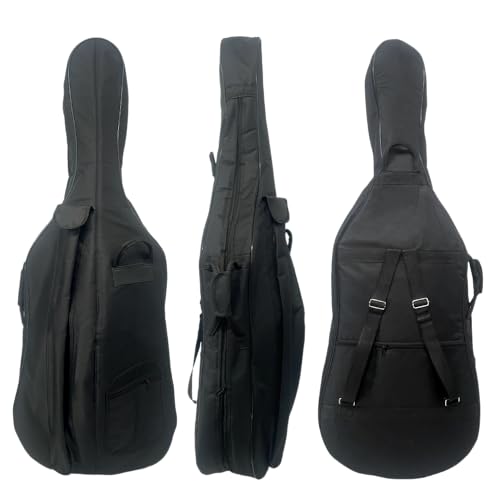
- Weighs around 2 pounds
- Foam padding with rainproof fabric
- Backpack straps, handle, and two compartments
Best For: 1/4 cello players needing a light travel bag
Best for Students

- Multi-layer padding and soft interior
- Padded backpack straps for hands-free carrying
- Multiple pockets plus water-resistant nylon
Best For: Students and 1/4-style players traveling to lessons
Best Lightweight 4/4 Pick
MIVI CB-5001 Full-Size Cello Travel Bag

- 12mm high-density foam padding
- Adjustable backpack straps and grab handles
- Bow, music-sheet, and accessory pockets
Best For: Full-size players seeking a lightweight padded bag for routine travel
Best 3/4 Travel Fit
MIVI CB-5001 3/4-Size Cello Gig Bag
- Sized for many 3/4 classic and electric cellos
- 12mm foam with non-abrasive lining
- Four-compartment storage layout
Best For: 3/4-size players transporting a cello to lessons or rehearsals
Best Compact Option
MIVI CB-5001 1/4-Size Cello Bag
- Lightweight 2.8-pound design
- 12mm padding and water-resistant nylon
- Bow pocket and front accessory compartment
Best For: 1/4-size players needing easy local transport
Best Budget Carry – Padded 4/4 Cello Gig Bag
For musicians comparing cellos for travel, this full-size gig bag offers practical protection and easy carrying at a manageable weight. Its 20 mm foam padding, nylon exterior, adjustable backpack straps, and multiple storage pockets suit routine transport.
Best For: 4/4 cello players who need an everyday soft case with backpack-style carrying and organized accessory storage.
Pros:
- 20 mm high-density foam padding helps protect the cello during transport.
- Adjustable backstraps and grab handles provide flexible carrying options.
- Front accessory and rear sheet-music pockets add useful storage.
- Protective feet and a nylon exterior support everyday use.
Cons:
- It is a soft gig bag rather than a rigid case.
- Designed for 4/4 cellos, so it is not suitable for smaller instruments.
With its combination of padding, backpack straps, and three compartments, this is a straightforward choice for short trips, lessons, rehearsals, and routine storage.
Best for Daily Transit – Gator Lightweight 4/4 Cello Bag
Gator Cases Lightweight Band and Orchestra Travel Bag for 4/4 Cello; (GBO-CELLO44)
Check Price On AmazonWhen choosing cellos for travel, the Gator GBO-CELLO44 focuses on lightweight daily handling and dependable bag construction. It combines a durable nylon exterior with backpack straps, reinforced handles, bow storage, and YKK zippers.
Best For: 4/4 cello players who regularly carry their instrument to lessons, rehearsals, or performances.
Pros:
- Lightweight design weighs 3.3 pounds.
- Backpack straps and reinforced handles support different carrying styles.
- Front bow storage keeps the bow conveniently with the instrument.
- Authentic YKK zippers and a 2-year warranty add practical reassurance.
Cons:
- The supplied notes do not specify a padding thickness.
- Its soft nylon shell may provide less structure than a rigid case.
This bag is a sensible daily-use option for full-size cello owners who prioritize portability, basic transit protection, and convenient bow access.
Best Weather-Resistant Pick – MIVI 4/4 Padded Cello Case
For cellos for travel in changing conditions, the MIVI CB-5005 adds weather-resistant materials to substantial everyday padding. The 20 mm padding, non-abrasive lining, adjustable backpack straps, and multiple pockets make it equipped for regular short-distance transport.
Best For: 4/4 players who want weather resistance, thick padding, and extensive organization in a soft cello case.
Pros:
- 20 mm padding and a non-abrasive lining help protect the instrument.
- Weather-resistant 1200D nylon supports travel in less predictable conditions.
- Adjustable backpack straps and multiple grab handles ease loading and carrying.
- Bow, music-sheet, and accessory pockets provide dedicated organization.
Cons:
- At 4.9 pounds, it is heavier than some lightweight gig bags.
- It is a soft case, not a rigid protective shell.
The MIVI stands out when padding, weather resistance, and storage matter more than minimizing case weight, particularly for short trips and daily musician use.
Best for 1/2 Cellos – Gator Allegro Pro Travel Bag
Gator Cases Allegro Series Pro Band and Orchestra Travel Bag for 1/2 Cello, (GOPB-CELLO12)
Check Price On AmazonFor players seeking cellos for travel in a smaller size, the Gator Allegro GOPB-CELLO12 is specifically designed for 1/2 cellos. Its premium 1680D nylon, thick padding, rigid protective structure, backpack straps, and included bow case make it suited to regular transit.
Best For: 1/2 cello owners who want a more structured soft travel bag with dedicated bow storage.
Pros:
- Designed specifically for 1/2-size cellos.
- Thick padding gives the bag a rigid and protective structure.
- Premium 1680D nylon and reinforced handles support daily use.
- Includes a soft bow case and backpack straps for convenient travel.
Cons:
- It weighs 6 pounds, making it the heaviest option in this selection.
- It is not intended for full-size 4/4 cellos.
- No wheels are included.
This is the targeted choice for smaller cello players who value structure and durable materials, provided the instrument matches the 1/2-size fit.
Best Overall Protection – Lightweight 4/4 Cello Gig Bag
For musicians comparing cellos for travel, this lightweight 4/4 gig bag combines padded protection, backpack-style carrying, and practical storage. Its water-resistant exterior and reinforced construction make it a versatile choice for daily travel and short trips.
Best For: 4/4 cello players who want broad compatibility, organized storage, and comfortable carrying.
Pros:
- Designed for most popular 4/4 classic and electric cellos.
- Thickened lining, reinforced edges, and velvet interior help protect against scratches and minor impacts.
- Adjustable backpack straps, handles, and multiple accessory pockets improve portability and organization.
- Water-resistant construction supports travel in light wet conditions.
Cons:
- At approximately 2.74 kg, it is heavier than some ultralight soft cases.
- The one-month manufacturer warranty is relatively limited.
This is a strong all-around option when protection, storage, and hands-free transport matter more than achieving the absolute lowest case weight.
Best Lightweight 1/4 Option – Black 1/4 Cello Soft Case
When choosing cellos for travel for a smaller instrument, this 1/4-size soft case keeps transport simple. It uses rainproof fabric, foam padding, backpack straps, and a compact pocket layout while weighing around 2 pounds.
Best For: 1/4 cello players who prioritize low weight and straightforward travel storage.
Pros:
- Lightweight design weighs approximately 2 pounds.
- Heavy-duty rainproof fabric and high-density foam padding provide everyday protection.
- Backpack straps and a top handle offer flexible carrying options.
- Dedicated pockets hold rosin, small personal items, and a bow.
Cons:
- Made specifically for 1/4-size cellos, limiting compatibility with larger instruments.
- Its two-compartment layout provides less storage than cases with several dedicated pockets.
This case is a practical budget-conscious travel solution for young players or anyone carrying a 1/4 cello who wants basic padding without much extra weight.
Best for Students – Padded 1/4 Cello Gig Bag
For students and traveling musicians searching for cellos for travel, this padded 1/4-style gig bag emphasizes comfortable carrying and organized accessory storage. Its water-resistant nylon exterior and multi-layer padding are suited to lessons, rehearsals, and everyday transport.
Best For: Students, teachers, and 1/4-style players who need hands-free carrying and space for essentials.
Pros:
- Multi-layer padding and a soft interior help protect against bumps and scratches.
- Adjustable padded backpack straps distribute weight for hands-free transport.
- Multiple interior and exterior pockets accommodate bows, rosin, sheet music, and accessories.
- Water-resistant nylon helps protect against light rain, spills, and dust.
Cons:
- The listing identifies the instrument size as 1/4 Style 1, so fit should be confirmed before purchase.
- Water resistance is intended for light exposure rather than heavy rain or full waterproofing.
With its student-friendly carrying design, useful pocket layout, and six-month warranty, this bag is a convenient choice for regular lessons and local performances.
Best Lightweight 4/4 Pick – MIVI CB-5001 Full-Size Cello Travel Bag
If you need a practical option among cellos for travel, this full-size MIVI gig bag combines 12mm high-density foam padding with a water-resistant 600D nylon exterior. Its backpack straps and storage pockets suit daily use and short-distance trips.
Best For: Full-size cello players who want lightweight carrying, basic padded protection, and organized accessory storage.
Pros:
- 12mm padding and a non-abrasive lining help protect the instrument during routine transport.
- Adjustable backpack straps and double-stitched grab handles offer flexible carrying options.
- Bow holder, rear music-sheet pocket, and front accessory compartment keep essentials together.
- Weighs 3.6 pounds and is designed to fit many 4/4 classic and electric cellos.
Cons:
- Soft-case construction is intended for daily use and short-distance travel rather than maximum hard-case protection.
- The full-size dimensions may be less convenient in tight storage spaces.
This is a sensible travel bag when portability and useful storage matter more than heavy-duty case construction. Confirm your cello’s fit before ordering.
Best 3/4 Travel Fit – MIVI CB-5001 3/4-Size Cello Gig Bag
For players comparing cellos for travel in a smaller size, this 3/4 MIVI soft case offers 12mm padding, water-resistant nylon, and adjustable backpack straps. The pocket layout is useful for carrying music and small accessories alongside the instrument.
Best For: 3/4-size cello owners who need a lightweight bag for lessons, rehearsals, and short-distance transport.
Pros:
- Designed for many 3/4 classic and electric cellos.
- 12mm high-density foam and a non-abrasive interior lining provide padded coverage.
- Adjustable backpack straps, leather handle, and double-stitched grab handles support easier carrying.
- Includes a bow pocket, music-sheet storage, and a small front accessory compartment.
Cons:
- As a soft gig bag, it is positioned for daily use and short-distance travel.
- At 3.4 pounds, it is lightweight but still requires careful handling around impacts.
This model is a well-matched choice when accurate 3/4 sizing and convenient carrying are priorities. Check the listed dimensions against your instrument before purchase.
Best Compact Option – MIVI CB-5001 1/4-Size Cello Bag
Among cellos for travel, this 1/4-size MIVI bag stands out for its compact dimensions and 2.8-pound weight. It adds 12mm padding, water-resistant nylon, backpack straps, and dedicated pockets for a bow and small essentials.
Best For: 1/4-size cello players who want a light, padded bag for routine local transport.
Pros:
- Made to fit many 1/4-sized classic and electric cellos.
- Lightweight 2.8-pound design is easy to carry.
- Adjustable backpack straps and leather handle offer multiple carrying options.
- Front bow pocket and accessory compartment help organize small necessities.
Cons:
- The soft-case format is intended for daily use and short-distance travel.
- Its smaller size is suitable only for compatible 1/4-size instruments.
This compact bag makes sense for young players or smaller instruments where manageable weight and simple organization are especially useful. Verify the fit and dimensions before ordering.
How We Picked These Cellos for Travel
We focused on travel-ready cases and gig bags selected for portability, protective construction, and everyday convenience. Key details included cello size compatibility, foam thickness, exterior materials, backpack straps, handles, accessory pockets, and water-resistant features where listed. Because a case cannot protect an instrument that does not fit correctly, size compatibility received priority over extra storage or styling.
These products cover several use cases, from lightweight soft bags for lessons and local rehearsals to more padded designs intended for frequent transport. Always confirm the measurements and size designation against your cello before ordering.
Quick Comparison
| What to Compare | Best For | Why It Matters |
|---|---|---|
| 4/4 size | Most adult full-size cellos | Offers the broadest compatibility, but requires a larger bag. |
| 3/4, 1/2, or 1/4 size | Smaller instruments and young players | Improves fit and reduces unnecessary bulk. |
| 20mm padding | Higher everyday protection | Provides more cushioning than thinner soft-case designs. |
| 12mm padding | Lightweight commuting | Can reduce carrying weight, but offers less impact protection. |
| Backpack straps and pockets | Lessons, rehearsals, and public transit | Makes hands-free carrying and accessory storage easier. |
Key Buying Factors for Cellos for Travel
Fit and Instrument Size
Choose the exact size category whenever possible. A loose cello can shift inside a bag, while an undersized case may stress the instrument or fail to close properly. Check the product dimensions, not only labels such as “full size” or “4/4.”
Padding and Structure
Thicker foam generally offers better protection against minor knocks, but soft gig bags remain less protective than rigid cases. For air travel, cargo transport, or frequent exposure to hard impacts, look for reinforced construction and verify airline requirements rather than relying on a basic padded bag.
Carrying Comfort
Adjustable backpack straps are useful for stairs, walking, and transit. Padded straps, balanced weight distribution, and sturdy top or side handles can make a noticeable difference during longer trips.
Weather and Storage
Water-resistant fabric can help with brief exposure to rain, but it is not a guarantee of waterproof protection. Multiple pockets are convenient for rosin, sheet music, tuners, and small accessories; avoid overloading them if doing so strains the zipper or case seams.
Who Should Buy Which Cellos for Travel?
Full-size players should begin with a 4/4 model and choose thicker padding if the cello travels often. Students using smaller instruments should select the matching 3/4, 1/2, or 1/4 option instead of buying a larger bag and relying on extra padding. Commuters and lesson-goers may prefer a lightweight design with backpack straps and several pockets, while frequent travelers should prioritize the strongest padding, reliable handles, and weather-resistant materials available within their budget.