Choosing your first flute can feel complicated when similar-looking instruments vary in key design, construction, accessories, and intended use. The right choice should be comfortable to hold, easy to maintain, and suitable for your learning goals.
We compared 10 flutes for beginners, including closed-hole student models, open-hole options for progressing players, and a traditional Chinese dizi. Use the guide below to narrow the list by skill level, budget, and included equipment.
Best 10 Flutes for Beginners Picks for 2026
Best Budget Starter

- Complete 16-key C flute outfit
- Beginner-friendly closed-hole keys
- Includes case and care accessories
Best For: New players seeking an affordable, ready-to-use starter flute
Best Traditional Option
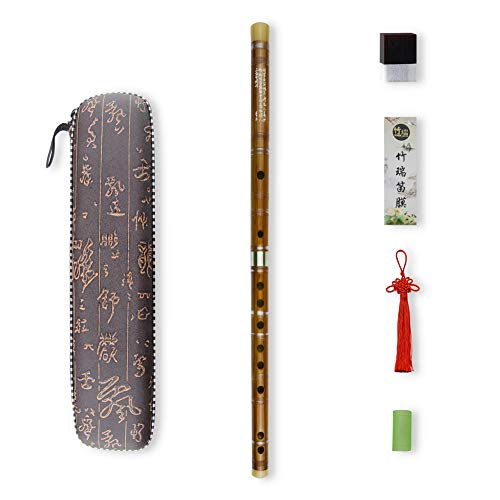
- Traditional C-key Chinese dizi
- Includes membrane and glue supplies
- Lightweight bamboo construction
Best For: Beginners exploring traditional Chinese flute music
Best Giftable Design
Rhythm Engraved-Flower C Flute

- Decorative engraved-flower finish
- Closed-hole 16-key student design
- Includes stand, case, and cleaning kit
Best For: Beginners or gift recipients who value appearance and accessories
Best Setup Support
Jean Paul FL-220 Student Flute
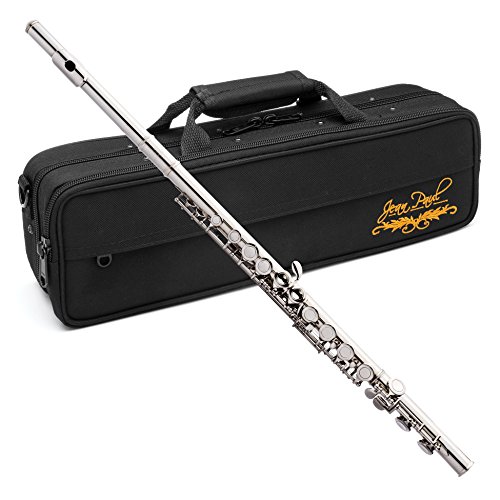
- Play-tested by certified technicians
- Closed-hole keys with offset G
- Includes split E and one-year warranty
Best For: Beginners prioritizing comfortable playability and setup confidence
Best Value Starter
Eastar EFL-1 Closed-Hole C Flute
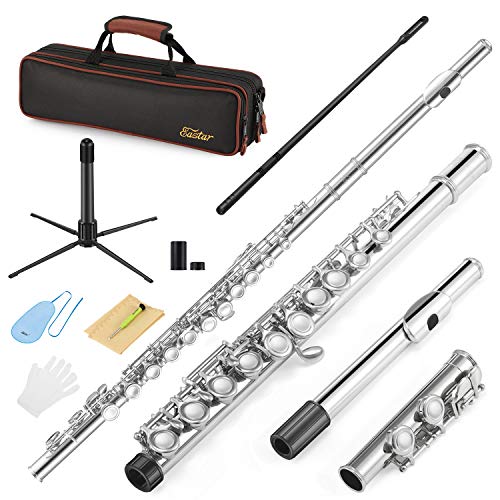
- Beginner-friendly beveled embouchure
- Offset G and split E keys
- Complete kit with 12-month warranty
Best For: New students wanting a complete practice setup
Budget-Friendly Classic

- 16-key closed-hole C flute
- Offset G and split E keys
- Includes stand and instructional pocketbook
Best For: Budget-conscious beginner students
Open-Hole Progression Pick
Eastar EFL-2 Open-Hole C Flute

- 16-key open-hole C flute
- Bright, clear sound profile
- Full accessory kit and 12-month warranty
Best For: Developing students who prefer an open-hole format
Best Value Student Flute

- 16-key closed-hole design for beginners
- Clear, focused tone with beveled embouchure
- Includes case and cleaning accessories
Best For: Students and beginners wanting an affordable starter flute
Best Beginner-Friendly Design

- Standard 16-key layout with offset G
- Double-bladder pads support airtight playing
- Includes case, stand, and cleaning kit
Best For: Kids and students starting lessons or school band
Best Upgrade Path

- Nickel and silver-plated options
- Beginner-friendly closed-hole key design
- Includes cleaning and tuning accessories
Best For: Beginners planning for future intermediate or concert use
Best Budget Starter – Glory Closed-Hole C Flute
Glory Closed Hole C Flute With Case, Tuning Rod,Joint Grease and Cloth, Gloves, Nickel Silver
Check Price On AmazonFor shoppers comparing flutes for beginners, the Glory Closed Hole C Flute is a complete, budget-friendly student outfit. Its closed-hole layout, protective case, and included care accessories make it practical for starting lessons or school band.
Best For: New players who want a ready-to-use C flute package with beginner-friendly features.
Pros:
- Includes a hard-shell case, tuning rod, cork grease, cleaning cloth, and gloves.
- Closed-hole design is easier for beginners to cover than open-hole keys.
- Cupronickel construction is durable and tarnish-resistant.
- Airtight leather pads support responsive low notes and easy playability.
Cons:
- The supplied notes do not specify a manufacturer warranty.
- Its polished nickel-silver finish may appeal less to shoppers seeking a different look.
This is a sensible entry-level choice when value and included essentials matter most. The closed-hole design should help beginners build confidence while they learn core fingerings.
Best Traditional Option – C Key Bitter Bamboo Dizi
Among flutes for beginners, this C-key dizi stands out as a traditional Chinese bamboo instrument rather than a standard Western concert flute. It includes the membrane, glue, protector, box, and velvet bag needed to explore its distinctive playing style.
Best For: Beginners interested in learning traditional Chinese dizi music and caring for a bamboo instrument.
Pros:
- Made from bitter bamboo that was dried and selected for a fine, straight pattern.
- Includes professional-level dizi membrane, membrane protector, and gelatin glue.
- Comes with a professional dizi box, velvet bag, and decorative red Chinese knot.
- Lightweight at 90 g and approximately 26 inches long.
Cons:
- This is a dizi, so its membrane-based design differs from a standard concert flute.
- Beginners must learn membrane setup and maintenance in addition to playing technique.
- The supplied notes do not mention a warranty.
This is a focused choice for someone specifically drawn to the dizi tradition. Its accessory bundle reduces the need to purchase the essential membrane supplies separately.
Best Giftable Design – Rhythm Engraved-Flower C Flute
This Rhythm C flute combines a beginner-friendly closed-hole layout with an engraved-flower design. For shoppers seeking flutes for beginners, the package adds a foldable stand, case, gloves, and maintenance supplies for a convenient start.
Best For: Students or gift recipients who want a decorative closed-hole flute with a broad accessory bundle.
Pros:
- Closed-hole 16-key configuration is suited to beginners.
- Engraved flowers provide a distinctive, elegant appearance.
- Includes a foldable stand, lightweight hard case, cleaning kit, rod, grease, and cloth.
- White gloves are included for handling and presentation.
Cons:
- The painted finish may not suit players who prefer a plain silver appearance.
- The supplied warranty information is limited to a 30-day return period.
- At 1.12 kg, it is not the lightest option in this selection.
The Rhythm is appealing when presentation and included extras are priorities. Its closed-hole design keeps it approachable for beginners, while the stand and decorative finish make it especially gift-friendly.
Best Setup Support – Jean Paul FL-220 Student Flute
The Jean Paul FL-220 is a strong consideration for flutes for beginners who want a conventional student instrument with setup support. Its closed-hole keys, offset G system, split E mechanism, and play-testing by certified technicians focus on comfortable, reliable learning.
Best For: Beginners who want a play-tested student flute with ergonomic features and warranty coverage.
Pros:
- Closed-hole design helps new players learn fundamental fingerings.
- Offset G key supports better hand alignment and comfort.
- Split E mechanism simplifies the third-octave E note.
- Play-tested by NAPBIRT-certified technicians and backed by a one-year warranty.
Cons:
- The supplied notes list only a case as an included component, with no cleaning accessories specified.
- It may offer fewer bundled extras than the larger beginner kits in this roundup.
The FL-220 is the most support-oriented option here, pairing beginner-friendly keywork with professional setup and a stated warranty. It is a practical pick for students prioritizing playability over a large accessory bundle.
Best Value Starter – Eastar EFL-1 Closed-Hole C Flute
For shoppers comparing flutes for beginners, the Eastar EFL-1 is a practical closed-hole C flute with an undercut beveled embouchure designed for quick air response. Its offset G and split E keys support comfortable handling, while the included case, stand, cleaning kit, and gloves make it ready for regular practice.
Best For: New students who want a complete, easy-to-maintain starter kit.
Pros:
- Closed-hole design and beveled embouchure can make producing clear tones more approachable.
- Cupronickel body, waterproof leather pads, and memory springs are built for daily use.
- Includes a hard case, foldable stand, cleaning kit, gloves, and a 12-month warranty.
Cons:
- The nickel finish requires regular cleaning to maintain its polished appearance.
- Its 16-key configuration is aimed at beginner and student use rather than advanced customization.
Overall, the EFL-1 offers a sensible combination of beginner-friendly playability, student-oriented ergonomics, and useful accessories in one package.
Budget-Friendly Classic – Cecilio Closed-Hole C Flute
The Cecilio closed-hole C flute is a cost-conscious option for flutes for beginners, with a 16-key layout, offset G and split E keys, and an undercut beveled embouchure. It also includes the core accessories a student needs to begin learning and caring for the instrument.
Best For: Students and families seeking an affordable introductory flute package.
Pros:
- Closed-hole design and beveled embouchure suit beginning players.
- Double-bladder pads and a polished nickel/silver-plated finish provide a student-focused build.
- Package includes a case, stand, joint grease, cleaning supplies, gloves, and an instructional pocketbook.
Cons:
- At 1.04 kg, it is heavier than the lighter Eastar EFL-1 listed here.
- The supplied notes do not specify a warranty period.
This Cecilio is a straightforward entry-level choice, particularly for beginners who value a broad accessory bundle and an affordable path into band or orchestra playing.
Open-Hole Progression Pick – Eastar EFL-2 Open-Hole C Flute
For flutes for beginners who may want an open-hole instrument, the Eastar EFL-2 combines a 16-key C-flute design with an undercut beveled embouchure and comfortable double-bladder pads. Its offset G and split E keys are intended to support accurate tone and comfortable practice, and the full kit covers basic maintenance needs.
Best For: Beginners or developing students interested in starting with an open-hole C flute.
Pros:
- Open-hole design offers a progression-oriented alternative to closed-hole student flutes.
- Cupronickel construction, waterproof leather pads, and memory springs support reliable daily use.
- Includes a hard case, stand, cleaning kit, adjustment screws, gloves, and a 12-month warranty.
Cons:
- Open-hole keys may require more precise finger placement from a first-time player.
- The 1 kg weight may feel substantial for younger students.
The EFL-2 stands out for buyers who want the included value of a beginner kit while choosing an open-hole format with room to develop playing technique.
Best Value Student Flute – POGOLAB Closed-Hole C Flute
If you’re comparing flutes for beginners, the POGOLAB Closed Hole C Flute offers a practical starter setup with 16 keys, a nickel-plated body, and accessories for maintenance and transport. Its beveled embouchure hole is designed to make producing a clear, focused sound easier for new players.
Best For: Students and beginners seeking an affordable, durable C flute with a complete starter kit.
Pros:
- Closed-hole 16-key design supports beginner-friendly finger positioning.
- Beveled embouchure hole helps produce a clear, smooth tone.
- Includes a case, cleaning kit, strap, probe rod, and gloves.
- Adjustment screws and anti-oxidation treatment support long-term use.
Cons:
- Nickel-plated construction is aimed more at value than premium resonance.
- Its included accessories may be more than some players need.
With its accessible design, sturdy finish, and useful accessories, this POGOLAB model is a well-rounded entry point for practicing at home or preparing for school band.
Best Beginner-Friendly Design – EastRock Closed-Hole C Flute
Among flutes for beginners, the EastRock Closed Hole C Flute stands out for combining a conventional 16-key layout with beginner-oriented playability. Its nickel-plated cupronickel body, closed-hole keys, case, stand, and cleaning kit make it suitable for lessons and regular practice.
Best For: Kids, students, and new players who want a complete C flute package with a comfortable key layout.
Pros:
- Standard 16 closed-hole keys are approachable for beginners.
- Offset G and split E key provide familiar student-flute features.
- Double-bladder pads are designed to improve airtightness and reduce leakage.
- Includes a case, stand, and cleaning kit.
Cons:
- The approximately 1 kg weight may feel substantial for younger players.
- Its nickel-plated metal construction is positioned as a student-level option rather than a premium instrument.
The ergonomic key placement and included stand make this EastRock a convenient choice for beginners who need an instrument package ready for lessons, storage, and daily practice.
Best Upgrade Path – C 16-Key Closed-Hole Flute
For shoppers comparing flutes for beginners with future progression in mind, this C 16-Key Closed-Hole Flute offers nickel-plated and silver-plated versions. The nickel model is positioned for beginners and students, while the silver-plated option provides a warmer, richer sound for more advanced playing.
Best For: Beginners who want an entry-level flute with an available upgrade option for intermediate or concert use.
Pros:
- Closed-hole 16-key design is easier for beginner finger placement.
- Nickel-plated version offers a durable, bright-toned entry option.
- Includes a case, cleaning rod and cloth, gloves, and tuning rod.
- Factory pre-tuned with pitch calibration and hand-assembly inspection.
Cons:
- The richer silver-plated option costs more than the beginner nickel version.
- Players must choose the finish that best matches their skill level and budget.
This model is appealing if you want a beginner-friendly instrument today but value a clear route toward a warmer, more performance-oriented finish later.
How We Picked the Best Flutes for Beginners
We focused on the features that matter most to new players: beginner-friendly fingering systems, practical construction, included maintenance supplies, portability, and overall value. Most selections are C flutes with 16 keys, a common format for students learning Western band or orchestra repertoire.
We also considered whether each instrument includes useful extras such as a case, cleaning rod, cloth, gloves, grease, stand, or tuning accessories. These additions can reduce the cost of getting started, although they should not outweigh the instrument’s basic playability and build quality.
Quick Comparison
| Type | Best For | What to Look For |
|---|---|---|
| Closed-hole C flute | Most first-time students | Comfortable keys, secure pads, durable finish |
| Open-hole C flute | Developing or advancing players | Removable plugs, accurate key alignment, good setup |
| Student full kit | Budget-conscious beginners | Case, cleaning tools, grease, and replacement supplies |
| Dizi | Traditional Chinese music learners | Correct key, membrane, glue, and protective accessories |
Key Buying Factors for Flutes for Beginners
Closed Hole or Open Hole
Closed-hole flutes are usually the simplest starting point because the fingers cover solid key cups directly. Open-hole models can support more advanced techniques and may offer a more traditional professional-style layout, but beginners often need time to develop accurate finger placement. Removable plugs can make an open-hole flute more approachable.
Material and Plating
Nickel-silver and silver-plated student flutes are common because they offer a balance of durability, appearance, and affordability. Plating does not automatically determine sound quality, so pay attention to key response, pad sealing, and quality control as well.
Included Accessories
A case protects the flute during storage and transport, while a cleaning rod and cloth help remove moisture after playing. Joint grease can make assembly smoother. Treat stands, gloves, and tuning tools as useful bonuses rather than substitutes for a well-fitted instrument.
Fit, Setup, and Support
New players benefit from an instrument that assembles smoothly and has keys that move cleanly. If possible, buy from a seller with a clear return policy or access to musical-instrument support. A teacher or repair technician can also check alignment and pad leaks.
Who Should Buy Which Flutes for Beginners?
Choose a closed-hole C flute if you are starting band or orchestra lessons and want the most straightforward learning path. A full kit is especially practical for students who need a case and basic care supplies immediately. Consider an open-hole model if a teacher recommends it or you expect to continue into more advanced playing.
Parents shopping for a young beginner should prioritize manageable weight, reliable key action, and a protective case over decorative extras. Players specifically interested in traditional Chinese music should choose the C-key dizi instead of a Western concert flute and confirm that the membrane accessories are included.
Finally, remember that inexpensive beginner instruments can vary in setup quality. Inspect the flute when it arrives, test that the keys close fully, and use the return window if the instrument is difficult to assemble or leaks air despite correct technique.