A kalimba can give children a simple, rewarding introduction to music. Its soft tones, compact size, and straightforward playing style make it approachable for beginners while still leaving room to learn melodies and rhythms.
This roundup compares 10 child-friendly options, from small 8- and 9-key instruments to full 17-key models with accessories. Use the guide below to match the kalimba’s size, materials, tuning, and extras to the child who will play it.
Best 10 Kalimbas for Children Picks for 2026
Best Overall

- 17 embossed note-marked keys
- Ergonomic hand-rest curve
- Includes book, bag, and cloth
Best For: Growing beginners wanting a versatile 17-key instrument
Best for Young Kids

- Designed for ages 4 and up
- Simple eight-key layout
- Colorful animal-themed design
Best For: Young children exploring rhythm and music through play
Best Portable Pick

- Compact solid beech wood body
- Pre-tuned clear, bright tone
- Includes lanyard and song book
Best For: Beginners needing a lightweight kalimba for travel
Best Gift Set

- Warm mahogany sound profile
- Complete accessory bundle
- Gift box and one-year warranty
Best For: Beginners receiving a comprehensive, gift-ready instrument
Small Starter Pick

- Compact 8-key design
- Solid wood with metal keys
- Includes case and lanyard
Best For: Young beginners who value portability
Most Complete Learning Set

- 17-key playing range
- Mahogany wood construction
- Includes learning and care accessories
Best For: Beginners ready to learn more songs
Best Pocket-Sized Gift

- Palm-size solid-wood body
- Lightweight 80-gram design
- Includes a lanyard
Best For: Casual play and compact gifting
Crystal-Star Pick
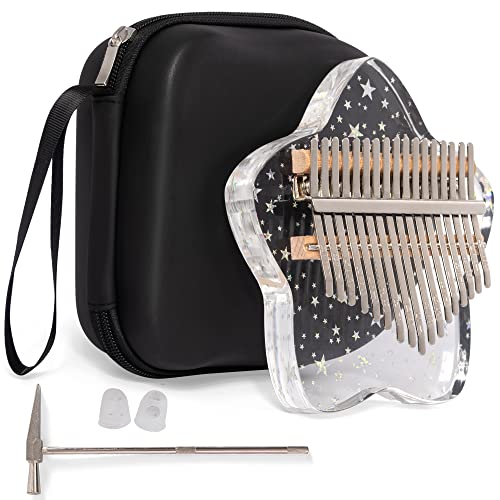
- 17-key acrylic body with a distinctive star design
- Standard C tuning and marked tines support beginners
- Includes case, hammer, covers, stickers, and instructions
Best For: Children or beginners seeking a colorful, gift-ready starter kalimba
Natural Wood Pick

- Solid wood body with crisp, balanced sound
- Embossed note markings resist peeling
- Curved hand rest and lightweight portable design
Best For: Children and beginners who prefer a traditional wooden instrument
Red Starter Pick

- Red 17-key design with embossed notes
- Ergonomic curve supports comfortable playing
- Includes tuning hammer, guide, bag, clips, and cleaning cloth
Best For: Young beginners and gift buyers wanting a colorful, well-equipped set
Best Overall – Newlam 17-Key Kalimba
For shoppers comparing kalimbas for children, the Newlam 17-key model offers a full-sized layout with embossed note letters and a beginner-friendly design. Its natural air-dried wood body, included instruction book, and compact size make it suitable for learning at home or taking along.
Best For: Children and adults who want a versatile beginner kalimba with clearly marked keys.
Pros:
- 17 embossed keys show letters and notes without relying on stickers.
- Ergonomic hand-rest curve is designed for comfortable positioning.
- Includes an instruction book, flannelette bag, and cleaning fabric.
- Wood body produces an ethereal sound profile.
Cons:
- The 17-key layout may be more than very young beginners need.
- The notes do not specify a dedicated child-safe age rating.
This is a well-rounded choice when you want a traditional 17-key instrument that can grow with a learner. The 180-day warranty adds useful purchase support.
Best for Young Kids – DJECO Animambo Kids Kalimba
Among kalimbas for children, the DJECO Animambo stands out as an educational toy aimed at ages 4 and up. Its colorful animal design and eight-key layout keep the instrument approachable while encouraging rhythm, coordination, listening, and creativity.
Best For: Young children beginning musical exploration through a simple, visually engaging instrument.
Pros:
- Recommended for children ages 4 and up.
- Eight-key format offers a simple starting point.
- Animal illustrations and bright colors appeal to young players.
- Supports motor skills, timing, sequencing, and imagination.
Cons:
- Eight keys provide less range than a 17-key kalimba.
- It is positioned as a toy rather than a full-size performance instrument.
- The supplied notes do not list a manufacturer warranty.
Choose this model when age-appropriate design and educational play matter more than an expanded note range. It is particularly suited to a child’s first hands-on introduction to making music.
Best Portable Pick – rayzm Mini 9-Key Kalimba
For families seeking portable kalimbas for children, the rayzm Mini uses a compact nine-key layout that is easy to carry and straightforward to learn. The solid beech wood body comes pre-tuned, and its naturally soft volume suits quiet practice, travel, or bedside playing.
Best For: Beginners who want a small, lightweight kalimba for travel, gentle practice, and simple melodies.
Pros:
- Compact 3.54-by-2.76-by-1.38-inch design weighs 0.22 pounds.
- Pre-tuned F-key layout provides clear, bright notes.
- Includes a lanyard and song book for portable use.
- Nine keys are described as intuitive for beginners.
Cons:
- The nine-key range is more limited than a 17-key model.
- Its soft volume may not suit players seeking a louder sound.
- The small size may be less comfortable for some larger hands.
This is the most convenient option for taking music on the go. Its low weight, lanyard hole, and gentle volume make it practical for quiet practice without sacrificing a clear tone.
Best Gift Set – 17-Key Mahogany Kalimba
This 17-key mahogany model is a strong gift option among kalimbas for children, especially for learners who will benefit from a complete accessory bundle. Its warm sound, instruction booklet, and included tuning and care tools provide a useful starting setup for home, school, or outdoor playing.
Best For: Older children, families, and beginners who want a gift-ready 17-key set with useful accessories.
Pros:
- Mahogany body and ore steel bars are designed for warm, resonant sound.
- 17-key layout supports a broader range of melodies.
- Includes a gift box, instructions, cloth bag, tuning hammer, stickers, and cleaning cloth.
- One-year warranty is listed in the product details.
Cons:
- At 437 g, it is heavier than the mini kalimba option.
- The 17-key layout may require more initial guidance for younger players.
- Finger protectors and tuning tools may be unnecessary for casual toy use.
This set makes sense when presentation and included extras are priorities. The warm mahogany tone and full key count also give a motivated beginner room to continue developing.
Small Starter Pick – Uenhoy Mini Wood Kalimba
For families comparing kalimbas for children, this compact 8-key model is a straightforward starter instrument. Its polished solid-wood body, metal keys, and 80-gram weight make it easy to hold, carry, and explore.
Best For: Young beginners who want a small, portable kalimba for casual play, school, travel, or gifting.
Pros:
- Lightweight, palm-friendly design with an included case
- Polished solid-wood body and metal keys
- Includes a lanyard for carrying or display
- Portable size suits backpacks, school bags, and outdoor use
Cons:
- Only 8 keys, offering less range than a standard 17-key model
- The supplied notes do not mention included song materials or tuning accessories
This is a practical choice when portability and simplicity matter more than playing a wider range of songs. Its compact design may be especially approachable for a child’s first introduction to thumb piano playing.
Most Complete Learning Set – 17-Key Mahogany Kalimba
This 17-key mahogany kalimba is a strong option for children and adult beginners who want more notes and useful learning accessories. The hand-finished instrument is designed to produce a sweet, clear sound and comes in a gift-ready package.
Best For: Beginners who want a fuller keyboard range and an accessory bundle for learning songs.
Pros:
- 17 keys provide more range than mini 8-key models
- Mahogany wood body with mineral rebar construction
- Includes a flannelette bag, instruction book, music score, hammer, finger cot, and stickers
- Supplied materials are intended to make learning more accessible without prior music experience
Cons:
- At 300 grams, it is heavier than the listed mini kalimbas
- Its 7.1-inch length may be less convenient for very small hands
For buyers seeking kalimbas for children that can support continued practice, this model offers the most extensive key range and accessory package in the group. It is less compact, but the included learning tools may help a beginner get started.
Best Pocket-Sized Gift – Mini 8-Key Kalimba
When shopping for kalimbas for children, this 8-key mini model stands out for its palm-size body and simple controls. The polished solid-wood design weighs 80 grams and includes a lanyard, making it easy to carry or give as a small gift.
Best For: Children, casual players, and gift buyers looking for an especially compact beginner instrument.
Pros:
- Ultra-small 2.8-by-2-by-1-inch design is easy to hold
- Polished surface and rounded edges are designed for comfortable handling
- Includes a lanyard for wearing or attaching to a key chain
- Simple 8-key layout is approachable for beginners
Cons:
- Eight keys limit the available musical range
- The supplied details list a lanyard but do not mention a protective case
This mini kalimba is a sensible pick when easy handling and portability are the priorities. Its limited key count suits simple play, while the lanyard adds convenience for travel and gifting.
Crystal-Star Pick – Star Crystal Acrylic Kalimba
For shoppers comparing kalimbas for children, this star-shaped 17-key acrylic model stands out for its colorful transparent design and beginner-friendly setup. Standard C tuning, markings on the tines, and included learning accessories make it approachable for first-time players.
Best For: Children or beginners who value a distinctive, giftable design and a complete starter kit.
Pros:
- Transparent star-shaped acrylic body offers a visually distinctive design.
- 17 carbon-steel tines use standard C tuning and have carved symbols for easier learning.
- Includes an EVA case, tuning hammer, thumb covers, stickers, instructions, and cleaning cloth.
- Acrylic construction is described as resistant to humidity-related changes.
Cons:
- The acrylic body may be less traditional in appearance than a wooden kalimba.
- The product notes do not specify a child age range or safety certification.
This is a strong choice when appearance and included accessories matter as much as playability. Its compact size and clear markings should help beginners get started, while the case supports storage and travel.
Natural Wood Pick – Beginner Wooden Kalimba
This 17-key wooden model is a practical option for families choosing kalimbas for children. Its embossed note markings, curved hand rest, lightweight build, and included instruction manual are designed to make learning and everyday handling straightforward.
Best For: Kids, adult beginners, and families wanting a traditional-looking kalimba with a comfortable grip.
Pros:
- Air-dried solid wood and steel tines are designed to produce crisp, balanced tones.
- Embossed notes and letters are intended to last longer than sticker markings.
- Curved hand-rest design supports a natural playing angle.
- Includes an instruction manual, flannel storage bag, and cleaning cloth.
Cons:
- The set does not list a tuning hammer among its included components.
- No warranty is provided according to the product details.
- The notes do not specify a child age range or safety certification.
Choose this model if you prefer the look and feel of wood, durable note markings, and a simple accessory package. Its compact 9.28-ounce design should also be manageable for carrying between practice sessions.
Red Starter Pick – Portable 17-Key Red Kalimba
This red 17-key kalimba offers a colorful presentation and a broad accessory bundle for shoppers seeking kalimbas for children. Embossed notes, an ergonomic hand-rest curve, a tuning hammer, and learning guidance give new players useful tools for getting started.
Best For: Children and beginners who want a colorful gift set with tuning and learning accessories included.
Pros:
- Premium wood construction and steel bars are described as producing an ethereal tone.
- Embossed letters and notes provide durable guidance without relying only on stickers.
- Ergonomic hand-rest curve is intended to improve comfort during extended playing.
- Includes a tuning hammer, instruction book, storage bag, cleaning cloth, note clips, stickers, and pendant.
Cons:
- The listed 12.32-ounce weight is heavier than some compact beginner options.
- The product notes do not specify a child age range or safety certification.
- The 30-day free return and exchange period is limited compared with a longer warranty.
This model makes sense for gift buyers who want a bright red finish and more setup accessories than a basic instrument provides. The tuning hammer and embossed markings are especially useful for a beginner starting independent practice.
How We Picked the Best Kalimbas for Children
We focused on features that matter most for young players and first-time buyers: manageable size, beginner-friendly layouts, durable construction, clear labeling, included accessories, and overall gift appeal. The selection includes compact mini kalimbas for smaller hands as well as 17-key instruments that offer a wider range of notes.
Because product specifications and included accessories can vary by listing, check the current details before ordering. Confirm the tuning, key count, dimensions, and whether a tuning hammer, carry pouch, instruction guide, or lanyard is included.
Quick Comparison
| Type | Best suited to | Main advantage | Potential limitation |
|---|---|---|---|
| 8- or 9-key mini kalimba | Young children and casual play | Small, lightweight, and easy to hold | Limited note range |
| 17-key wooden kalimba | Older children and progressing beginners | More notes for familiar melodies | Larger and potentially more complex |
| Decorative or acrylic model | Gift buyers prioritizing appearance | Distinctive visual design | May be less practical for everyday rough handling |
| Kalimba gift set | Beginners who need accessories | Convenient all-in-one purchase | Accessory quality may vary |
Key Buying Factors for Kalimbas for Children
Key Count and Playability
Eight- and nine-key models are usually the easiest starting point for small hands and short practice sessions. A 17-key kalimba provides a broader range and is a better long-term choice for children who want to learn more songs, but its larger layout may take more time to understand.
Size, Weight, and Comfort
Look for an instrument that the child can hold securely without stretching their thumbs. Rounded or smooth wooden bodies are generally comfortable, while a lanyard can make a compact model easier to carry. Avoid choosing by appearance alone if the instrument is too large or heavy for the intended player.
Materials and Tuning
Wooden bodies are a conventional choice and often provide a warm, resonant tone. Acrylic models can offer eye-catching designs. A tuning hammer is useful because kalimba tines may need adjustment after shipping or regular use. Beginners benefit from clearly marked notes and an instruction sheet.
Age, Supervision, and Durability
Check the manufacturer’s age guidance and inspect the tines, edges, and small accessories before use. Younger children may need help with tuning and should be supervised around detachable parts or accessories.
Who Should Buy Which Kalimbas for Children?
- For a younger first-time player: Choose an 8- or 9-key mini model that is light and easy to grip.
- For an older child learning songs: A 17-key wooden kalimba offers more room to progress.
- For a birthday or holiday gift: Consider a colorful, novelty-shaped, or accessory-inclusive model, while still checking playability and construction.
- For family sharing: Select a sturdier 17-key instrument with a tuning hammer and clear instructions.
- For travel: Prioritize a pocket-sized kalimba with a lanyard or protective storage option.
The best kalimba is one the child can hold comfortably and will want to play regularly. Match the instrument’s size and complexity to the player’s age, then choose the tone, design, and accessories that support consistent, enjoyable practice.