Choosing the right stage box can make your live audio setup cleaner, faster, and far easier to manage. For bands, houses of worship, theaters, and touring rigs, the best digital I/O can reduce analog clutter while improving signal control.
This roundup focuses on practical 16 channel digital stage boxes with the networking, preamp quality, and expandability buyers actually need. Use it to narrow down the right match for your mixer, protocol, and workflow.
Best 10 16 Channel Digital Stage Boxes Picks for 2026
Large-Format Networked Box
Behringer S32 32-Channel Stage Box

- 32 Midas-designed programmable preamps
- 16 XLR outputs plus AES50 networking
- Ultranet support for personal monitoring
Best For: Larger digital rigs needing expanded I/O and monitoring
Console-Linked Compact Box
Soundcraft MSB-16i Compact Digital Stagebox

- 16 x 8 digital stagebox layout
- Remote control for Soundcraft Si Series
- Compact, stage-side friendly design
Best For: Soundcraft Si Series users needing compact remote I/O
Feature-Rich Bundle Box
Midas DL16 16 Input and 8 Output Stage Box
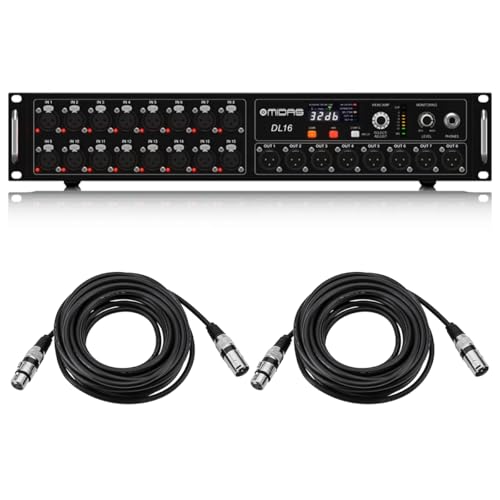
- 16 Midas-designed mic preamps
- 8 XLR outputs with AES50 SuperMAC
- Includes cable plus 1-year warranty
Best For: Live sound users wanting a compact, well-connected bundle
Self-Contained Mini Box
Soundcraft MSB-16R 16-Channel Mini Stagebox

- Integral PSU for self-contained use
- 16-channel mini stagebox format
- Supplied with matching console card
Best For: Soundcraft stage setups needing a compact, self-powered box
Compact AES50 Stage Box
Behringer SD16 16-Remote Midas Preamps

- 16 remote-controllable Midas-designed preamps
- 8 XLR outputs for stage routing
- AES50 networking plus ULTRANET support
Best For: Users building AES50 stage setups with personal monitoring integration
Rugged AVB Stage Box
PreSonus NSB 16.8 Networked I/O
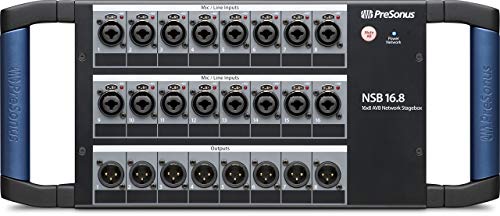
- 16 locking mic/line inputs and 8 locking outputs
- Remote XMAX preamps with gain compensation
- Dual AVB ports for networked setups
Best For: AVB live sound rigs and installations needing locking connections
Tablet-Controlled Digital Mixer
Behringer X AIR XR18 18-In/12-Bus
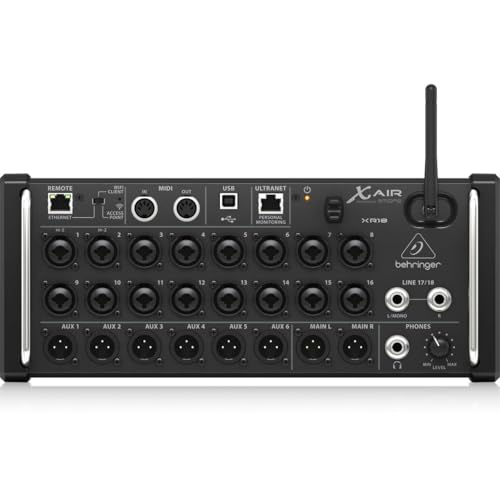
- 16 programmable Midas preamps
- Built-in Wi-Fi for tablet control
- 18 x 18 USB audio interface for recording
Best For: Compact live and recording setups that want mixer control at the box
Flagship 32x16 AES50 Stage Box

- 32 Midas PRO preamps with 48 V phantom power
- 16 balanced outputs plus ULTRANET and ADAT
- Dual AES50 ports for cascading more stageboxes
Best For: Large live rigs needing high channel count and expansion
Dante Rack Stage Box

- 16 inputs and 8 outputs in a 3U rack
- Dante Ethernet connectivity for networked audio
- Recallable D-PRE preamps at 96kHz
Best For: Yamaha and Dante setups needing compact networked I/O
Best Simple Pick

- 16 programmable MIDAS-designed mic preamps
- 8 servo-balanced XLR outputs
- AES50 plus 4-port ULTRANET distribution
Best For: Small-to-mid live rigs needing remote preamps and monitoring
Large-Format Networked Box – Behringer S32 32-Channel Stage Box
If you need 16 channel digital stage boxes performance with extra headroom, the Behringer S32 goes beyond the usual 16-input layout with 32 Midas-designed mic preamps and 16 analog XLR outputs. Its AES50 networking, Ultranet support, and AES/EBU ports make it a strong fit for digital live-sound setups that need flexible routing and low-latency operation.
Best For: Larger digital rigs that need more input capacity, networked connectivity, and personal monitoring support.
Pros:
- 32 Midas-designed, fully programmable mic preamps
- 16 servo-balanced XLR outputs
- AES50 network ports with SuperMAC networking
- Ultranet connectivity for P16 in-ear monitoring
Cons:
- More stage-box than a typical 16-channel buyer may need
- Best suited to AES50-based systems
- Requires compatibility with supported digital workflows
This is the most expansive option in the group, so it makes sense when you want the flexibility of a stage box that can handle more channels than a standard compact unit. The extra outputs and monitoring features add real utility for bigger live systems.
Console-Linked Compact Box – Soundcraft MSB-16i Compact Digital Stagebox
Soundcraft MSB-16i 16-channel Compact Digital Stagebox with Remote Controlled I/O
Check Price On AmazonThe Soundcraft MSB-16i is a practical pick if you’re shopping for 16 channel digital stage boxes and want a compact 16 x 8 layout for a Soundcraft Si Series console. It’s designed as a remote-controlled I/O stagebox, so it fits best in systems where the console and stage box are meant to work closely together.
Best For: Soundcraft Si Series users who need a compact remote-controlled stagebox.
Pros:
- 16 x 8 digital stagebox layout
- Remote control for Soundcraft Si Series consoles
- Compact footprint for stage-side placement
- Simple corded-electric power
Cons:
- Specifically tied to Soundcraft Si Series compatibility
- Fewer advanced connectivity details listed
- Not a universal stagebox for every digital mixer setup
For owners of compatible Soundcraft consoles, this is a straightforward way to add stage-side I/O without unnecessary complexity. Its strength is focused integration rather than broad-format versatility.
Feature-Rich Bundle Box – Midas DL16 16 Input and 8 Output Stage Box
The Midas DL16 is a strong option when comparing 16 channel digital stage boxes and you want a 16-in/8-out format with extra connectivity. It includes 16 Midas-designed mic preamps, AES50 SuperMAC ports, ULTRANET P-16 support, plus ADAT and MIDI I/O, making it a versatile stage-side hub for live sound systems.
Best For: Live sound users who want a compact digital stage box with broad connectivity and included accessories.
Pros:
- 16 Midas-designed microphone preamplifiers
- 8 XLR outputs with AES50 SuperMAC ports
- ULTRANET, ADAT, and MIDI connectivity
- Includes a 50′ XLR cable and limited warranty
Cons:
- Bundled listing may not be ideal if you only want the box itself
- Connectivity is feature-rich but system-dependent
- More than a basic 16-channel stage box
This model stands out for buyers who want a more complete package, not just a stage box. The additional ports and included cable make it especially appealing for flexible live-sound workflows.
Self-Contained Mini Box – Soundcraft MSB-16R 16-Channel Mini Stagebox
If you want 16 channel digital stage boxes with a self-contained design, the Soundcraft MSB-16R is built to sit comfortably stage-side with an integral power supply. It’s part of Soundcraft’s visi connect range and comes supplied with the stage box card installed, plus the matching Si Series console card.
Best For: Soundcraft users who want a self-contained 16-channel mini stagebox for stage-side use.
Pros:
- Integral PSU for self-contained operation
- 16-channel layout in a compact mini stagebox format
- Supplied with stage box card installed
- Includes corresponding card for an Si Series console
Cons:
- Designed around the Soundcraft ecosystem
- MADI cards for VI consoles are sold separately
- Connectivity details are more limited than some rivals
This mini stagebox is a solid fit when you want a ready-to-place solution with minimal setup fuss. Its main appeal is the self-contained power design and close integration with compatible Soundcraft systems.
Compact AES50 Stage Box – Behringer SD16 16-Remote Midas Preamps
If you need one of the more straightforward 16 channel digital stage boxes for AES50-based systems, the Behringer SD16 keeps the focus on remote mic control and simple stage-to-mixer connectivity. It combines 16 remote-controllable Midas-designed preamps with 8 XLR outputs and ULTRANET support, making it a practical fit for compact live rigs.
Best For: Bands, churches, and small venues using AES50 systems that want remote preamps plus personal monitoring integration.
Pros:
- 16 remote-controllable Midas-designed mic preamps
- 8 XLR outputs for stage routing
- AES50 networking with Klark Teknik SuperMac technology
- ULTRANET integration with Powerplay P16 systems
Cons:
- Designed around AES50/ULTRANET workflows, so it is not a universal network stage box
- No extra channel count beyond the 16-input layout
The SD16 is a solid utility box when you want a compact digital snake with remote preamps and built-in monitoring compatibility. It is less about extras and more about delivering the essentials reliably for connected live setups.
Rugged AVB Stage Box – PreSonus NSB 16.8 Networked I/O
Among 16 channel digital stage boxes, the PreSonus NSB 16.8 stands out for AVB networking and a rugged enclosure with handles. It offers 16 locking mic/line inputs, 8 locking XLR outputs, and remote-controllable XMAX preamps, so it is built for installed or traveling systems that need secure connections and networked control.
Best For: AVB-based live sound rigs and fixed installations that need locking connections and mixer/software control.
Pros:
- 16 locking mic/line inputs and 8 locking XLR outputs
- 16 remote-controllable XMAX preamps with gain compensation for shared inputs
- Two AVB ports with locking XLR Ethernet jacks
- Works with Series III mixers and UC Surface software
Cons:
- AVB networking makes it system-specific rather than a general-purpose box
- Heavier than some compact alternatives at 6.2 pounds
The NSB 16.8 is a good pick when connection security and AVB workflow matter as much as input count. Its locking hardware and software control options make it especially appealing for crews that want a dependable networked stage box.
Tablet-Controlled Digital Mixer – Behringer X AIR XR18 18-In/12-Bus
The Behringer XR18 is not a stage box in the traditional sense, but it is still relevant if you are comparing 16 channel digital stage boxes and want a compact networked input solution with more flexibility. It provides 16 programmable Midas preamps, built-in Wi-Fi for tablet control, and an 18 x 18 USB interface, so it can cover small live and recording setups where mixing is handled at the box.
Best For: Users who want a compact, tablet-controlled digital mixer with 16 quality preamps and direct recording capability.
Pros:
- 16 fully programmable Midas-designed preamps
- Built-in tri-mode Wi-Fi router for direct control
- 18 x 18 bidirectional USB audio interface for recording
- Dugan-style auto-mixing support via future firmware
Cons:
- It is a digital mixer rather than a dedicated stage box
- Output section is limited to 2 main XLR outputs
If you want mixing built into the same unit as your inputs, the XR18 is a practical all-in-one option. It offers more than a basic stage box, but that also makes it a better fit for users who want control and recording in one compact device.
Flagship 32×16 AES50 Stage Box – Midas DL32
If you need one of the most capable 16 channel digital stage boxes in a larger live setup, the Midas DL32 is built for serious I/O demands. It offers 32 Midas microphone preamps, 16 balanced line outputs, and AES50 connectivity for expandable digital routing, plus ADAT and AES-3 support for added integration flexibility.
Best For: Large-format live rigs that need high input count, robust Midas preamps, and flexible digital expansion.
Pros:
- 32 Midas PRO microphone preamps with switchable 48 V phantom power
- 16 electronically balanced low-impedance line outputs
- Dual AES50 SuperMAC ports for cascading additional stage boxes
- ULTRANET and ADAT interfaces add monitoring and digital routing options
Cons:
- More than a basic 16-channel stage box, so it may be overkill for small systems
- Designed for corded power and rack-style integration
The DL32 stands out when your stage box needs go beyond a simple snake replacement. It combines high channel count, pro-level preamps, and multiple digital interfaces, making it a strong fit for scalable systems that may grow over time.
Dante Rack Stage Box – Yamaha Tio1608-D2
The Yamaha Tio1608-D2 is a practical choice if you want one of the more straightforward 16 channel digital stage boxes for Dante-based systems. It provides 16 inputs and 8 outputs, a 96kHz sample rate, and recallable D-PRE preamps in a compact 3U rack format.
Best For: Yamaha and Dante users who want a compact rack stage box with recallable preamps.
Pros:
- 16 inputs and 8 outputs in a 3U rack size
- Dante Ethernet connectivity for networked audio systems
- Recallable D-PRE preamplifiers
- 96kHz sample rate for high-resolution operation
Cons:
- Requires a Dante-based workflow to make full use of its connectivity
- Primarily aimed at Yamaha mixer ecosystems
For users already working in Yamaha or Dante environments, the Tio1608-D2 is a clean, modern stage I/O solution. Its combination of network audio, compact size, and recallable pres makes it a strong fit when simplicity and system compatibility matter.
Best Simple Pick – Behringer SD16
For buyers comparing 16 channel digital stage boxes, the Behringer SD16 focuses on practical remote I/O in a compact format. It includes 16 MIDAS-designed programmable mic preamps, 8 analog XLR outputs, and AES50 networking with ULTRANET personal monitoring support.
Best For: Small-to-mid size digital live rigs that need remote-controllable preamps and built-in monitoring distribution.
Pros:
- 16 fully programmable MIDAS-designed mic preamps
- 8 servo-balanced XLR outputs
- AES50 networking with KLARK TEKNIK SuperMAC capability
- 4-port ULTRANET distribution hub for P16-M monitoring mixers
Cons:
- Fewer outputs than larger stage boxes
- Best suited to systems that already use AES50 or ULTRANET
The SD16 is a sensible pick when you want a compact stage box with solid preamps and easy networked monitoring integration. Its mix of AES50 I/O and ULTRANET distribution makes it especially useful for streamlined live sound setups.
How We Picked the Best 16 Channel Digital Stage Boxes
We focused on 16 Channel Digital Stage Boxes that offer strong preamp performance, dependable networking, and flexible I/O for live sound workflows. Priority went to units with remote-controllable inputs, enough outputs for monitor mixes or cue sends, and broad compatibility with common digital ecosystems such as AES50, Dante, AVB, and related control platforms.
Quick Comparison
Think first about your mixer and network standard. If you already run an AES50-based rig, a model in that ecosystem is usually the simplest path. If your system is built around Dante or AVB, matching the protocol matters more than raw channel count. Also check whether you need 8 outputs, monitor-focused routing, or extra expansion options for future growth.
Key Buying Factors for 16 Channel Digital Stage Boxes
Inputs, Outputs, and Headroom
Not all stage boxes are equal just because they have 16 inputs. Some add 8 outputs, which is useful for in-ears, wedges, or broadcast feeds. Make sure the output count matches how you actually mix, not just how many microphones you plan to plug in.
Preamps and Remote Control
Remote-controllable preamps are a major advantage because they let you adjust gain at the mixer or tablet instead of walking back to the rack. Cleaner gain staging and faster recall are especially helpful in changing live environments.
Network Protocol and System Compatibility
For 16 Channel Digital Stage Boxes, protocol compatibility is often the deciding factor. AES50, Dante, and AVB each fit different ecosystems, so verify that the stage box works natively with your console and any existing infrastructure.
Build Quality and Deployment
Rack-mountable steel construction, locking connectors, and reliable power handling matter more than flashy features when the box is going on tour or being moved between rooms. If your setup is permanent, ease of integration may matter more than portability.
Who Should Buy Which 16 Channel Digital Stage Boxes?
Choose a compact 16-channel box if you need a straightforward remote stage position for small to mid-size gigs. Go with a larger model if you want extra outputs, more growth room, or the flexibility to handle multiple monitor feeds. If your venue already standardizes on a network protocol, buy to match that infrastructure first and the feature set second.
In short, the best choice depends on your mixer, your routing needs, and how often your system changes. Matching those three factors will do more for performance than chasing the highest spec sheet numbers.