Choosing the right equalizer can make a home studio feel far more controlled, detailed, and easier to mix in. The best units help you shape tone, tame harshness, and fine-tune your system without overcomplicating your setup.
In this roundup, we focus on analog equalizers for home studio users who want practical sound-shaping tools for mixing, monitoring, and everyday playback.
Best 10 Analog Equalizers for Home Studio Picks for 2026
Rack-Mount Precision
dbx 231s Dual Channel 31-Band Equalizer

- Dual 31-band, 1/3-octave constant-Q EQ
- Switchable 6 dB or 12 dB boost/cut
- Front-panel bypass and LED output meters
Best For: Detailed rack EQ control in a home studio
Feature-Rich Stereo EQ
TNZ SGE6 Audio Graphic Equalizer

- RCA, 3.5 mm, USB, and Bluetooth inputs
- 15-band EQ for two channels with spectrum display
- Built-in microphone and adjustable display settings
Best For: Versatile home audio setups with wired and wireless sources
Studio Rack Workhorse
EQ-215 15-Band Stereo Graphic Equalizer
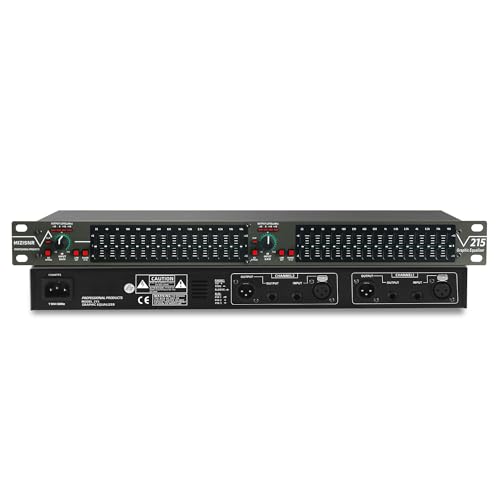
- Dual-channel 15-band EQ with ±12 dB range
- Low-cut switch reduces rumble, hum, and noise
- XLR balanced and 1/4" TRS I/O with bypass
Best For: Balanced rack EQ with basic cleanup tools
Compact Tonal Shaper
Douk Audio T7 7-Band Balanced EQ

- 7-band EQ from 64 Hz to 8 kHz
- XLR and RCA input/output support
- 104 dB+ SNR with 0.003% distortion
Best For: Small home systems needing simple tonal control
Studio-Grade 31-Band Control
31-Band Stereo EQ for Home Audio

- Dual-channel 31-band graphic EQ
- LOW-CUT and BYPASS switches included
- XLR and 1/4" TRS connectivity
Best For: users who want precise stereo EQ control in a home studio
Clean Home Stereo Tuning
Nobsound 9-Band Stereo EQ Preamp

- 9-band EQ from 20Hz to 16kHz
- 111dB SNR and 0.001% THD
- 2 RCA in/out with bypass and balance
Best For: subtle tone shaping in a clean home stereo setup
Feature-Rich Rack EQ
EQ8100 20-Band Graphic Equalizer
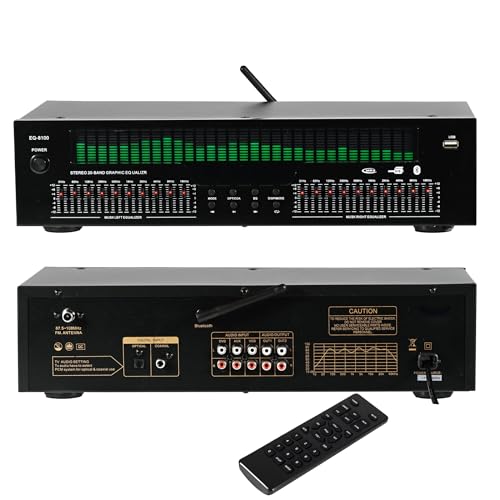
- 20-band EQ with 31-band spectrum analyzer
- Bluetooth, USB, optical, and coaxial inputs
- Auto-save presets in a 1U rack chassis
Best For: rack-mounted setups that need multiple inputs and visual monitoring
Dual-Channel Precision Rack EQ

- 15-band control per channel with ±12 dB range
- Low-cut and bypass features for simple cleanup
- Balanced XLR and 1/4" TRS connectivity
Best For: Home studios and rack setups needing tactile stereo EQ control
Digital Fine-Tuning EQ

- 31 bands per channel for detailed shaping
- PC software plus LED display for easier tuning
- 10 presets and bypass mode simplify use
Best For: Users who want detailed software-assisted EQ control in a home studio
Rack-Mount DSP EQ with Bluetooth

- 31-band DSP EQ with spectrum display feedback
- Bluetooth 5.2 and USB playback built in
- Adjustable subwoofer output for deeper bass control
Best For: Home audio users who want EQ, wireless playback, and subwoofer tuning in one unit
Rack-Mount Precision – dbx 231s Dual Channel 31-Band Equalizer
If you’re shopping for analog equalizers for home studio use and want very detailed control, the dbx 231s is built around a dual 31-band, 1/3-octave constant-Q layout. Its switchable 6 dB or 12 dB boost/cut range, front-panel bypass, and output metering make it easy to fine-tune a signal while keeping an eye on levels.
Best For: Home studio owners who want a full-featured, rack-mount graphic EQ with precise band control and clear level monitoring.
Pros:
- Dual 31-band, 1/3-octave constant-Q frequency bands for detailed shaping
- Switchable boost/cut ranges of 6 dB or 12 dB
- Front panel bypass switch for quick A/B comparison
- 4-segment LED ladders help monitor output levels
Cons:
- Rack-size unit may be more than needed for simple desktop setups
- Designed for line-level routing rather than portable use
For a studio rack where precision matters, the 231s offers the kind of granular control that suits correction and tonal shaping across a full mix path. It stands out most when you need a serious, hands-on EQ rather than a simple tone knob.
Feature-Rich Stereo EQ – TNZ SGE6 Audio Graphic Equalizer
For analog equalizers for home studio setups that also need modern input options, the TNZ SGE6 combines a stereo graphic EQ with RCA, 3.5 mm auxiliary, USB, and Bluetooth connectivity. It also adds a built-in microphone, visual spectrum display, and adjustable display settings, so it can work as both an audio control unit and a showpiece in a listening or production space.
Best For: Home audio and studio users who want a versatile EQ with wireless and wired source support.
Pros:
- Rear RCA and 3.5 mm auxiliary inputs/outputs for easy connections
- Bluetooth 5.0, USB input, and built-in microphone support
- 15-band EQ for two channels plus spectrum display features
- Adjustable colors, brightness, speed, and gain
Cons:
- More focused on feature set than on traditional studio minimalism
- Includes visual and wireless extras that may be unnecessary for purists
The SGE6 is a flexible choice when you want EQ control plus modern playback conveniences in one unit. It fits best in mixed home setups where the equalizer may also double as a preamp or display piece.
Studio Rack Workhorse – EQ-215 15-Band Stereo Graphic Equalizer
The EQ-215 is a practical pick if you’re comparing analog equalizers for home studio use and want a straightforward dual-channel graphic EQ with pro-style connectivity. Each channel offers 15 bands with an adjustable ±12 dB range, plus a low-cut switch and bypass for easier troubleshooting and cleanup.
Best For: Users who want a rack-mount stereo EQ with balanced connections and simple control over unwanted low-frequency noise.
Pros:
- Dual-channel 15-band design with up to ±12 dB adjustment per band
- Low-cut switch helps reduce wind noise, rumble, and hum
- Bypass switch makes comparisons and debugging easier
- XLR balanced and 1/4" TRS input/output support
Cons:
- Only 15 bands per channel, so it is less granular than 31-band models
- Rack-mount format may be overkill for compact desks
This model makes sense when you want useful EQ shaping without a complicated control surface. Its balanced I/O and low-cut function make it a solid utility option for studio, live, or install-style routing.
Compact Tonal Shaper – Douk Audio T7 7-Band Balanced EQ
If you want analog equalizers for home studio or home stereo use without a bulky rack unit, the Douk Audio T7 keeps things compact and simple. Its 7-band layout covers key frequency areas from 64 Hz to 8 kHz, while XLR and RCA inputs and outputs make it easy to insert into a variety of amplifier or speaker chains.
Best For: Compact home setups that need simple, high-quality tonal adjustment with both RCA and XLR connectivity.
Pros:
- 7-band equalizer with frequency points from 64 Hz to 8 kHz
- XLR and RCA inputs/outputs for flexible hookup options
- High SNR over 104 dB and very low 0.003% distortion
- Small aluminum alloy case with shielding against interference
Cons:
- Only 7 bands, so it offers less precise shaping than graphic EQs with more bands
- No volume control knob included
The T7 is a clean, no-fuss solution when your priority is reliable tone adjustment and straightforward integration. It makes the most sense in systems where you value compact size and signal quality over extensive tweaking.
Studio-Grade 31-Band Control – 31-Band Stereo EQ for Home Audio
If you’re comparing analog equalizers for home studio use and want detailed frequency shaping, this dual-channel 31-band graphic EQ gives you a wide adjustment range. Each channel offers ±12dB control, plus a LOW-CUT switch to reduce rumble, hum, and other unwanted low-frequency noise.
Best For: Home studio users, DJs, and audio setups that need precise stereo EQ control with balanced connections.
Pros:
- 31-band dual-channel design with adjustable ±12dB per band
- LOW-CUT switch helps reduce wind noise, floor rumble, and electrical hum
- BYPASS switch makes comparison and debugging simple
- XLR balanced and 1/4" TRS input/output support adds setup flexibility
Cons:
- Bulkier rack-style unit than compact desktop EQs
- More controls than a simple tone-shaping preamp
- Best suited to users who want hands-on frequency editing
Overall, this is a strong option if you want a traditional graphic EQ approach with broad control and practical studio-friendly features. It fits best in setups where stereo tuning and noise reduction matter more than simplicity.
Clean Home Stereo Tuning – Nobsound 9-Band Stereo EQ Preamp
For analog equalizers for home studio and hi-fi listening, this Nobsound EQ preamp focuses on clean, simple tone shaping. The 9-band layout covers 20Hz to 16kHz, while the high 111dB SNR and 0.001% THD specs are aimed at preserving clarity as you adjust bass, mids, and treble.
Best For: Audiophiles and home users who want subtle EQ control with clean RCA integration.
Pros:
- 9-band EQ lets you shape bass, mids, and treble across 20Hz to 16kHz
- 111dB SNR supports a cleaner background and wide dynamic range
- 0.001% THD is designed for low-distortion signal processing
- 2 RCA in/out makes it easy to add to existing home audio setups
Cons:
- RCA-only connectivity may limit studio routing flexibility
- Less detailed than a 20- or 31-band graphic EQ
- Best for gentle tone shaping rather than deep correction
This is a practical pick if you want a straightforward preamp-style equalizer that keeps the signal path simple. It makes the most sense for home stereo systems where clean sound and easy switching matter.
Feature-Rich Rack EQ – EQ8100 20-Band Graphic Equalizer
If you want analog equalizers for home studio setups with more modern extras, the EQ8100 combines a 20-band graphic EQ with a 31-band spectrum analyzer. It also adds Bluetooth 5.4, optical and coaxial input options, and USB playback, making it a flexible hub for mixed home and studio systems.
Best For: Users who want a rack-mounted equalizer with spectrum display, multiple inputs, and preset recall.
Pros:
- 20-band graphic EQ with 31-band spectrum analyzer display
- Optical, coaxial, USB, Bluetooth, and RCA connectivity
- Auto-save preset function for quick curve recall
- 1U aluminum chassis is built for rack use and portability
Cons:
- More feature-heavy than a basic analog EQ
- Rack design may be unnecessary for simple desktop use
- Many controls can feel overkill if you only need basic tone shaping
In practice, this model suits users who want EQ control plus visual feedback and broad input support in one unit. It is especially appealing if your studio or home theater setup benefits from quick preset changes and rack-mounted convenience.
Dual-Channel Precision Rack EQ – Stereo Graphic EQX-215S
If you’re comparing analog equalizers for home studio use, this 15-band stereo graphic EQ is built for straightforward hands-on shaping. It offers dual-channel control, a 1U rack-mount design, balanced XLR and 1/4" TRS connections, and a low-cut feature for trimming unwanted rumble before it reaches your monitors or recording chain.
Best For: Home studios, audiophiles, and users who want a simple rackmount EQ with precise band control and bass output options.
Pros:
- 15 bands per channel with ±12 dB adjustment for detailed tone shaping
- Low-cut control helps remove unwanted low-end noise
- Balanced XLR and 1/4" TRS connections support flexible setups
- Dedicated bass output adds extra control over low frequencies
Cons:
- Analog-style controls may feel more manual than software-based EQs
- 1U rack format is best suited to rack setups
- Fewer advanced features than digital units with presets or displays
For a home studio setup that values immediate tactile control, this EQ focuses on the essentials: band-by-band adjustment, bypass switching, and reliable connectivity. It’s a practical choice if you want to fine-tune stereo audio without relying on a digital interface.
Digital Fine-Tuning EQ – 31-Band EQ with PC Software
Among analog equalizers for home studio workflows, this model stands out by going fully digital with 31 bands per channel and PC tuning support. It’s designed for users who want detailed control, real-time feedback from the LED display, and flexible integration with XLR, stereo L/R, TRS, microphone, instrument, and mixer connections.
Best For: Home studio owners and audio users who want detailed dual-channel EQ control with software-assisted tuning.
Pros:
- 31-band dual-channel EQ offers very fine frequency adjustment
- PC software adds another layer of setup and tuning flexibility
- Large LED display helps with quick real-time monitoring
- 10 presets plus bypass mode make comparison and recall easy
Cons:
- Digital signal format may not suit buyers specifically seeking analog processing
- More features can mean a steeper learning curve for beginners
- Advanced controls may be more than needed for simple home audio use
This is a strong option if your priority is precise EQ control with software support rather than a purely analog workflow. The combination of presets, noise reduction, and detailed band control makes it a capable choice for studio-style equalization.
Rack-Mount DSP EQ with Bluetooth – 31-Band EQ with Bluetooth
If you want a modern home-studio-friendly equalizer with playback features built in, this 31-band digital rack unit adds more than basic EQ. It combines spectrum display feedback, noise reduction, Bluetooth 5.2, USB playback, and an adjustable subwoofer output, making it a versatile pick for home stereo and entertainment systems.
Best For: Home stereo systems, home theater setups, and users who want EQ plus Bluetooth, USB playback, and subwoofer control.
Pros:
- 31-band DSP EQ with real-time spectrum display
- Bluetooth 5.2 and USB playback add convenient source options
- Independent subwoofer output with adjustable 50Hz to 250Hz range
- 10 presets and bypass switch support quick changes
Cons:
- Digital design may not appeal to buyers looking for traditional analog equalizers for home studio use
- Feature-rich layout may be more than needed for basic EQ tasks
- Rack-mount format works best in organized component setups
This model is best viewed as a flexible control hub for sound shaping and playback rather than a simple EQ box. If you want a unit that can handle tuning, source playback, and subwoofer management in one rack-friendly device, it offers a lot of capability.
How We Picked These Analog Equalizers for Home Studio Use
We prioritized models that offer useful frequency control, reliable stereo operation, and straightforward integration with common home studio gear. We also looked at build style, signal compatibility, and whether the unit makes sense for desktop, rack, or hybrid home setups. For Analog Equalizers for Home Studio applications, the best choice is usually the one that fits your workflow as well as your sound goals.
Quick Comparison
More bands generally mean finer control, which can help with corrective EQ and room tuning. Fewer bands may be easier to use for broad tone shaping and simple system adjustment. Rack-mount models suit permanent studio installs, while compact preamp-style equalizers work better for smaller desks and casual listening spaces.
Key Buying Factors for Analog Equalizers for Home Studio
Band Count and Control
Choose band count based on how precise you need to be. A 7- or 9-band unit is often enough for broad tonal changes, while 15-band and 31-band models offer more detailed correction and room compensation.
Connections and System Compatibility
Check whether your gear uses RCA, XLR, or 3.5 mm connections, and make sure the equalizer matches your amplifier, interface, monitor controller, or stereo chain. Balanced connections are useful when you want to reduce noise over longer cable runs.
Noise Performance and Headroom
For home studio use, a quiet signal path matters. Look for strong signal-to-noise performance and enough headroom to avoid distortion when boosting or cutting frequencies.
Form Factor and Placement
Rack-mount equalizers are best for dedicated studio racks and more permanent installs. Desktop units are easier to place near a computer or audio interface and can be a better fit for smaller rooms.
Who Should Buy Which Analog Equalizers for Home Studio?
If you want precise room tuning or more serious tonal shaping, a 15-band or 31-band unit is usually the best fit. If you need simple tone control for speakers, a compact 7-band or 9-band model may be enough. Users building a semi-permanent setup should lean toward rack-mount designs, while anyone prioritizing convenience may prefer a smaller stereo equalizer with flexible inputs.
For most buyers, the right choice comes down to how much control you want versus how simple you want the system to stay. Pick the model that matches your room, your connections, and how often you plan to adjust the sound.