The right compressor can make vocals, instruments, and mixes sound more controlled without flattening their dynamics. For home studios, the best choice depends on your inputs, workflow, available rack space, and whether you need one channel or two.
These 10 options cover dedicated compressors, channel strips, gates, de-essers, and compact pedal-style designs, giving beginners and experienced producers practical ways to shape dynamics while recording or mixing.
Best 10 Audio Compressors for Home Studio Picks for 2026
Rack Dynamics Specialist

- Compressor, expander, and gate in one 1U unit
- Program-adaptive gating with smooth release characteristics
- Dedicated LED metering for quick setup
Best For: Hands-on control of instruments, drums, and stereo mixes
Tube Channel Strip Pick

- 12AX7 Class A tube preamp with VCA compressor
- Three-band EQ with variable-Q mid band
- Accepts mic, instrument, and line sources
Best For: Tracking vocals and instruments with integrated tone shaping
Two-Channel Value Option
Behringer Composer Pro-XL MDX2600

- Two-channel compressor, limiter, and gate
- Listed for production, mixing, and mastering
- Compact rack-style unit with two-year warranty
Best For: Dual-channel dynamics processing in a home studio
Vocal Processing Workhorse

- Mic and instrument preamp with integrated compression
- Adds de-esser, enhancer, and expander/gate sections
- XLR and 1/4-inch connectivity with loop-out
Best For: Vocal and instrument tracking with multiple processing stages
Compact Analog Control

- Compact pedal format
- Constant headroom technology
- Ten gain-reduction LEDs
Best For: Compact home-studio setups and pedal-based signal chains
Rackmount Studio Versatility
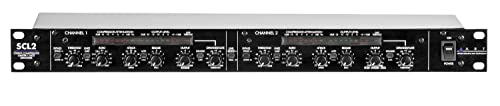
- Dual or linked-stereo operation
- Compression, limiting, expansion, and gating
- Balanced TRS and XLR inputs
Best For: Rack-based home studios handling stereo or varied dynamics tasks
Flexible Digital Compression

- Six compression types
- Dual compressors
- Automatic makeup gain
Best For: Experimenting with varied digital compression in a pedal setup
Tube Tone Control

- Selectable tube or solid-state signal path
- Variable blend for parallel-style control
- Switchable +4 dBu/-10 dBV levels
Best For: Single-channel vocals and instruments needing flexible tone and blend control
Dual-Channel Studio Control
Professional Dynamic Processor

- Two-channel Overeasy compression
- Noise gate and LED gain-reduction monitoring
- Sidechain insert with XLR/TRS I/O
Best For: Home studios and streaming setups needing versatile two-channel control
Vocal Dynamics Rack Unit
Dual-Channel Compressor/Limiter

- Dual-channel Overeasy compression and limiting
- VCA circuit aimed at vocal clarity
- Noise gate, sidechain, and LED metering
Best For: Vocal, podcast, broadcast, and live-sound dynamics control
Rack Dynamics Specialist – dbx 266xs Compressor/Gate
The dbx 266xs is a practical choice for home-studio users who want dedicated stereo dynamics control. Its compressor, expander/gate, sidechain insert, and clear LED metering can help smooth uneven levels, add sustain, tighten drums, or manage a mix.
Best For: Home studios needing a straightforward rack compressor and gate for instruments, drums, or stereo mixes.
Pros:
- Supports compression, expansion, and gating in a single 1U unit
- Program-adaptive gates and updated timing algorithms support smooth operation
- Separate LED displays make gain-reduction and threshold setup easier
Cons:
- Requires rack space and corded power
- Analog hardware controls may be less convenient than software processing
For audio compressors for home studio setups, the 266xs is a focused, error-resistant option when you want hands-on control over dynamics without adding preamp or EQ features.
Tube Channel Strip Pick – PreSonus StudioChannel
The PreSonus StudioChannel combines a Class A 12AX7 tube preamp, VCA compressor, and three-band EQ. For home studios comparing audio compressors for home studio recording, it offers a broader tracking and tone-shaping workflow than a compressor-only rack unit.
Best For: Recording vocals, instruments, keyboards, and synths while adding preamp gain, compression, and EQ in one channel.
Pros:
- Combines tube preamplification, VCA compression, and three-band EQ
- Includes mic, instrument, and line inputs
- Compressor provides auto attack/release plus soft- and hard-knee options
Cons:
- Single-channel design limits simultaneous processing
- Its larger feature set may be more than needed for compression alone
The StudioChannel is a flexible front-end for project studios. Choose it when tone shaping and input connectivity matter as much as dynamic control during recording.
Two-Channel Value Option – Behringer Composer Pro-XL MDX2600
The Behringer Composer Pro-XL MDX2600 is a two-channel compressor, limiter, and gate designed for audio production, mixing, and mastering. It is a sensible option for home studios that need multiple channels of basic dynamics processing in one unit.
Best For: Stereo or dual-channel recording and mixing workflows that need compression, limiting, and gating.
Pros:
- Provides two channels of compressor, limiter, and gate processing
- Suitable for audio production, mixing, and mastering applications
- Compact rack-style dimensions and a listed two-year warranty
Cons:
- Supplied notes provide limited detail about control sections and metering
- Requires corded power and external connections in the studio setup
Among audio compressors for home studio use, the MDX2600 stands out for channel count and basic dynamics coverage. It fits best when you need two channels rather than a single channel strip.
Vocal Processing Workhorse – dbx 286s Channel Strip
The dbx 286s is a one-channel microphone and instrument preamp with compression, de-essing, enhancement, and expander/gate sections. It is especially useful for home studios seeking audio compressors for home studio vocals, voice recording, or instrument tracking with several processing stages in one rack unit.
Best For: Vocal and instrument recording where preamp gain, compression, de-essing, gating, and tonal enhancement are useful.
Pros:
- Combines a mic/instrument preamp with four independent processing sections
- Dedicated de-esser helps reduce harsh high frequencies and sibilance
- Includes XLR and 1/4-inch inputs, loop-out, and status LED metering
Cons:
- Single-channel design is less suited to stereo processing
- More specialized for input processing than broad mix-bus duties
The 286s is a strong practical choice for a home-studio recording chain. Its integrated compressor and de-esser are particularly useful when you want to shape a vocal before it reaches the rest of the mix.
Compact Analog Control – MXR Studio Compressor
The MXR Studio Compressor is a compact analog option for home studios that also need a pedal-format compressor. Its constant headroom technology, gain-reduction LEDs, and straightforward knob control make it practical for monitoring and shaping dynamics without taking up much space.
Best For: Home-studio users who want an analog compressor in a compact pedal enclosure.
Pros:
- Compact Phase 90-sized pedal format
- Constant headroom technology for clear, clean performance
- Ten gain-reduction status LEDs provide visual feedback
- True bypass operation
Cons:
- Uses a pedal-style 1/4-inch audio interface rather than balanced XLR connections
- Requires 9-volt power
Choose this model when footprint and simple visual monitoring matter most. It is especially convenient for a compact home-studio setup or a pedal-based signal chain.
Rackmount Studio Versatility – ART SCL2 Compressor/Limiter
The ART SCL2 is a rackmount choice for home studios that need more than basic compression. It combines dual-channel or linked-stereo operation with limiting, expansion, and gating, while balanced 1/4-inch TRS and XLR inputs support a more traditional studio connection setup.
Best For: Home studios recording stereo sources or managing multiple dynamics-control tasks in a rack setup.
Pros:
- Dual-channel or linked-stereo operation
- Includes compression, limiting, expansion, and gating
- Balanced 1/4-inch TRS and XLR inputs
- Selectable automatic or manual attack and release
Cons:
- Rackmount format requires more space than a pedal
- Listed power specifications are 240 volts and 300 milliamps
The SCL2 is the most flexible option here for a rack-oriented setup. Its stereo linking, level meters, and multiple dynamics functions make it suited to users who want broader control than compression alone.
Flexible Digital Compression – Source Audio Atlas Compressor
The Source Audio Atlas Compressor is a digital pedal designed for home-studio users who want several compression approaches in one compact unit. With six compression types, dual compressors, and automatic makeup gain, it offers a flexible way to explore different dynamic-control sounds.
Best For: Home-studio musicians who want multiple digital compression types in a pedal format.
Pros:
- Six compression types
- Dual-compressor design
- Automatic makeup gain
- Compact 9-volt pedal operation
Cons:
- Uses a digital signal format rather than analog processing
- Pedal-style 1/4-inch audio connectivity may not suit balanced studio routing
The Atlas is a strong fit when variety is more important than a single classic compression character. Its digital design and multiple compression types make it useful for experimenting with different approaches in a home setup.
Tube Tone Control – Solo VLA
The ART Solo VLA is a single-channel option for home studio users seeking an audio compressor with a tube or solid-state signal path. Its selectable processing modes, optical control, and variable blend make it useful when you want either smooth dynamics control or parallel-style shaping.
Best For: Solo vocals, instruments, and mono signal chains where blend control and selectable tube character are useful.
Pros:
- Selectable MultiVoice tube or solid-state operation.
- Optical AOI control for compressor processing.
- Variable blend combines uncompressed and compressed signals.
- Switch-selectable +4 dBu and -10 dBV level modes.
Cons:
- Single-channel design is less suitable for stereo or multiple sources.
- Its 7.03-pound, 20.8-inch-wide chassis may require dedicated rack or desk space.
The Solo VLA stands out for flexible tonal and blend options rather than high channel count. It is a practical pick when one carefully controlled signal path is more important than compactness.
Dual-Channel Studio Control – Professional Dynamic Processor
This dual-channel audio compressor is built for home studios that need flexible dynamics control across vocals, guitars, drums, or streaming sources. Overeasy compression, automatic attack and release, a noise gate, and sidechain connectivity give it a broad feature set for a 1U rackmount processor.
Best For: Home studios, streaming setups, and live rigs needing two channels, vocal enhancement, and sidechain control.
Pros:
- Dual-channel design supports two sound sources.
- Overeasy compression and auto attack/release settings simplify setup.
- XLR and 1/4-inch TRS connectivity supports studio and live integration.
- Includes LED monitoring, a noise gate, and sidechain insert.
Cons:
- At 1U rackmount size, it is less compact than a desktop compressor.
- The supplied notes do not specify a switchable tube or solid-state path.
With two channels and practical routing features, this processor is suited to users who want one rack unit to handle several common recording and performance tasks. The sidechain insert is particularly useful for frequency-focused ducking.
Vocal Dynamics Rack Unit – Dual-Channel Compressor/Limiter
This dual-channel audio compressor and limiter provides a rackmount solution for home studio vocals, voiceovers, instruments, and streaming. Its Overeasy compression, adjustable attack and release, VCA circuit, noise gate, and sidechain insert cover both straightforward level management and more targeted dynamics shaping.
Best For: Vocal recording, podcasting, broadcast, live sound, and studio users who need two analog channels.
Pros:
- Dual-channel control with adjustable attack and release.
- VCA circuit is designed to enhance vocal clarity, warmth, and presence.
- LED indicators show gain reduction, compression, and gate thresholds.
- XLR/TRS connectivity, noise gate, and sidechain insert support flexible routing.
Cons:
- Rackmount form factor requires suitable equipment space.
- Push-button controls may offer less immediate adjustment than an all-knob layout.
This model makes the most sense when vocal-focused processing and clear visual monitoring are priorities. Its dual-channel analog design also gives a home studio room to manage multiple sources without adding separate processors.
How We Picked the Best Audio Compressors for Home Studio Use
We focused on the features that matter in a real home-studio workflow: usable compression controls, signal connectivity, metering, noise management, build quality, and flexibility across vocals, microphones, instruments, and stereo buses. The selection includes rackmount processors, channel strips, a dual-channel unit, and a compressor pedal so different recording setups are represented.
We also considered whether each model adds useful tools such as a gate, expander, de-esser, enhancer, limiter, sidechain insert, or tube-style coloration. These extras can reduce the need for separate processors, but they should not outweigh straightforward control and reliable signal handling.
Quick Comparison
| Best For | Recommended Type | Why It Stands Out |
|---|---|---|
| Vocal recording | Channel strip | Combines preamp, compression, and tone-shaping tools |
| Two-channel processing | Dual compressor | Handles stereo sources or two independent signals |
| Rack-based studios | 1U compressor | Efficient, consistent control with studio connectivity |
| Guitar and bass | Compressor pedal | Compact operation and instrument-friendly placement |
| Noise control | Compressor with gate or expander | Helps manage room noise, bleed, and pauses |
Key Buying Factors for Audio Compressors for Home Studio
Inputs, Outputs, and Signal Path
Check whether you need XLR microphone inputs, TRS line connections, instrument-level compatibility, or a sidechain insert. A channel strip can connect directly to a microphone, while a line-level rack compressor is usually placed after a preamp or audio interface. Make sure your interface has suitable outputs and inputs if you plan to use hardware while mixing.
Controls and Metering
Threshold, ratio, attack, release, and output gain are the core controls. Variable attack and release settings provide more creative control, while automatic modes can be useful for fast vocal or live-tracking workflows. Clear gain-reduction meters make it easier to avoid over-compression.
Compression Style and Extra Processing
Some units aim for transparent control; others add tube warmth or a more characterful response. Gates and expanders can reduce background noise, de-essers help with vocal sibilance, and limiters provide a final safety boundary. Choose extras that match your recording problems rather than paying for functions you will not use.
Space, Noise, and Workflow
Rackmount processors suit permanent setups, but they require room and cabling. A pedal is easier to place near an instrument, while a channel strip can simplify a vocal chain. For a small room, prioritize low-noise operation, sensible bypass switching, and controls that are easy to adjust while recording.
Who Should Buy Which Audio Compressors for Home Studio?
Choose a channel strip if you mainly record vocals or microphones and want preamp, compression, and tone shaping in one unit. A dual-channel compressor is better for stereo keyboards, drum machines, or two simultaneous sources. A rackmount compressor with a gate or expander suits producers who want repeatable processing for tracking, streaming, or live recording.
Guitarists and bassists should consider a dedicated compressor pedal for instrument-level use and hands-on control. Beginners may prefer a model with straightforward metering and automatic or forgiving modes, while experienced engineers can benefit from flexible sidechain routing, independent channels, and more detailed attack and release controls.