The best audio compressors under $200 can smooth out vocal dynamics, add punch to instruments, and help keep live or streamed audio under control without requiring a premium budget.
This roundup includes rack, pedal, and inline designs, with options for beginners, home-studio engineers, performers, and anyone building a compact signal chain.
Best 10 Audio Compressors Under 200 Picks for 2026
Versatile Rack Dynamics

- Two-channel compressor, limiter, and gate
- Designed for production, mixing, and mastering
- Portable 4.7-pound unit with two-year warranty
Best For: Home studios and live sound setups needing flexible two-channel dynamics control
Compact Stereo Limiting
Rolls SL33B Stereo Program Limiter

- Dedicated stereo program limiter
- Compact 5-by-5-by-5-inch design
- Listed weight is 1 pound
Best For: Space-conscious users needing simple stereo program limiting
Feature-Rich Bundle

- Two-channel independent or stereo-linked processing
- Includes de-esser, limiter, and side-chain I/O
- Comes with a 10-foot XLR microphone cable
Best For: Recording and live sound setups needing processing plus a ready-to-use cable
Balanced Dual-Channel Control

- Dual-channel or linked-stereo operation
- Compressor, limiter, expander, and gate functions
- Balanced TRS and XLR inputs with LED meters
Best For: Studio and live setups needing flexible stereo dynamics control
Compact Analog Pick
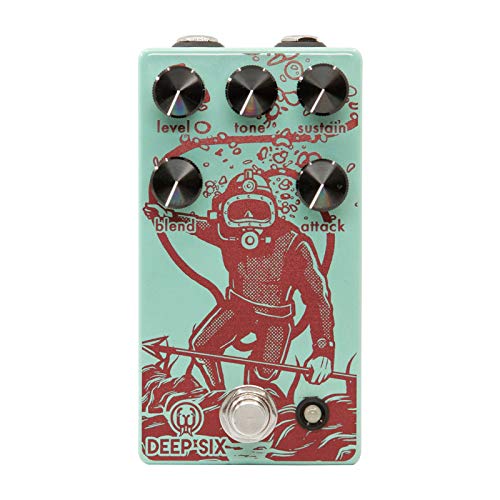
- Stompbox compressor with true bypass
- Tone knob adds bass-cut control
- Top-mounted jacks suit pedalboards
Best For: Guitarists seeking compact analog compression
Classic FET Rack Choice

- Discrete FET-style signal path
- Class-A output amplifier and MIDAS transformers
- Four selectable compression ratios
Best For: Studio users wanting hands-on FET compression
Flexible Dual-Channel Processor
Professional 1U Audio Compressor

- Dual-channel rackmount compression
- Noise gate and sidechain insert included
- XLR/TRS connectivity with LED monitoring
Best For: Studio, live, and streaming setups needing flexible routing
Best Compact Mic Compressor
One-Knob Inline FET-OPTO Compressor
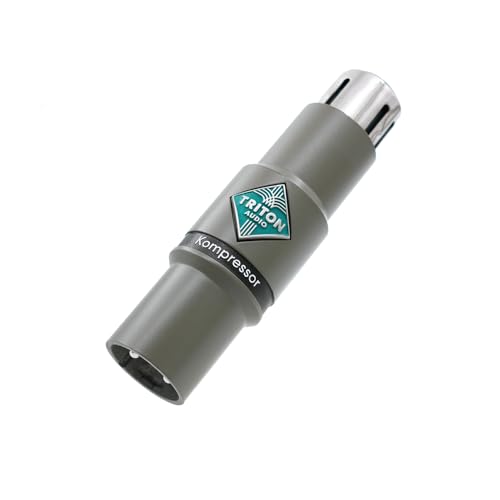
- 25 dB preamp plus inline compression
- Simple one-knob control
- Phantom-power blocking for ribbon mics
Best For: Dynamic and ribbon microphones
Best Dual-Channel Rackmount Compressor
Vocal Compressor/Limiter with Gate

- Dual-channel compression and limiting
- Noise gate with LED metering
- Sidechain insert and XLR/TRS connections
Best For: Studio, live sound, and streaming systems
Best Proven Compressor/Gate

- Compression and expander/gate in one unit
- Program-adaptive gate timing
- Dedicated LED threshold and reduction displays
Best For: Portable, touring, and studio rack systems
Versatile Rack Dynamics – Composer Pro-XL MDX2600
The Behringer Composer Pro-XL MDX2600 is a practical choice for shoppers comparing audio compressors under 200. Its two-channel design combines compression, limiting, and gating for recording, mixing, and mastering setups.
Best For: Home studios, live sound rigs, and users who need two-channel dynamics control.
Pros:
- Combines compressor, limiter, and gate functions.
- Supports audio production, mixing, and mastering applications.
- Portable 4.7-pound design with a listed two-year warranty.
Cons:
- Its rack-style dimensions may require dedicated equipment space.
- The supplied notes do not specify detailed control ranges or connectivity beyond the included components.
Choose the MDX2600 if you want a broad set of dynamics tools in one two-channel unit. It is especially suitable when gating and limiting are useful alongside compression.
Compact Stereo Limiting – Rolls SL33B Stereo Program Limiter
The Rolls Stereo Program Limiter SL33B is a straightforward option among audio compressors under 200 for buyers focused on stereo program limiting. Its compact product dimensions and one-pound listed weight suit space-conscious setups.
Best For: Users seeking a small, dedicated stereo program limiter.
Pros:
- Dedicated stereo program limiter design.
- Compact 5-by-5-by-5-inch product dimensions.
- Listed item weight of just 1 pound.
Cons:
- It is a limiter rather than a broadly specified compressor, expander, or gate.
- The supplied notes provide limited information about controls and connections.
The SL33B makes the most sense when your priority is simple stereo program limiting in a compact enclosure. Buyers wanting more detailed compression features may prefer a fuller dynamics processor.
Feature-Rich Bundle – MDX2600 with XLR Cable
This Behringer Composer Pro-XL MDX2600 bundle is a strong contender among audio compressors under 200 when immediate setup matters. It includes the two-channel dynamics processor plus a 10-foot H&A XLR male-to-female microphone cable.
Best For: Studio recording and live sound users who need compression, de-essing, limiting, and a balanced XLR cable in one package.
Pros:
- Offers independent or stereo-linked two-channel processing.
- Includes de-esser, tube simulation, dynamic enhancer, and peak limiter functions.
- Provides side-chain input/output and automatic or manual attack and release controls.
- Includes a 10-foot balanced XLR microphone cable.
Cons:
- The listed warranty is one year, shorter than the two-year warranty noted for another MDX2600 listing.
- The bundle adds a cable that may be unnecessary if your setup already has suitable XLR cables.
For buyers building or expanding a recording chain, this bundle combines extensive dynamics processing with a useful cable accessory. Its de-esser and side-chain features add flexibility for vocal and advanced signal-processing work.
Balanced Dual-Channel Control – ART SCL2 Compressor/Limiter
The ART SCL2 is a flexible option for shoppers comparing audio compressors under 200, with dual-channel or linked-stereo operation. It combines compression, limiting, expansion, and gating with balanced 1/4-inch TRS and XLR inputs.
Best For: Studio and live users who need flexible stereo linking and balanced connectivity.
Pros:
- Supports dual-channel or linked-stereo operation.
- Combines compressor, limiter, expander, and gate functions.
- Offers balanced 1/4-inch TRS and XLR inputs.
- Provides selectable automatic or manual attack and release controls with LED level meters.
Cons:
- The listed 19-inch length requires suitable rack or equipment space.
- Its 240-volt specification may require power compatibility checking depending on location.
The SCL2 suits buyers who value connectivity and control flexibility more than an especially compact footprint. Its stereo-linking capability and multiple dynamics functions make it adaptable across studio and live applications.
Compact Analog Pick – Walrus Audio Deep Six V3
For guitarists comparing audio compressors under 200, the Walrus Audio Deep Six Compressor V3 offers a compact stompbox format with studio-oriented compression features. Its added tone knob provides bass-cut control, while true bypass and relay switching support flexible pedalboard use.
Best For: Guitarists who want an analog compressor pedal with low-end shaping and reliable bypass switching.
Pros:
- True bypass and studio-grade compression in a stompbox design
- Tone knob helps shape the low end of the guitar signal
- Top-mounted input and output jacks save pedalboard space
- Soft-switch relay bypassing is designed for smooth, reliable operation
Cons:
- Designed primarily for guitar pedalboard use rather than rack-based studio routing
- Requires a 9-volt power source and draws 100 milliamps
The Deep Six V3 is a focused choice for players who value pedalboard simplicity, analog signal handling, and extra control over bass content. Its compact enclosure and top-mounted jacks make it especially practical for crowded boards.
Classic FET Rack Choice – Klark Teknik 76-KT Compressor
Among audio compressors under 200, the Klark Teknik 76-KT stands out for its classic FET-style design and rackmount format. It uses a completely discrete signal path, a Class-A line-level output amplifier, and custom-built MIDAS input and output transformers.
Best For: Studio users who want hands-on FET compression with selectable ratios and adjustable timing controls.
Pros:
- FET-style design modeled after classic 1176 revisions
- Discrete signal path with Class-A line-level output amplification
- Push-button 4:1, 8:1, 12:1, and 20:1 compression ratios
- Adjustable attack and release times plus an all-button mode
Cons:
- Rackmount dimensions make it less portable than a pedal compressor
- Its 6.2-pound chassis is comparatively substantial for a single processor
The 76-KT is a strong fit when classic FET-style operation and tactile controls matter more than minimal size. Its transformer-coupled, Class-A design is aimed at professional audio applications and fixed studio setups.
Flexible Dual-Channel Processor – Professional 1U Audio Compressor
For buyers seeking audio compressors under 200 for broader studio, live, or streaming duties, this 1U rackmount processor combines dual-channel compression with noise-gate and sidechain functions. XLR and 1/4-inch TRS connectivity supports integration with professional signal chains.
Best For: Users managing multiple sound sources who need visual monitoring, flexible routing, and sidechain control.
Pros:
- Dual-channel design supports simultaneous processing of multiple sources
- OverEasy compression and automatic attack/release settings simplify setup
- Built-in noise gate helps reduce unwanted background noise
- Sidechain insert enables targeted frequency ducking for sources such as bass or kick
Cons:
- 1U rackmount construction is less suitable for compact pedalboard setups
- Its broad feature set may be more than needed for simple single-source compression
This processor is the most versatile option of the three for routing-focused workflows. Independent LED indicators for gain reduction, compression, and gate thresholds make it easier to monitor settings during recording, streaming, or live use.
Best Compact Mic Compressor – One-Knob Inline FET-OPTO Compressor
If you need audio compressors under 200 for a simple microphone setup, the Triton Audio Kompressor combines inline compression and a 25 dB preamp in a compact XLR barrel. Its single control keeps operation straightforward for podcasts, recording, and other voice applications.
Best For: Dynamic and ribbon microphones, especially low-output models such as the Shure SM7B.
Pros:
- Combines FET-OPTO compression with 25 dB of gain.
- One-knob control makes compression easy to adjust.
- Blocks phantom power from reaching compatible ribbon microphones.
- Compact 4.95-inch XLR-barrel design weighs just 3.04 ounces.
Cons:
- Offers less hands-on control than a full rackmount compressor.
- Requires 48V phantom power to operate.
This is a practical choice when you want consistent microphone levels at the source without adding a larger processor to your setup. The trade-off is its deliberately limited, one-knob control scheme.
Best Dual-Channel Rackmount Compressor – Vocal Compressor/Limiter with Gate
Among audio compressors under 200, this dual-channel rackmount model is suited to users who need flexible signal control for studio, live, or streaming systems. It combines compression, limiting, a noise gate, LED metering, and sidechain connectivity in a 1U-style chassis.
Best For: Vocals, voiceovers, live sound, streaming, and systems requiring XLR/TRS integration.
Pros:
- Dual-channel design supports multiple sources.
- Adjustable attack and release controls enable detailed shaping.
- Built-in noise gate and LED metering assist setup and cleanup.
- Sidechain insert supports frequency-based ducking and low-end control.
Cons:
- Rackmount format is less convenient for compact desktop setups.
- Requires corded power and weighs 2.4 kg.
Its broad feature set makes it a versatile option when basic compression is not enough. Choose it if you value routing and control flexibility over a minimal, portable design.
Best Proven Compressor/Gate – dbx 266xs Dynamics Processor
The dbx 266xs is a 1U single-rack-space option for shoppers comparing audio compressors under 200 for portable, touring, or studio use. It pairs compression with an expander/gate and provides dedicated LED displays for quick gain-reduction and threshold adjustments.
Best For: Guitars, drums, mixes, and general-purpose dynamics control in rack-based systems.
Pros:
- Compression can smooth levels, add guitar sustain, fatten drums, and tighten mixes.
- Program-adaptive expander/gates support varied program material.
- Separate LED displays simplify setup and monitoring.
- Single-rack-space format suits portable and touring rigs.
Cons:
- Its 1/4-inch audio interface may require adapters in XLR-centered systems.
- At 6.6 pounds, it is less lightweight than compact inline units.
This is a strong fit for buyers who want a conventional rack processor with both compression and gating. Its front-panel controls and visual metering favor hands-on adjustment during setup and performance.
How We Picked the Best Audio Compressors Under 200
We focused on useful compression features, practical connectivity, build quality, and the range of applications each unit supports. The selection includes dual-channel rack processors, FET- and opto-style designs, pedal-format compressors, inline microphone tools, and models with gates, limiters, de-essers, or sidechain inserts.
Because prices and bundles can change, value was judged by the feature set and intended use rather than cost alone. We also considered whether a compressor is easy to integrate into a home studio, live rack, vocal chain, instrument setup, or streaming system.
Quick Comparison
| Best For | Recommended Type | Features to Look For |
|---|---|---|
| Home studio vocals | Dual-channel rack compressor | Clear metering, sidechain access, flexible threshold and ratio controls |
| Live sound and touring | Rugged 1U processor | Reliable controls, gate or limiter, balanced inputs and outputs |
| Electric guitar or bass | Compact pedal compressor | Fast attack, blend control, simple footswitch operation |
| Dynamic or ribbon microphones | Inline compressor and preamp | Clean gain, phantom-power compatibility, low-noise operation |
| Mix bus or program material | Stereo compressor or limiter | Linkable channels, gentle ratios, accurate level monitoring |
Key Buying Factors for Audio Compressors Under $200
Format and Connections
Choose a rack unit if you need balanced studio or live-system connections and repeatable front-panel control. A pedal is more convenient for guitar and bass rigs, while an inline design is useful when a microphone needs gain and dynamics control before reaching an interface or mixer. Check whether the unit uses XLR, TRS, TS, or a combination of connections.
Controls and Compression Character
Basic compressors may provide threshold, ratio, attack, release, and output controls. More specialized models may use FET, opto, or VCA-inspired behavior, each with a different response. Faster attack and release settings can add punch or excitement, while slower settings generally sound smoother and more transparent.
Extra Processing
A built-in gate can reduce microphone or stage noise, a limiter can protect downstream equipment, and a de-esser can help control vocal sibilance. Sidechain inserts are valuable when you need external filtering or want the compressor to react selectively to certain frequencies.
Mono, Stereo, and Channel Linking
For vocals or single instruments, a mono channel is usually sufficient. Stereo sources require a stereo processor or two linked channels to prevent the left and right image from shifting as levels change. Confirm how channel linking works before using a dual-channel unit on a mix bus.
Who Should Buy Which Audio Compressors Under 200?
Home-studio users should prioritize flexible rack compressors with clear metering and sidechain access. Live performers may prefer a durable 1U processor with a gate or limiter, especially for vocals and stage microphones. Guitarists and bassists will likely get the most practical benefit from a dedicated compressor pedal.
Choose an inline microphone compressor if portability and preamp gain matter more than extensive routing. For stereo mixes, program material, or mastering-style control, select a stereo limiter or compressor with channel linking and conservative controls. Whichever model you choose, leave headroom, use moderate ratios while learning, and compare processed and bypassed levels at matched volume.