Great podcast audio starts with control, and a good equalizer can make voices sound clearer, fuller, and easier to listen to.
Below, we break down 10 strong picks for creators who want practical adjustments for recording, streaming, or editing without overcomplicating the setup.
Best 10 Audio Equalizers for Podcasting Picks for 2026
Compact 7-Band Equalizer

- 7-band EQ with ±12dB adjustment
- Dual-channel design for simple routing
- 3.5mm interface with headset support
Best For: Creators who want a basic hardware EQ for voice setup
Bluetooth Tone Shaper
Douk Audio EQ5 Tone Upgraded Version

- 5-band EQ with bypass and balance control
- Bluetooth 5.0 for wireless audio streaming
- Dual VU meters for real-time monitoring
Best For: Podcast creators who want wireless input and visual level monitoring
Streaming Mixer with Fader
FIFINE Ampligame SC3 Gaming Audio Mixer

- XLR input with 48V phantom power
- Independent channel sliders and mute/monitor controls
- Built-in voice effects and sound buttons
Best For: Streamers and podcasters who want a mixer with hands-on control
Rack-Mount Precision EQ
Rockville REQ231 V2 Dual 31 Band Equalizer

- Dual 31-band EQ for detailed control
- Balanced XLR and 1/4-inch TRS I/O
- Low-cut, high-cut, and subwoofer controls
Best For: Rack-based podcast studios that need pro-level equalization
Balanced EQ Preamp
Douk Audio T7 7-Band Balanced Equalizer

- 7-band EQ from 64Hz to 8KHz
- XLR and RCA inputs/outputs
- 104dB+ SNR with 0.003% distortion
Best For: Simple, precise EQ control in a clean balanced signal chain
Mixer-EQ Combo
Pyle PMXFR16 16-Channel Mixer with 7-Band EQ
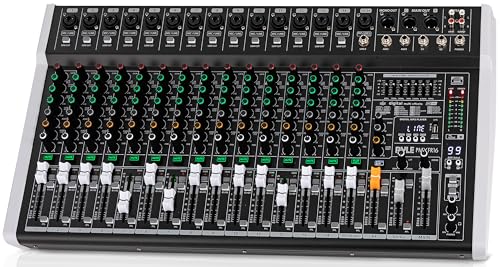
- 7-band EQ from 63Hz to 15kHz
- USB recording, Bluetooth, and MP3 playback
- 99 DSP effects plus +48V phantom power
Best For: Podcasters who want mixer controls, EQ, and recording in one device
Compact Voice EQ
EQ 7-Band Stereo Equalizer for Headphone and PC Audio

- 7 bands from 60Hz to 15kHz
- 5x (14dB) pre-amp gain boost
- TRS/TRRS headset support with RCA/3.5mm outputs
Best For: Small desktop voice setups with flexible headphone and speaker routing
Dual-Channel Rack EQ for Clean Stereo Control
15-Band Stereo EQ for Home Audio
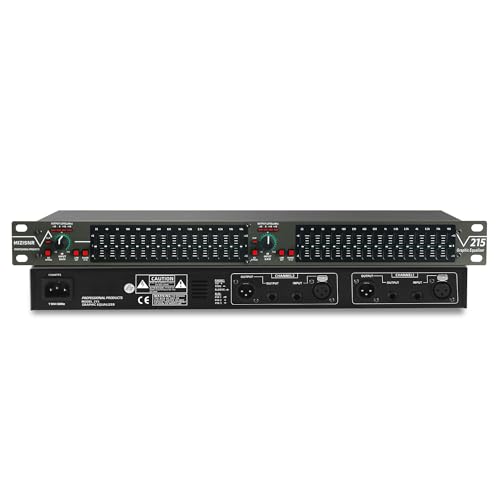
- 15-band dual-channel EQ with ±12dB range
- Low-cut switch helps reduce rumble and hum
- XLR and 1/4" TRS inputs/outputs
Best For: Podcasters wanting simple rack-mount control and noise cleanup
Digital 31-Band Tuning for Detailed Podcast Cleanup

- 31-band dual-channel EQ with PC software tuning
- 10 presets plus bypass mode for quick comparisons
- DSP noise reduction helps cut background noise
Best For: Creators who want detailed digital control and software-assisted tuning
Rack EQ with Bass Output Flexibility
Stereo Graphic Equalizer with Subwoofer Output

- Dual-channel 15-band EQ with ±12dB control
- Dedicated bass output with adjustable frequency
- Low-cut feature and XLR/TRS connectivity
Best For: Podcasters who need stereo EQ plus dedicated bass output control
Compact 7-Band Equalizer – 7 Band Sound Equalizer
If you want a straightforward audio equalizer for podcasting, this compact 7-band unit gives you hands-on control over key voice frequencies without a complicated setup. It offers dual-channel processing, a 7-band range from 60Hz to 15kHz, and ±12dB adjustment, which makes it useful for shaping voice tone and taming problem areas in a simple recording or streaming chain.
Best For: Podcasters who want a small, hardware EQ with direct frequency control and 3.5mm compatibility.
Pros:
- 7-band control with ±12dB adjustment across voice-relevant frequencies
- Dual-channel design for stereo or two-channel use
- 3.5mm interface with support for a 4-pin plug and headset mic output
- Aluminum alloy build and compact freestanding design
Cons:
- Limited to a fixed 7-band layout, so fine-tuning is less detailed than larger EQs
- 3.5mm-based design may be less flexible than pro balanced gear
- Best suited to basic voice workflows rather than advanced studio routing
Overall, this is a practical pick if you want basic EQ shaping for podcasting in a small, hardware-focused format. It favors simplicity and compatibility over deep control, which can be exactly what many solo creators need.
Bluetooth Tone Shaper – Douk Audio EQ5 Tone Upgraded Version
Among audio equalizers for podcasting, this Douk Audio unit stands out for creators who also want a compact preamp-style box with visual monitoring and wireless input. Its 5-band layout focuses on common tone-shaping points, while the bypass, balance control, and dual VU meters make it easier to manage sound during a desktop recording or content creation setup.
Best For: Podcasters who want Bluetooth convenience, visual level feedback, and easy tone control in one compact box.
Pros:
- 5-band EQ with independent op-amp processing for each frequency band
- Bluetooth 5.0 support for wireless audio streaming
- Dual 45mm VU meters for real-time signal monitoring
- Bypass and balance controls plus gold-plated I/O interfaces
Cons:
- Only 5 EQ bands, so adjustment options are more limited than larger graphic EQs
- Bluetooth is useful, but wired studio routing may still be preferable for critical recording
- DC 5V power and compact design suggest a desktop-friendly rather than full rack solution
This is a good fit if you value convenience and visual feedback alongside basic EQ shaping. It is less about deep studio control and more about making everyday audio management easy and approachable.
Streaming Mixer with Fader – FIFINE Ampligame SC3 Gaming Audio Mixer
If you’re looking at audio equalizers for podcasting but need more than EQ alone, this FIFINE mixer adds channel control, monitoring, and voice effects in one unit. It includes XLR mic input with 48V phantom power, individual sliders for multiple channels, and simple front-panel controls that can make a podcast or streaming workflow easier to manage.
Best For: Podcasters and streamers who want hands-on mic control, monitoring, and built-in voice effects.
Pros:
- XLR mic input with built-in 48V phantom power for condenser mics
- Individual control for microphone, line in, headphone, and line out channels
- Mute, monitor, and volume fader controls on the front panel
- Extra features like sound effects, voice changing modes, and customizable buttons
Cons:
- Not compatible with USB microphones
- XLR cable is not included
- Sound effects and RGB may be more than some podcast-only setups need
This is better described as a small mixer with podcast-friendly controls than a pure EQ device. For creators who want tactile control, monitoring, and creative voice options, it offers a lot in a beginner-friendly package.
Rack-Mount Precision EQ – Rockville REQ231 V2 Dual 31 Band Equalizer
For buyers comparing audio equalizers for podcasting in a more advanced studio or rack setup, the Rockville REQ231 V2 offers far more detailed control than compact desktop units. Its dual 31-band layout, selectable ±6dB or ±12dB range, and balanced pro I/O make it a strong fit when you need precise tone shaping and cleaner signal management.
Best For: Podcasters with rack gear who want detailed EQ control and balanced professional connections.
Pros:
- Dual 31-band, 1/3-octave graphic EQ for detailed adjustments
- Selectable ±6dB or ±12dB boost/cut per band
- Balanced XLR and 1/4" TRS inputs and outputs
- Useful system tools like low-cut, high-cut, subwoofer output, and bypass
Cons:
- Rack-mount format is less convenient for portable or minimalist podcast setups
- May be more EQ than a simple voice-only workflow needs
- Requires AC power and is heavier than compact desktop options
This is the most pro-oriented option in the group, especially if your podcast chain already uses balanced gear. It is built for detailed control, not convenience, so it makes the most sense in a dedicated setup.
Balanced EQ Preamp – Douk Audio T7 7-Band Balanced Equalizer
If you’re comparing audio equalizers for podcasting, the Douk Audio T7 is a straightforward option for shaping tone without adding much complexity. Its 7-band layout gives you targeted control over lows, mids, and highs, and the balanced XLR/RCA connectivity makes it easy to place in a broader home or studio audio chain.
Best For: Podcasters and home audio users who want simple, precise EQ control with balanced connection options.
Pros:
- 7 bands cover 64Hz through 8KHz for targeted tone adjustments
- XLR and RCA inputs/outputs provide flexible hookup options
- High SNR and low distortion support clean audio performance
- Compact aluminum case is durable and helps with interference shielding
Cons:
- No volume control knob, so it stays fixed at the rated output level
- More suited to signal shaping than feature-heavy production workflows
The T7 is a practical pick if your priority is clean, direct equalization rather than built-in extras. It works best when you want to refine tonal balance and keep the signal path simple.
Mixer-EQ Combo – Pyle PMXFR16 16-Channel Mixer with 7-Band EQ
Among audio equalizers for podcasting, the Pyle PMXFR16 stands out because it combines EQ control with full mixer functionality. The 7-band stereo graphic EQ gives you specific frequency shaping, while the built-in recording, Bluetooth, and effects tools make it useful when you need one device to handle multiple parts of a content workflow.
Best For: Podcasters and creators who want EQ plus mixer features, recording, and onboard effects in one unit.
Pros:
- 7-band stereo graphic EQ offers detailed control from 63Hz to 15kHz
- USB recording, Bluetooth, and built-in MP3 playback expand use cases
- +48V phantom power and XLR/mic/line combo inputs support mic setups
- Low cut filters and 99 DSP effects add flexibility for live or studio use
Cons:
- Large mixer format may be more than you need for a simple podcast chain
- Feature set can be more complex than a dedicated equalizer
This is a strong choice if you want EQ as part of a broader production hub. It makes the most sense for users who value routing, recording, and processing options alongside tone shaping.
Compact Voice EQ – EQ 7-Band Stereo Equalizer for Headphone and PC Audio
If you need audio equalizers for podcasting in a compact form factor, this 7-band stereo EQ is built for simple tone shaping and routing. It adds bass and treble control across seven frequencies, includes a pre-amp gain stage, and supports both headset and speaker use through its 3.5mm and RCA connections.
Best For: Streamers, podcasters, and voice-chat users who want a small EQ with flexible headphone and speaker routing.
Pros:
- 7-band adjustment covers 60Hz through 15kHz for voice and music tuning
- 4580 op-amp provides up to 5x (14dB) gain boost
- 3.5mm support works with TRS and TRRS headsets for mic use
- RCA and 3.5mm outputs can be used at the same time
Cons:
- You must choose between RCA or 3.5mm input rather than using both together
- Less of a full production tool and more of a compact signal-shaping device
This model is a good fit when you want EQ control without a large mixer footprint. Its routing options and gain stage make it especially practical for desktop voice setups.
Dual-Channel Rack EQ for Clean Stereo Control – 15-Band Stereo EQ for Home Audio
If you want audio equalizers for podcasting that give you hands-on control over stereo sound, this 15-band rack unit is a straightforward option. It offers dual-channel processing, a low-cut switch for reducing rumble and hum, and XLR/TRS connectivity for flexible integration in a studio or home setup.
Best For: Podcasters and creators who want a simple rack-mount EQ for taming low-end noise and shaping stereo audio.
Pros:
- 15-band dual-channel design with ±12dB adjustment per band
- Low-cut switch helps reduce wind noise, floor rumble, and electrical hum
- BYPASS switch makes A/B checks and troubleshooting easier
- XLR balanced and 1/4″ TRS input/output support flexible setups
Cons:
- Analog-style control is less precise than software-based tuning
- Rack-mount format may be more than some podcast desks need
This model is a practical fit if your priority is reliable physical control and basic cleanup rather than deep digital processing. It is best used where stereo routing and low-frequency noise reduction matter more than advanced presets or software features.
Digital 31-Band Tuning for Detailed Podcast Cleanup – 31-Band Digital Equalizer
Among audio equalizers for podcasting, this digital 31-band unit stands out for creators who want detailed shaping and easy on-screen control. It combines dual-channel equalization, PC tuning, presets, and noise reduction, making it a strong fit for users who want more adjustment options than a basic analog EQ.
Best For: Podcasters and studio users who want fine-grained digital control, presets, and software-assisted tuning.
Pros:
- 31-band dual-channel EQ offers very detailed frequency control
- PC software support adds a deeper tuning workflow
- 10 presets and bypass mode make comparisons quick
- Built-in DSP noise reduction helps clean up background noise
Cons:
- Digital features may be more complex than a simple knob-and-fader layout
- Requires more setup attention than a basic rack EQ
This is the most feature-rich choice in the group, especially if you want to refine podcast audio with presets, real-time feedback, and software support. It makes sense for users who value detailed control over a minimal workflow.
Rack EQ with Bass Output Flexibility – Stereo Graphic Equalizer with Subwoofer Output
If your podcast setup also doubles as a broader home audio or production system, this rack-mount unit offers useful low-end control alongside standard stereo equalization. It includes dual-channel 15-band adjustment, a dedicated bass output with adjustable frequency, and both XLR and 1/4″ TRS connectivity for flexible routing.
Best For: Podcasters who want stereo EQ plus dedicated bass output control in a rack-friendly format.
Pros:
- Dual-channel 15-band EQ with ±12dB control per band
- Dedicated bass output adds extra low-end management options
- Low-cut feature helps remove unwanted low-frequency noise
- XLR balanced and 1/4″ TRS connections support versatile setups
Cons:
- Bass-output features may be unnecessary for simple voice-only podcasting
- Rack-mount design is better suited to fixed installations than portable use
This is a solid pick if you want a more flexible EQ that can handle both podcast cleanup and system-wide low-end shaping. It is especially appealing when you need more than a standard stereo graphic EQ.
How We Picked These Audio Equalizers for Podcasting
We focused on equalizers that make sense for spoken-word work: clear band controls, usable inputs and outputs, low-noise design, and setups that fit common podcast gear. We also favored models that offer enough flexibility for voice shaping without pushing beginners into overly complex workflows.
Quick Comparison
For simple desktop podcast rigs, compact 5-band and 7-band units are usually the easiest to live with. If you want more precise room correction or multi-source control, 15-band and 31-band rack models offer finer adjustment. Mixers with built-in EQ can be a better value if you also need microphone routing, phantom power, or streaming controls.
Key Buying Factors for Audio Equalizers for Podcasting
Band Count and Precision
Fewer bands are easier to use and great for basic voice shaping. More bands give you finer control, which can help tame room harshness, reduce muddiness, or clean up a bright microphone.
Connection Types
Check whether your setup needs 3.5mm, RCA, XLR, or balanced connections. For podcasting, matching the equalizer to your interface, mixer, or speakers matters more than chasing extra features.
Noise and Signal Quality
Since voice recordings reveal background hiss quickly, look for units with solid noise reduction, clean gain staging, and a reputation for stable output.
Workflow Fit
If you record solo or with a simple USB mic, a compact EQ may be enough. If you run multiple mics, stream live, or manage guests, a mixer or rack equalizer can be a better long-term choice.
Who Should Buy Which Audio Equalizers for Podcasting?
Choose a compact EQ if you want straightforward voice tuning and minimal setup. Pick a rack-mount graphic equalizer if you already have a dedicated audio chain and want deeper control. Select a mixer with EQ if you need podcast routing, live monitoring, and onboard processing in one device.
For most creators, the best Audio Equalizers for Podcasting are the ones that solve a specific problem cleanly: harsh highs, muddy lows, weak voice presence, or an awkward signal chain. Start with your biggest audio issue, then choose the least complicated tool that fixes it well.