The right mixer can make streaming sound cleaner, balance microphones and game audio more easily, and reduce the need for complicated software controls.
We compare 10 audio mixers for streaming across beginner-friendly bundles, gaming-focused interfaces, compact analog mixers, and advanced production consoles so you can choose a setup that fits your workflow and budget.
Best 10 Audio Mixers for Streaming Picks for 2026
Best Analog Streaming Mixer

- Eight-input analog mixing and equalization
- USB connectivity for computer or mobile audio
- Direct PC and gaming sound integration
Best For: Hands-on streaming, podcasting, and recording
Best All-in-One Streaming Studio
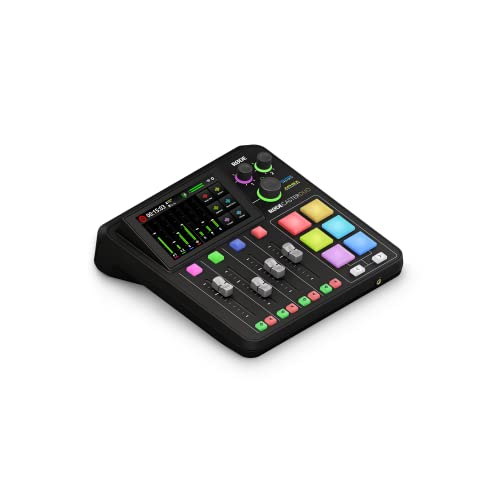
- Two combo microphone and instrument inputs
- Touchscreen, faders, and SMART pads
- APHEX processing and studio-grade effects
Best For: Podcasts, streams, and content production
Best Beginner Streaming Bundle

- Includes mixer, condenser microphone, and accessories
- Built-in effects, voice changing, and reverb
- Supports two people and multiple devices
Best For: Entry-level podcasts and live streams
Best Compact Recording Interface
Focusrite Scarlett 2i2 4th Gen

- Two mic preamps and two Hi-Z inputs
- 24-bit/192kHz audio with 120dB dynamic range
- Auto Gain, Clip Safe, and Air modes
Best For: Solo recording and simple streaming setups
Compact Control

- Five-channel compact mixer with low-noise performance
- Phantom-powered mic/line input with two-band EQ
- Stereo RCA connectivity for playback or recording
Best For: Simple one-microphone streaming and recording setups
Podcast Production Hub
MAONO AME2 Audio Interface Mixer

- XLR preamps with 60dB gain and 48V phantom power
- 11 customizable sound pads with looping support
- Effects, loopback, USB-C, Bluetooth, and instrument input
Best For: Interactive podcasts and feature-rich livestream production
Gaming Stream Control

- Four individually controlled channels for streaming devices
- XLR input with built-in 48V phantom power
- Mute, monitoring, voice changer, RGB, and dual-PC support
Best For: Gaming livestreams and interactive desktop broadcasts
Best Beginner Pick

- XLR input with 48V phantom power
- One-click noise reduction and loopback
- Voice effects, sound pads, and RGB lighting
Best For: New gamers and streamers using an XLR microphone
Best for Console and Surround Audio

- Optical, AUX, and USB-C connectivity
- Game/chat balancing with virtual 7.1 surround
- Eight voice effects and four custom sound keys
Best For: Multi-device gamers who want immersive audio control
Best for Multi-Source Control

- Four physical faders with customizable source mapping
- Three submixes for creator, audience, and teammates
- Dual USB-C, XLR input, and creator-focused routing
Best For: Windows streamers managing multiple audio sources
Best Analog Streaming Mixer – Behringer XENYX 802S
Behringer XENYX 802S Premium Analog 8-Input Mixer with USB Streaming Interface
Check Price On AmazonThe Behringer XENYX 802S is a practical choice among audio mixers for streaming if you want analog mixing and equalization with direct PC or gaming audio integration. Its stereo USB interface also supports connection to a computer or mobile device for streaming, podcasting, or recording.
Best For: Streamers and podcasters who prefer hands-on analog controls with USB connectivity.
Pros:
- Eight-input analog mixer with equalization controls
- Directly mixes PC and gaming sounds into the streaming output
- Stereo USB audio interface supports computers and mobile devices
- Designed for low-noise streaming, podcasting, and recording
Cons:
- Analog workflow may be less feature-rich than a dedicated production studio
- Powered by corded electric power rather than a battery
The 802S makes sense when straightforward analog control is more important than advanced effects or automation. Its USB and XLR, TRS, and RCA connectivity provide flexibility for a basic streaming setup.
Best All-in-One Streaming Studio – RØDECaster Duo
The RØDECaster Duo is an all-in-one option among audio mixers for streaming, combining microphone and instrument inputs, broadcast-style controls, effects, and touchscreen operation in a compact production studio. It is built for podcasting, music production, streaming, and broader content creation.
Best For: Creators who want integrated broadcast controls, effects, and touchscreen access in one unit.
Pros:
- Two Neutrik combo inputs accept microphones and instruments
- Four broadcast-quality faders and six SMART pads with bank switching
- High-resolution touchscreen provides haptic feedback
- Includes APHEX processing and studio-grade effects
Cons:
- Four-channel configuration may be limiting for larger setups
- Requires corded electric power
With its dedicated controls, touchscreen, SMART pads, and effects, the RØDECaster Duo is suited to creators who want fewer separate devices. The 3.5mm TRRS input also supports headset monitoring and recording.
Best Beginner Streaming Bundle – MAONO S1 Podcast Kit
The MAONO S1 bundle is a beginner-friendly package among audio mixers for streaming, combining a mixer, condenser microphone, tripod, cables, and accessories. It supports live streaming, podcasting, and recording with built-in effects, voice changing, monitoring, and connections for multiple devices and platforms.
Best For: New streamers and podcasters who need a bundled microphone-and-mixer setup.
Pros:
- Includes a condenser microphone, tripod, cable, windscreen, and mixer
- Offers four recordable and eight built-in audio effects
- Supports up to two people, four devices, and four platforms simultaneously
- Provides voice changing, reverb, tone controls, and real-time monitoring
Cons:
- Supports 3.5mm microphone input and does not support phantom power
- Guitars and keyboards require an additional 6.35mm-to-3.5mm adapter
- Phones without a 3.5mm jack require an OTG adapter
This kit prioritizes convenience and live-production features over expandable studio connectivity. Check your device ports and workspace dimensions before buying, and follow the setup guidance for selecting the MAONO AM200 as the computer input and output.
Best Compact Recording Interface – Focusrite Scarlett 2i2 4th Gen
The Focusrite Scarlett 2i2 4th Gen is a compact USB interface for creators comparing audio mixers for streaming and recording. It provides two microphone preamps, two Hi-Z instrument inputs, high-resolution conversion, and features that help simplify level setting and protect against clipping.
Best For: Musicians, vocalists, and streamers who need a compact two-input interface for microphones and instruments.
Pros:
- Two microphone preamps and two Hi-Z instrument inputs
- Supports 24-bit/192kHz recording with a 120dB dynamic range
- Auto Gain helps set levels while Clip Safe helps prevent clipping
- Includes Air modes and a broad recording-software bundle
Cons:
- Two-channel design is less suitable for multi-person or multi-source mixing
- Focused on recording-interface functionality rather than onboard mixer effects
The Scarlett 2i2 is a strong fit for simple microphone-and-instrument workflows rather than complex live routing. Its compact size, USB connection, and included software make it a practical starting point for recording and streamlined streaming setups.
Compact Control – Mackie Mix5
The Mackie Mix5 is a straightforward choice among audio mixers for streaming when you need a compact, low-noise setup for one microphone and stereo playback. Its dedicated inputs and main outputs make it practical for simple streaming, recording, or monitoring arrangements.
Best For: Streamers who need a small, uncomplicated mixer with one mic input and stereo line connectivity.
Pros:
- Compact five-channel design with high-headroom, low-noise performance.
- One mic/line input includes phantom power for studio condenser microphones.
- Two-band EQ provides clean, precise tone shaping.
- Dedicated stereo RCA inputs and outputs support playback or recording.
Cons:
- Only one mic/line input is provided.
- Its feature set is more basic than podcast-focused digital mixers.
The Mix5 is best suited to a focused, hands-on setup rather than elaborate live production. Choose it when compact size, simple controls, and dependable analog connectivity matter most.
Podcast Production Hub – MAONO AME2 Audio Interface Mixer
The MAONO AME2 is a feature-rich option among audio mixers for streaming, combining XLR microphone support, USB-C connectivity, sound pads, effects, and loopback functions. It is designed for creators who want more control over voice, music, and audience interaction from one console.
Best For: Podcasters, livestreamers, and content creators who want customizable sound effects, voice processing, and multiple connection options.
Pros:
- Supports XLR condenser and dynamic microphones with up to 60dB gain and 48V phantom power.
- Offers 11 customizable sound pads, including looping and longer audio recordings.
- Includes reverb modes, auto-tune, tone controls, pitch changing, and DENOISE.
- Provides USB-C, smartphone outputs, Bluetooth, instrument input, and loopback features.
Cons:
- USB microphones are not supported.
- The large feature set may take more time to learn than a basic mixer.
- Its stated compatibility is centered on analog microphones and supported devices.
The AME2 stands out when streaming involves more than basic mixing. Its sound pads, effects, instrument input, and device connectivity make it a versatile control center for interactive broadcasts and podcast production.
Gaming Stream Control – FIFINE Ampligame SC3W
The FIFINE Ampligame SC3W is a gaming-oriented choice among audio mixers for streaming, with four independently controlled channels for managing a microphone and other devices. It adds practical streaming controls such as mute, monitoring, voice changing, RGB lighting, and support for dual-PC arrangements.
Best For: Gamers and live entertainers who want quick physical volume control, XLR microphone support, and interactive streaming features.
Pros:
- Four individual control channels allow separate device adjustments.
- XLR microphone input includes built-in 48V phantom power for condenser microphones.
- Provides mute, real-time monitoring, volume control, voice changing, and customizable sound buttons.
- Supports USB plug-and-play PC use and dual-PC streaming configurations.
Cons:
- Its 3.5mm output connectivity is aimed primarily at desktop and gaming setups.
- RGB lighting and entertainment features may be unnecessary for minimalist broadcasts.
- The mixer has four channels, fewer than the MAONO AME2’s listed 10-channel design.
The SC3W is a strong fit for streamers who value fast, tactile adjustments during gameplay. Its individual faders and entertainment controls prioritize live interaction over traditional studio-style mixing.
Best Beginner Pick – MAONO G1 Neo
The MAONO G1 Neo is a compact choice among audio mixers for streaming, especially for new gamers and creators who want straightforward controls, XLR microphone support, voice effects, and RGB lighting. Its built-in preamp, 48V phantom power, one-click noise reduction, Bluetooth accompaniment, and loopback features cover many common streaming needs.
Best For: Beginner gamers and streamers building an XLR-based setup for PC, consoles, or mobile-compatible streaming workflows.
Pros:
- XLR input with built-in preamp and 48V phantom power for compatible microphones
- One-click mute, noise reduction, direct monitoring, and loopback simplify live control
- Voice changer, customizable sound pads, reverb, Bluetooth accompaniment, and RGB lighting add stream-friendly features
Cons:
- Not compatible with USB microphones, Xbox, or other MAONO devices according to the supplied notes
- Requires careful gain and volume adjustment for the best results
The G1 Neo emphasizes accessibility and entertainment rather than complex routing. It is a practical starting point if you want an easy-to-use mixer with creative effects and broad compatibility across supported devices and streaming software.
Best for Console and Surround Audio – FIFINE SC8W
The FIFINE SC8W stands out among audio mixers for streaming when gaming audio, console connectivity, and quick voice control are priorities. It combines XLR microphone support, optical input, USB-C connectivity, game/chat balancing, virtual 7.1 surround, voice effects, and programmable sound keys in one USB-powered unit.
Best For: Gamers and streamers who use PC, PS5, Switch, PS4, or optical-connected devices and want hands-on control over game and chat audio.
Pros:
- Supports XLR microphones with 48V phantom power and Dynamic/Condenser switching
- Optical, AUX, and USB-C connections support multiple gaming and streaming sources
- Game/chat dial, virtual 7.1 surround, eight voice effects, and four custom sound keys provide live control
Cons:
- Its feature-rich control set may take time to configure
- The supplied notes do not identify current software-update support
The SC8W is a versatile option for creators who want more than basic microphone mixing. Its optical input and game/chat dial are particularly useful for gaming setups where balancing communication and in-game sound quickly matters.
Best for Multi-Source Control – MAONO G3
The MAONO G3 is designed for streamers who need hands-on management of several audio sources. Among audio mixers for streaming, it is a strong fit for Windows PC setups because its four physical faders, dual USB-C connections, XLR input, submixes, and source mapping can organize mic, game, music, chat, and alerts from one desktop unit.
Best For: Windows gamers, solo creators, and streamers managing multiple sources, game chat, commentary, and audience audio.
Pros:
- Four assignable faders can control mapped mic, game, music, chat, or alert sources
- Three submixes allow different audio experiences for the creator, audience, and teammates
- XLR input, 48V phantom power, up to 57 dB low-noise preamp, direct monitoring, and AI noise-reduction support add creator-focused flexibility
Cons:
- Designed primarily for Windows PC workflows, making it less suitable for Mac-first users
- Users with very gain-hungry dynamic microphones may need a different solution
- Source mapping and routing require setup before the controls work as intended
The G3 is the most control-oriented option in this group. It makes sense for creators who regularly balance several sources or send different mixes to themselves, viewers, and teammates, though its routing-focused design is more than a basic streaming setup may require.
How We Picked the Best Audio Mixers for Streaming
We evaluated these Audio Mixers for Streaming based on input flexibility, connection options, monitoring controls, ease of setup, software compatibility, and the types of creators they serve. We also considered whether each model is better suited to gaming, podcasting, music, voice chat, or mixed-content broadcasts.
Models with USB connectivity can simplify computer-based streaming, while analog mixers may offer useful hands-on control at a lower price. We also looked for practical features such as headphone monitoring, mute controls, faders, effects, loopback support, and phantom power for condenser microphones.
Quick Comparison
| Best For | What to Look For | Typical Advantage |
|---|---|---|
| New streamers | Simple controls and USB connectivity | Faster setup with fewer technical hurdles |
| Gaming creators | Independent volume controls, mute buttons, and chat mixing | Easy adjustment during live play |
| Podcasters | Multiple mic inputs, routing, and monitoring | Better control over guests and recorded sources |
| Musicians | Clean preamps, phantom power, and instrument support | More flexibility for vocals and instruments |
| Advanced creators | Dedicated effects, programmable controls, and multitrack features | Greater production control and expansion potential |
Key Buying Factors for Audio Mixers for Streaming
Inputs and Connections
Count the sources you plan to use at the same time: microphone, headset, game audio, music, phone, co-host, or instruments. XLR inputs are preferable for many dedicated microphones, while 3.5mm and USB connections can be convenient for headsets and computers.
USB, Analog, and Routing
A USB mixer or audio interface can send your mix directly to a computer. Analog models are useful when you already have a separate interface or need straightforward physical mixing. Check whether the device supports loopback if you want to route computer audio, calls, or music into a stream.
Monitoring and Controls
Look for a headphone output with a useful volume range, direct monitoring, mute controls, and separate level adjustments. Faders are convenient for frequent live changes, while compact knobs can save desk space.
Microphone Support
If you use a condenser microphone, verify that the mixer provides 48V phantom power. Dynamic microphones may require more gain, so check compatibility and available preamp power before buying.
Who Should Buy Which Audio Mixers for Streaming?
Choose a compact gaming mixer if you mainly stream games and want quick access to chat, microphone, and system-volume controls. A small analog mixer is a sensible choice for simple multi-source setups, especially when you already own an audio interface.
Podcasters and interview creators should prioritize multiple microphone inputs, reliable monitoring, and flexible routing. Beginners may prefer a bundle or integrated console that includes essential accessories and reduces setup decisions. Musicians and creators who need cleaner recording, instrument support, or future expansion should consider a dedicated USB audio interface or a more capable production-focused mixer.
Before purchasing, confirm the operating-system support, required cables, microphone connector type, desk footprint, and whether the mixer works with your preferred streaming software. The best option is the one that provides the inputs and controls you will actually use without adding unnecessary complexity.