Choosing the right compact studio monitors can make a small room feel far more controlled, revealing detail that budget speakers often blur. If you produce, edit, or mix at a desk, the right pair can improve every session.
This roundup focuses on compact, nearfield-friendly options that balance size, clarity, and practical features like Bluetooth, desktop tuning, and easy placement.
Best 10 Compact Studio Monitors Picks for 2026
Desktop-Focused Reference
ADAM Audio D3V Active Desktop Studio Monitor Speakers
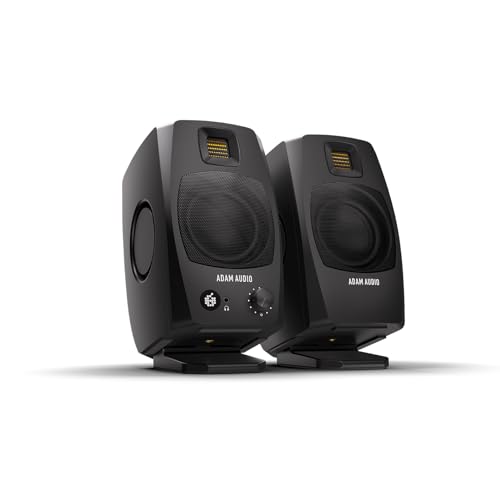
- USB-C direct connection to computers and mobile devices
- 3.5-inch woofers with dual passive radiators reach 45 Hz
- Includes D-ART tweeter, headphone jack, and angled stands
Best For: Songwriters and producers who want premium desktop monitoring with USB-C
Budget All-Rounder
PreSonus Eris 3.5 Powered Studio Monitors

- 50 watts of built-in power in a compact stereo pair
- 3.5-inch woofers and 1-inch silk-dome tweeters
- High/low tuning controls plus front aux and headphone jack
Best For: Budget buyers wanting small powered monitors for desktop use
Bluetooth Desktop Reference
JBL Professional 104-BT Compact Desktop Reference Monitors
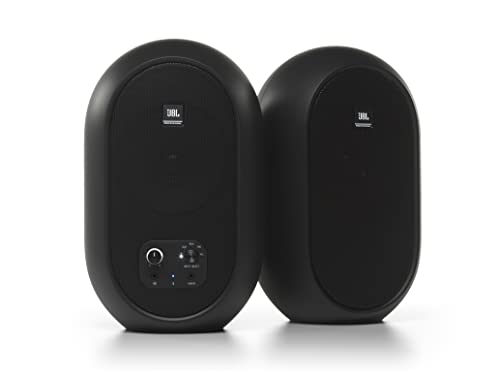
- Bluetooth 5.0 streaming with TRS, RCA, and aux inputs
- Coaxial 4.5-inch woofer and 0.75-inch tweeter
- Front-panel source control and headphone mute jack
Best For: Desktop creators needing Bluetooth and multiple input choices
Small Room Monitor Pair
Yamaha HS3 Powered Studio Monitor Pair

- Pair of 2-way powered monitors with 3.5-inch woofer
- Room control and high trim help adapt sound to the space
- XLR/TRS, RCA, and stereo mini inputs included
Best For: Small studios and desk setups needing simple room adjustment
Compact Desktop Studio Pick
M-AUDIO BX3 3.5" Wired Studio Monitors Pair

- Zero-latency wired desktop monitoring
- 3.5-inch Kevlar woofers with silk dome tweeters
- Multiple inputs and rear EQ controls
Best For: Desktop creators who want a compact wired monitor pair with flexible inputs
Balanced Nearfield Choice
Yamaha HS4 Powered Studio Monitor Pair

- 4.5-inch woofer with 1-inch dome tweeter
- Room control and high trim adjustments
- XLR/TRS, RCA, and stereo mini inputs
Best For: Producers and editors who need a compact powered monitor pair for nearfield use
Ultra-Portable Reference Pick
IK Multimedia iLoud Micro Monitor

- Tiny portable monitor with Bluetooth
- DSP EQ and position compensation modes
- 50W RMS with RCA and 1/8-inch aux inputs
Best For: Mobile creators who need a very small reference monitor with wireless support
Studio starter pick

- 50W powered desktop monitors
- Acoustic tuning for room matching
- TRS, RCA, aux, and headphone jack
Best For: Desktop creators who want a compact, wired pair with tuning controls and flexible inputs.
Desk-friendly tune-up choice

- Tone Knob for quick voicing changes
- Location Switch helps with wall placement
- Includes pads and cables in the box
Best For: Small studios and desktop setups where you want fast voicing control and easy placement correction.
Wireless desk upgrade

- Bluetooth 5.0 plus wired inputs
- 50W powered near-field design
- Room tuning controls for easy adjustment
Best For: Users who want compact near-field monitors with Bluetooth alongside wired studio connections.
Desktop-Focused Reference – ADAM Audio D3V Active Desktop Studio Monitor Speakers
If you want compact studio monitors that bring a more premium desktop monitoring feel, the ADAM Audio D3V is built for exactly that role. It’s a fully active pair with USB-C connectivity, 3.5-inch aluminum woofers, dual passive radiators, and ADAM’s D-ART tweeter, making it a strong fit for close-up listening, production, and casual use at a desk.
Best For: Songwriters, producers, and listeners who want a compact desktop monitor system with USB-C convenience.
Pros:
- Fully active pair with direct USB-C connection to computers and mobile devices.
- 3.5-inch woofers plus dual-sided passive radiators extend response down to 45 Hz.
- D-ART tweeter is designed for precise, unfatiguing high frequencies.
- Includes angled desktop stands and a front headphone jack for easy everyday use.
Cons:
- Only one pair size in a compact format, so output is geared to desktop use.
- Rear-panel connectivity and placement switches may take a little setup time.
For buyers comparing compact studio monitors for a desk or small room, the D3V stands out for its feature set and flexible connectivity. It’s the most convenience-oriented option here, especially if USB-C and a tidy desktop setup matter.
Budget All-Rounder – PreSonus Eris 3.5 Powered Studio Monitors
The PreSonus Eris 3.5 is a straightforward pick if you want compact studio monitors that can do double duty for music, games, movies, and everyday desktop listening. Sold as a stereo pair, they offer 50 watts of amplification, front and rear connections, and basic tuning controls to help them fit different rooms and setups.
Best For: Budget-conscious buyers who want small powered monitors for mixed desktop use.
Pros:
- Sold as a complete stereo pair with 50 watts of built-in amplification.
- 3.5-inch woven-composite woofers and 1-inch silk-dome tweeters aim for balanced sound.
- High- and low-frequency controls help adjust sound for the room.
- Front aux input and headphone jack make desk use simple and convenient.
Cons:
- Small size and 50-watt output are better suited to near-field listening than larger spaces.
- Front-panel simplicity means fewer advanced features than pricier options.
As compact studio monitors, the Eris 3.5 model is about practicality and value rather than headline features. It’s a sensible option if you need a clean, easy-to-connect pair for a desktop or bookshelf setup.
Bluetooth Desktop Reference – JBL Professional 104-BT Compact Desktop Reference Monitors
The JBL Professional 104-BT is aimed at desktop users who want compact studio monitors with flexible inputs and Bluetooth streaming. Its coaxial driver design, 60-watt Class D amplifier, and front-panel source selection make it a practical choice for small desks where you need both monitoring and easy everyday playback.
Best For: Desktop creators who want Bluetooth-enabled reference monitors with multiple input options.
Pros:
- Coaxial 4.5-inch woofer and 0.75-inch soft-dome tweeter for a wide sweet spot.
- Bluetooth 5.0 plus TRS, RCA, and aux inputs cover many sources.
- Front-panel controls include source selection, volume, and a headphone jack with mute.
- Compact desktop-optimized cabinet with a 60-watt Class D amplifier.
Cons:
- Bluetooth convenience may not matter if you only need a wired studio setup.
- Larger 4.5-inch driver makes it a bit less compact than 3.5-inch alternatives.
For buyers comparing compact studio monitors for a desk, the 104-BT offers one of the most flexible connection sets in the group. It’s especially appealing if you want a monitor pair that can switch easily between studio work and casual streaming.
Small Room Monitor Pair – Yamaha HS3 Powered Studio Monitor Pair
The Yamaha HS3 is a compact pair built for straightforward near-field monitoring in small spaces. With a 3.5-inch cone woofer, 0.75-inch dome tweeter, room control and high trim adjustments, and multiple input options, it fits neatly into a practical desktop or small-studio workflow.
Best For: Small studios and desk setups that need a simple powered monitor pair with basic room adjustment.
Pros:
- Pair of 2-way powered monitors with a compact 3.5-inch woofer design.
- Room control and high trim response controls help tailor the sound.
- XLR/TRS combo, RCA, and stereo mini inputs support several source types.
- Includes stereo mini-to-RCA cable, speaker cable, and anti-slip pad.
Cons:
- Output is modest at 26 W and above, so it’s aimed at close listening.
- Smaller 3.5-inch woofer limits low-end reach compared with larger monitors.
If you want compact studio monitors that stay simple and space-saving, the HS3 is easy to place and easy to connect. It’s a sensible option for buyers who value room adjustment and a no-fuss powered pair over extra features.
Compact Desktop Studio Pick – M-AUDIO BX3 3.5" Wired Studio Monitors Pair
If you want compact studio monitors for a desktop setup, the M-Audio BX3 pair is built around simple wired monitoring with a small footprint and broad input support. The 3.5-inch Kevlar woofers, silk dome tweeters, and MDF cabinet are aimed at clean nearfield sound for music production, streaming, gaming, and everyday desktop audio.
Best For: Desktop creators who want an affordable wired monitor pair with flexible connectivity.
Pros:
- Zero-latency wired connection for monitoring and desktop work
- 3.5-inch Kevlar woofers and silk dome tweeters for clear stereo imaging
- MDF cabinet with bass reflex design to reduce vibration
- Rear EQ controls plus multiple inputs, including RCA, 1/4-inch, and 1/8-inch
Cons:
- Small woofer size limits deep bass output
- Best suited to close-range listening rather than filling a room
Overall, the BX3 is a practical pick if you need compact studio monitors that stay flexible on a crowded desk. It leans more toward convenience and clarity than outright power, which fits compact home setups well.
Balanced Nearfield Choice – Yamaha HS4 Powered Studio Monitor Pair
The Yamaha HS4 is a compact studio monitor pair designed for nearfield work where accurate playback matters more than big-room volume. With a 4.5-inch woofer, 1-inch dome tweeter, and room control/high trim adjustments, it gives you the kind of simple, practical tuning that suits a small studio desk.
Best For: Producers and editors who want a compact powered pair with straightforward tone controls.
Pros:
- Powered 2-way design with 4.5-inch woofer and 1-inch dome tweeter
- Room control and high trim controls help tailor the sound
- Useful input options: XLR/TRS combo, RCA, and stereo mini
- Pair includes cable and anti-slip pad for setup convenience
Cons:
- Maximum output is modest at 26 watts
- Smaller format is best for nearfield listening, not high-volume playback
For buyers comparing compact studio monitors, the HS4 stands out as a tidy powered option with enough connectivity to fit many desktop workflows. It’s a sensible choice when you want controlled, accurate monitoring in a small space.
Ultra-Portable Reference Pick – IK Multimedia iLoud Micro Monitor
The IK Multimedia iLoud Micro Monitor is one of the smallest compact studio monitors in this group, but it still focuses on true linear response and practical DSP tuning. With Bluetooth, RCA, and 1/8-inch aux inputs, it works well for small home studios, travel setups, and desktop listening where space is tight.
Best For: Mobile creators and small-room users who want a tiny reference monitor with wireless convenience.
Pros:
- Very small, lightweight design for portable use
- Internal DSP with EQ and position compensation settings
- Bluetooth support plus RCA and 1/8-inch aux inputs
- 50W RMS output with a front-firing bass reflex port
Cons:
- 3-inch woofer size limits low-end scale
- Best for personal monitoring rather than larger room playback
If portability matters most, the iLoud Micro Monitor is an easy fit among compact studio monitors because it combines tiny dimensions with useful tuning tools. It is especially appealing for creators who move between home, travel, and mobile workspaces.
Studio starter pick – PreSonus Eris 3.5 White
If you want compact studio monitors that fit easily on a desk but still aim for clear, balanced sound, the PreSonus Eris 3.5 White is a straightforward option. With 50 watts of built-in power, 3.5-inch woven-composite woofers, and 1-inch silk-dome tweeters, these speakers are built for near-field listening in a home studio, dorm, or multipurpose setup.
Best For: Desktop creators who want a compact, wired pair with tuning controls and flexible inputs.
Pros:
- 50 watts of built-in amplification for clear, distortion-free playback
- High- and low-frequency acoustic tuning controls help match your room
- Balanced TRS, RCA, front aux, and front headphone jack for easy connectivity
- Sold as a complete stereo pair in a small desktop-friendly footprint
Cons:
- No Bluetooth in this white version
- 3.5-inch woofers are compact, so bass output is naturally limited
- Best suited to near-field use rather than larger rooms
Overall, this is a practical choice if your priority is accurate sound in a compact package. The tuning controls and multiple wired inputs make it especially useful when you want one pair for music production, gaming, streaming, and general desktop audio.
Desk-friendly tune-up choice – Mackie CR3.5 Pair
The Mackie CR3.5 pair is built for compact studio monitors shoppers who want a simple desk setup without extra menu diving. These 3.5-inch monitors are sold as a pair for desks and small studios, and the Tone Knob plus Location Switch give you quick, practical ways to shape the sound for your space.
Best For: Small studios and desktop setups where you want fast voicing control and easy placement correction.
Pros:
- Tone Knob lets you adjust voicing directly from the desk
- Location Switch helps correct bass when speakers sit near a wall or in open space
- Includes isolation pads and cables, so you can start using them right away
- Sold as a pair and sized for desks and small studios
Cons:
- RCA and TRS wired connectivity only, with no Bluetooth
- 3.5-inch woofers are best for near-field listening, not full-room playback
- Designed as a practical monitor set rather than a feature-heavy system
For buyers who want straightforward control and an easy setup, these monitors make a strong case. The included accessories and simple tuning tools make them especially appealing if your desk position changes or your room acoustics are not ideal.
Wireless desk upgrade – PreSonus Eris 3.5BT Black
If you need compact studio monitors with a little more convenience, the PreSonus Eris 3.5BT adds Bluetooth 5.0 to the same small desktop-friendly format. It keeps the 50-watt powered design, 3.5-inch woven-composite woofers, and 1-inch silk-dome tweeters, while also offering wired inputs for interfaces, desktops, and other gear.
Best For: Users who want compact near-field monitors with Bluetooth alongside wired studio connections.
Pros:
- Bluetooth 5.0 adds wireless listening convenience
- 50 watts of built-in power for clear, distortion-free sound
- High- and low-frequency controls help tailor the sound to your room
- TRS, RCA, aux, and Bluetooth give you flexible hookup options
Cons:
- Bluetooth is convenient, but wired listening is still the better fit for serious studio work
- 3.5-inch drivers keep the cabinet compact, which limits low-end output
- Best suited to desktop and near-field use rather than larger listening spaces
This version is the most flexible of the three if you want one pair for both casual use and desk-based monitoring. It’s a strong fit when you want compact studio monitors that can handle audio production, gaming, and everyday playback without sacrificing connection options.
How We Picked These Compact Studio Monitors
We prioritized small-footprint models that make sense on a desktop or in a tight studio space, with an emphasis on usable sound quality, active amplification, and overall value. We also looked for options that suit different workflows, from casual content creation to more critical music production.
Because Compact Studio Monitors are often used close to the listener, we gave extra weight to models with clean midrange response, reasonable bass for their size, and controls that help them adapt to a desk or wall-adjacent setup.
Quick Comparison
If you want the most flexible all-around pick, look for models with balanced detail and straightforward connectivity. If you need the smallest possible footprint, a 3.5-inch pair is often the easiest fit. If you care about wireless playback as well as production, Bluetooth-equipped options can be convenient, though wired connections remain the better choice for critical monitoring.
Key Buying Factors for Compact Studio Monitors
Driver Size and Low-End Expectations
Smaller drivers save space, but they also limit bass extension. For Compact Studio Monitors, that is normal. Focus on clarity through the mids and highs first, then decide whether you need a slightly larger woofer for fuller low-end playback.
Connectivity and Input Options
Check for the inputs you actually use: balanced TRS or XLR is ideal for audio interfaces, while RCA and auxiliary inputs are useful for simpler desktop setups. Bluetooth is a bonus for casual listening, but it should not replace a wired monitoring chain.
Placement and Desktop Controls
Features like high-frequency trim, tone controls, or desktop-mode switches can help compensate for reflective surfaces and wall proximity. In small rooms, these adjustments often matter as much as raw power.
Power, Volume, and Listening Distance
Most compact models are designed for nearfield use at short listening distances. You do not need huge wattage if the speakers are meant to sit close to you; clean output at moderate volumes is usually more important than headline power.
Who Should Buy Which Compact Studio Monitors?
Choose the smallest pairs if you need a tight desktop footprint, secondary editing speakers, or a simple setup for podcasting and content work. Step up to slightly larger Compact Studio Monitors if you want better fullness for music production or more reliable balance when mixing.
If you regularly switch between work and casual playback, a Bluetooth model may be the most practical choice. If accuracy is the priority, stick with a wired pair and use room placement and basic tuning to get the best results.
Ultimately, the best choice depends on your desk space, your audio interface, and how critical your listening needs are. For most buyers, a well-placed compact pair will outperform larger speakers crammed into a small room.