A quiet microphone can make cleaner recordings easier to achieve, especially when you are working in a home studio or untreated room. The best condenser microphone with low self-noise combines a quiet electronics design with the pickup pattern, connectivity, and controls your setup actually needs.
We compare 10 options ranging from affordable project-studio models to flexible XLR/USB microphones, helping you narrow the field by recording use, room conditions, and budget.
Best 10 Condenser Microphone with Low Self Noise Picks for 2026
Quiet Vocal Specialist

- 4.5 dBA self-noise rating
- Cardioid pattern for focused vocals
- Shock mount, pop filter, and XLR cable included
Best For: Vocalists, streamers, and interface-based home studios
Pattern-Flexible Studio Choice

- Continuously variable polar pattern
- Gold-sputtered 1.1-inch diaphragm
- Shock mount and internal pop filter included
Best For: Studios needing adaptable pickup patterns
Hybrid Low-Noise Workhorse

- XLR and USB-C connectivity
- Ultra-low-noise capsule
- Includes shock mount, pop filter, and both cables
Best For: Creators switching between computers and audio interfaces
Warm Low-Noise Classic

- Low-noise FET condenser design
- Warm, smooth vocal character
- Low proximity effect for close recording
Best For: Warm vocal and acoustic-instrument recording
Best Shielded Studio Pick
Shure SM4 XLR Studio Condenser Microphone Kit

- RF shielding helps reduce electronic interference
- Integrated pop filter and shock mount included
- 140 dB SPL handling for vocals and instruments
Best For: Home studios, podcasting, streaming, and close-miking
Best Budget Studio Starter
Mackie EM-91C Large-Diaphragm Condenser

- Affordable option for home or large studios
- Cardioid pickup reduces ambient sound
- Shock mount and XLR cable included
Best For: Budget-conscious vocal and instrument recording
Best Proven Home-Studio Value
Audio-Technica AT2020 XLR Condenser Microphone

- Cardioid pattern improves source isolation
- Handles high SPL and a wide dynamic range
- Includes stand mount, adapter, and pouch
Best For: Project and home-studio vocals and instruments
Best Plug-and-Play Pick

- USB/XLR connectivity for flexible recording
- USB mode offers 192kHz/24-bit audio and software controls
- Complete arm-stand recording kit included
Best For: Podcasting, streaming, voiceover, and adaptable home studios
Best Low-Noise XLR Value
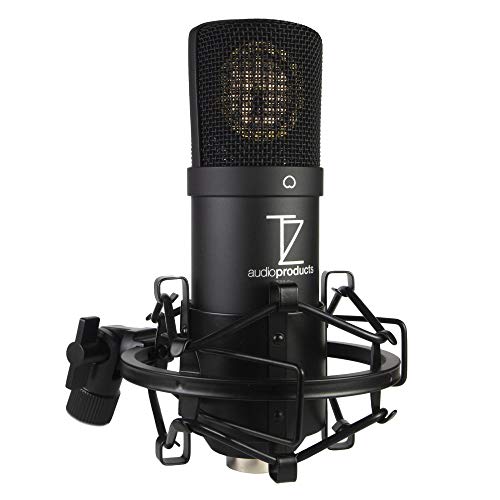
- Noise floor rated below 13dBA
- Neutral, non-fatiguing frequency response
- Includes case, shock mount, and wind cover
Best For: Detailed studio vocals and instruments with an interface
Best for Dynamic Studio Recording
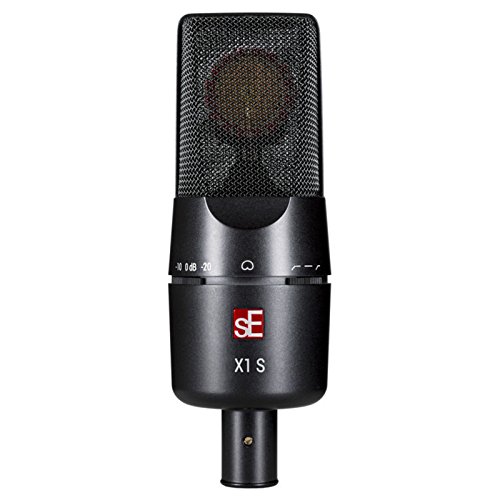
- Reduced self noise and improved sensitivity
- 160dB SPL handling for loud sources
- Filters and pads control rumble and recording level
Best For: Vocals, instruments, amps, drums, and versatile studio work
Quiet Vocal Specialist – RØDE NT1 Signature Series
The RØDE NT1 Signature Series is a strong pick if you want a condenser microphone with low self noise for vocals, streaming, and home recording. Its 4.5 dBA self-noise rating, cardioid pattern, and included shock mount, pop filter, and XLR cable make it a practical setup for focused voice capture.
Best For: Vocalists, streamers, and creators recording through an audio interface.
Pros:
- Very low 4.5 dBA self-noise helps keep quiet passages clean.
- Cardioid pattern focuses on the voice and rejects room sound.
- Includes an SM6 shock mount, pop filter, XLR cable, and dust cover.
- Legendary NT1 voicing is suited to studio vocals.
Cons:
- Requires an audio interface or compatible XLR input.
- Does not offer a USB connection.
Choose this model when clean vocal recording and a ready-to-use XLR accessory package matter more than connection flexibility. Its low noise and focused pickup make it especially suitable for controlled voice work.
Pattern-Flexible Studio Choice – CAD Audio M179
The CAD Audio M179 is a versatile large-diaphragm condenser for recording situations that benefit from adjustable pickup. Its continuously variable polar pattern moves from omnidirectional to figure-8, while the gold-sputtered 1.1-inch diaphragm is designed for a rich, detailed tone.
Best For: Studio users who need to tailor microphone pickup to different sources and room setups.
Pros:
- Continuously variable polar pattern provides broad placement flexibility.
- Gold-sputtered 1.1-inch diaphragm supports detailed sound capture.
- Includes a shock mount and internal pop filter.
Cons:
- The supplied specifications do not provide a conventional low self-noise figure.
- XLR connectivity requires compatible studio equipment.
- Its pattern controls may be more than a simple voice-recording setup needs.
The M179 is better suited to buyers who prioritize polar-pattern control over a specifically documented low-noise rating. It can adapt to multiple recording arrangements, but it is less directly targeted at noise-floor-conscious vocalists than the RØDE options here.
Hybrid Low-Noise Workhorse – RØDE NT1 5th Gen
The RØDE NT1 5th Gen combines the classic NT1 sound with both XLR and USB-C connectivity, making it a flexible condenser microphone with low self noise for studio, home, and computer-based recording. Its ultra-low-noise capsule, high SPL handling, and included accessories support vocals, voiceovers, instruments, and podcasting.
Best For: Creators who want one microphone for direct computer recording and traditional interface-based workflows.
Pros:
- Offers both XLR and USB-C connections.
- Ultra-low-noise capsule and an 80 dB signal-to-noise ratio support clean recordings.
- Supports high-resolution USB recording up to 192 kHz and clip-proof 32-bit float over USB.
- Includes shock mount, pop filter, XLR cable, USB-C cable, and dust cover.
Cons:
- Its wide feature set may be unnecessary for a simple XLR-only setup.
- USB and XLR workflows require different connection arrangements.
This is the most flexible choice in the group for buyers who want low noise without committing to one recording connection. USB-C simplifies computer recording, while XLR keeps the microphone compatible with conventional interfaces and mixers.
Warm Low-Noise Classic – MXL-V87 Condenser Microphone
The MXL-V87 is a solid-state condenser aimed at warm, clear recordings, making it a candidate for shoppers seeking a condenser microphone with low self noise for vocals and instruments. Its low-noise FET design, low proximity effect, and smoothness suit close vocal work as well as acoustic guitar and piano.
Best For: Singers and musicians who prefer a warm, smooth character for vocals and acoustic instruments.
Pros:
- Low-noise FET condenser design is intended for clean recording.
- Combines warmth and clarity for R&B, pop, and rock vocals.
- Low proximity effect helps with up-close recording.
- Suitable for acoustic guitars and pianos.
Cons:
- Uses XLR connectivity and requires compatible recording equipment.
- The supplied notes do not include a specific self-noise figure in dBA.
- Comes as a microphone-only package rather than an accessory bundle.
The V87 makes sense when tonal warmth and low proximity effect are as important as noise performance. It is a focused XLR studio microphone for vocalists and instrumentalists, but buyers should plan for any needed stand, cable, and interface separately.
Best Shielded Studio Pick – Shure SM4 XLR Studio Condenser Microphone Kit
The Shure SM4 is a strong choice if you need a condenser microphone with low self noise for vocals, instruments, podcasting, or video work. Its uniform cardioid pattern, RF interference shielding, integrated pop filter, and 60 dB signal-to-noise ratio are designed to support clean, controlled recordings.
Best For: Home studios, vocal recording, podcasting, streaming, and close-miking instruments where interference rejection and included accessories matter.
Pros:
- RF shielding helps block noise from phones, laptops, and Wi-Fi routers.
- Integrated pop filter and magnetic detachable filter help reduce plosives and rumble.
- Handles sound levels up to 140 dB and includes a shock mount and carrying case.
- All-metal construction supports stage and studio use.
Cons:
- Requires phantom power and an XLR audio interface or compatible setup.
- Its 2.5-pound weight may require a sturdy stand or boom arm.
The SM4 is the most feature-rich option here for users prioritizing a cleaner recording chain and a complete accessory kit. Its low-profile design also suits camera-facing setups.
Best Budget Studio Starter – Mackie EM-91C Large-Diaphragm Condenser
The Mackie EM-91C is a straightforward condenser microphone with low self noise for affordable vocal and instrument recording. Its large-diaphragm capsule and cardioid pattern are suited to home or larger studios, while the included shock mount and XLR cable simplify setup.
Best For: Budget-conscious home-studio users who want an XLR condenser mic for vocals and instruments.
Pros:
- Affordable professional-quality design for studio recording.
- Cardioid pattern helps reduce ambient sound pickup.
- Includes a shock mount and XLR cable.
- Rugged construction is intended for reliable use.
Cons:
- Requires an XLR-compatible audio mixer or interface.
- Its included accessories are more limited than the Shure kit.
The EM-91C keeps the essentials focused on recording: a large-diaphragm capsule, cardioid pickup, and a basic accessory bundle. It is a practical entry point for building an XLR studio setup.
Best Proven Home-Studio Value – Audio-Technica AT2020 XLR Condenser Microphone
The Audio-Technica AT2020 is a dependable condenser microphone with low self noise for project and home studios. Its cardioid pattern improves isolation from side and rear sound, while high SPL handling, a wide dynamic range, and a low-mass diaphragm support versatile vocal and instrument recording.
Best For: Project studios and beginners seeking a versatile XLR microphone for vocals, instruments, and recording software.
Pros:
- Cardioid pickup improves isolation of the intended sound source.
- High SPL handling and wide dynamic range support varied sources.
- Low-mass diaphragm provides extended frequency and transient response.
- Includes a stand mount, thread adapter, and protective pouch.
Cons:
- Requires phantom power and an XLR connection.
- Does not include a shock mount or XLR cable in the listed accessories.
The AT2020 is a sensible all-purpose choice when you want a familiar, flexible microphone for a home recording setup. Its isolation and dynamic handling make it adaptable across common studio sources.
Best Plug-and-Play Pick – MAONO A04 Gen2
If you need a condenser microphone with low self noise for podcasting, streaming, or voiceover work, the MAONO A04 Gen2 offers flexible USB and XLR connectivity. Its cardioid pickup pattern, included windscreen and pop filter, and USB-only software noise reduction make it practical for home recording setups.
Best For: Creators who want one microphone for USB recording now and XLR expansion later.
Pros:
- USB and XLR connections support computers, phones, mixers, and audio interfaces.
- USB mode supports up to 192kHz/24-bit recording and adjustable software noise reduction.
- Includes a shock mount, pop filter, windscreen, and adjustable arm stand.
Cons:
- XLR mode requires phantom power, and an XLR cable is not included.
- Software noise reduction and advanced controls are available only in USB mode.
- Not compatible with Xbox.
The A04 Gen2 is a versatile choice when convenience and included accessories matter. It is especially well suited to desk-based content creation, while its XLR output leaves room for a more traditional studio setup.
Best Low-Noise XLR Value – TZ Stellar X2
The TZ Stellar X2 is a focused XLR condenser microphone with a reported noise floor below 13dBA, making it a strong candidate when low self noise is a priority. Its large-diaphragm cardioid design and balanced, neutral voicing suit detailed vocal and instrument recording.
Best For: Studio users who already have an audio interface with 48V phantom power.
Pros:
- Low-noise transformerless JFET circuit has a stated noise floor of less than 13dBA.
- Balanced, neutral frequency response is designed to avoid harsh or fatiguing sound.
- High-grade capsule materials support reproduction of subtle sounds.
- Includes an aluminum flight case, spring shock mount, foam wind cover, and adapter.
Cons:
- Requires an audio interface with 48V phantom power.
- An XLR-to-XLR cable is needed for computer recording but is not listed among the included items.
- Provides XLR connectivity only, without direct USB operation.
With its explicitly specified low noise floor and neutral character, the Stellar X2 is a sensible fit for controlled recording environments. Plan on pairing it with a suitable interface and phantom power rather than using it as a standalone computer microphone.
Best for Dynamic Studio Recording – sE Electronics X1 S
The sE Electronics X1 S is a professional XLR condenser microphone designed for clear, detailed recording with improved sensitivity and reduced self noise. Its switchable filters and attenuation pads add useful control when recording vocals, guitars, drums, brass, or other loud sources.
Best For: Musicians and engineers who need a durable studio microphone for both quiet detail and high sound-pressure sources.
Pros:
- Ultra-low self-noise design captures detail in quiet or dynamic recording environments.
- 160dB maximum SPL handling supports loud vocals, amps, drums, and brass.
- Selectable 80Hz/160Hz filters help reduce rumble and proximity effect.
- -10dB and -20dB pads provide additional headroom for loud sources.
Cons:
- Uses XLR connectivity and requires a compatible recording setup rather than direct USB connection.
- Its advanced controls may be unnecessary for simple spoken-word recording.
- The supplied notes do not specify a numeric self-noise rating.
The X1 S stands out for versatility rather than a single use case. Its low-noise design, high SPL capacity, filters, and pads make it a practical long-term studio microphone for recording sources with widely varying volume levels.
How We Picked the Best Condenser Microphone with Low Self Noise
We focused on condenser microphones suited to recording vocals, speech, instruments, podcasts, and home-studio production. Our comparison considers published specifications where available, including self-noise, sensitivity, frequency response, polar pattern, maximum SPL, and connection type. We also looked at practical features such as pad switches, high-pass filters, variable patterns, included accessories, USB support, and overall setup flexibility.
Low self-noise matters, but it is only one part of a clean recording chain. A quiet microphone can still capture room noise, computer fans, HVAC systems, or reflections, so performance depends on both the microphone and the recording environment.
Quick Comparison
| Best for | Look for | Useful choices in this roundup |
|---|---|---|
| Home-studio vocals | Cardioid pattern, quiet electronics, solid off-axis rejection | RØDE NT1 Signature, MXL-V87, TZ Stellar X2 |
| Flexible studio recording | Multiple patterns, pad, and high-pass filtering | CAD M179, Shure SM4 |
| Podcasting and hybrid setups | USB and XLR connectivity, monitoring, easy controls | RØDE NT1 5th Gen, MAONO A04 Gen2 |
| Budget project studios | Reliable XLR connection and useful sensitivity | Audio-Technica AT2020, Mackie EM-91C |
Key Buying Factors for a Condenser Microphone with Low Self-Noise
Self-Noise and Gain Requirements
Choose a model with a low equivalent noise specification when available, particularly for quiet vocals, acoustic instruments, or close-miked speech. You will also need a clean audio interface or preamp with enough gain and stable phantom power. USB models simplify this chain but may provide less upgrade flexibility.
Polar Pattern and Room Control
Cardioid microphones reject much of the sound behind the capsule and are usually the safest choice for untreated rooms. Variable-pattern microphones are more adaptable for ensembles, room capture, and dual-source recording, but they require more careful placement.
Filters, Pads, and Maximum SPL
A high-pass filter can reduce rumble and proximity buildup, while a pad helps prevent overload from loud singers, guitar cabinets, or percussion. Check maximum SPL and frequency response if you record loud sources or want a deliberately bright, detailed sound.
Connectivity and Accessories
XLR is the standard for interfaces, mixers, and expandable studio systems. USB/XLR models are useful when you alternate between a computer and conventional recording hardware. Budget for a stand, shock mount, pop filter, and suitable cable if they are not included.
Who Should Buy Which Condenser Microphone with Low Self Noise?
Choose the RØDE NT1 Signature or TZ Stellar X2 if your priority is a quiet, focused home-studio vocal or instrument setup. The RØDE NT1 5th Gen is better for creators who want both USB convenience and XLR expansion. Select the CAD M179 or Shure SM4 when selectable patterns and studio control are more valuable than simplicity.
The AT2020, Mackie EM-91C, or MXL-V87 make practical starting points for project studios, depending on your budget and preferred voicing. For computer-based podcasting, the MAONO A04 Gen2 offers an approachable kit-style setup. The sE Electronics X1 S is a strong option when switchable filtering and attenuation are useful for varied recording sources.