The best desktop microphone preamps add clean gain, reduce noise, and help microphones perform at their full potential without requiring a large rack-mounted setup.
We selected 10 options spanning single-channel boosters, two-channel units, compact studio preamps, and versatile models with phantom power, EQ, Hi-Z inputs, or headphone-friendly outputs.
Best 10 Desktop Microphone Preamps Picks for 2026
Transformer-Toned Choice

- Single-channel mic and instrument preamp
- Ultra-high-speed input stage
- Transformer-balanced output
Best For: Desktop studios needing one dedicated preamp channel
Flexible Low-Noise Value

- Up to 75 dB gain with stated -120 dB EIN
- 48V phantom power for condenser microphones
- Balanced XLR and dual 3.5mm outputs
Best For: Vocal, podcast, and portable recording setups
Ultra-Compact Listening Amp
YWBL-WH High Gain Microphone Amplifier

- Automatic level control and high sensitivity
- 3.5mm connection for mobile recording
- 65 × 53 × 25 mm portable aluminum-alloy body
Best For: Headphone listening and simple smartphone recording
Portable Gain-Boosting Hub

- 0–72 dB adjustable gain with stated -120 dBV EIN
- Separate mic and 1 MΩ instrument inputs
- USB-C power-bank support with 48V phantom power
Best For: Streaming, podcasting, and flexible mic-plus-instrument setups
Best Clean Gain Booster
StudioMan CL-200 Dual-Channel XLR Preamp

- 25dB gain for passive dynamic and ribbon microphones
- Two channels with balanced XLR I/O
- Phantom-powered and designed for low-noise operation
Best For: Two-mic setups needing transparent passive-mic gain
Best Hands-On EQ
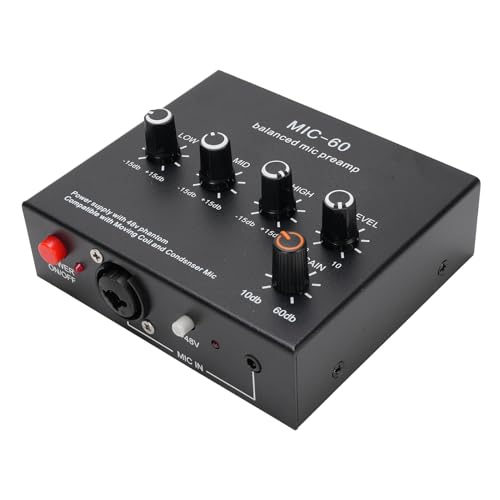
MIC-60 Mic Preamp with 3-Band EQ

- Three-band low, mid, and high EQ
- Dedicated gain and level controls
- Switchable 48V phantom power for condensers
Best For: Desktop recording and streaming with quick physical tone control
Best Flexible Gain Range
RO03 66dB Low-Noise Mic Preamp

- 19–66dB variable gain with -120dBV EIN
- Supports microphones and 1MΩ instrument input
- XLR, TRS, TS outputs and Type-C power
Best For: Vocal, instrument, and portable recording setups
Compact Dynamic Mic Booster

- +25dB clean gain for dynamic and ribbon mics
- Balanced XLR I/O with phantom-power compatibility
- Compact metal housing for desktop use
Best For: Dynamic microphones and compact XLR recording setups
Flexible Multi-Input Preamp
- Up to +60dB gain with 48V power
- Supports dynamic and condenser microphones
- XLR, 3.5mm, and 6.35mm connections
Best For: Multi-channel recording, podcasting, and live streaming
Simple Low-Noise Booster
48V XLR Microphone Preamplifier

- 20dB clean, transparent balanced gain
- 48V support for dynamic and condenser mics
- Compact black metal case with low-noise design
Best For: Straightforward XLR home-studio and podcast setups
Transformer-Toned Choice – Black Lion Audio Auteur DT
The Black Lion Audio Auteur DT is a straightforward option for shoppers comparing desktop microphone preamps. Its single-channel design combines an ultra-high-speed input stage with a transformer-balanced output for a focused recording setup.
Best For: Home studios and desktop rigs that need one dedicated mic or instrument preamp channel.
Pros:
- Supports microphone and instrument sources.
- Uses an ultra-high-speed input stage.
- Transformer-balanced output is suited to balanced audio connections.
Cons:
- Only one channel is provided.
- Its desktop footprint may require dedicated workspace.
The Auteur DT is best viewed as a purpose-built, single-channel desktop preamp rather than a multi-input solution. Choose it when its transformer-balanced output and compact studio-oriented format fit your signal chain.
Flexible Low-Noise Value – JCANOL MIC-1 Mic Preamp
The JCANOL MIC-1 stands out among desktop microphone preamps for its high gain range, low stated EIN, and multiple output formats. It is designed to support dynamic and condenser microphones, including low-output models, while also accommodating compact recording devices.
Best For: Vocal recording, podcasting, and desktop or portable setups using XLR or 3.5mm connections.
Pros:
- Offers up to 75 dB of gain and a stated -120 dB EIN.
- Includes 48V phantom power for compatible condenser microphones.
- Provides balanced XLR plus independent 3.5mm mic and line outputs.
- Includes a 1 MΩ high-impedance instrument input.
Cons:
- The two input ports cannot be used simultaneously.
- The unit’s listed channel specification may be confusing for a preamp with two input modes.
With substantial gain, flexible outputs, and a three-year warranty, the MIC-1 is a versatile choice for creators moving between desktop and mobile recording. Its main limitation is the inability to use the two input ports at the same time.
Ultra-Compact Listening Amp – YWBL-WH High Gain Microphone Amplifier
The YWBL-WH High Gain Microphone Amplifier is a tiny alternative in the desktop microphone preamps category, emphasizing portability and headphone listening. Its 3.5mm interface is intended for mobile recording and direct headphone use rather than a conventional studio XLR chain.
Best For: Mobile-device recording and headphone listening when a compact 3.5mm amplifier is preferred.
Pros:
- Provides high sensitivity and automatic level control.
- Offers stated 1,000-times amplification for weak sounds.
- Compact 65 × 53 × 25 mm aluminum-alloy design is easy to carry.
- Can connect to smartphones and drive headphones.
Cons:
- Uses a 3.5mm connection rather than balanced XLR.
- The supplied notes do not specify phantom power or standard studio input options.
- Its maximum listed voltage is 5 volts DC.
This amplifier makes the most sense for simple, portable setups and headphone monitoring. Buyers seeking conventional desktop microphone preamp connectivity or condenser-microphone support should look for a model with clearly specified XLR and phantom-power features.
Portable Gain-Boosting Hub – RO-04 Mic Preamp
The RO-04 is a versatile option among desktop microphone preamps, pairing 0–72 dB adjustable gain with a stated -120 dBV EIN. It adds separate microphone and instrument inputs, 48V phantom power, and output options intended for both computer-based and mobile streaming setups.
Best For: Streamers, podcasters, and recording users who need adjustable gain, instrument compatibility, and USB-C power-bank flexibility.
Pros:
- Provides adjustable gain from 0 to 72 dB and stated -120 dBV EIN.
- Includes separate mic and 1 MΩ instrument inputs.
- Supports 48V phantom power, HPF, and phase functions.
- Offers dual output levels and USB-C power-bank operation.
Cons:
- It is larger and heavier than many compact portable preamps, at 2.42 pounds.
- The supplied notes do not identify the exact connector types for each output.
The RO-04 is a strong fit when a desktop or mobile rig needs more than basic gain. Its dual-input design and power flexibility broaden its use, while the adjustable range helps accommodate both low-output microphones and instruments.
Best Clean Gain Booster – StudioMan CL-200 Dual-Channel XLR Preamp
For desktop microphone preamps, the StudioMan CL-200 is a focused solution for raising the output of passive dynamic and ribbon microphones without adding unnecessary tone shaping. Its two channels and balanced XLR connections suit recording, streaming, and live setups where clean gain and longer cable runs matter.
Best For: Users who need transparent gain for two passive microphones, especially in home studios or live rigs.
Pros:
- Provides up to 25dB of clean gain for dynamic and passive ribbon microphones.
- Dual-channel design can process two microphone signals simultaneously.
- Uses 48V phantom power from a compatible mixer or interface and supports balanced XLR connections.
- Low-noise specifications and support for longer output cable runs help preserve signal quality.
Cons:
- It cannot pass phantom power to condenser microphones and is not compatible with them.
- The microphone-to-booster cable is recommended to be shorter than 30 feet.
- It requires a mixer, interface, or preamp that supplies 48V phantom power.
The CL-200 is best viewed as a clean, compact signal booster rather than a full tone-shaping preamp. Choose it when your passive microphone needs more level and you want to avoid pushing interface gain to its noisiest range.
Best Hands-On EQ – MIC-60 Mic Preamp with 3-Band EQ
Among desktop microphone preamps, the MIC-60 stands out for giving you physical tone controls before the signal reaches a mixer, recorder, or other audio device. Its gain, level, and three-band EQ controls make it practical for quick vocal, podcast, streaming, and live-audio adjustments.
Best For: Home-studio and desktop users who want simple, hands-on microphone gain and tone shaping.
Pros:
- Three-band low, mid, and high EQ enables direct microphone tone adjustments.
- Dedicated gain and level controls provide separate signal management.
- Switchable 48V phantom power supports compatible condenser microphones.
- Compact metal enclosure with XLR and 6.35mm connections fits practical desktop setups.
Cons:
- It has one output channel.
- Unlike a transparent booster, its emphasis is on user-controlled EQ rather than strictly uncolored gain.
- Phantom power should remain off when using dynamic microphones that do not require it.
The MIC-60 is a straightforward choice if you prefer turning knobs instead of relying on software processing. Its feature set is especially useful when your microphone needs both additional gain and quick, basic tonal correction.
Best Flexible Gain Range – RO03 66dB Low-Noise Mic Preamp
The RO03 is one of the more versatile desktop microphone preamps in this group, combining adjustable gain with microphone and instrument support. Its 19–66dB gain range, Type-C power input, and XLR, TRS, and TS connectivity make it suitable for vocal recording, instrument tracking, and portable setups.
Best For: Users who need substantial adjustable gain, instrument compatibility, and flexible connections in a compact preamp.
Pros:
- Offers a practical 19–66dB gain range with a stated -120dBV EIN noise performance.
- Supports dynamic, condenser, and ribbon microphones, plus instruments through a 1MΩ input.
- Provides XLR, TRS, and TS connections with three outputs usable simultaneously.
- Type-C power improves portability for individual recording and streaming setups.
Cons:
- The two input ports cannot operate simultaneously.
- The manufacturer recommends connecting to an interface’s TRS line input for the lowest noise.
- Correct cable selection and connection are important for avoiding excess noise.
The RO03 is a strong fit when a simple mic booster is not enough. Its broad gain range and instrument input add flexibility, but getting the cleanest result depends on following the recommended TRS line-input connection approach.
Compact Dynamic Mic Booster – StudioMan CL-100 XLR Preamp
For desktop microphone preamps, the StudioMan CL-100 is a focused choice for dynamic and passive ribbon microphones that need more clean level. Its +25dB gain, balanced XLR connections, compact metal housing, and phantom-power compatibility make it easy to add to a home studio, podcast, streaming, or live-sound setup.
Best For: Dynamic microphones, passive ribbon mics, and compact XLR recording setups.
Pros:
- Provides up to +25dB of clean gain for low-output microphones.
- Uses balanced XLR input and output for interfaces, mixers, and recording devices.
- Compact metal chassis offers desk-friendly portability and EMI/RFI shielding.
- Wide 10Hz–20kHz frequency response and high headroom support full-range recording.
Cons:
- Designed specifically for dynamic and passive ribbon microphones rather than being a general-purpose preamp.
- Offers less maximum gain than some higher-gain alternatives.
The CL-100 makes the most sense when you want a simple, durable XLR signal booster without adding much bulk to your desktop. Its straightforward design is particularly suitable for low-level dynamic microphone chains.
Flexible Multi-Input Preamp – VBESTLIFE 3-Input Mic Booster
If you need versatile desktop microphone preamps for more than one connection type, this VBESTLIFE model stands out with up to +60dB of gain, three inputs, 48V power, and several output options. It is built for dynamic or condenser microphones and can connect with interfaces, mixers, consoles, speakers, and streaming equipment.
Best For: Multi-channel home studios, vocal recording, podcasting, and live streaming.
Pros:
- Offers up to +60dB of gain for microphones requiring substantial level boost.
- Supports both dynamic and condenser microphones with 48V power.
- Provides XLR balanced, 3.5mm, and 6.35mm output options.
- Rugged black metal housing helps reduce interference while remaining compact.
Cons:
- Its broader connector layout may be more than needed for a simple single-mic setup.
- The listed manufacturer warranty is 90 days.
This is the most connection-flexible option in the group. Choose it when your desktop setup includes varied cables or multiple downstream devices and you want considerably more gain adjustment than a basic booster provides.
Simple Low-Noise Booster – 48V XLR Microphone Preamplifier
For shoppers comparing desktop microphone preamps, this compact model keeps the feature set straightforward: balanced 20dB gain, 48V power, XLR output, and support for dynamic and condenser microphones. Its fully balanced circuit and metal case are aimed at clean, low-noise operation for vocal recording, podcasting, streaming, and studio work.
Best For: Users seeking a compact, uncomplicated XLR booster for home or professional studio use.
Pros:
- Delivers 20dB of clean, transparent gain through balanced amplification circuitry.
- 48V power supports both dynamic and condenser microphones.
- Fully balanced design is intended to minimize noise and sonic coloration.
- Lightweight metal housing is easy to carry and helps reduce EMC interference.
Cons:
- Provides less gain than the 60dB VBESTLIFE option.
- Its listed output is XLR, offering fewer connection choices than the multi-output alternative.
The appeal here is simplicity: it adds moderate gain and phantom-power support without taking up much space. It is a practical fit for users who already have an XLR-based recording chain and do not need multiple output formats.
How We Picked These Desktop Microphone Preamps
We focused on the features that most directly affect recording results and everyday usability: available gain, noise performance, microphone compatibility, phantom-power support, input and output types, channel count, controls, and overall desktop practicality. The selection includes dedicated XLR preamps as well as more flexible units intended for instruments, headphones, or basic home-studio routing.
Specifications such as maximum gain and equivalent input noise are useful comparison points, but they do not tell the entire story. Power requirements, connector quality, control layout, and compatibility with your interface or mixer also matter.
Quick Comparison
| Best For | Features to Prioritize | Recommended Type |
|---|---|---|
| Dynamic vocal microphones | High, clean gain and low noise | Dedicated inline or desktop preamp |
| Condenser microphones | 48V phantom power and balanced XLR | Full-featured microphone preamp |
| Two microphones | Dual channels and independent controls | Two-channel desktop model |
| Voice and instruments | Hi-Z input, EQ, or flexible outputs | Multi-purpose preamp |
| Compact setups | Small footprint and simple connections | Single-channel desktop booster |
Key Buying Factors for Desktop Microphone Preamps
Gain and Noise
Dynamic and ribbon microphones often need substantial clean gain, particularly with quiet speakers or distant microphone placement. Look for enough headroom for your microphone rather than choosing the highest advertised number alone. A low-noise design is especially important when adding significant gain to podcasts, vocals, or spoken-word recordings.
Phantom Power and Microphone Compatibility
Condenser microphones typically require 48V phantom power, while many dynamic microphones do not. If you use several microphone types, choose a preamp with clearly labeled phantom-power control. Ribbon microphones deserve extra care: confirm the manufacturer’s guidance before enabling phantom power.
Connections and Signal Routing
Balanced XLR connections are generally the best choice for longer cable runs and cleaner studio wiring. Check whether the output matches your audio interface, mixer, recorder, amplifier, or headphones. Some compact units add 3.5mm or 6.35mm outputs, but these may serve different purposes than a balanced line-level output.
Controls and Extra Features
Gain control is essential, while high-pass filtering, phase switching, EQ, Hi-Z input, automatic level control, and headphone monitoring can be valuable depending on your workflow. Avoid paying for features you will not use if a simpler signal path is your priority.
Who Should Buy Which Desktop Microphone Preamps?
Choose a simple single-channel preamp if you need more gain for one dynamic microphone and already own an audio interface or mixer. Choose a dual-channel model for interviews, stereo recording, or two-person sessions. Choose a model with 48V phantom power if you use condenser microphones or want broader microphone compatibility.
For musicians and creators who record both voice and instruments, a unit with Hi-Z connectivity, EQ, or multiple output options may provide better long-term value. If your setup is primarily a computer, microphone, and headphones, prioritize easy controls, appropriate output connections, and quiet operation over a long feature list.