The best drum machine for beginners makes rhythm creation approachable without limiting future growth. The right choice depends on whether you want hands-on beatmaking, quiet drumming practice, sampling, or a traditional hardware workflow.
We selected 10 approachable options across compact grooveboxes, MIDI controllers, electronic drum sets, samplers, and classic-style drum machines so you can match the controls, sounds, and setup to your goals.
Best 10 Drum Machine for Beginners Picks for 2026
Compact Rhythm Starter

- Four drum kits and four bass sounds
- Click track, tempo lock, and layered recording
- Built-in speaker with wired headphone support
Best For: Portable beginner beat making
Pad-Based Beat Builder
Akai MPD218 USB MIDI Pad Controller

- Sixteen velocity-sensitive MPC pads
- Three banks provide 48 assignable pads
- Includes MPC Beats and Ableton Live Lite
Best For: Computer-based beginner beat production
Pocket Sequencing Pick
Teenage Engineering PO-12 Rhythm

- Synthesized and sampled drum sounds
- Sixteen punch-in effects and pattern chains
- Built-in speaker and 3.5 mm line output
Best For: Portable creative beat sequencing
Full-Kit Learning Option
AODSK UAED-400 Electric Drum Set
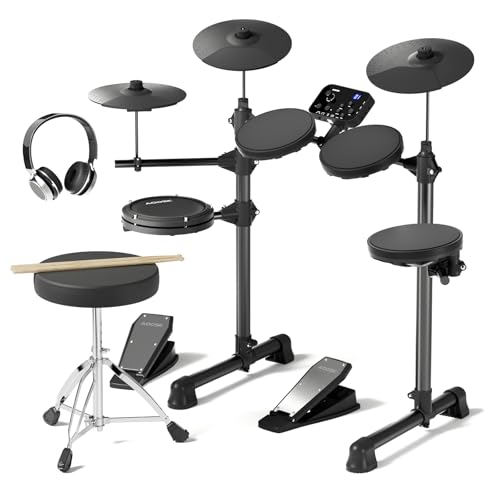
- Four pads, three cymbals, pedals, and included accessories
- 300 sounds, 30 kits, and 20 demo songs
- Headphone output, metronome, and USB MIDI
Best For: Hands-on beginner electronic drumming
Best Pocket Pick

- Built-in mic and line-in sampling
- Drum, melodic, sequencing, and effects modes
- Pocket-sized and battery powered
Best For: Portable beat-making and hands-on sampling
Best Full Kit

- Mesh pads and complete drum hardware
- 180 sounds and beginner practice tools
- Headphone practice with USB MIDI
Best For: Learning electronic drumming at home
Best Advanced Portable Pick
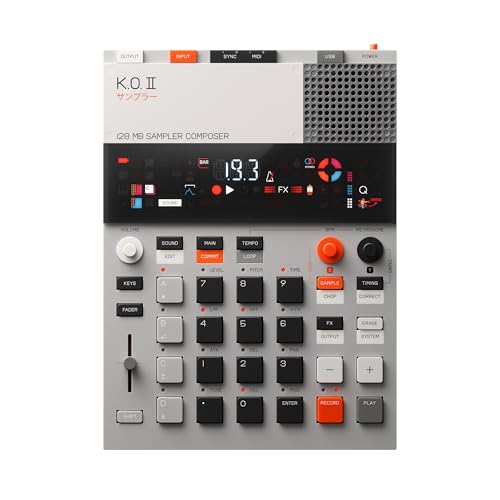
- 128 MB memory and 999 sample slots
- Reworked sequencer with pattern groups
- MIDI, sync, and performance effects
Best For: Growing into portable sampling and arrangement
Hands-On Analog Control

- Separate accent per drum
- Song mode chains patterns
- Metal alloy-steel body
Best For: Beginners learning hands-on analog sequencing
Portable Practice Pick
Sboet 9-Pad Electronic Drum Set

- Nine pads with two pedals
- Headphone output and recording
- Up to 10 hours per charge
Best For: Kids and beginners practicing at home or on the go
Classic Pattern Starter

- 15 analog drum sounds
- 34 rhythm presets
- 16-step sequencer
Best For: Beginners learning classic beat programming
Compact Rhythm Starter – Stylophone BEAT
The Stylophone BEAT is a compact drum machine for beginners who want hands-on beat making without a large setup. Its stylus interface, four drum kits, four bass sounds, click track, tempo lock, and layering features provide a practical way to explore rhythm and simple arrangements.
Best For: Beginners seeking a portable, battery-powered rhythm machine with a built-in speaker.
Pros:
- Includes four drum kits and four bass sounds.
- Click track and tempo lock help with timing.
- Supports multiple layers, muted sounds, and multiple patterns.
- Built-in speaker and wired headphone connection offer flexible monitoring.
Cons:
- Three AA batteries are required and not included.
- Its compact plastic design may offer less control depth than larger machines.
The Stylophone BEAT keeps the learning curve approachable while still offering pattern recording and layered beats. It is a sensible choice for casual practice, portable experimentation, and first steps into electronic rhythm programming.
Pad-Based Beat Builder – Akai MPD218 USB MIDI Pad Controller
The Akai Professional MPD218 is a USB MIDI pad controller for beginners who want to make beats with a computer or compatible iOS setup. Its 16 velocity-sensitive MPC pads, three pad banks, assignable knobs, and included MPC Beats software create a flexible starting point for learning production.
Best For: Beginners who want tactile drum-pad control for computer-based beat production.
Pros:
- Sixteen velocity-sensitive pads expand to 48 assignable pad locations through three banks.
- Eighteen assignable knobs provide control over software parameters.
- Includes MPC Beats, Ableton Live Lite, and Drum Synth 500 software.
- USB-powered and compact for portable production.
Cons:
- It is a MIDI controller, so it requires compatible software or an iOS setup to generate sounds.
- An iOS Camera Connection Kit is sold separately.
The MPD218 is best suited to learners who want to build beats in a DAW rather than use a standalone drum machine. The bundled software and familiar pad layout make it a capable entry point into computer-based production.
Pocket Sequencing Pick – Teenage Engineering PO-12 Rhythm
The teenage engineering PO-12 is a pocket-sized drum machine for beginners who want portable sequencing and sound design. It combines synthesized and sampled drum sounds with 16 punch-in effects, pattern chains, and a built-in speaker for immediate experimentation.
Best For: Beginners who prioritize ultra-portable beat sequencing and creative effects.
Pros:
- Combines synthesized and sampled drum sounds in a pocket-sized format.
- Offers 16 punch-in effects for modifying patterns.
- Supports pattern chains for building longer tracks.
- Includes a built-in speaker and 3.5 mm line output.
Cons:
- Its very small size may make detailed controls less comfortable for some users.
- Two AAA batteries are required.
- The product is focused on rhythm sequencing rather than a full drum-kit playing experience.
The PO-12 is a playful introduction to sequencing, especially for users who want to create beats away from a desk. Its effects and pattern-chain features provide room to progress beyond basic loops while keeping the device highly portable.
Full-Kit Learning Option – AODSK UAED-400 Electric Drum Set
The AODSK UAED-400 is an electric drum set for beginners who want to learn by playing physical pads and cymbals. It includes four drum pads, three cymbals, pedals, a throne, sticks, headphones, 300 sounds, 30 kits, and 20 demo songs for practice.
Best For: Beginners who want a complete electronic drum kit with silent-practice and MIDI features.
Pros:
- Includes a full playing setup with pads, cymbals, pedals, throne, sticks, and headphones.
- Offers 300 sounds, 30 drum kits, and 20 demo songs.
- Headphone output supports quieter practice, while the built-in metronome helps with timing.
- USB MIDI and AUX connectivity support music creation and external devices.
Cons:
- At 19.8 pounds and roughly 39.4 inches in each listed dimension, it requires more space than pocket-sized options.
- The included setup is more involved than a standalone compact drum machine.
The UAED-400 is the most traditional learning choice in this group, giving beginners a physical kit layout and a broad selection of sounds. Its foldable frame, headphones, and MIDI output add useful flexibility for home practice and music creation.
Best Pocket Pick – PO-33 K.O. Micro Sampler
For beginners who want a compact drum machine for beginners, the teenage engineering PO-33 K.O. combines sampling, drum programming, sequencing, and effects in a pocket-sized device. Its built-in microphone and simple portable format make it useful for experimenting with beats wherever inspiration strikes.
Best For: Beginners who want portable beat-making and hands-on sampling.
Pros:
- Built-in microphone and 3.5 mm input allow sampling from many sound sources.
- Includes melodic and drum modes, sequencing, and 16 onboard effects.
- Runs on two AAA batteries and includes a built-in speaker plus headphone/output connectivity.
Cons:
- Limited to 40 seconds of sample memory.
- The very small format may require a learning period for new users.
The PO-33 K.O. is an approachable entry point for learning basic sampling and drum sequencing. Choose it if portability and creative experimentation matter more than a larger display or extensive memory.
Best Full Kit – DED-80 Electronic Drum Set
If you mean a playable electronic kit rather than a desktop groovebox, the Donner DED-80 is a practical drum machine for beginners who want to build real drumming skills. It includes mesh pads, cymbals, pedals, a throne, sticks, headphones, sounds, and guided practice features.
Best For: Beginners who want a complete electronic drum kit for practice and lessons.
Pros:
- Complete package includes four mesh pads, three cymbals, pedals, throne, sticks, headphones, and cables.
- Offers 180 sounds, 15 drum kits, 30 demo songs, and 30 accompaniment tracks.
- Headphone practice, foldable construction, USB MIDI, and Melodics lessons support home learning.
Cons:
- Requires a power amplifier for speaker output.
- Its expanded setup is less compact than a pocket or tabletop drum machine.
- The included Melodics access does not include a subscription service.
The DED-80 is the strongest choice here for learning physical drumming technique, especially in an apartment where headphones are useful. It is less suited to quick sample-based beat creation than the smaller Teenage Engineering units.
Best Advanced Portable Pick – EP-133 K.O. II Sampler
The teenage engineering EP-133 K.O. II is a more capable drum machine for beginners who want room to grow into sampling, arranging, and live performance. It expands on the pocket sampler concept with 128 MB of memory, a reworked sequencer, pattern groups, MIDI, sync, and extensive effects.
Best For: Beginners who want a portable sampler with advanced sequencing and performance features.
Pros:
- Built-in microphone and line-in support easy sampling and resampling.
- Provides 128 MB memory, 999 sample slots, and a four-track sequencer.
- Includes punch-in and master effects, pattern variation tools, MIDI, and sync connections.
- Can run on four AAA batteries or USB-C for portable use.
Cons:
- Its larger feature set may feel less immediately simple than a basic beginner groovebox.
- Portable battery operation requires four AAA batteries.
The EP-133 K.O. II is the best long-term option for beginners who expect to sample, arrange full ideas, and perform. Its deeper workflow costs more attention to learn, but the extra memory and sequencing tools reduce the need to upgrade quickly.
Hands-On Analog Control – Arturia DrumBrute Impact
If you want a drum machine for beginners that encourages hands-on experimentation, the Arturia DrumBrute Impact offers a focused analog workflow. Its dedicated drum controls, pattern chaining, and sound-shaping options provide useful room to learn beat programming.
Best For: Beginners who want a metal-bodied analog drum machine for pattern creation and live-style control.
Pros:
- Separate accent control for each drum
- Song mode can chain patterns together
- Optional Color sound shaping on most instruments
- Metal alloy-steel body with a two-year manufacturer warranty
Cons:
- Color sound shaping does not apply to the cowbell
- Its dedicated hardware workflow may be more specialized than a toy-style practice pad
The DrumBrute Impact is a strong choice if learning means turning physical controls and sequencing ideas into complete patterns. Its Song mode also helps beginners move beyond isolated loops.
Portable Practice Pick – Sboet 9-Pad Electronic Drum Set
For families looking for a drum machine for beginners, the Sboet electronic drum set combines nine pads, pedals, built-in sounds, and portable roll-up construction. Headphone output and recording make it practical for quiet practice and basic rhythm exploration.
Best For: Kids and beginners who want a portable, gift-friendly drum practice pad with speakers and headphones.
Pros:
- Nine pads, two pedals, seven timbres, and nine rhythms
- Built-in stereo speakers and a 3.5mm headphone jack
- Recording function supports performances up to 180 seconds
- Rechargeable battery provides up to 10 hours of playtime
Cons:
- Miniature, toy-sized format may not suit advanced drummers
- Power adapter is not included
- Its manufacturer-recommended age range is 0–12 years
The Sboet emphasizes accessibility rather than studio-style sequencing. Its demos, rhythms, recording feature, and portable design make it a convenient first instrument for casual practice and musical introduction.
Classic Pattern Starter – Behringer RD-78 Drum Machine
The Behringer RD-78 is a straightforward drum machine for beginners who want to start with classic electronic rhythms. Its 15 drum sounds, 34 rhythm presets, and 16-step sequencer offer an approachable foundation for learning beat construction.
Best For: Beginners and producers seeking a compact drum machine for basic sequencing, music production, and live performance.
Pros:
- Includes 15 classic analog drum sounds
- 34 rhythm presets provide immediate starting points
- 16-step sequencer supports programmed beat patterns
- Compact alloy-steel design weighs two pounds
Cons:
- The supplied notes list USB connectivity but do not specify other connector options
- Warranty information is described as community Music Tribe support rather than a stated manufacturer warranty period
With presets for quick starts and a step sequencer for learning, the RD-78 keeps the core workflow focused. It suits beginners who want to build patterns without the extra features of a larger production setup.
How We Picked the Best Drum Machine for Beginners
We focused on products that offer a relatively accessible learning curve, useful built-in sounds or responsive playing surfaces, and a clear path from first beats to more advanced music-making. The lineup includes several types of hardware because “drum machine” can mean very different things: a step sequencer for programming patterns, a pad controller that relies on software, a sampler for recording sounds, or an electronic drum kit designed for physical practice.
We also considered portability, headphone-friendly operation, connectivity, included accessories, sequencing features, and whether each option suits home practice, live use, or studio production. Product specifications and included equipment can vary by seller, so verify the current listing before buying.
Quick Comparison
| Best For | Recommended Type | What to Look For |
|---|---|---|
| Learning beat programming | Compact sequencer | Simple pattern controls, onboard sounds, and visual feedback |
| Playing pads with a computer | USB MIDI controller | Velocity-sensitive pads and compatible music software |
| Sampling and experimentation | Sampler drum machine | Microphone or audio input, memory, effects, and easy recording |
| Traditional drumming practice | Electronic drum set | Quiet pads, pedals, headphone output, and a stable setup |
| Hardware-focused production | Analog drum machine | Hands-on controls, reliable sequencing, and sound-shaping options |
Key Buying Factors for a Drum Machine for Beginners
Workflow and Learning Curve
Decide whether you prefer tapping pads in real time or placing hits on a step sequencer. Pad-based units feel more like instruments, while step sequencers can make timing and pattern construction easier to understand.
Sounds, Sampling, and Expansion
Built-in kits are convenient for immediate play. A sampler is more flexible if you want to record voices, found sounds, or custom percussion. If you already use a computer, a MIDI controller may provide the broadest software sound library for the lowest hardware complexity.
Practice Environment and Connectivity
For quiet practice, prioritize headphone output and electronic drum pads designed to reduce acoustic noise. For production, check USB, MIDI, audio outputs, and software compatibility. A compact unit is easier to travel with, but full-size kits generally offer a more natural drumming posture.
Included Accessories and Total Cost
Electronic drum sets may include pedals, sticks, a throne, headphones, or lessons, while compact machines may require cables, power supplies, or a computer. Compare the complete setup rather than the hardware price alone.
Who Should Buy Which Drum Machine for Beginners?
Choose the Stylophone BEAT or a pocket operator if you want a small, inexpensive way to learn pattern-based beatmaking. The Akai MPD218 is better for beginners who already plan to work inside music software and want responsive pads. Choose the PO-33 K.O.! or EP–133 K.O. II if sampling is central to your workflow.
For physical drumming practice, the AODSK, Donner DED-80, or Sboet electronic kits are the more natural fit; compare pad construction, included accessories, space requirements, and headphone support. The Arturia DrumBrute Impact and Behringer RD-78 are stronger choices for hands-on hardware production and classic drum-machine workflows, especially if you value dedicated controls over maximum portability.