Moving beyond a beginner flute is an exciting step, but the right upgrade depends on your technique, repertoire, hand position, and performance goals. The best flutes for intermediate players offer improved response and control without becoming unnecessarily difficult to play.
This roundup compares 10 options, including closed-hole and open-hole designs, C-foot and B-foot models, offset and inline G configurations, and instruments suited to school band, private study, and performance.
Best 10 Flutes for Intermediate Players Picks for 2026
Reliable Student Upgrade
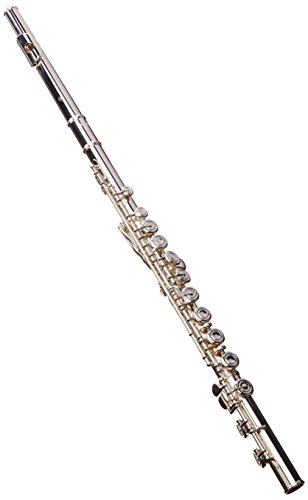
- Offset G system and silver-plated keys
- Warm, rich, resounding sound profile
- Case and cleaning supplies included
Best For: Advancing students who prefer a comfortable, student-oriented flute
Traditional Open-Hole Choice

- Open-hole intermediate configuration
- B footjoint and offset G
- Silver-plated French-style keys
Best For: Players developing technique on an open-hole flute
Sterling-Silver Headjoint Pick

- Sterling-silver headjoint and lip plate
- Offset G with silver-plated keys
- Pure, light tone profile
Best For: Intermediate players prioritizing headjoint refinement and a lighter sound
Accessory-Rich Open-Hole Option

- Open-hole C flute with B footjoint
- Offset G and split E key
- Includes stand, hard case, and cleaning kit
Best For: Students and hobbyists wanting advanced features and bundled accessories
Reliable Foundation

- Closed-hole plateau design
- Offset G key and silver-plated finish
- Case included with five-year limited warranty
Best For: Developing players who want a dependable closed-hole flute
Flexible Upgrade

- Open-hole design with removable plugs
- Offset G key and split E mechanism
- Setup and play-tested by certified technicians
Best For: Intermediate players ready for adaptable open-hole features
Silver-Body Step-Up
Yamaha YFL-462H Intermediate Flute

- Silver construction with polished finish
- Open-hole French-style configuration
- Offset G and B-foot setup
Best For: Established intermediate players wanting an advanced configuration
Affordable Starter Pick

- Closed-hole C flute with offset G and split E keys
- Includes case, stand, cleaning supplies, and gloves
- Cost-effective package for student musicians
Best For: Budget-conscious beginners and developing players
Refined Intermediate Choice
Yamaha YFL-382H Inline G Flute

- Sterling-silver headjoint with nickel-silver body and footjoint
- Silver-plated keys and inline G system
- Includes carrying bag and 2-year warranty
Best For: Intermediate musicians wanting a concert flute with inline G keys
Balanced Upgrade Option
Yamaha YFL-382 Inline G C-Foot

- Intermediate flute with inline G and C-foot design
- Polished nickel-and-silver construction
- Modern Yamaha option for developing players
Best For: Intermediate players who prefer an inline G C-foot flute
Reliable Student Upgrade – Yamaha YFL-222
The Yamaha YFL-222 is a practical option for players comparing flutes for intermediate players who want a familiar student-oriented design with a warm, rich sound profile. Its offset G system, silver-plated keys, and included cleaning supplies make it suitable for regular practice and lessons.
Best For: Advancing students who want a dependable C flute with a warm, resonant tone.
Pros:
- Offset G key system supports comfortable playing.
- Silver-plated keys and a nickel-silver body offer a polished finish.
- Includes a case and cleaning supplies.
- Backed by a listed two-year warranty.
Cons:
- It uses a student-oriented specification rather than an open-hole design.
- The supplied listing information describes the body material as stainless steel, which may require buyers to verify the exact construction details.
Choose the YFL-222 if comfort, straightforward maintenance, and a warm sound matter more than advanced open-hole features. It is a sensible fit for students progressing beyond an entry-level instrument.
Traditional Open-Hole Choice – Gemeinhardt Model 3OB
The Gemeinhardt Model 3OB is aimed directly at shoppers seeking flutes for intermediate players with more advanced keywork. Its open-hole layout, offset G, B footjoint, and French-style keys provide a feature set suited to players developing technique.
Best For: Intermediate flutists ready to work with open holes and a B footjoint.
Pros:
- Open-hole design supports continued technique development.
- B footjoint extends the instrument’s low range.
- Offset G key and French-style keys are included.
- Silver-plated construction and a case are supplied.
Cons:
- Open-hole keys can demand more precise finger coverage from developing players.
- At 2.6 pounds, it is heavier than some listed alternatives.
The 3OB stands out when open holes and a B footjoint are priorities. It is a focused intermediate choice for players prepared to handle the additional demands of its French-style configuration.
Sterling-Silver Headjoint Pick – Yamaha YFL-362H
The Yamaha YFL-362H is a strong contender among flutes for intermediate players who want a more refined headjoint specification. It combines a nickel-silver body with a sterling-silver headjoint and lip plate, plus an offset G system and silver-plated keys.
Best For: Intermediate players seeking a lighter, pure-toned flute with a sterling-silver headjoint.
Pros:
- Sterling-silver headjoint and lip plate are designed for a refined setup.
- Offset G key system supports comfortable hand positioning.
- Silver-plated keys and a carrying case are included.
- Listed two-year warranty adds purchase support.
Cons:
- The listed pure, light tone may not suit players seeking a darker, warmer sound.
- It does not list an open-hole configuration.
Consider the YFL-362H if headjoint material and a lighter sound are central to your decision. Its specification balances an accessible key layout with an upgraded sterling-silver headjoint.
Accessory-Rich Open-Hole Option – Cecilio 17-Key C Flute
The Cecilio 17-key C flute offers a broad feature package for shoppers comparing flutes for intermediate players on a budget-conscious practice or performance setup. Its open holes, B footjoint, offset G, split E key, and beveled embouchure support players working on control and technique.
Best For: School-band members and hobbyists who want open-hole features plus a complete accessory kit.
Pros:
- Open-hole C design includes 17 keys and a B footjoint.
- Split E key and offset G support advanced playability.
- Undercut beveled embouchure is intended for tone control.
- Includes a hard case, stand, grease, screwdriver, cleaning items, and gloves.
Cons:
- The open-hole layout may be challenging for players still developing finger coverage.
- The listing identifies the construction generally as metal rather than specifying a silver-plated body.
The Cecilio is appealing when included accessories and advanced key features are more important than a highly specified material package. It provides a versatile setup for practice, school band, and performance use.
Reliable Foundation – Gemeinhardt 2SP Flute
For players comparing flutes for intermediate players, the Gemeinhardt 2SP is a straightforward, dependable plateau-model instrument. Its closed-hole design, offset G key, and silver-plated finish make it a practical choice for developing musicians who value familiar handling and consistent construction.
Best For: Developing players who prefer a reliable closed-hole flute with comfortable key positioning.
Pros:
- Closed-hole plateau design is approachable for developing players.
- Offset G key can support more comfortable hand alignment.
- Includes a case and a five-year limited warranty.
- Professionally padded with stainless steel springs and silver-plated finish.
Cons:
- Closed-hole keys provide less tonal-control flexibility than an open-hole model.
- The supplied notes identify it as a standard beginning-flutist instrument, so advancing players may want more specialized features.
The 2SP emphasizes reliability and ease of use rather than advanced customization. It is a sensible option for a player moving beyond the basics while still wanting a familiar, low-maintenance setup.
Flexible Upgrade – Jean Paul FL-430 Flute
The Jean Paul FL-430 is a strong contender among flutes for intermediate players who want to explore open-hole technique without committing to a permanently exposed-key setup. Its removable plugs, offset G key, and split E mechanism combine flexibility with features aimed at advancing players.
Best For: Intermediate players seeking an open-hole flute with removable plugs and playability-focused features.
Pros:
- Open-hole keys offer added tonal control and versatility.
- Removable plugs let players adapt the instrument as their skills develop.
- Offset G key supports comfortable hand alignment.
- Play-tested by NAPBIRT-certified technicians and supplied with a semi-hard case.
Cons:
- Open-hole keys can require more precise finger placement than closed-hole keys.
- The one-year manufacturer’s warranty is shorter than the warranty listed for the Gemeinhardt 2SP.
With accurate-intonation design, a split E mechanism, and adjustable open-hole coverage, the FL-430 offers a practical bridge from beginner equipment to more demanding playing. It is particularly appealing when flexibility is a priority.
Silver-Body Step-Up – Yamaha YFL-462H Intermediate Flute
The Yamaha YFL-462H is a polished silver intermediate instrument for players comparing flutes for intermediate players and looking for a step-up model with a French-style configuration. The supplied specifications identify an open-hole design, offset G, and a B foot, giving it a feature set suited to more developed playing.
Best For: Intermediate players seeking a Yamaha silver flute with open holes, offset G, and a B foot.
Pros:
- Silver construction and polished finish.
- Open-hole configuration supports a more advanced playing setup.
- Offset G key may improve hand comfort.
- B-foot configuration extends the instrument’s lower range compared with a standard C foot.
Cons:
- Open holes demand accurate finger coverage and may be less forgiving for newer players.
- Its listed 3.5-pound weight is higher than the Jean Paul FL-430’s listed 1.2 pounds.
- The supplied notes provide limited detail about included accessories beyond a carrying bag.
The YFL-462H is geared toward players who want a more advanced configuration rather than a basic starter design. Its open holes, offset G, B foot, and silver construction make it a compelling option for established intermediate technique.
Affordable Starter Pick – Cecilio Closed Hole C Flute
For players seeking flutes for intermediate players on a budget, the Cecilio Closed Hole C Flute offers a practical student-oriented setup with an offset G key, split E key, and 16 keys. Its included accessories also make it convenient for continued practice and basic maintenance.
Best For: Budget-conscious beginners and developing players who want a complete flute package.
Pros:
- Includes a durable case, cleaning cloth and rod, joint grease, gloves, and a foldable stand.
- Closed-hole C-flute design includes offset G and split E keys.
- Undercut beveled embouchure and double bladder pads are included in the design.
Cons:
- Its beginner-focused design may be less suitable for advanced players seeking a more specialized instrument.
- The nickel/silver-plated construction is positioned as a cost-effective student option.
This is a sensible choice when value and included accessories matter most. It can help a student move from initial lessons into regular practice without requiring separate purchases for basic upkeep and storage.
Refined Intermediate Choice – Yamaha YFL-382H Inline G Flute
The Yamaha YFL-382H is a focused option for flutes for intermediate players who want a more advanced concert-flute configuration. It combines a nickel-silver body and footjoint with a sterling-silver headjoint, silver-plated keys, and an inline key system.
Best For: Intermediate musicians looking for a concert flute with a sterling-silver headjoint and inline G keys.
Pros:
- Sterling-silver headjoint is paired with a nickel-silver body and footjoint.
- Silver-plated keys and an inline key system support its intermediate configuration.
- Includes a carrying bag and comes with a 2-year warranty.
Cons:
- Its inline G layout may not suit players who specifically prefer an offset G arrangement.
- The supplied notes do not list additional maintenance accessories beyond the case.
With its mixed-metal construction and pure, light tone profile, the YFL-382H is aimed at players ready to move beyond a basic student model. The inline layout is an important fit consideration before buying.
Balanced Upgrade Option – Yamaha YFL-382 Inline G C-Foot
The Yamaha YFL-382 is a streamlined choice among flutes for intermediate players, with an inline G configuration and C-foot design. Its polished nickel-and-silver construction offers a straightforward upgrade path for musicians who want a modern Yamaha intermediate flute.
Best For: Intermediate players who prefer an inline G flute with a C foot and polished finish.
Pros:
- Features an inline G key system and C-foot configuration.
- Polished nickel-and-silver construction provides a conventional silver-colored finish.
- Compact dimensions and a listed weight of 3.5 pounds make its specifications easy to compare with other models.
Cons:
- The supplied notes do not specify included accessories or a warranty.
- Inline G may be less comfortable for players accustomed to an offset G key.
The YFL-382 keeps the decision relatively focused: choose it for the Yamaha intermediate platform, inline G layout, and C foot. Confirm the included package and fit before purchasing, especially if accessories are important.
How We Picked the Best Flutes for Intermediate Players
We focused on features that meaningfully affect an advancing player’s experience: key configuration, headjoint design, foot-joint range, mechanism layout, materials, and overall suitability for continued study. The selection includes established Yamaha and Gemeinhardt models alongside more accessible Cecilio and Jean Paul options.
Because “intermediate” can describe several skill levels, we included both straightforward closed-hole instruments and more demanding open-hole flutes. We also considered whether each model supports common progression goals, such as learning the split-E fingering, developing alternate fingerings, and expanding into more advanced repertoire.
Quick Comparison
| Best For | Look For |
|---|---|
| Simple upgrade from a beginner flute | Closed holes, offset G, and a C foot |
| Developing advanced technique | Open holes, split E, and an offset or inline G |
| Lower-register flexibility | B-foot joint |
| Traditional classical setup | Silver-plated body with a responsive headjoint |
| Players with smaller hands | Offset G and an ergonomic key layout |
Key Buying Factors for Flutes for Intermediate Players
Open or Closed Holes
Closed-hole keys are generally easier for players transitioning from a beginner instrument and can be more forgiving of finger placement. Open-hole flutes provide additional control and are common in advanced classical playing, but they require accurate coverage and may involve a short adjustment period. Removable plugs can make some open-hole models more adaptable.
C Foot or B Foot
A C-foot is lighter and typically sufficient for school band, lessons, and most standard repertoire. A B-foot extends the instrument’s low range by one semitone and may appeal to players working on more advanced orchestral or solo music. It adds some weight and cost, so it is not essential for everyone.
Offset or Inline G
An offset G can feel more comfortable for many hands, especially when moving from a student flute. Inline G is a traditional layout that some players prefer for its alignment and feel. Neither is automatically superior; comfort, reach, and teacher guidance matter more than convention.
Headjoint, Materials, and Setup
A well-designed headjoint contributes to response, projection, and ease of articulation. Silver-plated instruments are common at this level and can provide a durable, familiar platform. Professional adjustment is also important: pad leaks, key noise, and alignment problems can affect performance more than small differences in specifications.
Who Should Buy Which Flutes for Intermediate Players?
Choose a closed-hole C-foot model if you want the easiest transition and primarily play in school ensembles or lessons. An open-hole flute with a B foot is a better fit for students preparing advanced repertoire and willing to refine finger technique. Players who need comfortable reach should prioritize an offset G, while those already accustomed to an inline layout can select an inline model confidently.
Before buying, ask your teacher to test the flute if possible, confirm the return policy, and budget for inspection or adjustment by a qualified technician. A comfortable, properly regulated instrument is usually a better long-term choice than one selected solely for its feature list.