Fretless bass guitars offer a fluid, vocal character that fretted instruments cannot quite reproduce. Their unbroken fingerboards make slides, vibrato, and microtonal phrasing especially expressive—but they also demand accurate technique and careful setup.
This roundup compares 10 options across four-, five-, and six-string formats, including classic Jazz Bass-style designs, modern extended-range instruments, and an acoustic-electric model. Use the buying guide below to match scale, construction, electronics, and playability to your experience and musical goals.
Best 10 Fretless Bass Guitars Picks for 2026
Versatile 5-String Choice

- Five-string fretless design
- Spalted maple top with Natural Satin finish
- Passive pickups with active ABQ-3 EQ
Best For: Players seeking extended range and onboard tone shaping
Classic-Style Value Pick
Squier Classic Vibe 60s Jazz Bass Fretless

- Four-string fretless Jazz Bass design
- Fender-Designed alnico pickups
- Vintage-tinted neck and nickel hardware
Best For: Players wanting familiar 1960s-inspired styling
Extended-Range Through-Neck

- Six-string fretless configuration
- Through-neck body construction
- Active/passive pickup system and gig bag
Best For: Experienced players seeking range and flexible electronics
Acoustic-Electric Alternative

- Four-string fretless acoustic-electric design
- Sapele body with walnut fingerboard
- Piezo pickup and built-in preamp system
Best For: Players wanting amplified acoustic-style fretless bass
Five-String Fretless Choice
TARIO Black 5-String Fretless Bass

- Five-string fretless electric design
- Maple neck with composite ebony fingerboard
- Dual soap-bar pickups and four controls
Best For: Players wanting extended range and flexible onboard controls
Classic Four-String Option

- Full-size four-string electric bass
- Alder body with hard maple neck
- Rosewood fingerboard and lifetime limited warranty
Best For: Right-handed players seeking a traditional four-string setup
Extended-Range Pick
Fretless 6-String Sunburst Bass
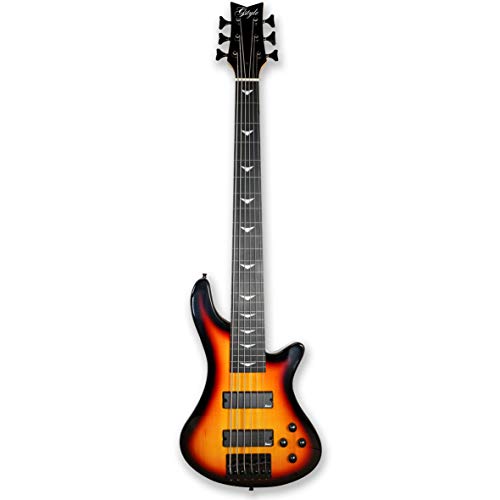
- Six-string fretless electric configuration
- Maple neck and composite ebony fingerboard
- Dual soap-bar pickups with four controls
Best For: Experienced players seeking maximum range and a wide neck
Best with Extra Features

- Six-string fretless design
- Composite ebony fingerboard
- Dual soap-bar pickups
Best For: Players wanting extended range
Value Pick

- Four-string configuration
- Maple neck and ebony fingerboard
- Dual soap-bar pickups
Best For: Budget-minded bassists
Best Simple Pick
TARIO Active/Passive Fretless Bass

- Five-string fretless design
- Passive/active Belcat pickup
- Padded gig bag included
Best For: Players wanting flexible electronics
Versatile 5-String Choice – ESP LTD B-205SM Fretless
The ESP LTD B-205SM is a distinctive option for players comparing fretless bass guitars with extended range. Its ash body, spalted maple top, five-string layout, fret indicators, passive pickups, and active EQ combine practical playability with a standout Natural Satin appearance.
Best For: Players who want a five-string fretless bass with onboard tone shaping and a visually distinctive finish.
Pros:
- Five-string design provides an extended low range.
- Spalted maple top offers a unique grain pattern and coloration.
- Extra-thin U-shaped five-piece maple/jatoba neck and 24 fret indicators support comfortable pitch navigation.
- Passive ESP Designed SB-5 pickups pair with an active ABQ-3 EQ.
Cons:
- Its five-string format may be more instrument than some four-string players need.
- The supplied details do not list included accessories.
This is a strong fit when extended range, visual character, and flexible electronic controls matter more than a traditional four-string setup.
Classic-Style Value Pick – Squier Classic Vibe 60s Jazz Bass Fretless
Squier Classic Vibe 60s Jazz Bass, 3-Color Sunburst, Fretless, Laurel Fingerboard
Check Price On AmazonThe Squier Classic Vibe ’60s Jazz Bass is a straightforward choice among fretless bass guitars for players drawn to familiar Fender-inspired styling. It combines a four-string format with Fender-Designed alnico pickups, a vintage-tinted gloss neck finish, and nickel-plated hardware.
Best For: Players who want a four-string fretless bass with classic 1960s Jazz Bass-inspired styling.
Pros:
- Inspired by 1960s-era Jazz Bass models and 100% designed by Fender.
- Fender-Designed alnico pickups provide a familiar pickup configuration.
- Vintage-tinted gloss neck finish and nickel-plated hardware reinforce the classic appearance.
Cons:
- It is limited to four strings for players seeking an extended range.
- The supplied specifications identify a painted finish rather than a natural wood finish.
Choose this model if traditional Jazz Bass aesthetics and a conventional four-string layout are priorities in your fretless setup.
Extended-Range Through-Neck – TARIO Fretless 6-String Bass
TARIO Fretless 6 string through-neck electric bass Guitar Millettia Laurentii body
Check Price On AmazonThe TARIO Y120-6 brings six-string range and a through-neck construction to the fretless bass guitars category. Its Millettia Laurentii body, composite ebony fingerboard, active/passive Belcat pickup system, multiple controls, side markers, and included padded gig bag make it a feature-rich option.
Best For: Experienced players who need six-string range and want through-neck construction with active/passive electronics.
Pros:
- Six-string fretless layout offers the broadest range of these listed models.
- Through-neck construction is designed for sustain, resonance, and tonal consistency.
- Belcat BJ-80-6 pickup system supports passive and active operation.
- Includes two volume controls, three tone controls, side markers, and a padded gig bag.
Cons:
- A six-string fretless bass can require more adjustment from players accustomed to four strings.
- The stated warranty is a 30-day no-reason return period.
- Its 2 1/16-inch nut width may feel substantial to some players.
With its extended range, dual-mode electronics, and through-neck design, the TARIO is aimed at players who want maximum flexibility rather than a conventional beginner-oriented format.
Acoustic-Electric Alternative – Ibanez AEGB24FE Fretless Bass
Ibanez AEGB24FE AEG Fretless Acoustic-electric Bass Guitar - Mahogany Sunburst
Check Price On AmazonThe Ibanez AEGB24FE offers a different direction for fretless bass guitars by combining a four-string fretless acoustic-electric design with a sapele body and built-in preamp/pickup system. Its Mahogany Sunburst presentation, nyatoh/maple neck, walnut fingerboard, and piezo pickup suit players who want an acoustic-style instrument that can also connect to an amplifier.
Best For: Players seeking a four-string fretless acoustic-electric bass for amplified acoustic-style playing.
Pros:
- Acoustic-electric format provides an alternative to solid-body fretless basses.
- Sapele top, back, and sides offer a consistent wood construction specification.
- Built-in preamp/pickup system and 1/4-inch mono output support amplification.
- Piezo pickup configuration complements the acoustic-electric design.
Cons:
- It has four strings, so it does not provide the extended range of six-string models.
- Its acoustic-electric format may be less suited to players specifically seeking a traditional solid-body bass.
This Ibanez is the practical choice when acoustic presentation and plug-in capability are more important than high string count or solid-body styling.
Five-String Fretless Choice – TARIO Black 5-String Fretless Bass
The TARIO Black 5 String is a full-size electric option for players seeking the expanded range of five-string fretless bass guitars. Its poplar body, bolt-on maple neck, composite ebony fingerboard, and dual soap-bar pickups provide a straightforward feature set for amplified playing.
Best For: Players who want a five-string fretless bass with two pickups and separate volume and tone controls.
Pros:
- Five-string layout offers an extended low range.
- Composite ebony fingerboard and maple bolt-on neck.
- Dual soap-bar pickups with two volume and two tone controls.
- Includes a truss rod, 24 fret markers, and side markers.
Cons:
- Its 1 3/4-inch nut may feel wider than a four-string neck.
- The listed warranty is limited to 30 days with no-reason returns.
- Poplar construction and painted metallic-gold finish may not suit every preference.
With its five-string format and dual-pickup control layout, this TARIO is suited to bassists who prioritize range and flexible onboard adjustment in a full-size fretless instrument.
Classic Four-String Option – Stagg BC300FL Fretless Bass
The Stagg BC300FL is a full-size four-string electric bass for players comparing fretless bass guitars with a traditional string count. It pairs a solid alder body with a hard maple neck and rosewood fingerboard, and it uses a 6.35mm jack for connection.
Best For: Right-handed players seeking a conventional four-string fretless bass with alder, maple, and rosewood construction.
Pros:
- Four-string layout offers a familiar bass format.
- Solid alder body with a hard maple neck.
- Rosewood fingerboard and natural semi-gloss finish.
- Limited lifetime warranty for qualifying material and workmanship defects.
Cons:
- Listed specifically for right-handed players.
- At 10.5 pounds, it may feel substantial during extended sessions.
- The supplied notes do not specify included accessories.
The BC300FL keeps the configuration simple: four strings, familiar tonewood materials, and a full-size body. Its warranty is a notable consideration for buyers who value longer stated coverage.
Extended-Range Pick – Fretless 6-String Sunburst Bass
This six-string fretless electric bass is aimed at players who need the broadest range among these fretless bass guitars. It features a poplar body, bolt-on maple neck, composite ebony fingerboard, 24 fret markers, and two soap-bar pickups with independent volume and tone controls.
Best For: Right-handed players who want a full-size six-string fretless bass with a wide 2 1/8-inch nut.
Pros:
- Six-string configuration provides the widest listed range.
- Composite ebony fingerboard and bolt-on maple neck.
- Dual soap-bar pickups with two volume and two tone controls.
- Includes a truss rod, 24 fret markers, and side markers.
Cons:
- The 2 1/8-inch nut creates a notably wide neck.
- Its six-string layout may be more instrument than some players need.
- Poplar construction may not appeal to buyers seeking other body woods.
The MGS-6-Fretless-3TS stands out for range and neck width. It is a practical match for experienced players comfortable with a wider fingerboard and a six-string fretless layout.
Best with Extra Features – 6-String Fretless Bass
For players seeking extended range from fretless bass guitars, this six-string electric model combines a maple neck, composite ebony fingerboard, and Millettia Laurentii and Okoume body. Its dual soap-bar pickups and broad control layout offer a flexible platform for shaping your sound.
Best For: Bassists who want six-string range and a full-size fretless instrument for exploratory playing.
Pros:
- Six-string design provides an extended range.
- Composite ebony fingerboard with fingerboard inlay.
- Two soap-bar pickups, two volume controls, and three tone controls.
- Includes a truss rod, two strap hangers, and side markers.
Cons:
- Its 2 1/8-inch nut width may feel broad compared with four-string models.
- No gig bag is listed among the included components.
- The stated warranty is limited to 30 days with no-reason returns.
With a 35 1/2-inch scale and six-string layout, this is a range-focused option rather than a compact beginner bass. Confirm that the wider nut and additional strings suit your technique before buying.
Value Pick – TARIO 4-String Fretless Bass
This TARIO model is a straightforward choice among fretless bass guitars, pairing a four-string layout with a bolt-on maple neck, composite ebony fingerboard, and basswood body. Its two soap-bar pickups and four-band control setup keep the design practical for bassists seeking a reasonably priced instrument.
Best For: Bass lovers who want an accessible four-string fretless bass with conventional controls.
Pros:
- Familiar four-string configuration.
- Bolt-on maple neck and composite ebony fingerboard.
- Two soap-bar pickups with two volume and two tone controls.
- Includes die-cast black machine tuners, a truss rod, and two strap hangers.
Cons:
- The notes do not list a gig bag or case as included.
- It uses nickel strings, which may not suit every player’s preference.
- The warranty is limited to 30 days with no-reason returns.
Its conventional four-string format and uncomplicated control scheme make this a practical entry point into fretless playing. Buyers should verify the included accessories if transport protection is important.
Best Simple Pick – TARIO Active/Passive Fretless Bass
This five-string TARIO stands out among fretless bass guitars with a Millettia Laurentii top, Okoume body, composite ebony fingerboard, and a Belcat pickup supporting passive and active operation. A padded gig bag is included, making it a useful package for players who want added range and flexible electronics.
Best For: Intermediate players seeking a five-string fretless bass with active/passive pickup operation and included storage.
Pros:
- Five-string design adds range beyond a standard four-string bass.
- Belcat BJ-80-6 pickup supports passive and active operation.
- Two volume controls and three tone controls provide shaping options.
- Includes a padded gig bag, two truss rods, and two strap hangers.
Cons:
- The listed 34-inch scale is shorter than some extended-scale basses.
- The 1 3/4-inch nut width may require adjustment for players used to narrower necks.
- The warranty is limited to 30 days with no-reason returns.
Active/passive operation gives this model more tonal flexibility than a basic passive setup, while the gig bag adds practical value. Its five-string neck and 34-inch scale should still be checked against your preferred playing feel.
How We Picked These Fretless Bass Guitars
We selected instruments representing the main ways players use fretless basses: traditional electric styles, affordable practice instruments, extended-range designs, and acoustic-electric performance. We considered string count, neck construction, body materials, pickup and preamp formats, fingerboard design, and likely fit for different experience levels.
Because fretless setup and intonation can vary significantly, specifications should be confirmed with the manufacturer or seller before purchase. A professional setup may also be worthwhile, especially for a first fretless instrument.
Quick Comparison
| Type | Best suited to | What to prioritize |
|---|---|---|
| 4-string | Beginners, traditional players, and straightforward gigging | Comfortable neck, clear markers, stable setup |
| 5-string | Modern styles and low-register range | Low-B response, neck balance, spacing |
| 6-string | Soloists, fusion players, and extended-range techniques | Wide-range ergonomics, electronics, intonation control |
| Acoustic-electric | Unplugged practice, songwriting, and amplified acoustic work | Feedback control, preamp quality, body comfort |
Key Buying Factors for Fretless Bass Guitars
String Count and Scale
A four-string bass is usually the simplest place to learn fretless intonation. Five-string models add a useful low B, while six-string versions extend both the low and high registers but require more reach and a wider neck. Check scale length and string spacing, not just the number of strings.
Fingerboard Markers and Intonation
Fret lines or side dots can help you locate notes, but they are reference points rather than a substitute for listening. A cleanly marked fingerboard, reliable tuning hardware, and a properly adjusted bridge make accurate playing easier.
Neck Construction and Playability
Bolt-on necks can be practical and serviceable, while through-neck construction may provide a smooth feel and strong sustain. Neither is automatically superior; prioritize neck stability, comfortable action, manageable weight, and good balance on a strap.
Electronics and Tone
Passive pickup layouts often deliver familiar, direct bass tones. Active electronics can provide additional shaping, which is useful for modern or extended-range playing but may require batteries and more careful control settings. Acoustic-electric models add convenience for amplified acoustic performance but can be more sensitive to feedback.
Who Should Buy Which Fretless Bass Guitars?
New fretless players: Start with a manageable four-string design, clear position references, and a comfortable neck. A traditional Jazz Bass-style format is an approachable choice for players who already know standard bass technique.
Players needing more low end: Choose a five-string if your arrangements regularly use low B notes. Confirm that the instrument remains balanced and that the low string responds cleanly.
Advanced and experimental players: Six-string instruments suit solo bass, fusion, chordal work, and players who need broad range. Their extra width and complexity make them better for experienced hands.
Songwriters and acoustic performers: An acoustic-electric fretless bass can work well for portable practice and intimate performances, provided its plugged-in sound and feedback behavior fit your venues.