Choosing among semi-modular synthesizers can be tricky because the best option depends on how you want to patch, sequence, and perform. Some models are built for deep bass, others for percussion, and a few are ideal as flexible studio hubs.
This roundup highlights 10 strong picks for 2026, with an eye toward sound quality, workflow, and value so you can match the right synth to your setup.
Best 10 Semi Modular Synthesizers Picks for 2026
Moog Pick
Polyrhythmic semi-modular analog synth

- Two VCOs plus subharmonic generators
- Four rhythm sources for unusual patterns
- Tabletop unit or 60HP Eurorack module
Best For: Experimental sound design and polyrhythmic sequencing
Budget Semi-Modular
Affordable analog semi-modular synth

- Pure analog VCO, VCF, and VCA path
- 32-step sequencer for quick patterns
- Compact desktop-friendly form factor
Best For: First-time buyers who want classic analog tone on a budget
Classic Moog Choice
Warm semi-modular analog synth with sequencer

- Analog VCO, noise, and Moog ladder filter
- 32-note sequencer with up to 64 sequences
- Tabletop use or 60HP Eurorack install
Best For: Musicians who want classic Moog sound and modular expansion
Percussion Specialist
Semi-modular analog percussion synth
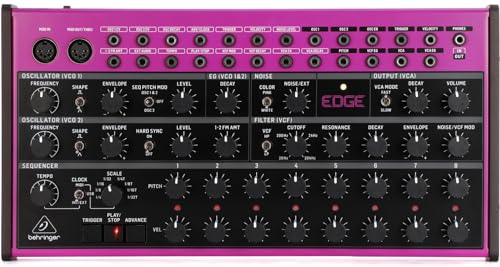
- 15 x 10 patch matrix for flexible routing
- Two 8-step sequencers for beat patterns
- Built for gritty, analog percussion sounds
Best For: Rhythm-focused producers who want a dedicated percussion synth
Classic Keyboard Semi-Modular
Moog Grandmother Semi-Modular Analog Synthesizer

- 32 velocity-sensitive full-size keys
- 256-note sequencer and spring reverb
- 41 patch points for modular expansion
Best For: Keyboard players wanting a playable analog semi-modular synth
Sequencer-First Studio Semi-Modular
Arturia MiniBrute 2S Semi-Modular Analog Synthesizer and Step Sequencer

- Two VCOs, two LFOs, and a Steiner Parker filter
- 48-point CV/gate patchbay for modular routing
- 64 sequence memories with velocity/pressure pads
Best For: Producers who want sequencing and patching over keys
Rhythm Machine Semi-Modular
Moog DFAM Semi-Modular Analog Percussion Synthesizer

- Two analog VCOs, white noise, and ladder filter
- 8-step sequencer for rhythmic experimentation
- 24-point patch bay plus Eurorack compatibility
Best For: Experimental beat makers and percussion-focused synthesis
East Coast Starter
Cre8audio East Beast Semi-Modular Synth

- 40HP compact analog semi-modular design
- Multi-mode filter, envelope generator, MIDI, and LFO
- Eurorack compatible with patch cables included
Best For: Players who want an approachable semi-modular analog synth with Eurorack-friendly patching.
Moog Character Compact

- 100% analog Moog-style circuitry with ladder filter
- Two oscillators, ADSR, wavefolder, and sample and hold
- Standalone instrument that also integrates with Eurorack
Best For: Synth players who want Moog analog character in a compact, patchable kit.
Budget Patch Hub
Behringer Model 15 Semi-Modular Synth

- Two VCOs with 48 patch points for flexible routing
- Includes a step-sequencer and arpeggiator
- Headphone out supports convenient standalone use
Best For: Buyers looking for a semi-modular analog synth with plenty of patch points and built-in sequencing tools.
Moog Pick – Polyrhythmic semi-modular analog synth
If you want one of the most distinctive semi modular synthesizers for experimental composition, the Moog Subharmonicon is built around layered harmony and evolving rhythm. Its dual VCOs, subharmonic generators, and paired sequencers make it a strong pick for players who want ideas to grow in unexpected directions.
Best For: Experimental musicians and synth players who want polyrhythms, rich harmonic layers, and deep patching potential.
Pros:
- Six tonal sources create a dense harmonic bed of sound.
- Four rhythm generators can drive either sequencer, or both, for unusual polyrhythms.
- Two four-step sequencers can route to the VCOs and subharmonic generators in different combinations.
- Works as a tabletop synth or a 60HP Eurorack module.
Cons:
- Its strength is experimental sequencing, not straightforward traditional subtractive synthesis.
- The four-step sequencers are intentionally limited compared with longer pattern-based workflows.
This is a synth for discovery, not convenience. If your priority is rhythmic complexity, modular flexibility, and unusual textures ranging from pads to percussive patterns, the Subharmonicon delivers a very focused creative experience.
Budget Semi-Modular – Affordable analog semi-modular synth
The Behringer CRAVE is a practical entry point into semi modular synthesizers if you want a pure analog signal path and patchable sound design without a huge footprint. Its 3340 VCO, ladder filter, and 32-step sequencer give it a classic synth format that is easy to build into a larger setup later.
Best For: Budget-conscious buyers who want an analog semi-modular synth with sequencing and patching options.
Pros:
- Pure analog signal path with VCO, VCF, and VCA designs.
- 3340 oscillator and classic ladder filter support fat, familiar analog tones.
- 32-step sequencer adds immediate hands-on pattern building.
- Compact design makes it easy to place in a small studio or desktop setup.
Cons:
- Its 2.5mm jack format is less common than standard patch connections.
- The small footprint may feel limited for players wanting a larger control surface.
Overall, the CRAVE is a straightforward choice for learning patching and sequencing with an all-analog voice. It focuses on essential synth building blocks rather than broad feature depth, which makes it appealing if you value simplicity and core tone.
Classic Moog Choice – Warm semi-modular analog synth with sequencer
The Moog Mother-32 is a strong choice among semi modular synthesizers if you want a warm analog voice with a built-in sequencer and straightforward patching. It combines a VCO, noise source, and Moog ladder filter with an extended patchbay, so it can work as a self-contained instrument or as part of a larger Eurorack system.
Best For: Players who want classic Moog tone, onboard sequencing, and easy expansion into Eurorack.
Pros:
- Analog signal path delivers raw, authentic sound.
- 32-note step sequencer supports two modes and up to 64 onboard sequences.
- Extended patchbay adds flexibility for modular routing.
- Can be used as a tabletop synth or a 60HP Eurorack module.
Cons:
- Single-voice architecture keeps the focus on one analog line at a time.
- Like other semi-modular designs, it rewards patching more than preset-based convenience.
If you want a dependable foundation piece for an analog setup, the Mother-32 makes a lot of sense. It is simple enough to use right away, but flexible enough to grow with a modular system over time.
Percussion Specialist – Semi-modular analog percussion synth
The Behringer Edge stands out among semi modular synthesizers because it is focused on percussion and gritty analog rhythm creation rather than melodic duties. With a 15 x 10 I/O patch matrix, dual 8-step sequencers, and noise/envelope tools, it is aimed at producers who want hands-on beat construction and experimental percussive textures.
Best For: Producers and performers who want an analog percussion synth for punchy rhythmic sound design.
Pros:
- Analog semi-modular design is tuned for gritty, percussive sounds.
- 15 x 10 I/O patch matrix encourages flexible routing.
- Two 8-step sequencers help build evolving rhythmic patterns.
- Includes white/pink noise and an envelope generator for broader percussion shaping.
Cons:
- Its percussion focus makes it less suited to conventional melodic synth work.
- The patch-matrix workflow may feel specialized if you want a simpler all-in-one instrument.
The Edge is best viewed as a rhythm sound designer rather than a general-purpose synth. If your setup needs aggressive analog percussion and modular-style control, it offers a very targeted and creative toolset.
Classic Keyboard Semi-Modular – Moog Grandmother Semi-Modular Analog Synthesizer
If you want one of the most approachable semi modular synthesizers for hands-on sound design, the Moog Grandmother gives you a true analog keyboard instrument with no patching required to get started. It combines 32 full-size velocity-sensitive keys, a built-in arpeggiator, a 256-note sequencer, spring reverb, and 41 patch points for expanding into more complex routing when you’re ready.
Best For: Keyboard players and Moog fans who want a playable semi-modular synth that can work standalone or alongside Eurorack gear.
Pros:
- 32 velocity-sensitive full-size keys make it easy to play like a traditional synth.
- Built-in arpeggiator, 256-note sequencer, and analog spring reverb add immediate creativity.
- 41 modular patch points support deeper exploration and integration with Mother-32, DFAM, and Eurorack systems.
- Includes 1/4" audio in plus MIDI DIN and USB connectivity for flexible setup.
Cons:
- Monophonic design limits it to one note at a time.
- At 32 keys, it is compact rather than a full-size stage keyboard.
- Its analog, hands-on layout may be overkill if you only want preset-based sounds.
The Grandmother is a strong choice if you want a semi-modular instrument that feels immediate but still rewards patching and expansion. It balances classic Moog character with practical onboard features, making it easy to use as both a first modular-friendly synth and a studio centerpiece.
Sequencer-First Studio Semi-Modular – Arturia MiniBrute 2S Semi-Modular Analog Synthesizer and Step Sequencer
The Arturia MiniBrute 2S is a strong pick in semi modular synthesizers if you care more about sequencing and patching than playing traditional keys. It pairs two VCOs, two LFOs, a Steiner Parker filter with four modes, and a 48-point CV and gate patchbay with 16 velocity- and pressure-sensitive pads plus a 64-memory sequencer.
Best For: Producers and sound designers who want a compact semi-modular synth centered on step sequencing and CV control.
Pros:
- 64 sequence memories make it practical for building and recalling patterns.
- 48-point CV and gate patchbay opens up deep modular routing options.
- Steiner Parker filter offers four modes: low pass, high pass, band pass, and notch.
- Pad-based control adds velocity and pressure sensitivity without needing a keyboard.
Cons:
- No traditional piano-style keys, so it is less ideal for keyboard players.
- The workflow is more focused on sequencing and control than instant melodic playing.
- It is better suited to studio programming than to straightforward casual use.
For buyers who want one of the more performance-oriented semi modular synthesizers without a keybed, the MiniBrute 2S delivers a flexible control surface and a serious patchbay. It is especially appealing if you want to sequence evolving patterns and shape them with CV-driven modulation.
Rhythm Machine Semi-Modular – Moog DFAM Semi-Modular Analog Percussion Synthesizer
The Moog DFAM stands out among semi modular synthesizers as a percussion-focused instrument built for immediate rhythmic experimentation. It uses two analog VCOs, a white noise generator, Moog ladder filter, an 8-step sequencer, and a 24-point patch bay, and it can also be used as a tabletop unit or installed as a 60HP Eurorack module.
Best For: Experimental musicians and beat makers who want a hands-on analog percussion synth for evolving rhythms and textures.
Pros:
- Fully analog sound engine with two VCOs, white noise, and a Moog ladder filter.
- 8-step sequencer encourages fast rhythmic sketching and live exploration.
- 24-point patch bay adds useful modular flexibility.
- Can function as a tabletop synth or as a 60HP Eurorack module.
Cons:
- Its percussion-first design is less suited to standard melodic keyboard parts.
- Only an 8-step sequencer, so pattern length is limited compared with larger sequencers.
- Its experimental workflow may not suit users seeking a conventional synth layout.
If your goal is to make drums, textures, and unusual rhythmic sequences, the DFAM is one of the most focused choices here. It is a great example of how semi-modular design can invite creativity without requiring cables to get started.
East Coast Starter – Cre8audio East Beast Semi-Modular Synth
If you want semi modular synthesizers that are straightforward to patch but still flexible, the Cre8audio East Beast is a compact 40HP analog option built around an east coast-style workflow. It pairs a multi-mode filter, envelope generator, MIDI, LFO, and Eurorack compatibility, making it a practical entry point for hands-on sound design.
Best For: Players who want an approachable semi-modular analog synth with Eurorack-friendly patching.
Pros:
- 40HP format keeps it compact for desktop use or a modular setup
- Includes multi-mode filter, envelope generator, MIDI, and LFO
- Eurorack compatible for expanding patch options
- Comes with patch cables and MIDI pigtails in the box
Cons:
- Only the included hardware and patch points are mentioned, so it’s not a full feature-dense workstation
- Best suited to patch-based users rather than those wanting immediate preset recall
The East Beast is a clean pick if you want a semi-modular synthesizer that emphasizes practical patching and classic analog control without taking up much space. It looks especially useful as a first Eurorack-compatible instrument or a focused add-on to an existing setup.
Moog Character Compact – MOOG Mavis Semi-Modular Kit
The MOOG Mavis is a semi modular synthesizer kit designed for players who want classic Moog-style analog tone in a compact 44HP format. It combines two oscillators, a ladder filter, ADSR, wavefolder, sample and hold, attenuators, and mixer functions, while also offering Eurorack integration for broader patching.
Best For: Synth players who want Moog analog character in a compact, patchable kit.
Pros:
- 100% analog design with Moog oscillator and filter circuits
- Includes two oscillators, full ADSR, ladder filter, and wavefolder
- Built-in keyboard with glide and keyboard scaling
- Can be used standalone or removed from its case for Eurorack connectivity
Cons:
- It is a build-it-yourself kit, so assembly is required
- Compact format may feel limited if you want a larger integrated performance surface
Mavis stands out for buyers who value Moog’s harmonic character and want a semi-modular instrument that can live on its own or integrate into a larger system. The included dust cover and assembly accessories add practicality, but the real draw is the analog sound palette.
Budget Patch Hub – Behringer Model 15 Semi-Modular Synth
The Behringer Model 15 is a semi-modular analog synthesizer aimed at players who want lots of patching flexibility in a hardware synth format. With two VCOs, 48 patch points, a step-sequencer, headphone out, and arpeggiator, it gives you several ways to build patterns and shape sound.
Best For: Buyers looking for a semi-modular analog synth with plenty of patch points and built-in sequencing tools.
Pros:
- Two VCOs provide a solid analog foundation for synthesis
- 48 patch points open up extensive routing options
- Built-in step-sequencer and arpeggiator support pattern creation
- Headphone output makes it easy to use without extra gear
Cons:
- The supplied notes do not detail extra onboard modulation features beyond sequencing and patch points
- Its larger physical size may take more desk space than compact semi-modular units
The Model 15 is a strong choice if you want a patch-heavy semi modular synthesizer that encourages hands-on exploration. It should appeal to users who value routing flexibility and immediate sequencing tools over a minimal desktop footprint.
How We Picked the Best Semi Modular Synthesizers
We focused on instruments that offer a real semi-modular workflow, meaning they can make sound on their own while also opening the door to patching, expansion, and external control. Priority went to synths with useful core features, strong build quality, practical sequencing or modulation options, and a clear role in a modern studio or live rig.
We also considered how each model fits a different type of buyer, from first-time modular-curious players to experienced users who want a dedicated voice for bass, melody, or percussion.
Quick Comparison
In general, Moog models lean toward classic analog tone and hands-on performance, while Behringer and Cre8audio options often emphasize affordability and patching value. Arturia’s entry stands out for sequencing flexibility, and dedicated percussion voices are the best choice for rhythm-focused patch systems.
If you want a single synth that can cover many roles, look at broader all-rounders. If you want one instrument to anchor a specific workflow, such as drums or acid-style sequences, a more specialized model may be the better fit.
Key Buying Factors for Semi-Modular Synthesizers
Sound Character
Decide whether you want a thick, vintage-leaning analog voice, sharper modern tones, or something designed for percussion and rhythmic textures. Sound personality matters more than feature count for many buyers.
Patching and Modulation
Check the number and usefulness of patch points, since these determine how far you can expand beyond the normal signal path. More patching options usually mean more sound-design potential.
Sequencing and Performance Tools
Built-in sequencers, hands-on controls, and clocking options can make a huge difference if you plan to use the synth without a large external setup. Semi Modular Synthesizers are often most rewarding when the front panel is fast to use.
Size, Power, and System Fit
Make sure the unit fits your desk, case, or live rig, and think about whether you want a tabletop instrument, eurorack integration, or a keyboard-based workflow. The best choice is the one you can actually play often.
Who Should Buy Which Semi Modular Synthesizers?
Buy a versatile all-rounder if you want one synth for learning, sound design, and performance. Choose a percussion-focused model if rhythm and modulation experiments are your priority. Pick a more affordable patchable synth if you want to explore modular ideas without a bigger investment.
If you already know your style, narrow the field by use case: melodic sequencing, basslines, drum synthesis, or a keyboard-centered performance setup. That approach will get you to the right instrument faster than shopping by specs alone.