The best harmonicas for live performances need more than a pleasant tone. They should respond quickly, stay comfortable during long sets, and project clearly through a microphone or amplifier.
This lineup covers versatile diatonic harmonicas, low-tuned and amplified options, chromatic models, and practical bundles for players at different experience levels. Use the guide below to match your playing style, stage setup, and budget to the right instrument.
Best 10 Harmonicas for Live Performances Picks for 2026
Versatile Stage Starter

- Comfortable recessed reed-plate design
- Warm, versatile sound
- Includes case and care accessories
Best For: Beginners and professionals needing a dependable C harmonica
Blues Amplification Pick
Hohner Harp Blaster Microphone

- Vintage-inspired dynamic capsule
- Durable all-metal housing
- Gold-plated XLR connector
Best For: Amplified harmonica players performing with an XLR-equipped setup
Bright Travel Bundle

- Bright 10-hole diatonic sound
- Moisture-resistant ABS comb
- Vented protective case included
Best For: Traveling players who need a bright C harmonica
Deep Low-End Choice

- One octave below standard Rocket tuning
- Strong projection and loudness
- Warm, bass-heavy tone
Best For: Blues players needing a deep low F harmonica
Professional Pocket Pick

- Rich, responsive tone
- Supports bending and overblowing
- Compact and portable
Best For: Blues, folk, rock, country, and jazz players
Chromatic Stage Specialist

- Adjustable slide spring tension
- Silent, airtight slide action
- Includes moisture-managing case
Best For: Experienced chromatic performers
Powerful Diatonic Performer

- Loud, powerful sound
- Rounded design for comfort
- Includes a protective zipper case
Best For: Diatonic players needing strong stage projection
Four-Octave Control

- Four-octave C3–D7 range
- Climate-resistant plastic comb
- Maintenance-friendly screw assembly
Best For: Live players needing broad chromatic range in C
Mic-Focused Power
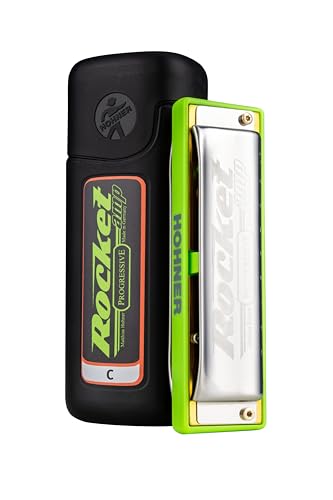
- Directs sound toward the microphone
- Designed for a loud, powerful sound
- Rounded, comfortable playing surfaces
Best For: Amplified live performers playing in C major
Classic Full Tone

- Traditional pearwood comb
- Full tone in key of G
- 20 brass reeds and protective case
Best For: Live players wanting a classic G diatonic harmonica
Versatile Stage Starter – Hohner Special 20 in C
The Hohner Special 20 is a practical option for musicians seeking harmonicas for live performances, especially when comfortable playability and dependable projection matter. Its recessed reed plates, airtight design, and durable construction suit both beginners and experienced players.
Best For: Players who want a versatile, warm-sounding C harmonica with professional features and useful accessories.
Pros:
- Comfortable recessed-plate mouthpiece and airtight design
- Warm, mellow, versatile sound profile
- Durable plastic comb, stainless steel covers, and screwed brass reed plates
- Includes a zip case, online manual access, and polishing cloth
Cons:
- This bundle is tuned to C, so other keys require additional harmonicas
- The manual is available online rather than as a physical booklet
The Special 20 balances accessible handling with construction suited to regular performance use. It is a strong all-around choice if C is the key you need and you value a ready-to-use bundle.
Blues Amplification Pick – Hohner Harp Blaster Microphone
The Hohner Harp Blaster is a dedicated microphone choice for players building a live harmonica setup around an amplifier. Its vintage-inspired dynamic capsule, all-metal housing, and XLR connection are designed for a sturdy stage-ready configuration.
Best For: Amplified harmonica players who want a compact, corded microphone with a vintage-style dynamic response.
Pros:
- Dynamic capsule designed after legendary vintage microphones
- Rock-solid all-metal housing
- Gold-plated XLR connector and Bourns potentiometer
- Includes a protective microphone pouch
Cons:
- Requires a corded XLR connection and compatible amplifier setup
- It is a microphone accessory, not a harmonica
For live performances that use amplification, the Harp Blaster focuses on essential durability and control rather than portability without cables. Its included pouch also makes transport simpler between gigs.
Bright Travel Bundle – Fender Blues Deluxe in C
The Fender Blues Deluxe is a straightforward C diatonic harmonica for players who prioritize a bright sound, easy maintenance, and transport-friendly protection. Its moisture-resistant ABS comb and vented case make it a practical candidate among harmonicas for live performances.
Best For: Players wanting a bright-sounding C harmonica with a protective case for travel, storage, and regular practice.
Pros:
- Bright sound from a 10-hole diatonic design
- Moisture-resistant ABS plastic comb supports tuning stability
- Chromed metal covers are protective and easy to clean
- Vented case helps the harmonica dry after playing
Cons:
- Only the key of C is included
- The manual is provided online rather than in printed form
The Blues Deluxe is a sensible option for performers who want a bright, traditional harmonica and a case designed with post-playing storage in mind. The bundle also includes a polishing cloth for routine care.
Deep Low-End Choice – Hohner Rocket Low in F
The Hohner Rocket Low brings a deeper voice to live playing, tuning one octave below a standard Rocket. Its strong projection, rounded acrylic body, and warm bass-heavy profile make it a distinctive option for bluesy rhythms and low-tone melodies.
Best For: Performers seeking a low F harmonica with deep tone, strong loudness, and blues-oriented character.
Pros:
- Tuned one octave below the standard Rocket for a deep sound
- Designed for strong projection and loudness
- Warm, rich, bass-heavy sound profile
- Includes a snapcase for protection
Cons:
- Low F tuning is specialized and may not replace a standard-key harmonica
- Its bass-heavy voice is less suited to players seeking a bright, conventional tone
The Rocket Low is best viewed as a complementary performance instrument rather than an all-purpose first harmonica. It can add useful depth and contrast to a live harmonica collection when low F fits the arrangement.
Professional Pocket Pick – East Top 008K Key of C
For players comparing harmonicas for live performances, the East Top 008K offers a compact C-key diatonic design with a rich, responsive tone. Its airtight construction and pocket-friendly size make it practical for rehearsals, gigs, and travel.
Best For: Adult beginners, advancing students, and professionals playing blues, folk, rock, country, or jazz.
Pros:
- Responsive, accurate tone with rich sound and timbre.
- Precision plastic comb and phosphor bronze reeds support bending and overblowing techniques.
- Compact 4.01-inch design is easy to carry to performances.
- Includes a cleaning cloth and one-year manufacturer warranty.
Cons:
- Available here only in the key of C.
- Single-harmonica package may be limiting for players who need multiple keys.
The 008K is a versatile, portable option when you want a professional-style diatonic harmonica without a bulky setup. Its C key and performance-focused response make it a sensible starting point for live playing.
Chromatic Stage Specialist – Hohner Super 64 Chromatic
Among harmonicas for live performances, the Hohner Super 64 stands out as a full chromatic model designed for controlled, comfortable playing. Its adjustable slide spring and airtight slide action are useful features for players who need dependable response on stage.
Best For: Experienced performers seeking a 64-model chromatic harmonica with adjustable slide feel and a protective travel case.
Pros:
- VarioSpring system allows adjustment of slide spring tension.
- Construction is designed for silent, airtight slide action.
- Optimized comb chambers support faster response.
- Nylon zipper case helps keep dust out while allowing moisture to evaporate.
Cons:
- At 875 g, it is substantially heavier than the compact diatonic options listed here.
- Its larger case and instrument dimensions are less convenient for minimalist travel setups.
The Super 64 is best suited to players who specifically need a chromatic instrument and value adjustability and stage-ready storage. Its weight is worth considering if portability is a major priority.
Powerful Diatonic Performer – Hohner Rocket Key of C
For musicians choosing harmonicas for live performances, the Hohner Rocket is built around a loud, powerful sound that can project effectively in a performance setting. Its rounded design and recessed reed plates also emphasize playing comfort during longer sessions.
Best For: Diatonic players who want a powerful C-key sound, comfortable handling, and a convenient protective case.
Pros:
- Wide cover plates, side vents, and larger channel openings produce a loud, powerful sound.
- Rounded comb sides, edges, and corners improve comfort.
- Recessed reed plates create a more comfortable mouthpiece.
- Sturdy zipper case helps keep dust out while allowing moisture to evaporate.
Cons:
- Available here in the key of C, so additional keys may be needed for broader setlists.
- It is a diatonic model rather than a chromatic harmonica.
The Rocket is a strong choice when projection and comfortable handling matter more than chromatic range. Its focused C-key setup makes it especially practical for players building a live diatonic collection.
Four-Octave Control – Hohner The 64 Chromonica
For players comparing harmonicas for live performances, the Hohner The 64 Chromonica offers a broad four-octave range in the key of C. Its resilient plastic comb is designed for reliable performance across changing climates, while the assembled construction supports easier maintenance.
Best For: Live performers who need extended range and a chromatic instrument in C.
Pros:
- Four-octave tonal range from C3 to D7
- Resilient plastic comb suits varied climate conditions
- Screw-assembled design supports maintenance and slide conversion for left-hand use
- Includes a protective case
Cons:
- Available in the key of C only in the supplied configuration
- Its 7.6-inch length and 8-ounce weight may be less compact than smaller harmonicas
This is a practical choice when range and serviceability matter more than minimal size. The classic chromatic design and included case make it well suited to prepared stage setups.
Mic-Focused Power – Hohner ROCKA-C Rocket Amp
For harmonicas for live performances that need to project through amplification, the Hohner ROCKA-C Rocket Amp is built around microphone use. Its ventless cover plates direct sound toward the microphone, while the open design and larger air channels are intended to produce a loud, powerful tone.
Best For: Amplified performers seeking a microphone-oriented harmonica in C major.
Pros:
- Cover plates without side vents direct sound toward the microphone
- Open cover plates and larger air channels support a powerful sound
- Rounded comb sides, edges, and corners improve playing comfort
- Recessed reed plates create a more comfortable mouthpiece
Cons:
- Supplied in C major rather than a range of keys
- Its design is specifically oriented toward amplified use, which may not suit every setup
With a 1/4-inch TS audio plug and a lightweight 2.08-ounce body, this model is a focused option for players building a mic-driven live rig.
Classic Full Tone – Hohner Marine Band
Among harmonicas for live performances, the Hohner Marine Band is a recognizable diatonic option with a full tone and traditional pearwood comb. Tuned to G, it uses 20 reeds with 0.9 mm brass reed plates and includes a distinctive protective case.
Best For: Players seeking a traditional G harmonica for full-toned live playing.
Pros:
- Full tone from its pearwood comb construction
- 20 reeds with 0.9 mm brass reed plates
- G tuning suits players who need a lower major key option
- Recognizable design with an included protective case
Cons:
- This configuration is limited to the key of G
- The wood comb may require more care than a plastic-comb design
- It is a 10-hole diatonic rather than a chromatic instrument
The Marine Band is a straightforward choice for performers who value familiar diatonic response and traditional construction. Its G tuning and full sound make it a strong fit for roots-oriented live setups.
How We Picked the Best Harmonicas for Live Performances
We focused on the features that matter most onstage: reliable tuning, responsive reeds, comfortable construction, useful key options, and compatibility with microphones or amplification. The selection includes standard 10-hole diatonic models for blues, rock, folk, and country, plus chromatic harmonicas for jazz, pop, classical, and melodic work. We also considered included accessories, portability, and whether each model suits beginners, working musicians, or experienced players.
Because live setups vary, there is no single best harmonica for every performer. A compact acoustic harp may be ideal for an intimate set, while an amplified model or dedicated microphone can deliver more control in a loud band.
Quick Comparison
| Best For | Recommended Type | What to Look For |
|---|---|---|
| Blues and rock | 10-hole diatonic | Fast response, durable comb, strong projection |
| Amplified stage playing | Microphone-ready diatonic | Feedback control, focused tone, comfortable grip |
| Jazz and melodic lines | Chromatic | Reliable slide, airtight construction, smooth valves |
| Lower registers | Low-tuned harmonica | Stable low reeds and enough breath control |
| New players | Standard key-of-C diatonic | Easy availability, clear layout, included guidance |
Key Buying Factors for Harmonicas for Live Performances
Diatonic or Chromatic Design
Most blues, rock, and country performers start with a 10-hole diatonic harmonica. It is compact, expressive, and well suited to bends and rhythmic parts. Chromatic harmonicas use a slide to access sharps and flats, making them better for fully melodic arrangements and genres that require wider note coverage.
Key Selection
Key of C is the usual starting point and works well for learning, demonstrations, and many songs. Working blues players often carry several keys because the harmonica is commonly chosen to complement the song’s position and the band’s arrangement. A low-tuned model can add depth, but it may require more breath and a slightly different technique.
Stage Projection and Microphone Use
For live performances, consider how the instrument will be heard. Acoustic playing benefits from clear projection, while amplified playing requires a suitable microphone, secure handling, and sensible volume management to reduce feedback. A dedicated harmonica microphone can make tone shaping and stage placement easier.
Comfort, Maintenance, and Accessories
Rounded edges, a comfortable mouthpiece, and an airtight design matter during long sets. Cases protect reeds between performances, while cleaning supplies and instructional materials add practical value. Store any harmonica dry and allow moisture to clear after playing.
Who Should Buy Which Harmonicas for Live Performances?
Beginners should choose a dependable key-of-C diatonic with a comfortable comb and straightforward note layout. Blues and rock players should prioritize responsive reeds, durable construction, and compatibility with an amplified setup. Players seeking deeper textures can choose a low harmonica, while musicians covering jazz, classical, or intricate melodies should consider a chromatic model. If portability and flexibility are priorities, a standard diatonic remains the easiest option to carry as a backup or add to a larger collection.