Loop stations can help church musicians build fuller arrangements, support solo worship sets, and keep live transitions smooth. The right model depends on how you play, how much control you need, and whether you prefer a floor pedal or tabletop unit.
In this roundup, we focus on practical options for worship settings: dependable timing, clear hands-on operation, and features that make it easier to serve the band, congregation, and sound team.
Best 10 Loop Stations for Church Musicians Picks for 2026
Simple Starter Looper

- Record, overdub, play, undo, and redo
- 12 minutes of stereo recording time
- Compact design with clear LED loop indicator
Best For: Church musicians wanting a simple, reliable first looper
Feature-Rich Worship Looper

- 32-bit audio processing for clean playback
- 13 hours of stereo recording with 99 memories
- 57 rhythms plus MIDI and USB connectivity
Best For: Worship musicians who want advanced looping and storage
Bundle-Friendly Beginner Looper
Boss RC-1 Bundle with Power Supply

- Simple RC-1 loop workflow for easy use
- 12 minutes of stereo recording time
- Includes power adapter, cables, and picks
Best For: Church musicians who want a starter looper bundle
Dual-Track Performance Looper
BOSS RC-500 Dual-Track Loop Station

- Dual-track looper for more arrangement control
- 13 hours of stereo record time
- XLR, 1/4-inch, and USB connectivity
Best For: Worship leaders needing a flexible, performance-ready looper
Flagship Multi-Track Power
BOSS RC-600 Floor-Based Loop Station
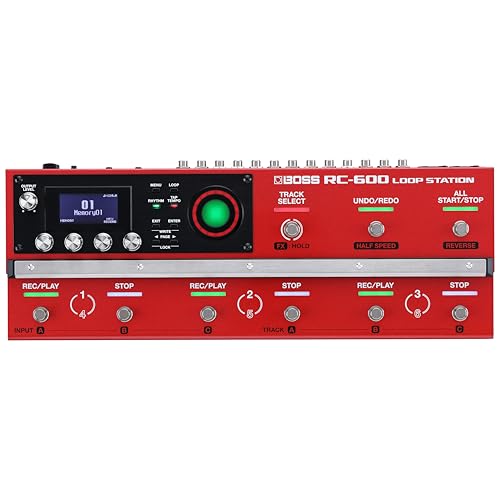
- Six stereo phrase tracks for layered worship sets
- 32-bit processing with extensive onboard effects
- Nine assignable footswitches for flexible live control
Best For: Worship leaders needing advanced multi-track looping and deep control
Dual-Track Flexibility

- Dual-track looping with 32-bit audio processing
- 13 hours of stereo recording and 99 phrase memories
- 16 drum kits and 57 preset rhythms for live use
Best For: Church musicians wanting compact pro looping with rhythms and MIDI
Three-Track Simplicity

- Three stereo tracks with dedicated footswitches
- Per-track faders and expression pedal control
- Includes XLR cable for microphone input
Best For: Worship setups needing direct control and mic input support
Tabletop Performance Hub

- Five stereo tracks for layered looping
- Two XLR mic inputs with phantom power
- Two stereo line input pairs for routing flexibility
Best For: Vocalists and worship leaders who want a tabletop looper with mic support
Compact Rhythm Looper

- Compact footprint for pedalboard-friendly setups
- Over 280 preset rhythm styles and 16 drum kits
- Two-track operation with full MIDI I/O
Best For: Guitarists and small-setup performers who want looping plus rhythms
Advanced Worship Looper
- Five simultaneous stereo phrase tracks
- Two effects sections with extensive onboard processing
- 99 memories for fast recall of loops and settings
Best For: Advanced performers who need deep tabletop looping control
Simple Starter Looper – BOSS RC-1 Loop Station Pedal
If you want one of the most straightforward loop stations for church musicians, the BOSS RC-1 keeps the workflow simple: record, overdub, play back, and undo or redo without a steep learning curve. Its 12 minutes of stereo recording time, stereo I/O, and clear loop indicator make it a practical fit for worship players who want to build pads, riffs, or layered parts quickly.
Best For: Church musicians who want an easy-to-use first looper for live worship or practice.
Pros:
- Very simple operation with record, overdub, playback, undo, and redo
- 12 minutes of stereo recording time with stereo inputs and outputs
- 24-segment LED loop indicator helps show current loop mode
- Compact BOSS stompbox design with battery or optional adapter power
Cons:
- No advanced multi-track features
- Includes a battery, but AC adaptor is sold separately
For church use, the RC-1 is best when you value reliability and clarity over deep editing. It gives you the core looping tools in a compact pedal that is easy to place on a worship board.
Feature-Rich Worship Looper – BOSS RC-5 Loop Station
The BOSS RC-5 is a strong choice if you need one of the more advanced loop stations for church musicians. It combines 32-bit AD/DA conversion, 13 hours of stereo recording time, 99 phrase memories, and built-in rhythms, so it can handle everything from practicing at home to leading layered parts on stage.
Best For: Worship players who want advanced looping features, memory storage, and rhythm support.
Pros:
- 32-bit AD/DA and 32-bit floating-point processing for high-quality audio
- 13 hours of stereo recording time with 99 phrase memories
- 57 rhythms and 7 drum kits for practice and performance support
- MIDI I/O, USB, and external control options expand flexibility
Cons:
- More complex than a basic single-button looper
- Uses 9V battery power, with optional adapter sold separately
For church musicians who need more than a basic loop, the RC-5 offers serious depth without sacrificing pedalboard-friendly size. Its storage, rhythm tools, and connectivity make it a versatile pick for modern worship setups.
Bundle-Friendly Beginner Looper – Boss RC-1 Bundle with Power Supply
Boss RC-1 Loop Station | Bundle with Gearlux Power Supply, Instrument Cable, Patch Cable, and Picks
Check Price On AmazonThis RC-1 bundle is a practical option for church musicians who want an easy looper plus the basics to get started. It includes the RC-1 with a power adapter, instrument cable, patch cable, and picks, while keeping the same straightforward looping approach and 12 minutes of stereo recording time as the core pedal.
Best For: Players who want a simple looper package with included accessories.
Pros:
- RC-1 looping with simple Rec/Overdub/Play operation
- 12 minutes of stereo recording time
- Bundle includes power adapter, instrument cable, patch cable, and picks
- Stereo in/out supports stereo effects, amplifiers, and instruments
Cons:
- Still a basic looper with no advanced memory or multi-track features
- Bundle details may be less important if you already own cables and power
This version of the RC-1 is especially appealing if you want to simplify your first purchase. It delivers the familiar easy-to-use BOSS looper plus the core accessories many church musicians need right away.
Dual-Track Performance Looper – BOSS RC-500 Dual-Track Loop Station
The BOSS RC-500 is built for church musicians who need a more capable performance looper. With dual tracks, 13 hours of stereo record time, onboard rhythm tracks, XLR and 1/4-inch inputs, and USB import/export, it is suited to more complex worship arrangements and vocal or instrument-based looping setups.
Best For: Worship leaders and musicians who need dual-track looping and flexible input options.
Pros:
- Two-track looper expands arrangement options
- 13 hours of stereo record time on board
- XLR and 1/4-inch inputs support different signal sources
- USB import/export and onboard rhythm tracks add workflow flexibility
Cons:
- Bigger and heavier than compact single-track pedals
- Requires an AC adapter for power, not battery operation
If your church setup calls for more than a basic looping pedal, the RC-500 offers the depth to match. It is a strong fit for players who want dual-track control, broader connectivity, and built-in rhythm support in one unit.
Flagship Multi-Track Power – BOSS RC-600 Floor-Based Loop Station
For church musicians who need a serious looper for worship sets, the BOSS RC-600 stands out as one of the most advanced loop stations for church musicians. It offers six simultaneous stereo phrase tracks, real-time loop recording and editing, and a large selection of onboard effects, making it well suited to layered pads, rhythm parts, and live arrangement building.
Best For: Worship leaders and multi-instrumentalists who want maximum looping flexibility, deep effects, and hands-free control on a floor unit.
Pros:
- Six simultaneous stereo tracks for complex layered performances
- 32-bit AD/DA and 32-bit floating-point processing for class-leading sound quality
- 49 Input FX and 53 Track FX, with four usable at once in each section
- Nine assignable footswitches plus three pedal modes for flexible control
Cons:
- Larger floor-based design may take more space on a church pedalboard
- Feature depth can be more than a simple user needs
- Requires corded power with a 1100 mA draw
Overall, the RC-600 is the most full-featured option here, and it makes sense when your worship arrangements depend on multiple layers, detailed live editing, and broad control. If you want a flagship looper that can grow with a demanding set, this is the most capable choice in the group.
Dual-Track Flexibility – BOSS RC-500 Loop Station
The BOSS RC-500 is a strong mid-size choice among loop stations for church musicians who want pro features without moving up to a larger flagship unit. It gives you dual-track looping, 32-bit audio processing, onboard rhythms, and MIDI support, so it can handle everything from simple song beds to more involved live worship builds.
Best For: Church players who want advanced dual-track looping, onboard rhythms, and compact control options.
Pros:
- Dual-track looping with professional-grade 32-bit processing
- 13 hours of stereo recording time and 99 phrase memories
- 16 drum kits and 57 preset rhythms with A/B variations
- USB file management plus full MIDI I/O for expanded workflow
Cons:
- Only two tracks, so it is less expansive than a three- or six-track unit
- Uses mini TRS MIDI jacks, which may require an extra adapter
- May feel more feature-rich than needed for very basic looping
If you want a looper that balances portability, control, and enough depth for live worship use, the RC-500 is a practical middle ground. Its rhythm features and memory storage make it especially useful for players who build repeatable parts across songs.
Three-Track Simplicity – BOSS RC-300 Loop Station
The BOSS RC-300 is a classic option for church musicians who want three stereo tracks with dedicated footswitches and straightforward real-time control. It also includes a dedicated fader per track, an expression pedal, and XLR input support, which makes it a useful all-in-one looper for worship settings where vocals or other sources may be part of the performance.
Best For: Worship setups that need three-track looping, direct foot control, and microphone input support.
Pros:
- Three stereo tracks with dedicated footswitches and controls
- Dedicated fader per track for hands-on mixing
- Expression pedal for real-time effects control
- XLR cable included for microphone input use
Cons:
- Older design with less advanced feature set than newer RC models
- Up to three hours of internal recording is lower than some alternatives
- Only 99 onboard memories, which may limit larger set libraries
For players who prefer clear physical controls and want to manage multiple parts without a steep learning curve, the RC-300 remains a practical choice. It is especially appealing when microphone input and direct track faders matter more than cutting-edge features.
Tabletop Performance Hub – Boss RC-505 Mk2
The Boss RC-505 Mk2 is a strong pick for church musicians who want one of the most capable loop stations for church musicians in a tabletop format. With five stereo tracks, two XLR mic inputs with phantom power, and two stereo line input pairs, it gives you plenty of routing flexibility for live vocal layering, instruments, or backing parts.
Best For: Vocalists, worship leaders, and multi-input performers who want hands-on tabletop looping with mic support.
Pros:
- Five stereo tracks for complex layered performances
- Two XLR mic inputs with phantom power for vocals or mics
- Two stereo line input pairs for flexible instrument routing
- Includes rhythm generator and looping controls for live use
Cons:
- Tabletop design may not suit players who prefer a floor-based looper
- Requires external power and a more deliberate setup
If your church set relies on live vocal looping, multiple sources, and direct hands-on control, the RC-505 Mk2 offers a very practical feature set. It is built for expanded performance control rather than minimalism, which makes it especially useful when flexibility matters most.
Compact Rhythm Looper – Boss RC-10R
The Boss RC-10R is a practical choice for church musicians who want loop stations for church musicians in a compact footprint. It combines two-track looping with built-in rhythm styles, so you can build repeating parts while keeping a steady musical foundation during rehearsal or live worship settings.
Best For: Guitarists and small-setup performers who want looping plus rhythm support in a compact pedal.
Pros:
- Small footprint that fits easily into a pedalboard setup
- Over 280 preset rhythm styles for broad genre coverage
- Two-track operation for building loop performances with song parts
- Full MIDI I/O and expanded control support
Cons:
- Only two-track operation, so it is less expansive than larger loop stations
- Focused form factor may feel limited for players wanting more hands-on layering
For church musicians who want reliable looping without taking up much space, the RC-10R is easy to justify. Its rhythm engine and compact build make it a good fit when you need groove support as much as looping control.
Advanced Worship Looper – Boss RC-505mkII
The Boss RC-505mkII is a high-capacity option for church musicians who need loop stations for church musicians with deep control and professional connectivity. It offers five simultaneous stereo phrase tracks, dual effects sections, and extensive input and output options, making it well suited to more involved live arrangements.
Best For: Advanced performers who want a feature-rich tabletop looper for live worship layering.
Pros:
- Five simultaneous stereo phrase tracks with dedicated faders
- Two effects sections with a large onboard effects selection
- Two XLR mic inputs with phantom power and multiple line inputs
- 99 memories for instant recall of phrases, effects, and settings
Cons:
- Large tabletop unit takes more space than compact loop pedals
- Feature depth may be more than needed for simpler setups
This model is built for performers who want precision control, strong audio specs, and room to grow creatively. If your church work involves layered loops, vocal processing, and frequent preset recall, the RC-505mkII gives you a lot to work with.
How We Picked These Loop Stations for Church Musicians
We looked for models that balance usability, sound quality, and live reliability. For church use, the most important factors are easy operation in low-pressure and high-pressure moments, enough memory for setlists or song ideas, and controls that make it simple to start, stop, overdub, and undo without distraction.
We also favored units with strong performance tools such as multiple tracks, built-in rhythms, USB connectivity, and flexible input/output options. That matters whether you lead from acoustic guitar, electric guitar, keys, vocals, or a full worship rig.
Quick Comparison: What Stands Out
Compact single-pedal loopers are usually best for simplicity and small rigs. Dual-track and multi-track units offer more control for layered worship arrangements. Tabletop models are a strong fit for vocalists, producers, and multi-instrumentalists who want hands-on looping. Rhythm-integrated units are especially useful for solo services or acoustic-led sets.
Key Buying Factors for Loop Stations for Church Musicians
Ease of Use During Live Worship
Choose a looper with a layout you can operate confidently without looking down too much. Clear displays, footswitch spacing, and straightforward undo/redo functions are important in live ministry settings.
Track Count and Memory
If you only need one repeating part, a basic looper may be enough. If you build intros, verses, bridges, and ambient layers, consider more tracks, longer recording time, and memory slots for storing ideas or full songs.
Rhythms and Tempo Support
For solo worship or stripped-down teams, built-in drum patterns or tempo sync can help keep songs anchored. This is useful when a drummer is absent or when you want a more polished, consistent groove.
Connection and Signal Routing
Check for stereo I/O, mic inputs, USB support, and external footswitch compatibility if your setup is more advanced. These features can make Loop Stations for Church Musicians much easier to integrate with pedals, mixers, and recording workflows.
Who Should Buy Which Loop Stations for Church Musicians?
Simple floor pedals are best for players who want a no-fuss entry into looping. Mid-level multi-track units suit worship leaders who need more layers and control. Larger floorboards fit full-band or tech-heavy setups. Tabletop loopers are the best match for singers, keyboard players, and anyone leading from a seated or front-facing position.
If you serve in a church environment where reliability matters more than experimentation, prioritize straightforward controls, clear metering, and stable tempo handling over extra features you may rarely use.