Choosing the right looper can make recording ideas faster, cleaner, and far more creative. The best loop stations for recording let you capture parts quickly, layer performances, and build arrangements without breaking your workflow.
In this roundup, we focus on reliable options for guitarists, vocalists, and multi-instrument creators, with an eye toward sound quality, ease of use, and recording flexibility.
Best 10 Loop Stations for Recording Picks for 2026
Dual-Track Pro Looper

- Dual-track looping with onboard mixing
- 32-bit audio processing and LCD display
- 13 hours stereo recording with 99 memories
Best For: Players who want advanced looping control and long recording capacity
Vocal-Friendly Mic Looper

- Automatic mic gain control
- Two-button operation for easy use
- 5-minute loops with unlimited overdub
Best For: Vocalists and acoustic players who want an easy mic looper
Three-Track Performance Looper

- Three stereo tracks with dedicated footswitches
- Separate faders and expression pedal control
- Up to 3 hours recording with 99 memories
Best For: Players who want hands-on three-track looping and live control
Compact Sync Looper
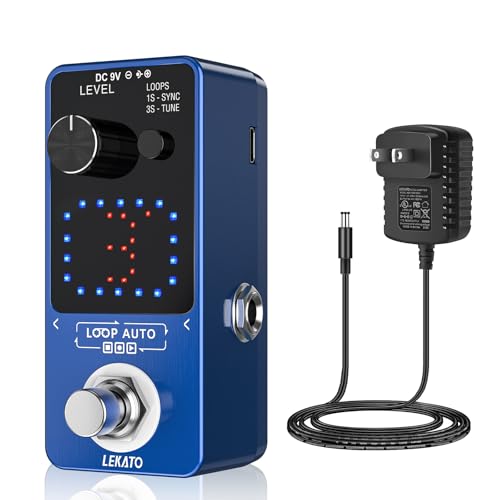
- Three loops with 18 minutes total record time
- Sync recording plus built-in tuner
- USB import/export for WAV files
Best For: Guitarists who want a compact looper with tuner and USB transfer
Tabletop Powerhouse

- Five stereo tracks with dedicated faders
- 49 Input FX and 53 Track FX types
- 99 memories for quick performance recall
Best For: Beatboxers and tabletop performers who need advanced multi-track looping
Compact Pedal Looper

- 9 loops with 40 minutes total recording time
- 48K/24-bit uncompressed audio
- Built-in tuner and USB file transfer
Best For: Guitar and bass players who want a simple, affordable looping pedal
Hands-On Creator Station

- Two stereo tracks with dedicated controls
- Four Input FX and four Track FX at once
- USB audio/MIDI plus 64 phrase memories
Best For: Electronic musicians and performers who want compact tabletop looping
Simple Starter Looper

- Record, playback, overdub, and undo/redo in one compact pedal
- Up to 12 minutes of stereo recording time
- Stereo I/O and phrase memory retention
Best For: Guitar, bass, and keyboard players who want a simple first looper
Starter Bundle Pick

- Includes power adapter, cable, patch cable, and picks
- 24-segment LED shows Rec/Overdub/Play status
- Up to 12 minutes of stereo recording time
Best For: Beginners or players who want a looper bundle with essentials included
Expanded Performance Looper
BOSS RC-30 Twin Track Loop Station

- Two synchronized stereo tracks with dedicated faders
- Up to three hours of stereo recording time
- 99 onboard memory phrases plus built-in effects
Best For: Players who want a twin-track looper with long recording capacity and storage
Dual-Track Pro Looper – BOSS RC-500 Loop Station
If you want loop stations for recording with pro-level control, the BOSS RC-500 is built for players who need more than a basic looper. Its dual-track design, 32-bit processing, 13 hours of stereo recording time, and onboard rhythm library make it a strong fit for detailed live looping and writing sessions.
Best For: Guitarists, singer-songwriters, and live performers who want deep control, long recording capacity, and dual-track looping.
Pros:
- Dual-track looper with dedicated mixing and control options
- 32-bit AD/DA conversion and 32-bit floating-point processing
- 13 hours of stereo recording time plus 99 phrase memories
- 16 drum kits and 57 preset rhythms for performance support
Cons:
- May be more complex than a simple starter looper
- External control options may require extra accessories
The RC-500 stands out when recording quality and performance flexibility matter as much as looping itself. It is a feature-rich pedal for players who want to build, store, and shape loops with serious control.
Vocal-Friendly Mic Looper – TC Helicon Ditto Mic Looper
TC Helicon DITTO MIC LOOPER Easy to Use Two-Button Looper Pedal for Vocals and Acoustic Instruments
Check Price On AmazonThe TC Helicon Ditto Mic Looper is a practical option if you need loop stations for recording vocals or acoustic instruments without a steep learning curve. It keeps the layout simple with two buttons, automatic mic gain control, and up to 5 minutes of loop length with unlimited overdubbing.
Best For: Vocalists and acoustic performers who want a simple mic looper for quick recording and layering.
Pros:
- Automatic mic gain control helps simplify setup
- Two-button design keeps operation easy
- 5-minute loop length with unlimited overdub
- Stop button allows noiseless loop clearing
Cons:
- Designed for simplicity rather than deep looping features
- Loop length is shorter than larger multi-track units
This is a focused looper for users who value speed and ease over advanced editing. For vocals and acoustic parts, it delivers the essentials without adding unnecessary complexity.
Three-Track Performance Looper – BOSS RC-300 Loop Station
For players comparing loop stations for recording, the BOSS RC-300 is built for hands-on performance with three stereo tracks, dedicated footswitches, and separate faders for each track. It also includes an expression pedal and up to three hours of internal recording, making it a solid choice for building layered live loops.
Best For: Musicians who want three-track looping, direct foot control, and real-time performance shaping.
Pros:
- Three stereo tracks with dedicated footswitches
- Separate fader for each track
- Expression pedal support for real-time effects control
- 99 onboard memories and up to three hours of recording
Cons:
- Bulkier than compact single-pedal loopers
- May be more than needed for simple looping tasks
The RC-300 is aimed at players who want a more performance-oriented looping station with plenty of control at their feet. It is especially useful when live layering and track balancing matter.
Compact Sync Looper – LEKATO 3-Loop Pedal
The LEKATO guitar looper is a compact option for loop stations for recording when you want simple looping, sync support, and built-in tuning in one pedal. It offers three loops, up to 18 minutes of total recording time, and USB import/export for saving WAV files on a computer.
Best For: Guitarists who want a small looper with sync recording, tuner functionality, and USB file transfer.
Pros:
- Three loops with up to 18 minutes total recording time
- Synchronous recording mode for easier capture during playback
- Built-in high-sensitivity tuner function
- USB import/export and automatic file saving
Cons:
- Shorter total recording time than larger loop stations
- Less advanced than multi-track performance units
This pedal makes sense for players who want straightforward looping and basic utility in a compact format. It is especially appealing if you want to record, save, and transfer loops without a complicated setup.
Tabletop Powerhouse – BOSS RC-505mkII Loop Station
If you want loop stations for recording that can handle detailed live layering, the RC-505mkII is built for hands-on creation. Its five stereo phrase tracks, dual FX sections, and extensive memory make it a strong fit for performers who want to build complex arrangements in real time.
Best For: Beatboxers, solo performers, and tabletop creators who need deep control over multi-track looping and effects.
Pros:
- Five simultaneous stereo phrase tracks with independent faders
- Two FX sections with a large selection of onboard effects
- Two XLR mic inputs with phantom power and multiple line inputs/outputs
- 99 memories for fast recall of loops, effects, and control assignments
Cons:
- Larger tabletop footprint than a compact pedal looper
- May be more control than needed for very simple looping
- Best suited to users comfortable with a more advanced workflow
This is a feature-rich looper for players who want more than basic record-and-playback. If your setup calls for flexible routing, layered tracks, and detailed sound shaping, it stands out as a serious live looping tool.
Compact Pedal Looper – LEKATO 9-Loop Guitar Pedal
For players looking for loop stations for recording in a simple stompbox format, this LEKATO pedal keeps the process straightforward. It offers 9 loops, up to 10 minutes on a single loop, and a visual time indicator, making it a practical option for practice and basic layering.
Best For: Guitarists and bass players who want an affordable, easy-to-use looping pedal with basic recording flexibility.
Pros:
- Up to 9 loops with 40 minutes of total recording time
- 48K/24bit uncompressed audio for lossless recording
- Built-in tuner adds convenience on a crowded pedalboard
- USB import/export support for moving WAV loop files
Cons:
- Single-knob and one-button workflow is simple, but limited
- Less advanced than multi-track tabletop loop stations
- Designed primarily for guitar and bass use
This pedal focuses on ease of use and essential looping features rather than deep performance editing. If you want a compact looper with tuner functionality and straightforward overdubbing, it delivers a lot in a small format.
Hands-On Creator Station – BOSS RC-202 Loop Station
The RC-202 is a strong pick if you want loop stations for recording in a compact tabletop format with performance control at your fingertips. With two stereo tracks, onboard rhythm patterns, and USB audio/MIDI support, it works well for club-style looping, beatmaking, and live sketching.
Best For: Electronic musicians, club performers, and beatboxers who want a compact hands-on looper with effects and external control options.
Pros:
- Two simultaneous stereo tracks with dedicated controls
- Four Input FX and four Track FX available at once
- 64 phrase memories for storing loops and settings
- USB integration for phrase import/export and DAW use
Cons:
- Only two phrase tracks, so it is less expansive than larger loop stations
- Compact format may feel limited for complex multi-layer arrangements
- Some users may want external foot control for expanded operation
Overall, the RC-202 is a focused performance tool for creators who want hands-on looping without moving up to a larger tabletop unit. Its effects, memory system, and MIDI/external control support make it flexible for live electronic setups.
Simple Starter Looper – BOSS RC-1 Loop Station Pedal
If you want loop stations for recording that are easy to learn and quick to use, the BOSS RC-1 keeps the process straightforward. It offers record, playback, overdub, and undo/redo in a compact stompbox, plus stereo I/O and up to 12 minutes of stereo recording time.
Best For: Guitar, bass, and keyboard players who want a simple, dependable first looper.
Pros:
- Very user-friendly layout with a clear Rec/Overdub/Play indicator
- Up to 12 minutes of stereo recording time
- Stereo inputs and outputs for flexible setups
- Memory retains recorded phrases even when powered off
Cons:
- Single-track design, so it is less advanced than multi-track loopers
- Optional AC adaptor is sold separately
- Battery life is about 4.5 hours on the included 9V alkaline battery
This is a practical choice if you value simplicity over deep editing features. The RC-1 focuses on core looping functions and a compact footprint, making it easy to add to a basic playing rig.
Starter Bundle Pick – Boss RC-1 Loop Station Bundle
Boss RC-1 Loop Station | Bundle with Gearlux Power Supply, Instrument Cable, Patch Cable, and Picks
Check Price On AmazonAmong loop stations for recording, this RC-1 bundle is aimed at players who want a simple looper plus the basic accessories to get started. It keeps the same straightforward RC-1 layout with a 24-segment loop indicator, 12 minutes of stereo recording time, and stereo in/out jacks for stereo effects, amplifiers, and instruments.
Best For: Beginners or gigging players who want the pedal and a starter accessory pack in one box.
Pros:
- 24-segment LED loop indicator makes mode status easy to read
- Up to 12 minutes of stereo recording time
- Stereo inputs and outputs support stereo instruments and effects
- Includes power adapter, instrument cable, patch cable, and picks
Cons:
- Still a compact single looper rather than a multi-track unit
- Bundle adds accessories, but the pedal itself remains simple
- Optional AC adaptor mention in the notes can be confusing alongside the included power adapter
This bundle is appealing if you want to skip piecing together the basics separately. The RC-1 itself is easy to operate, and the included accessories make it more convenient as an all-in-one purchase.
Expanded Performance Looper – BOSS RC-30 Twin Track Loop Station
If you need loop stations for recording with more room to build layered parts, the BOSS RC-30 is the most expanded option in this group. It uses two synchronized stereo tracks with dedicated faders and track-select buttons, plus up to three hours of stereo recording time and 99 memory phrases.
Best For: Players who want a twin-track looper with long recording capacity and onboard storage.
Pros:
- Two synchronized stereo tracks with dedicated volume faders
- Massive internal memory with up to three hours of stereo recording time
- 99 onboard memory phrases for saving loops
- Built-in effects for processing loops
Cons:
- Larger and heavier than the simpler RC-1 models
- More controls may be overkill if you only need basic looping
- Requires more space on a pedalboard than a compact single-loop unit
The RC-30 is the right step up when you need more than a basic looper and want serious recording capacity. Its twin-track design and onboard memory make it better suited to building complete performance layers.
How We Picked These Loop Stations for Recording
We looked for loop stations that balance ease of use with real recording usefulness. That means dependable timing, useful phrase memory, solid overdub behavior, straightforward controls, and features that fit both practice and content creation.
We also favored models that suit different setups, from simple stompbox looping to tabletop units and multi-track performance stations.
Quick Comparison
If you want the simplest experience, compact pedal-style loopers are usually best. If you need more layered arrangements or hands-on control, larger multi-track units give you more room to build songs. Vocalists and solo performers may prefer loopers designed for microphones or tabletop use, while guitar players often benefit from footswitch-based control.
Key Buying Factors for Loop Stations for Recording
Recording Time and Memory
Check total record time and how many phrase memories you get. Short loops are fine for practice, but longer memory and more slots matter if you want to save ideas or build full performances.
Tracks and Overdubs
Some Loop Stations for Recording offer a single loop track, while others support multiple independent tracks. More tracks make arrangement-building easier, especially for layered songs, beatboxing, or complex live sets.
Input Type and Use Case
Match the looper to your source. Guitar-first pedals are great for instrument practice and songwriting, while mic-friendly or desktop units are better for vocal layering and production-style workflows.
Connectivity and Sync
USB audio, MIDI, and sync functions can be valuable if you record into a DAW or perform with tempo-based gear. These features help keep loops aligned and can simplify studio integration.
Controls and Learning Curve
Simple controls matter if you want to start recording immediately. More advanced stations may offer deeper editing, but they can take longer to master. Choose the level of complexity that fits how often you will use it.
Who Should Buy Which Loop Stations for Recording?
Choose a basic pedal if you want an affordable way to capture riffs and practice timing. Pick a more advanced multi-track station if you plan to layer parts, save ideas, or perform live. Vocalists and creators who work from a desk should prioritize models with hands-on controls and flexible input options.
For most buyers, the best choice comes down to workflow: fast and simple for sketching ideas, or expanded control for arranging and recording more ambitious performances.